
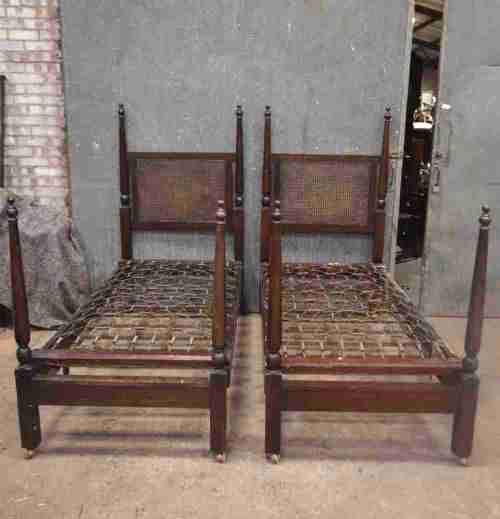
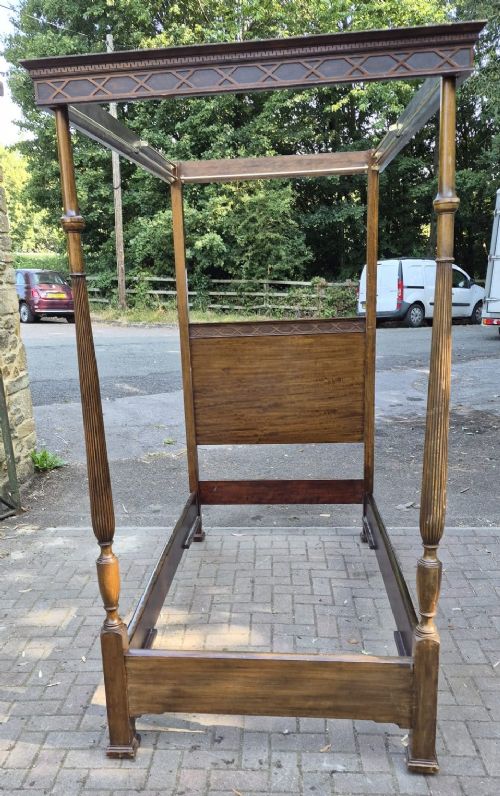
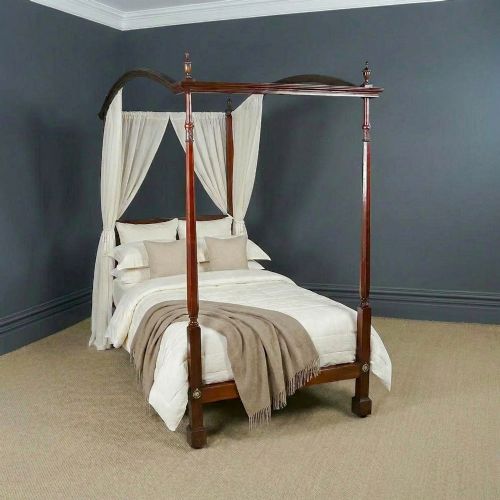


Four Poster Bed Frame
A four poster bed frame anchors a room with structural height and timber presence, offering a commanding sleeping enclosure.
Four Poster Bed Frame
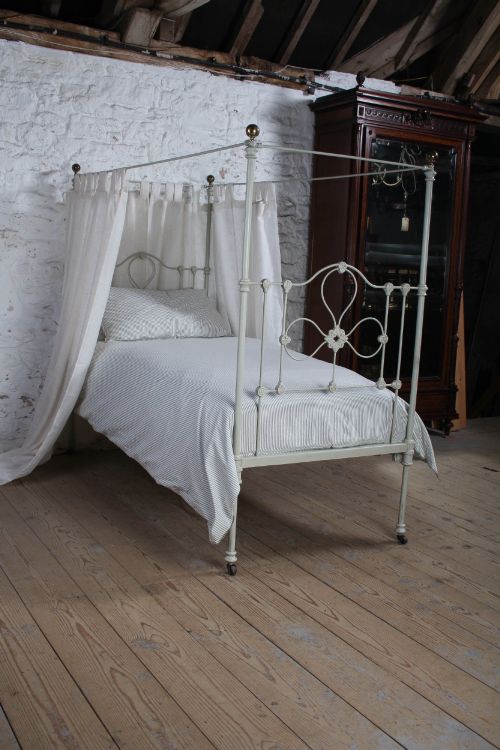
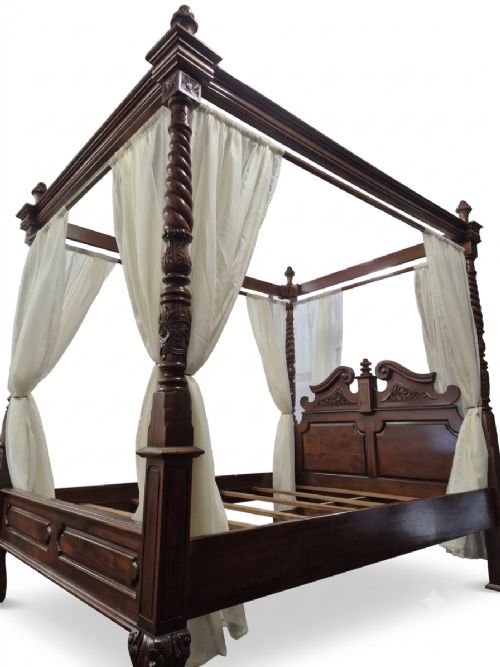
A four poster bed frame stands as a significant architectural piece of furniture, utilising vertical posts at each corner to support an overhead tester canopy. When you examine a four poster bed frame on this page, you encounter variations spanning the seventeenth, eighteenth, nineteenth, and early twentieth centuries.
The selection ranges from substantial oak and mahogany frames to slender iron and brass bedsteads, alongside specialised forms such as half tester beds and Chinese marriage beds. Cabinetmakers adapted proportions across periods, producing formats from single and double sizes up to king and super king dimensions.
Regional diversity appears through styles like Victorian Gothic, Edwardian Georgian revivals, and Anglo-Indian colonial designs. Miniature doll beds also surface, demonstrating the same structural ambition on a diminutive scale.
Materials and Construction
Carpenters and cabinetmakers relied on dense timbers such as mahogany, oak, hardwood, tiger maple, and pine for the structural posts, rails, and testers. Hand carving frequently defined the crests, headboards, and upright columns.
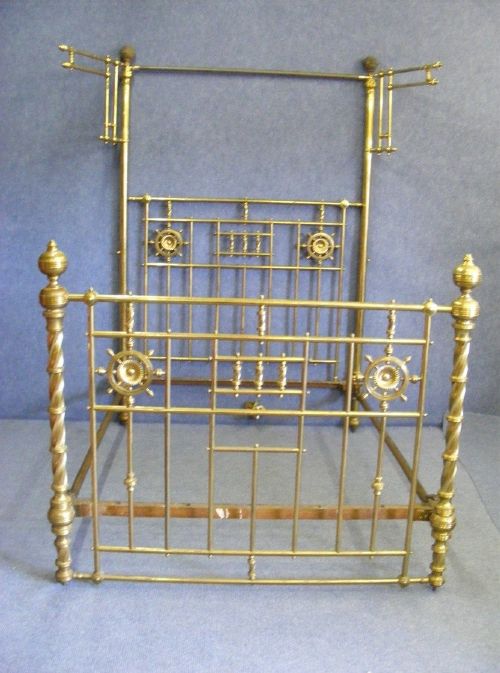
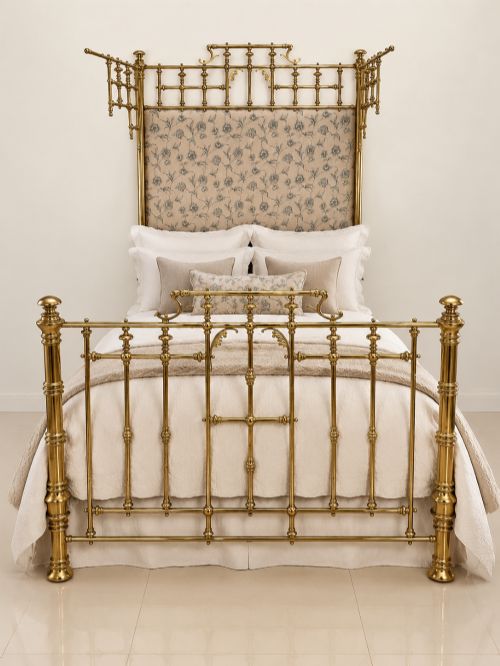
Metal alternatives utilised solid brass, iron, and painted finishes, often incorporating porcelain mounts or fabric hangings. Joinery methods combined traditional tenon joints with heavy bolt fixings to secure the substantial canopy frames against lateral movement.
Listings incorporate solid brass, painted iron, tiger maple, and lacquered hardwood across periods from the seventeenth century onward.
Assessing Quality and Execution
The distinction between tiers rests upon the depth of hand carving, the choice of timber figurations, and the integrity of the structural joinery. Superior examples demonstrate crisp relief work on the posts and balanced proportions between the tester and the base.
Metal iterations vary according to the weight of the brass castings, the rigidity of the iron framework, and the precision of the joints. Maker attribution and exhibition provenance elevate specific pieces through documented workshop standards.
Heals of London·Howard and Sons·R W Winfield
The Four Poster Bed Frame Glossary
- Tester
- The wooden or fabric canopy positioned above the bed frame. It links the four posts overhead to complete the architectural enclosure.
- Half Tester
- A wall-mounted or post-supported canopy that covers only the head portion of the bed rather than the entire length. This form appears frequently on nineteenth-century brass and iron frames.
- Bergere
- A type of chair or bed panel featuring woven cane work. In these listings, it describes specific headboard or footboard inserts.
- Marriage Bed
- An ornate traditional Chinese bed frame featuring enclosed cabinetry or lacquered woodwork. These pieces often display intricate red lacquer and carved panels.
- Bedstead
- The complete structural framework of a bed, supporting the mattress without including the soft furnishings. The term interchanges with bed frame across various periods.
Four Poster Bed Frame: Frequently Asked Questions
How do I assemble a four poster bed frame?
Assembly requires at least two people to align the heavy corner posts with the side rails and headboard. Securing the bolts progressively ensures the frame remains square before the overhead tester drops into place.
Older frames rely on wedge or bolt fixings that demand careful handling to protect the patinated timber or brass surfaces during tightening.
Will a standard mattress fit an antique frame?
Many antique frames predate modern standard sizing dimensions by decades or centuries. Checking exact internal rail measurements against current mattress sizes prevents fitting issues.
Custom mattress providers often supply bespoke dimensions to match the unique perimeters of nineteenth and eighteenth-century frames.
How do I care for brass and iron frames?
Metal frames require dusting with a dry microfibre cloth and gentle cleaning to preserve patinated surfaces. Avoid abrasive metal polishes that strip historical lacquer from brass components.
Iron frames benefit from occasional checks on bolted joints to maintain structural stability over decades of daily use.
How do I date a wooden four poster?
Dating relies on observing timber choices, tool marks, and stylistic indicators such as column turning and pediment carving. Georgian pieces display refined classical proportions, while seventeenth-century examples utilise heavier oak framing.
Secondary woods used in hidden structural areas also provide reliable clues regarding the regional origin and production period.