


Vintage Wooden Canopy Bed
These vintage wooden canopy bed pieces bring architectural presence to a bedroom, offering substantial frames built to last.
Vintage Wooden Canopy Bed
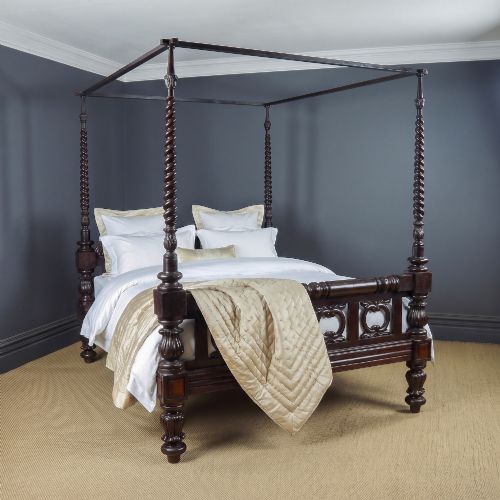
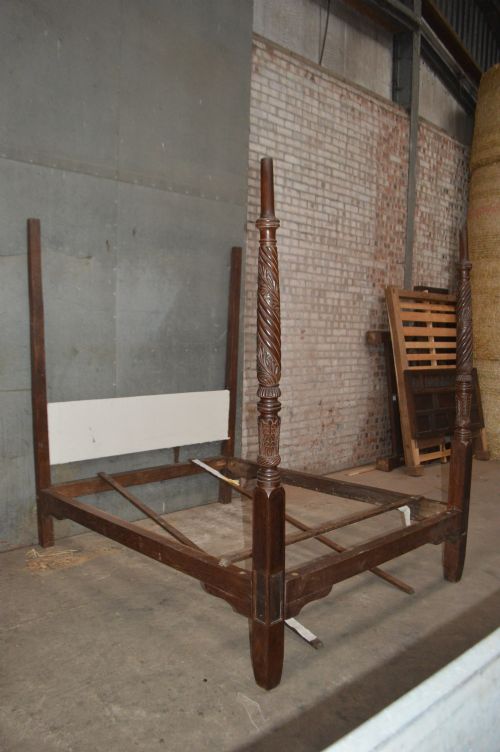
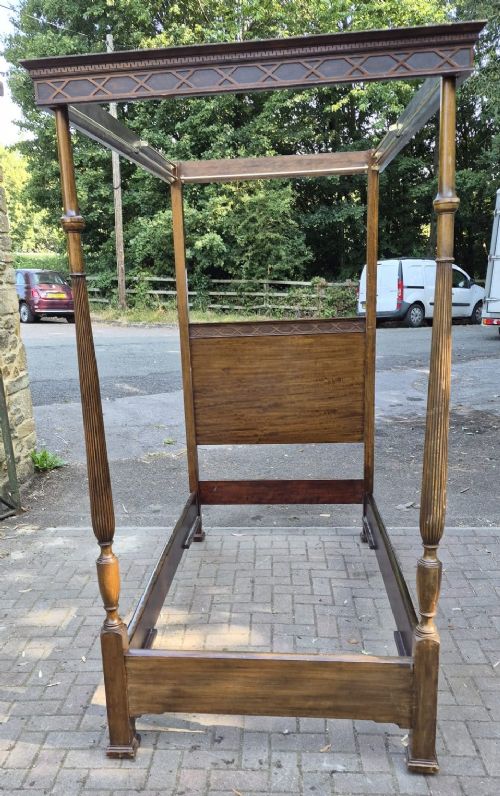
When you search for a vintage wooden canopy bed, you find substantial sleeping frames and tester structures ranging from the 19th Century through the Edwardian period. The selection on this page centres primarily on full-size four poster beds and half tester designs rather than smaller items.
The styles represented across these listings span Victorian, Regency, Edwardian Chinoiserie Revival, British Colonial, and Arts & Crafts aesthetics. Alongside full-sized bedroom furniture, the forms occasionally extend to smaller domestic pieces like cradles and dog beds sharing the same architectural canopy design.
Mahogany forms the backbone of these pieces, accompanied by oak, burr walnut, pine, and hardwood. Buyers frequently encounter traditional proportions paired with architectural posts and tester frames that define the period character.
Materials and construction
Cabinetmakers utilised dense timbers like mahogany, oak, and burr walnut to construct the heavy posts and tester frames. These structural woods provided the necessary strength to support canopy tops and drapery without warping.
Surface treatments varied from polished mahogany and waxed oak to painted pine and gilt wood highlights. Joinery techniques relied on traditional framing methods to ensure the vertical posts and overhead testers remained rigid and secure.
Canopy designs extend beyond human sleepers to include miniature four poster beds built specifically for pampered dogs.
Judging quality in wooden canopy beds
Quality rests upon the proportion of the architectural posts and the crispness of any carved detailing on the headboards and tester cornices. Pieces executed in solid mahogany or figured burr walnut demonstrate a superior selection of timber compared to simpler painted pine alternatives.
The structural integrity of the joint connections where the canopy meets the vertical posts dictates the overall stability of the frame. Finer examples retain balanced proportions that command the room without appearing heavy or clumsy.
The Vintage Wooden Canopy Bed Glossary
- Tester
- The wooden canopy or flat tester board that sits above the bed frame. It traditionally supported curtains or drapery to retain warmth.
- Half Tester
- A bed style featuring a canopy that extends over only the head portion of the bed rather than the entire length. This configuration was popular during the Victorian era.
- Four Poster
- A bed frame characterised by four vertical posts supporting an upper framework. These posts range from plain turned timbers to heavily carved architectural columns.
- Chinoiserie Revival
- A decorative style inspired by Chinese artistic traditions, appearing on Edwardian pieces with painted or lacquered motifs. It brings lighter ornamental details to wooden frames.
Vintage Wooden Canopy Bed: Frequently Asked Questions
How do I fit a canopy bed in a modern room?
Check your ceiling height carefully before purchase to ensure the tester clears light fixtures and ceiling mouldings. These architectural frames require adequate vertical clearance to display the proportions correctly.
Position the bed as the central focal point of the room, keeping surrounding furniture lower in profile. This allows the wooden posts and canopy structure to dominate the space naturally.
How do I clean wooden canopy posts?
Dust the carved details and vertical posts regularly with a soft, dry cloth to prevent build-up in recessed areas. Avoid modern silicone polishes that leave a residue on antique timber.
Apply a traditional beeswax conditioner periodically to nourish the mahogany, oak, or walnut surfaces. Buff gently to maintain the natural warmth of the grain.
Are these beds suitable for daily use?
These historical bed frames are constructed from dense hardwoods like mahogany and oak, built for daily utility over generations. Modern mattress supports can often be integrated within the antique framework.
Inspect the side rail joints and bolt fixings to ensure they remain tight and secure. Proper assembly guarantees the frame handles regular weight without movement.