
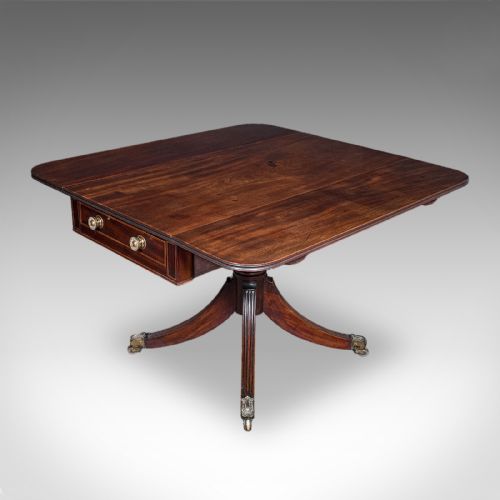


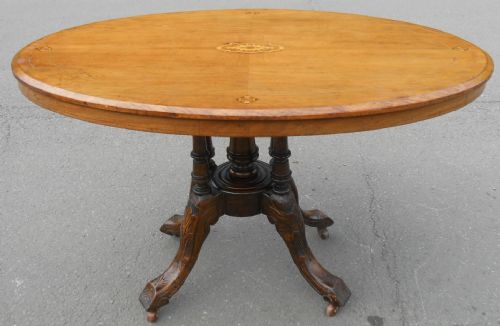
Four Leg Pedestal Table
A four leg pedestal table is a sturdy centrepiece designed for dining and display, prized for its balanced column support and rich timbers.
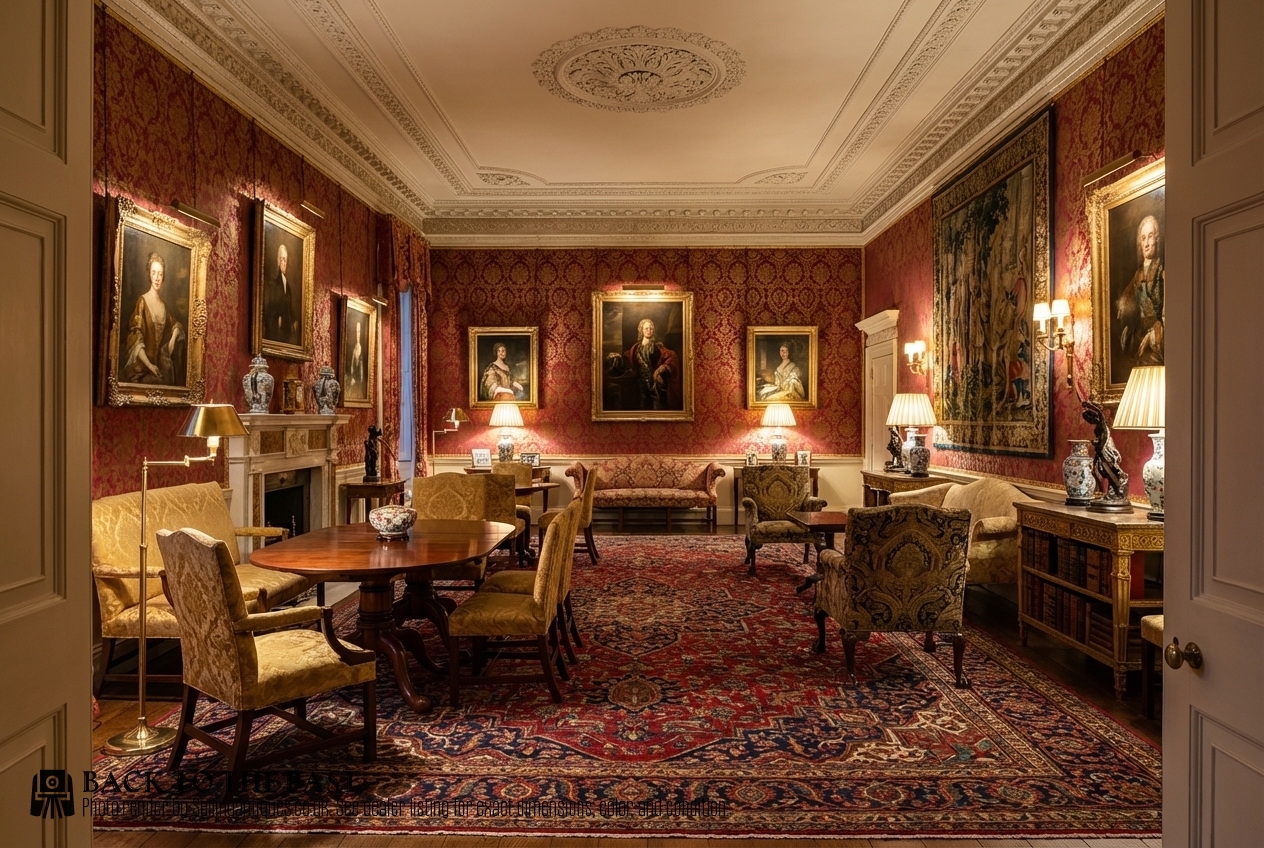
Four Leg Pedestal Table
A four leg pedestal table brings together classical pillar supports and multiple splayed feet to hold substantial timber tops. When you search for a four leg pedestal table, you encounter substantial dining tables with multiple pedestals alongside tilt-top breakfast tables, drum tables, and loo tables resting on a single central column with four swept legs.
The pieces on this page span the Georgian, Regency, William IV, Victorian, and Edwardian periods, stretching from the late eighteenth century into the early twentieth century. Makers of these eras utilised mahogany, walnut, burr walnut, rosewood, cherry wood, and satinwood to construct forms ranging from large multi-pedestal dining formats to compact tea and occasional tables.
Dining examples often incorporate removable leaves to alter their length for large gatherings, while smaller tilt-top breakfast and supper tables save space by standing upright when not in use. Drum tables and centre tables offer circular surfaces supported by turned columns and brass castors, balancing everyday utility with formal nineteenth-century design.
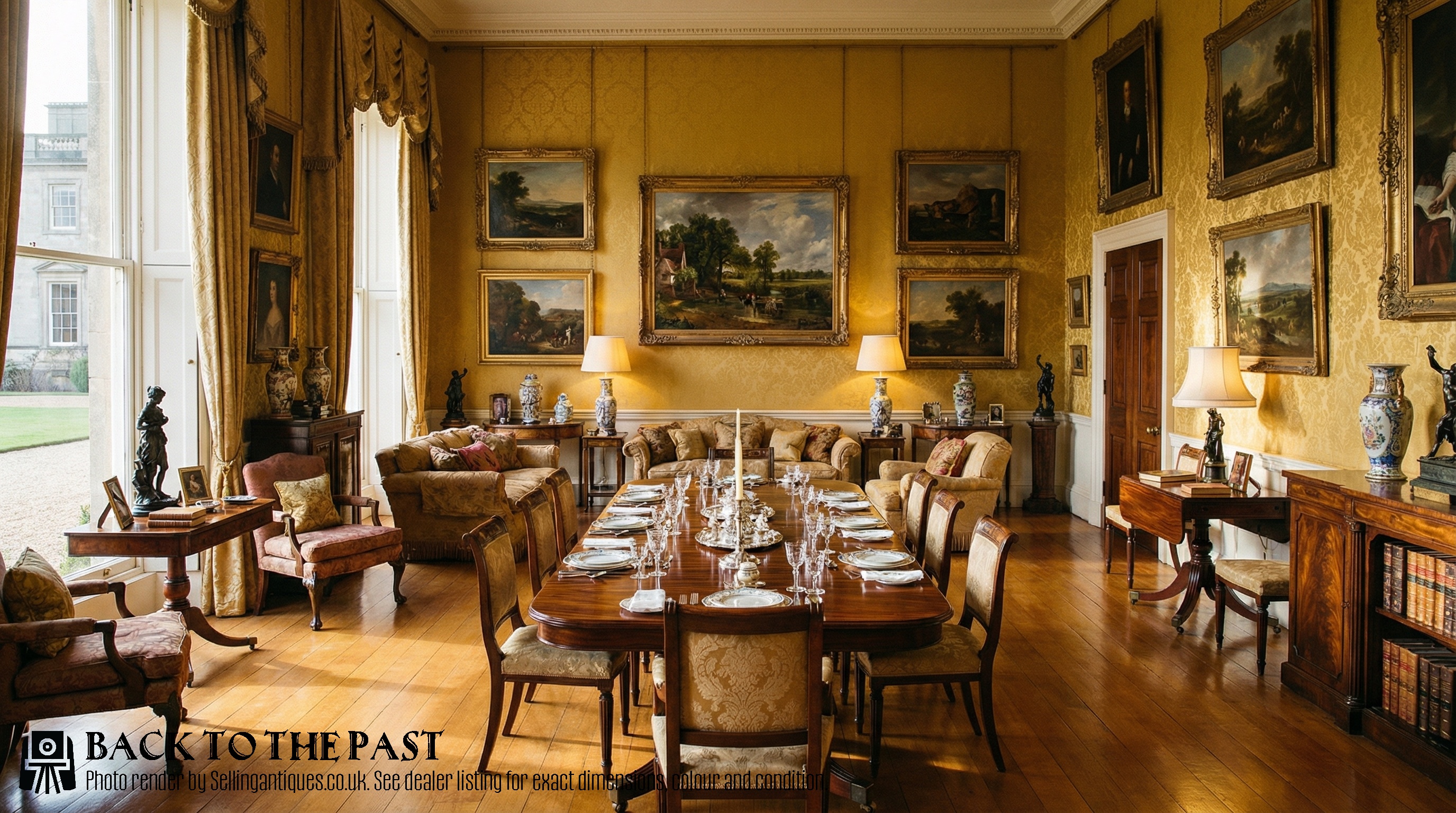
How they were made
Cabinet makers built these tables using dense hardwoods such as mahogany, walnut, and rosewood, frequently selecting figured veneers like burr walnut and satinwood for top surfaces. Timber sections were joined with care to allow wood to move naturally with changes in humidity without splitting the surface.
Pedestal supports typically feature turned or carved central columns rising from four splayed legs, often fitted with brass castors to ease movement across floors. Tilt-top mechanisms rely on clever catches and blocks that let the table top pivot securely between horizontal and vertical positions.
Four Leg Pedestal Table Retail Price Guide 2026
Typical asking prices for four leg pedestal table among the pieces listed under this phrase on Sellingantiques today, from the lower quarter to the upper quarter. They describe what is for sale here now, not the wider market.
Listings on this site span the Georgian, Regency, Victorian, and Edwardian eras, utilising mahogany, rosewood, walnut, and cherry wood.
What varies in quality
Quality rests in the choice of timber and the crispness of the carving on the pedestal knees and column turnings. Superior pieces show carefully matched grain patterns across table leaves and table tops, maintaining visual continuity when extended.
The stability of the four-legged base and the smooth operation of tilt mechanisms or leaf-insertion tracks distinguish fine workshops from ordinary production. Original brass castors and well-fitted internal components further elevate an example's standing.
The Four Leg Pedestal Table Glossary
- Pedestal
- A central column or pillar supporting a table top, usually rising from a platform or splayed legs. This design removes corner legs to maximise seating space.
- Tilt-top
- A table top hinged to tilt vertically, allowing the piece to be stored flat against a wall when not in use. This mechanism appears frequently on breakfast and supper tables.
- Drum table
- A circular library or centre table with a deep frieze containing drawers, mounted on a central pillar and four-leg base. These tables became popular during the Regency period.
- Splayed legs
- Legs that curve or angle outward from a central column to provide a wide, stable base. They often terminate in brass castors.
- Loo table
- A large Victorian or Regency circular or oval table designed for card games, supported by a heavy pedestal and four feet. The name derives from the card game loo.
Four Leg Pedestal Table: Frequently Asked Questions
What is a four leg pedestal table used for?
These pieces serve primarily as dining tables, centre tables, and breakfast tables depending on their size and mechanism. Larger versions accommodate multiple leaves for formal meals.
Smaller examples function as tea tables, drum tables, or occasional tables placed in the centre of a room or against a wall.
How do I identify the period of a pedestal table?
Dating relies on timber choices, leg profiles, and hardware. Georgian and Regency pieces often feature rich mahogany with brass castors and splayed legs, while Victorian examples introduce heavy walnut and oval formats.
Edwardian interpretations incorporate lighter satinwood inlay and refined proportions, reflecting changing interior tastes at the turn of the twentieth century.
Can I use a tilt top table every day?
Tilt-top breakfast and supper tables suit daily use provided the catch mechanism remains secure and stable. Lowering and raising the top requires a firm grip to control the weight of the timber.
Keeping the mechanism lightly waxed ensures smooth operation when pivoting the surface between horizontal and vertical positions.
How do I care for mahogany and walnut surfaces?
Protect timber surfaces by using mats under hot dishes and wiping spills promptly with a dry or slightly damp cloth. Regular application of beeswax helps nourish the grain and maintains the natural lustre of the wood.
Avoid placing tables in direct sunlight or close to heat sources to prevent the timber from drying out and the veneer from lifting.