


Four Door Glazed Cabinet
A four door glazed cabinet provides generous display and storage capacity, bringing imposing presence and practical elegance to a large room.
Four Door Glazed Cabinet
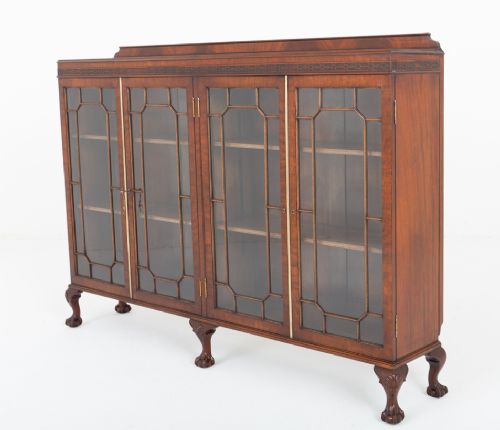
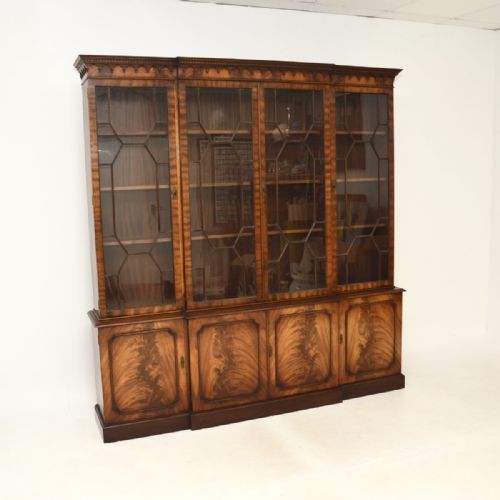
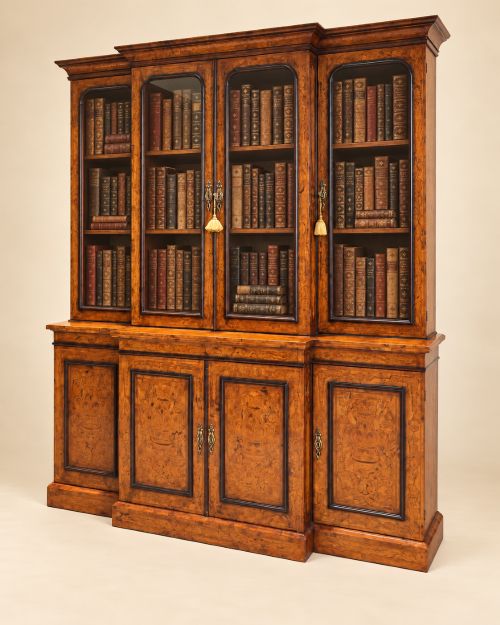
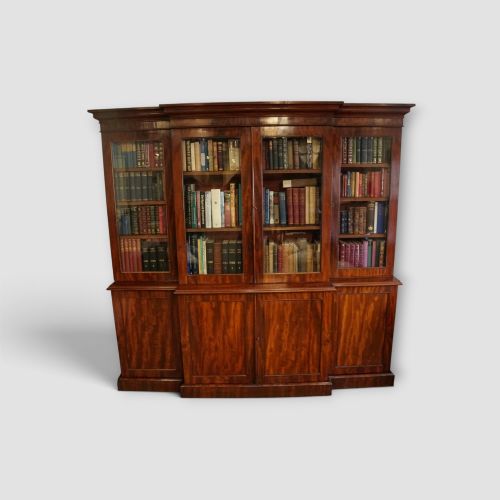
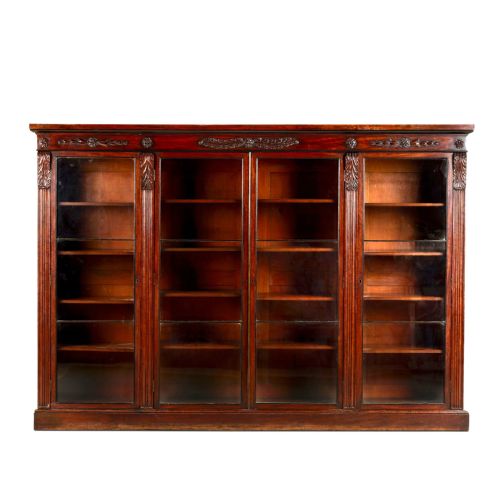
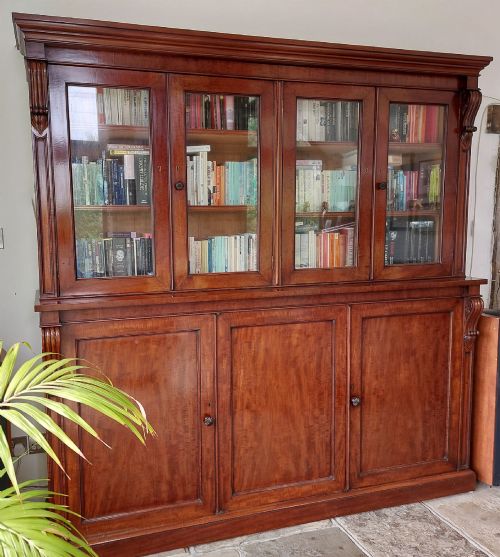
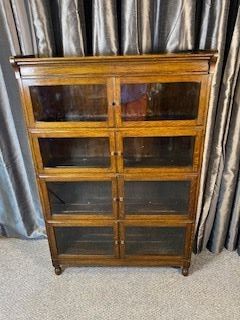
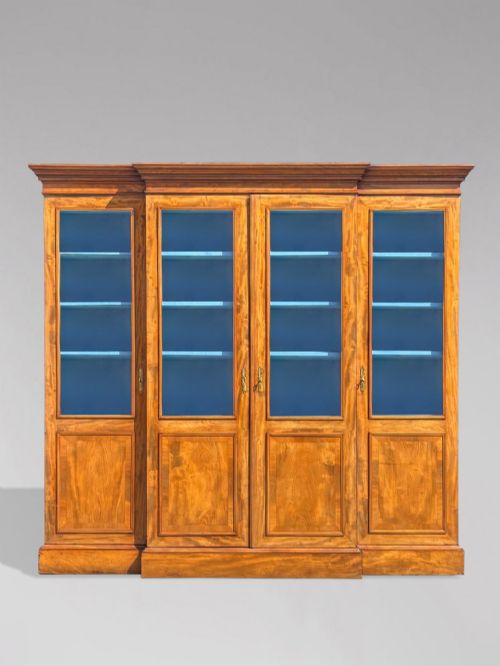
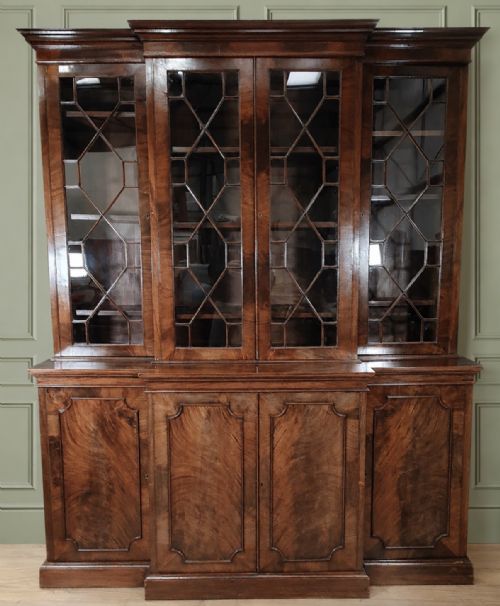
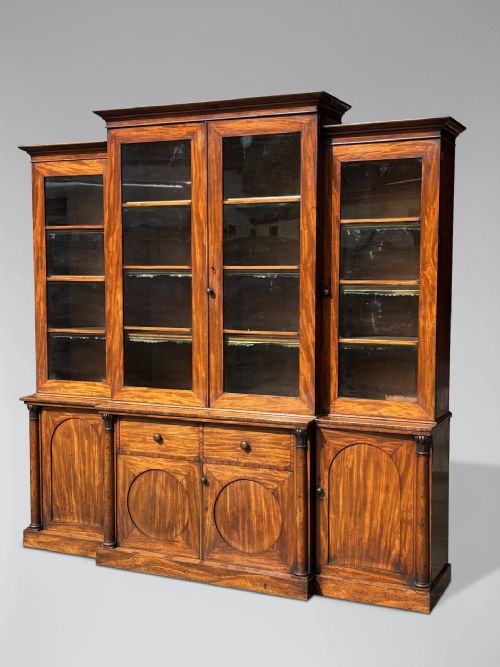
A four door glazed cabinet is principally represented on this page by large breakfront bookcases, library bookcases, and credenzas spanning the nineteenth century through the early twentieth century. These pieces combine substantial timber shelving behind glass panels with lower wooden doors or cabinet bases, designed to house extensive collections of books or decorative objects.
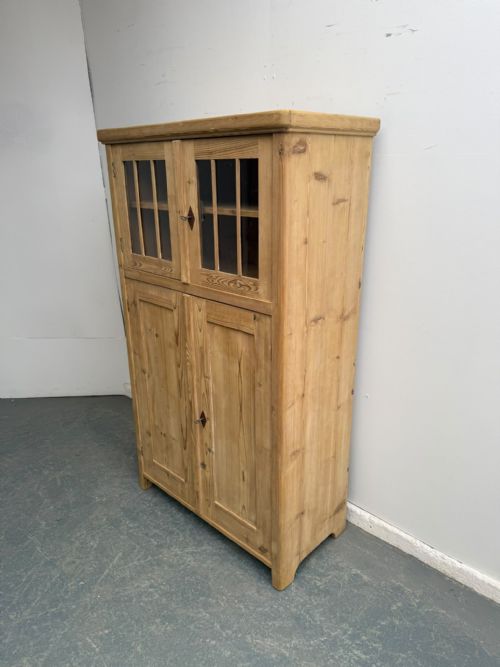
The materials and styles reflect prominent periods including the Regency, Victorian, and Edwardian eras, alongside revival aesthetics such as Chippendale and Gothic styles. Mahogany and walnut dominate the selection, complemented by oak, pine, and burr walnut timbers.
Most examples originate from English and French workshops, ranging from formal country house library furniture to modular stacking designs and exhibition pieces. Buyers seeking this phrase encounter both towering breakfront structures and lower dwarf glazed formats.
Materials and Construction
Cabinet makers utilised dense primary timbers such as mahogany, walnut, and oak, often selecting figured veneers and flame mahogany to create striking grain patterns on the front panels. Secondary timbers like pine provided internal stability for the carcase and shelving.
Glazing techniques involved securing individual glass panes within wooden or brass-mounted framing bars to form expansive viewing windows for the upper sections. Surface enrichment was achieved through marquetry inlay, carved mouldings, and ormolu mounts, finished with hand-applied wax or polish.
One towering library cabinet weighs enough to test the floorboards of a modest Victorian parlor.
Craftsmanship and Proportion
Quality rests upon the selection of timber figures and the precision of the cabinet work, particularly in breakfront configurations where sections project forward harmoniously. Superior pieces exhibit fine marquetry, carefully matched veneer grains across all four doors, and well-balanced proportions that prevent an imposing structure from appearing heavy.
The refinement of carved details, the integrity of the brass or glass fittings, and the seamless operation of large doors distinguish standard cabinet making from exceptional exhibition pieces.
Lamb And Co·Gunn
The Four Door Glazed Cabinet Glossary
- Breakfront
- A cabinet design where the central section projects forward from the flanking wings. This architectural arrangement creates depth and visual interest across large furniture facades.
- Glazed
- Fitted with glass panes to enclose shelves while permitting visibility of the contents. Glazing bars often divide the glass into geometric panes.
- Credenza
- A low cabinet piece often featuring doors along the front. In nineteenth-century examples, these items incorporate glazed display sections and elaborate marquetry.
- Flame mahogany
- Mahogany timber exhibiting a distinctive flame-like grain pattern. Cabinet makers reserved veneers of this quality for the most prominent display surfaces.
- Ormolu
- Gilt bronze mounts applied to furniture for decorative accent. This technique adds metallic highlights to the timber carcase.
Four Door Glazed Cabinet: Frequently Asked Questions
What rooms suit a four door glazed cabinet?
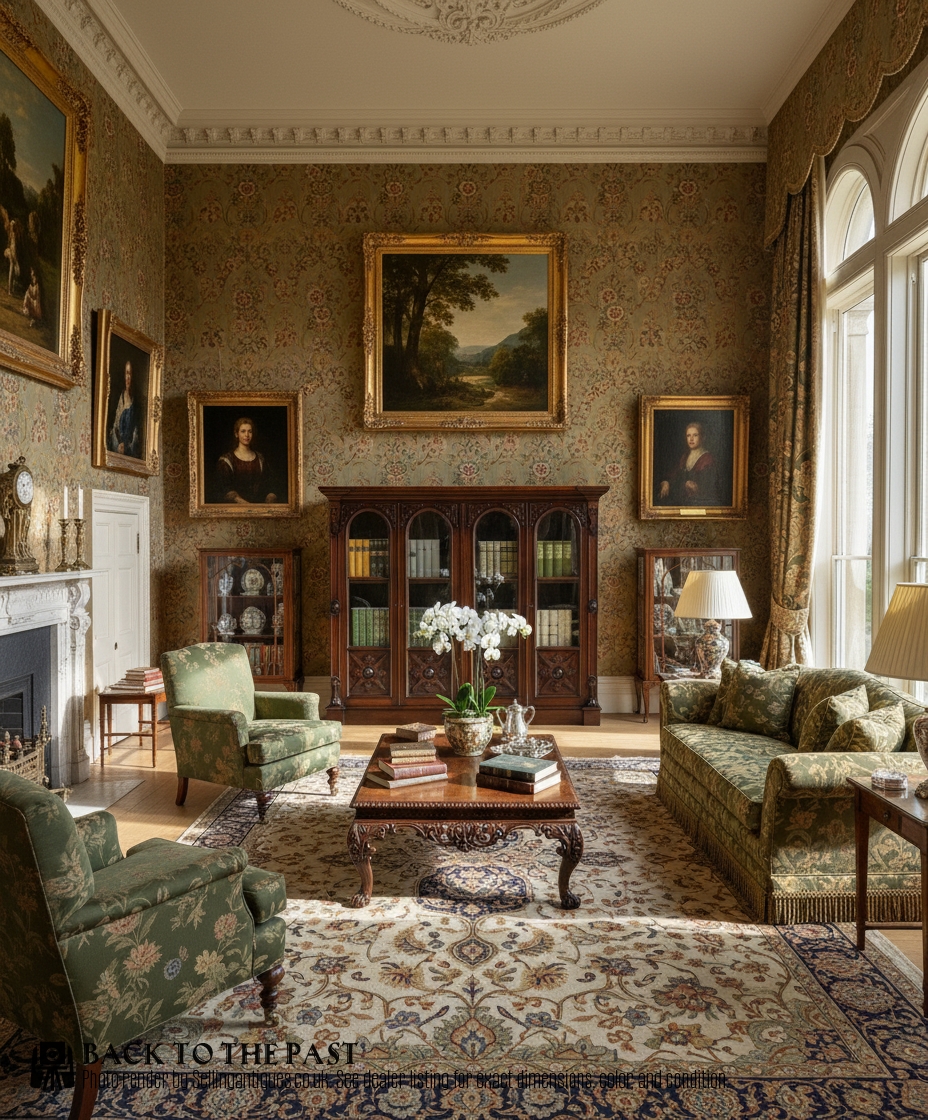
These large cabinets suit spacious reception rooms, libraries, or dining halls where their considerable width and height can be accommodated comfortably without overwhelming the architecture.
They function effectively as focal points, providing ample shelved space for large book collections or curated displays of ceramics and glass.
How do I distinguish a Regency bookcase from a Victorian one?
Regency pieces often display restrained classical lines, architectural pediments, and subtle brass inlay, reflecting neoclassical influences of the early nineteenth century. Victorian examples frequently introduce heavier proportions, bolder carved ornamentation, and darker figured mahogany or walnut veneers.
Examining the construction of the interior shelving and the character of the glazing bars assists in confirming the period.
Are stacking barrister bookcases difficult to assemble?
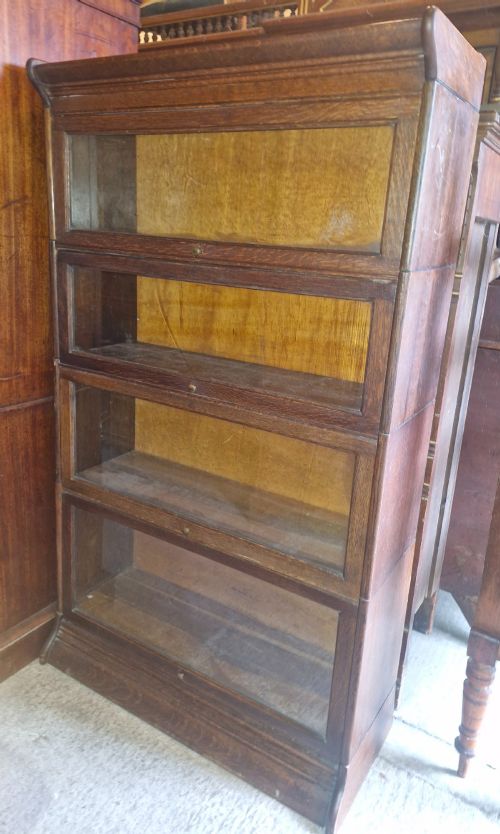
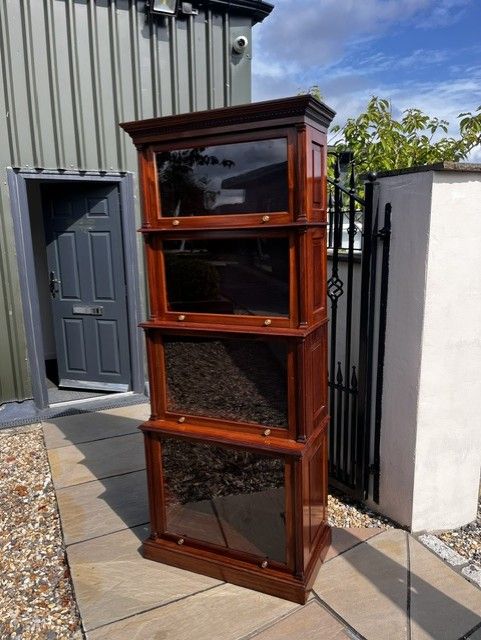
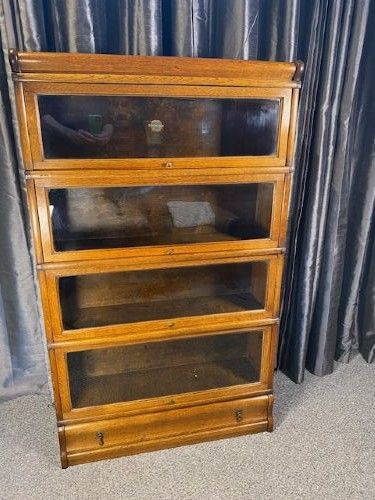
Stacking bookcases consist of separate modular sections that rest one upon another beneath a top cornice and above a base plinth. This modular construction makes them straightforward to move and reassemble in different locations.
Each glazed tier lifts off independently, simplifying transport compared to solid one-piece library cabinets.
How should I care for antique mahogany and walnut?
Maintain timber surfaces by applying natural beeswax periodically and buffing gently with a soft cloth to preserve the polish. Avoid placing cabinets near direct heat sources or strong sunlight, which can dry out the wood and fade delicate veneers.
Ensure glass panels are cleaned with non-abrasive solutions to protect the surrounding timber and putty.