




Footed Glass Bowl
A footed glass bowl elevates your table service, bringing light and substance through centuries of blown and cut crystal design.
Footed Glass Bowl
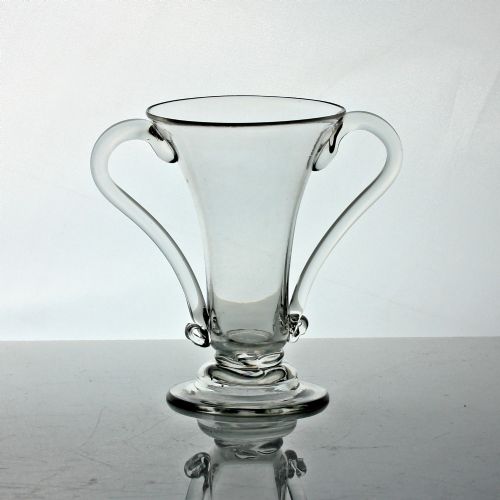
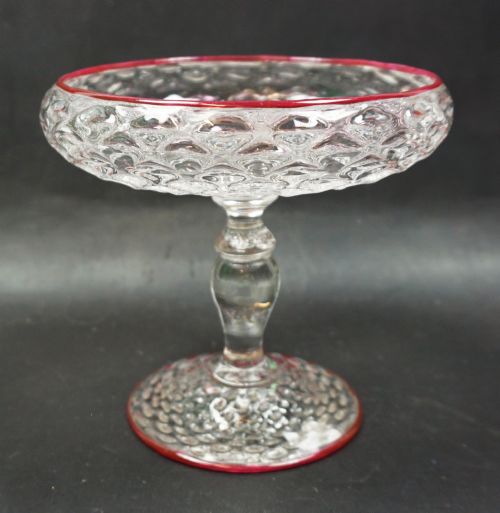
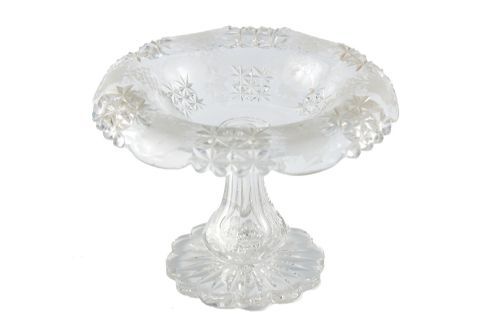
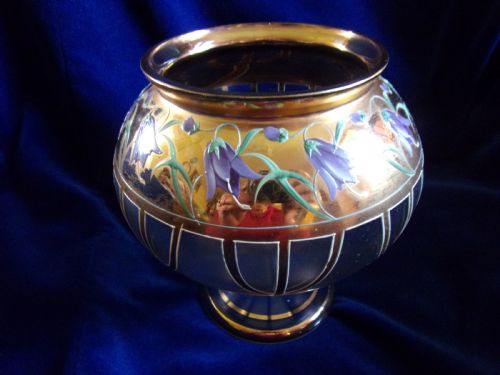
A footed glass bowl combines a elevated base with a vessel designed for display, fruit, or service. When you search for a footed glass bowl, you encounter forms ranging from Georgian sweetmeat glasses and jelly dishes to Victorian cut crystal pedestals and Art Deco moulded pieces. The selection spans straightforward table glassware to decorative centrepieces produced across the eighteenth, nineteenth, and early twentieth centuries.
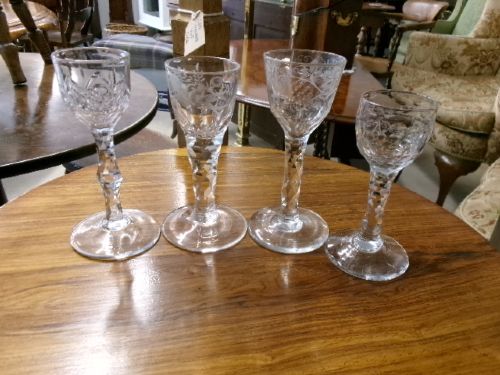
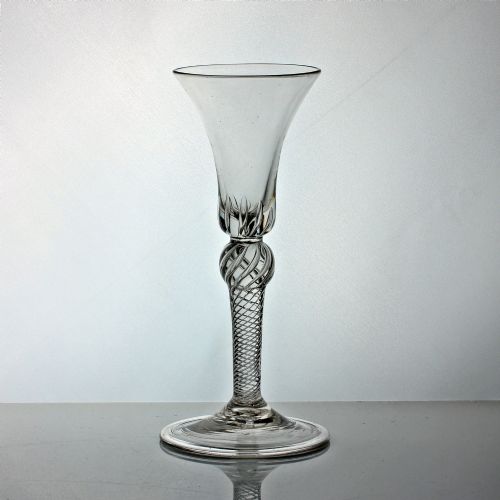
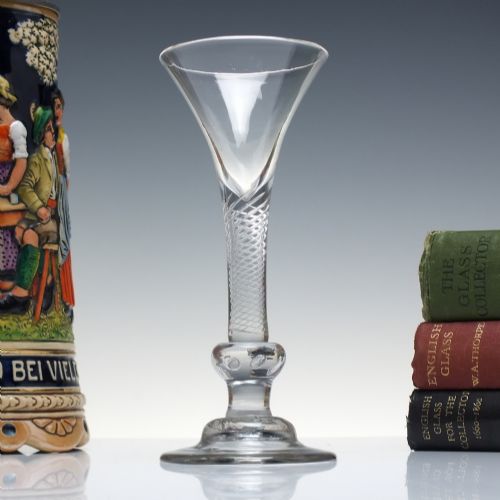
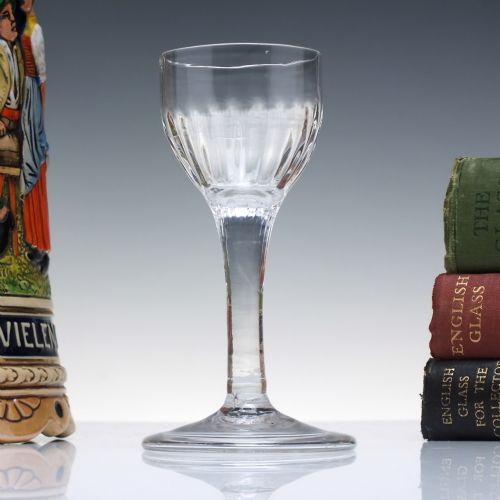
The pieces on this page include shallow tazzas, heavy comports, honeycombed fruit bowls, and stemmed drinking vessels with wide foot bases. You will find examples featuring folded feet, domed bases, and ball supports that lift the glass above the surface. Origins stretch across English, Irish, continental, and Bohemian workshops, utilising clear, coloured, and overlay materials.
How they were made
Maker's methods rely heavily on hand blowing and lead-rich glass batches that allow deep cutting, faceting, and moulding. Workers gathered molten metal on a blowpipe, shaped the bowl with tools or in moulds, and applied separate feet or stems while hot.
Surface decoration involves wheel-cutting, engraving, acid-etching, and applying enamel or gilding over the clear or flashed body. Pieces like tazzas and pedestal bowls often combine a blown bowl with a separately formed foot, joined at a central stem or knop.
Some sweetmeat bowls were designed narrow enough to test a guest's dexterity when reaching for sticky sugar plums.
What varies in quality
Quality rests in the weight of the metal, the clarity of the glass, and the crispness of any wheel-cut or moulded detail. Heavy lead crystal provides a resonant ring and sharp light refraction, whereas inferior metal appears dull or contains bubbles and striations.
The finesse of the finishing matters greatly, from the smoothness of the pontil mark on the underside of the foot to the precision of faceted stems and engraved vines. Superior pieces maintain balanced proportions between the bowl, stem, and foot without distortion.
St Louis glassworks·Stuart for Liberty·Rene Lalique·Baccarat·Makeig-Jones Wedgwood
The Footed Glass Bowl Glossary
- Tazza
- An elevated shallow bowl or plate mounted on a stem and foot, traditionally used for serving fruit or sweetmeats. This form dates back centuries and appears frequently in Victorian and Edwardian cut crystal.
- Folded foot
- A base edge turned back underneath during manufacture to create a thicker, smoother rim that resists chipping. This technique is common on Georgian drinking glasses and bowls.
- Pontil mark
- The rough scar left on the base of a blown glass vessel where the punty rod was snapped off after shaping. Skilled makers often ground or polished this area smooth.
- Overlay glass
- A vessel formed of two or more distinct layers of glass, typically a coloured layer over clear crystal. Artisans cut through the top layer to reveal the contrasting colour beneath.
Footed Glass Bowl: Frequently Asked Questions
What is a footed glass bowl used for?
These vessels serve as table centrepieces, fruit bowls, or display items holding decorative objects.
Historically, deeper and smaller versions held sweetmeats, jellies, or sugar, while larger pedestals presented fruit or desserts during formal meals.
How do I date an old glass bowl?
Dating relies on examining the weight of the metal, the presence of lead, cutting styles, and the formation of the base. Georgian and early nineteenth-century pieces often display pontil marks and characteristic tool marks on folded or domed feet.
Later Victorian and Edwardian examples show machine-moulded uniformity or heavier, deeper wheel-cutting associated with industrial production methods of the period.
Are these bowls made of lead crystal?
Many of the listed pieces utilise lead glass or heavy crystal, which gives them substantial weight and brilliant clarity.
Other examples consist of plain glass, satin glass, or coloured overlay materials produced across various European glasshouses.