



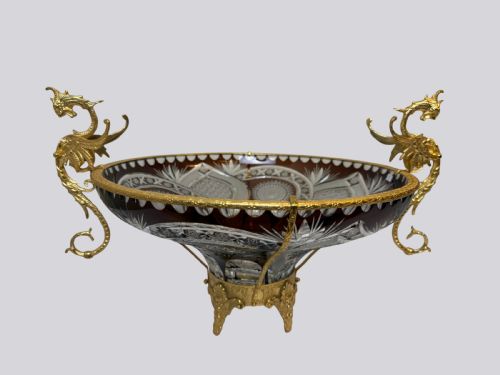


Crystal Tazza Dish
These crystal tazza dish pieces combine cut glass and gilt bronze to elevate formal dining tables across the centuries.
Crystal Tazza Dish
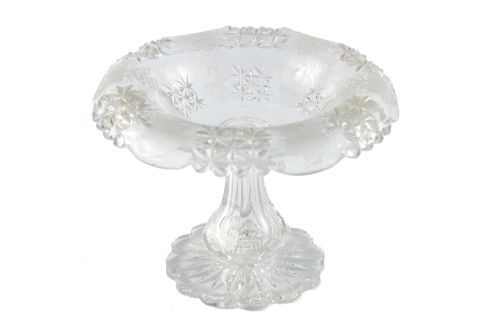
A crystal tazza dish serves as an elevated centrepiece or sweet dish for formal settings, combining a footed base with a shallow upper vessel. When you search for a crystal tazza dish, you encounter forms ranging from Georgian lead glass patch stands to Victorian etched glass tazzas and grand centrepieces mounted in gilt bronze.
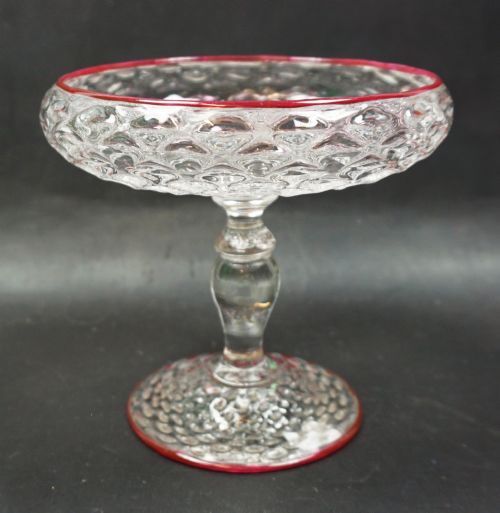
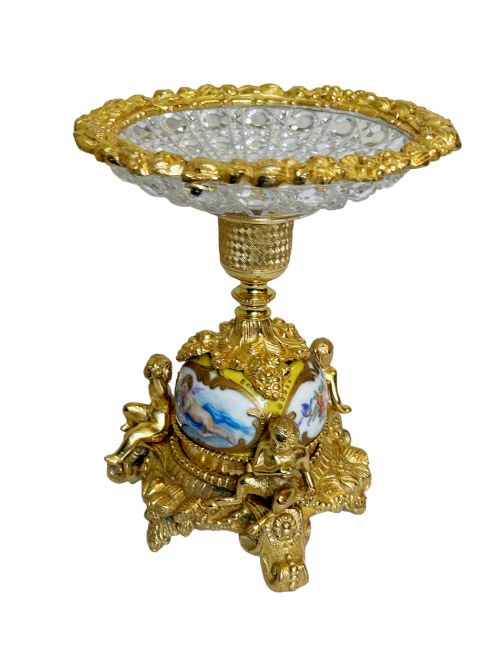
The pieces listed here span the eighteenth, nineteenth, and early twentieth centuries, encompassing Victorian, Edwardian, and French Rococo Revival styles. You will frequently find honeycombed moulded glass, coloured glass over crystal, and intricate cut glass bowls elevated on terraced feet or supported by Cherubs.
Originating as small patch stands or grand table centrepieces, these items demonstrate diverse manufacturing techniques across English and continental workshops. The selection includes miniature patch stands with triple-knop stems alongside substantial gilt bronze and cut crystal centrepieces.
Materials and construction
Makers shaped lead glass, crystal glass, and cut glass through heavy moulding, wheel-cutting, and etching to achieve faceted surfaces and decorative patterns. Honeycomb moulding and red cane decoration add distinct visual texture to the glass bodies of Victorian and English pieces.
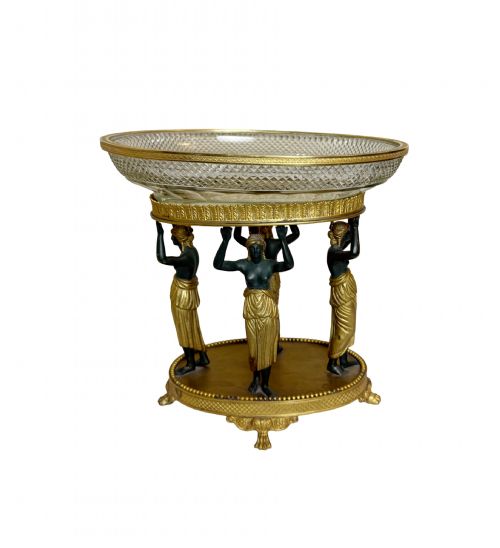
Foundations and mounts frequently utilise gilt bronze and patinated bronze, often cast with figurative details such as cherubs. Silver components also appear alongside bronze detailing to secure and elevate the heavy glass bowls.
Crystal Tazza Dish Retail Price Guide 2026
Typical asking prices for crystal tazza dish among the pieces listed under this phrase on Sellingantiques today, from the lower quarter to the upper quarter. They describe what is for sale here now, not the wider market.
The listings span from early Georgian lead glass patch stands of the 1730s to early twentieth-century coloured glass centrepiece bowls.
Distinctions in quality
The refinement of the glass cutting and the clarity of the lead crystal separate standard domestic wares from exceptional decorative pieces. Crisp facets, deep wheel-engraving, and heavy, resonant metal define the upper tier of glass production.
Mounting hardware reveals structural skill through the precision of the gilt bronze and patinated bronze casting. Heavier, finely chased metalwork securely frames the glass without obscuring its transparency.
The Crystal Tazza Dish Glossary
- Tazza
- A shallow saucer or bowl mounted on a stem and foot, used originally for serving small portions of food or sweets. These elevated vessels dominate the centre of formal tables.
- Patch stand
- A miniature footed dish from the eighteenth century designed to hold small cosmetic patches worn on the face. These delicate pieces often feature triple-knop stems and terraced feet.
- Centrepiece
- A large decorative item placed in the middle of a dining table, combining cut crystal bowls with gilt or patinated bronze mounts. They frequently incorporate figurative elements such as cherubs.
- Lead glass
- Heavy glass containing lead oxide that increases brilliance and refractive index. This material allows for deep, sharp cutting and intricate faceting.
- Gilt bronze
- Bronze coated with a thin layer of gold or gold-coloured alloy, also known asormolu. It provides decorative mounts and structural support for glass dishes.
Crystal Tazza Dish: Frequently Asked Questions
What was a crystal tazza dish used for?
These elevated vessels served as decorative centrepieces or held sweetmeats and small delicacies during formal dining courses. Their raised profile allowed them to sit prominently among other tablewares.
In earlier periods, smaller variants functioned as patch stands for holding cosmetic accessories. Their decorative presence remained paramount in dining rooms across the eighteenth and nineteenth centuries.
How do I date a glass tazza?
Dating relies on observing the combination of glass manufacturing techniques, stem formations, and metal mounts. Georgian pieces often display early lead glass properties and terraced feet, while Victorian examples introduce honeycomb moulding and etched decoration.
Style shifts also help establish periods, moving from early Georgian simplicity toward ornate French Rococo Revival and Belle Epoque metal mountings by the late nineteenth century.
How should I clean my glass tazza?
Maintain crystal and cut glass components using lukewarm water and a mild detergent to preserve the polished surfaces. Avoid abrasive cloths that might scratch the lead glass or wear down engraved patterns.
Metal mounts require separate care, keeping moisture away from gilt bronze and patinated bronze surfaces. Gentle dusting with a soft brush protects the intricate cast details.
Are bronze mounts original to the glass?
Many nineteenth-century centrepieces combined glass bowls with cast bronze or gilt bronze frames as part of their initial design. Examining the fit between the glass vessel and the metal mount helps confirm their integration.
French Empire and Rococo Revival pieces frequently utilised patinated and gilded bronze to support heavy crystal bowls. Secure fittings and consistent patination indicate period assembly.