
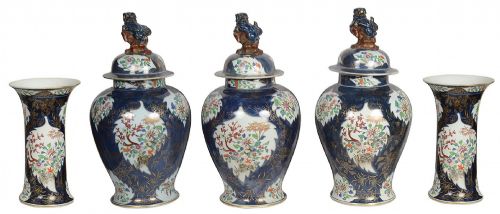


Foo Dog Lid Jar
These foo dog lid jar pieces are covered ceramic vessels topped with guardian lion finials, prized by collectors for their striking decorative presence and historical craftsmanship.
Foo Dog Lid Jar
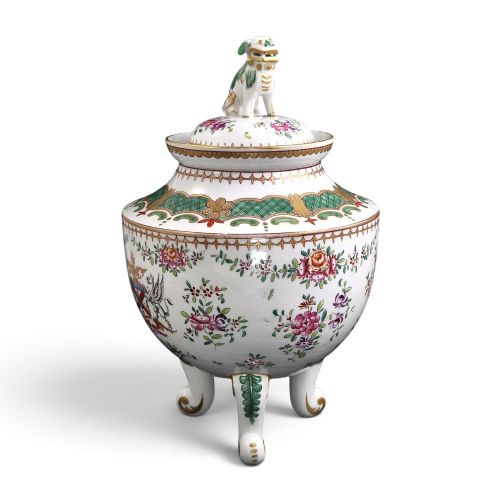
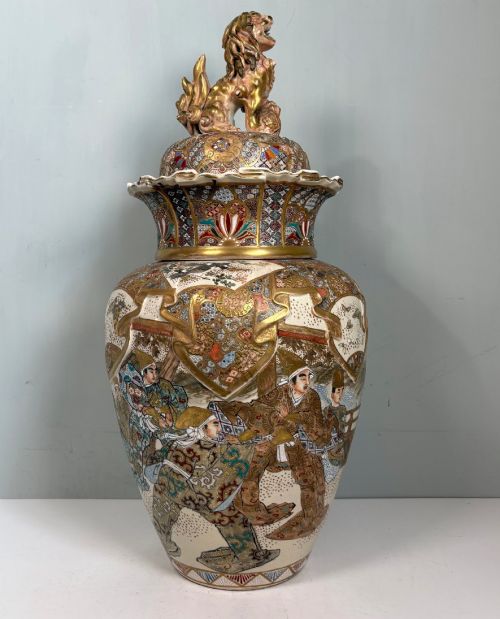
A foo dog lid jar is a covered ceramic vessel featuring a guardian lion finial on the cover, combining utility and display. The pieces met on this page originate predominantly from the nineteenth century, encompassing Victorian productions and Asian export wares.
The forms range from baluster vases and garniture sets to temple jars and incense burners. Makers across nineteenth-century Europe and Asia produced these vessels in styles including Japanese Imari, Chinese Qing, Chinoiserie, and Satsuma.
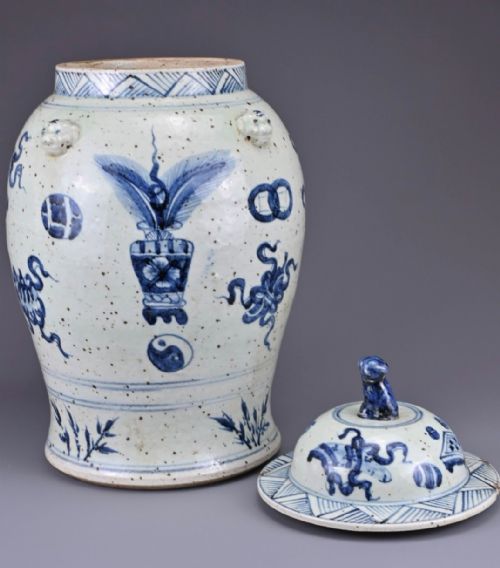
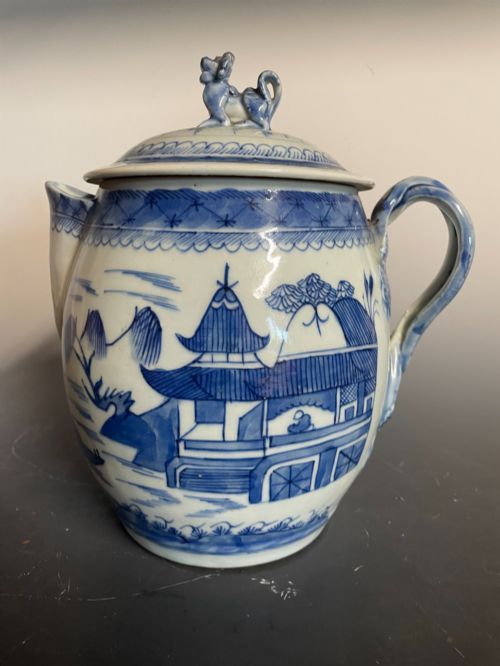
Collectors encounter both Chinese blue and white porcelain and Japanese export ceramics. These vessels served both decorative interior functions and ritual purposes.
Materials and Construction
The foundation of these vessels relies on hard-paste porcelain and earthenware bodies shaped into substantial jars and baluster forms. Cobalt pigment provides the deep blue underglaze decoration seen on traditional Chinese examples.
Enamel and gold leaf or gilding add surface colour and metallic detailing to styles like Famille Rose and Japanese Imari. Artisans applied these pigments over fired glazes before secondary low-temperature firings to fix the palette.
Every fierce guardian lion perched on a lid was tasked with keeping evil spirits away from the ginger inside.
Assessing Quality
Quality rests upon the crispness of the painted detail and the control of the cobalt pigment or enamel colours. Finer vessels display precise brushwork on both the body and the guardian lion finial, whereas simpler pieces show hurried application.
The weight and purity of the porcelain body and the stability of the glaze define the tier of the piece. Superior examples maintain balanced proportions between the jar and the lidded top without kiln distortion.
Samson Paris
The Foo Dog Lid Jar Glossary
- Foo dog
- A traditional guardian lion sculpture used as a lid finial on ceramic jars. These mythical beasts symbolise protection and prosperity in East Asian art.
- Imari
- A style of Japanese export porcelain featuring underglaze blue and overglaze red, gold, and green. This aesthetic became highly popular in European interiors during the nineteenth century.
- Famille rose
- A palette of Chinese ceramic enamels dominated by opaque pink or rose colours. Introduced in the Qing Dynasty, this style allowed for subtle tonal gradations.
- Baluster
- A vase shape with a rounded body that tapers toward the base and swells near the shoulder. This classic architectural form provides stability and presence.
- Garniture
- A set of matching vases or jars designed for symmetrical display on a mantelpiece or cabinet. These sets typically include three or five pieces.
Foo Dog Lid Jar: Frequently Asked Questions
What is a foo dog lid jar?
A foo dog lid jar is a covered ceramic container featuring a guardian lion sculpture on the lid. These vessels were made for export and domestic markets in Asia and Europe.
Collectors value them for their sculptural lids and vibrant hand-painted surfaces that reflect nineteenth-century ceramic traditions.
How were these jars used historically?
These jars served primarily as decorative ornaments in grand interiors, often displayed on mantelpieces or occasional tables. Some variations functioned as incense burners or receptacles for dried herbs and aromatics.
Their substantial size and covered design made them focal points in Victorian and colonial decorative schemes.
How do I date a nineteenth-century jar?
Dating relies on examining the characteristics of the porcelain paste, the composition of the glazes, and the painting style. Nineteenth-century examples often bear specific pigment qualities and stylistic traits associated with the Qing Dynasty or Meiji period.
Comparing the potting technique and base finish with known dated pieces helps narrow the production era.
How do I care for antique porcelain jars?
Antique porcelain and enamel jars require gentle handling and stable indoor environments away from direct sunlight. Dusting with a soft, dry brush preserves fragile gilt and enamel decorations over time.
Avoid using liquid cleaners or submersing pieces with overglaze gold leaf in water.