







Folk Art Portrait Painting
Folk art portrait painting brings unpretentious character to a wall, recording sitters and animals with direct, unschooled charm.
Folk Art Portrait Painting
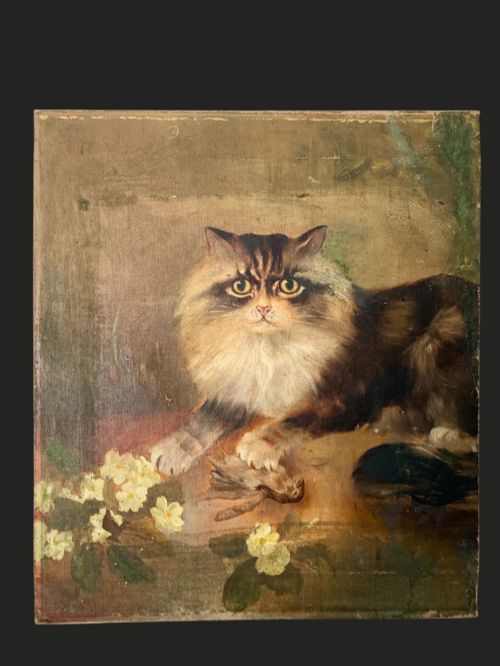
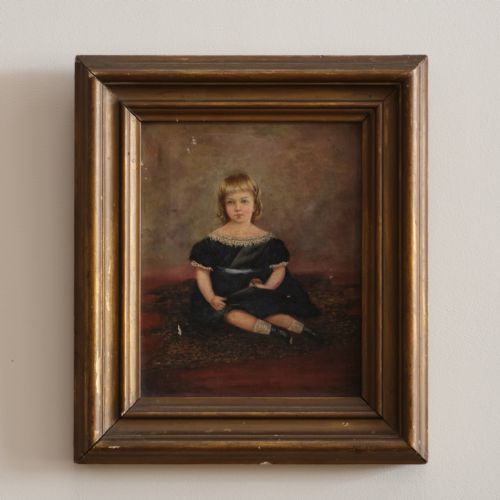
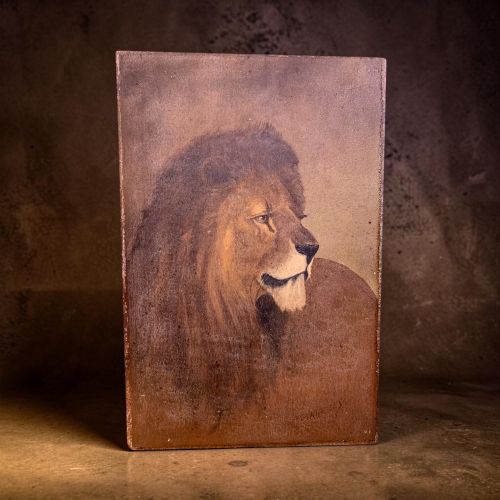
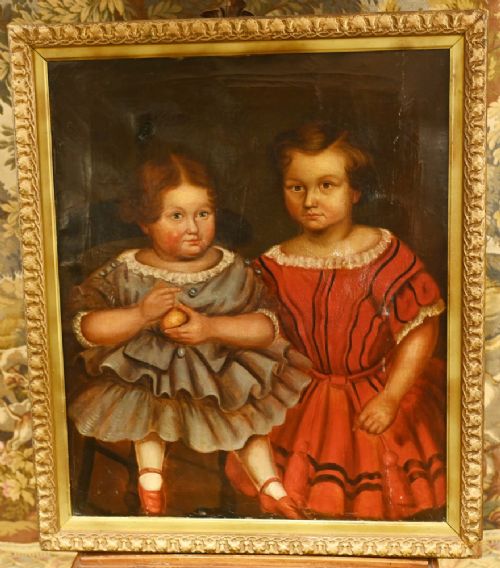
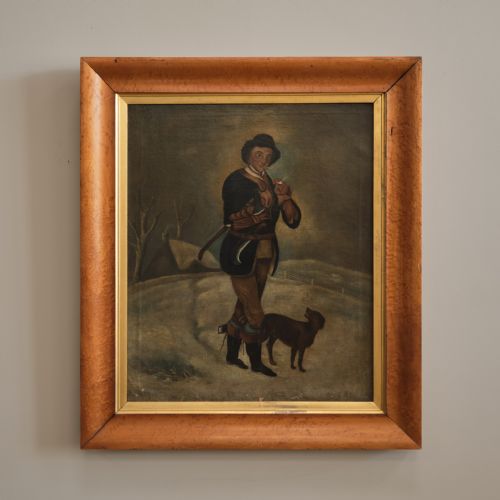
A folk art portrait painting captures human subjects, children, animals, and domestic scenes with an unacademic perspective and direct observation. These works span the eighteenth, nineteenth, and early twentieth centuries, produced by provincial artists, itinerant painters, and amateurs working outside academic traditions. The inventory frequently includes nineteenth-century naive school oils on canvas, British and American provincial pieces, and characterful studies of individuals, children, and pets.
Subjects range from lone gentlemen and young girls in architectural settings to family groups, Quakers, and domestic animals rendered with singular expression. The tradition embraces British, American, French, and Scandinavian provincial schools, often demonstrating a flat perspective and honest line rather than academic proportion. Collectors encounter these works on wood panel, canvas, paper, and card, frequently retaining their original frames.
How They Were Made
Artists painted primarily in oil on canvas, wood panel, or board, while others worked in watercolour and ink on paper. Pigments were applied with direct brushwork, often omitting the subtle glazing techniques of academic portraiture to achieve a solid, graphic presence.
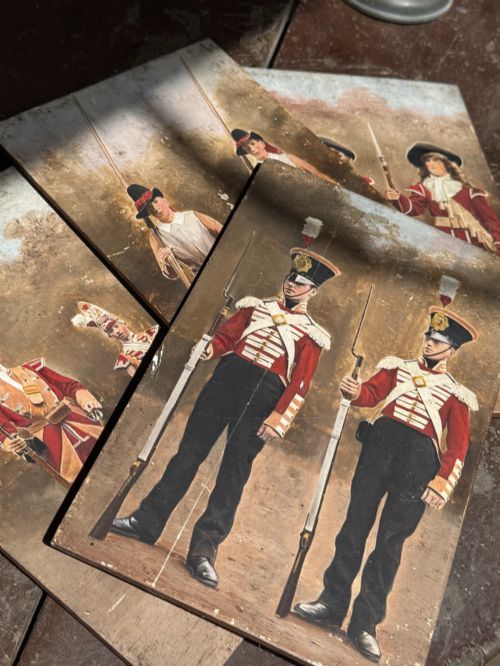
Supports varied according to what was locally available to the provincial painter, including improvised panels, tinplate, and stretched canvas. Framing typically relied on simple wood or rosewood mouldings that suited the unpretentious nature of the artwork.
Several portraits record beloved domestic animals, including border collies, racing pigeons, and goldfish kept in Victorian parlours.
What Varies in Quality
The strength of a folk art portrait painting lies in the intensity of character capture and the confidence of the naive drawing. Works that convey a vivid, arresting likeness despite a lack of formal perspective hold greater visual power than stiff, hesitant copies.
Condition and originality also set examples apart, particularly the preservation of untouched pigment surfaces and period framing. Pieces retaining an explicit subject identification, date, or regional provenance offer deeper historical connection.
Ferruccio Vitale·E H Windred·W Skinner
The Folk Art Portrait Painting Glossary
- Naive school
- Art produced by individuals lacking formal academic training, characterised by flattened perspective and direct representation. This approach prioritises expressive impact over anatomical correctness.
- Primitive
- A descriptive term for early or provincial art displaying simplified forms and unpretentious technique. It often applies to American and British works from the eighteenth and nineteenth centuries.
- Oil on canvas
- Pigment bound in drying oil applied to a woven fabric support stretched over a wooden frame. This medium allowed artists to build rich textures and lasting colour.
- Panel painting
- An artwork executed on a flat piece of wood rather than stretched fabric. Wooden panels provided a rigid, durable surface favoured by earlier provincial makers.
- Watercolour
- A paint consisting of water-soluble pigments applied to paper. It was frequently utilised for intimate provincial portraits and detailed domestic records.
Folk Art Portrait Painting: Frequently Asked Questions
What is a folk art portrait painting?
A folk art portrait painting is an artwork created by a self-taught or provincial artist outside the formal rules of the academic art academies. These pieces record sitters, children, and animals with a straightforward, honest perspective.
The style emphasises character and direct expression over anatomical accuracy, resulting in charmingly unique depictions that reflect local traditions and individual hand.
How do I date an antique naive portrait?
Dating relies on examining the materials, such as hand-woven canvas types, wooden panel construction, and the composition of the pigments. Costume, hair styling, and framing methods also provide reliable clues to the period of creation.
Inscribed details on the reverse, artist signatures, or accompanying biographical notes help narrow the decade when the sitter was painted.
Where should I hang a primitive painting?
These works suit rooms where their unpretentious character can stand out against neutral walls, such as a living room, hallway, or study. They mix well with both traditional period interiors and modern minimalist spaces.
Direct sunlight should be avoided to protect organic watercolours and nineteenth-century oil pigments from fading over time.
Why do some naive portraits lack perspective?
Provincial and self-taught artists worked without the formal training in geometry and linear perspective taught in royal academies. They concentrated instead on recording the likeness and presence of the sitter as they saw them.
This flattened sense of space and proportion contributes to the distinct visual appeal that collectors seek in these historic works.