


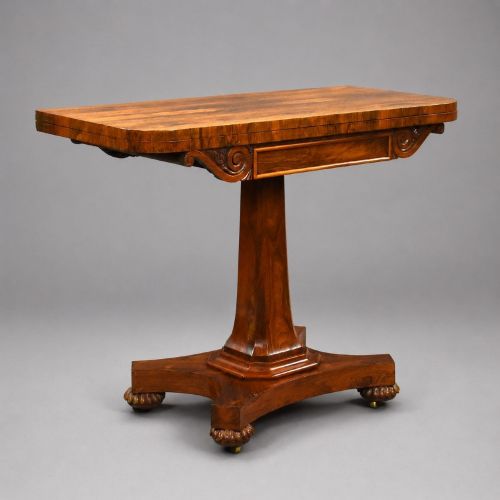
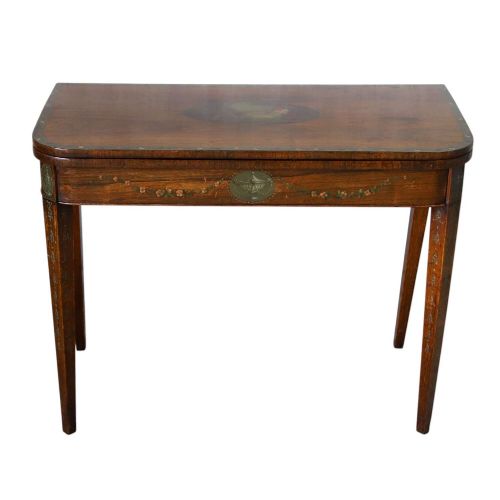
Foldover Card Table
A foldover card table turns a quiet wall into a place for play, offering a hinged top that opens to reveal a baize-lined surface.
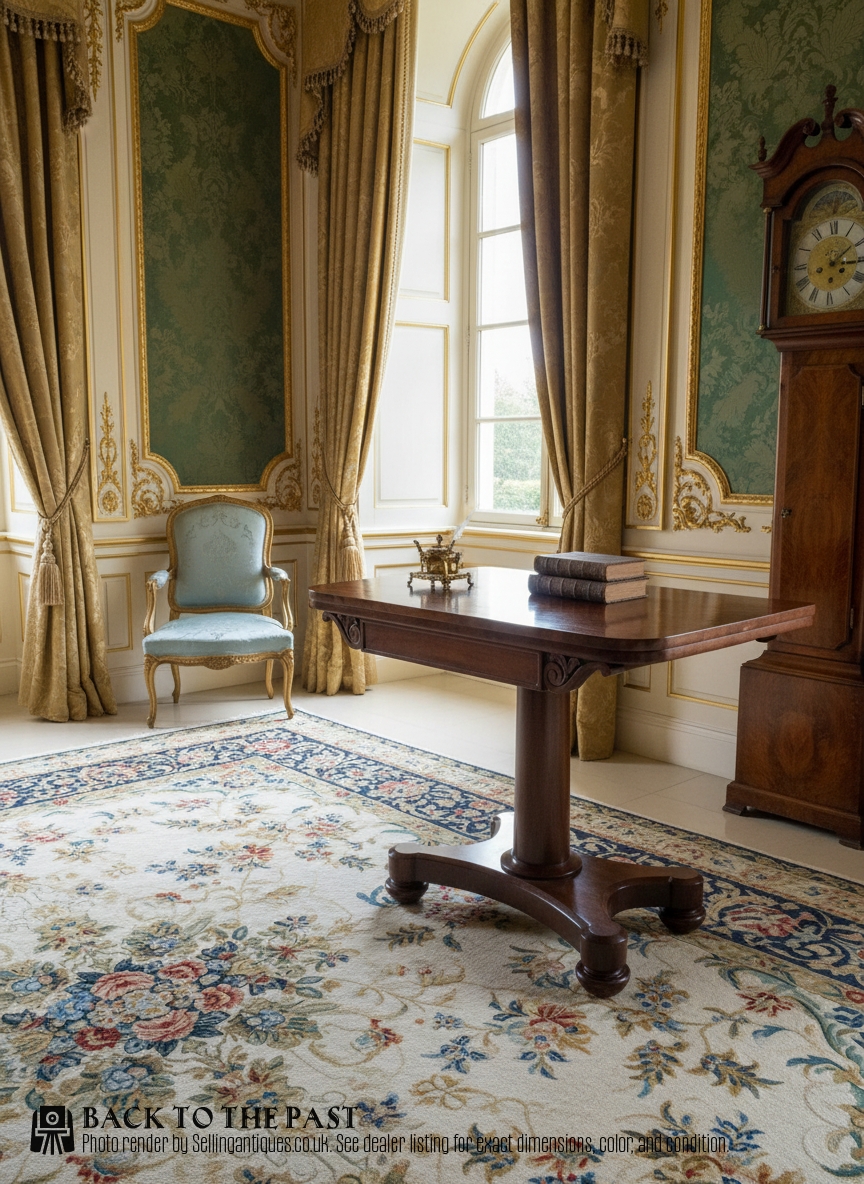
Foldover Card Table
A foldover card table serves dual purposes in a room, functioning as a console or side table when closed and opening to provide a gaming surface.
The pieces seen in this selection span the eighteenth and nineteenth centuries, including Georgian, Regency, and Victorian eras.
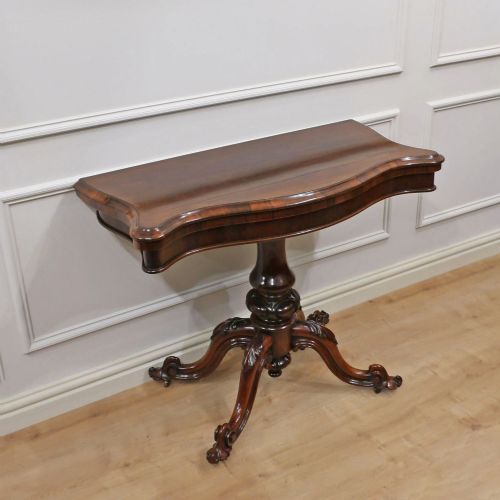
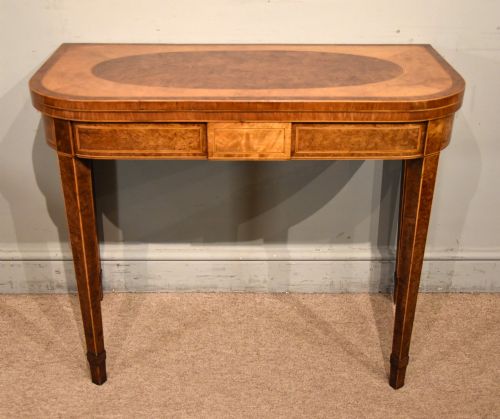
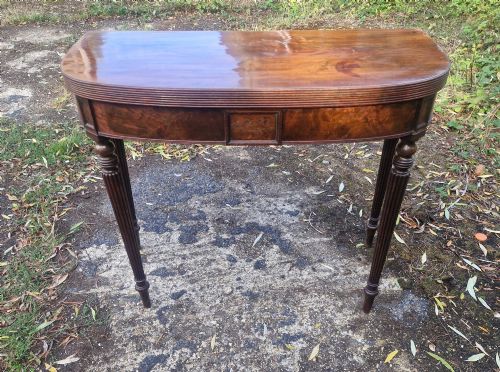
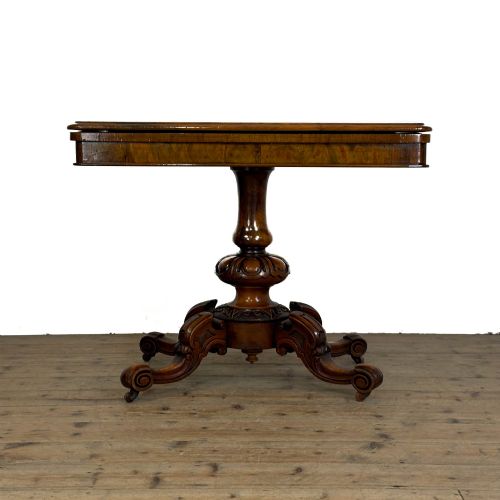
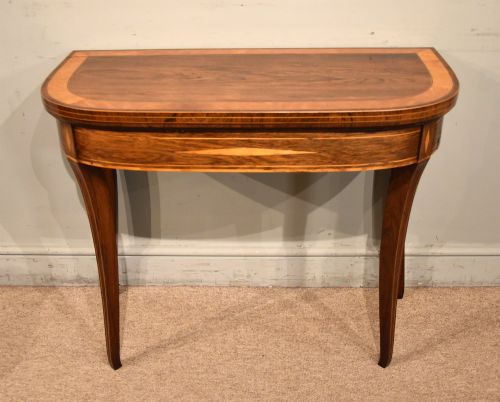
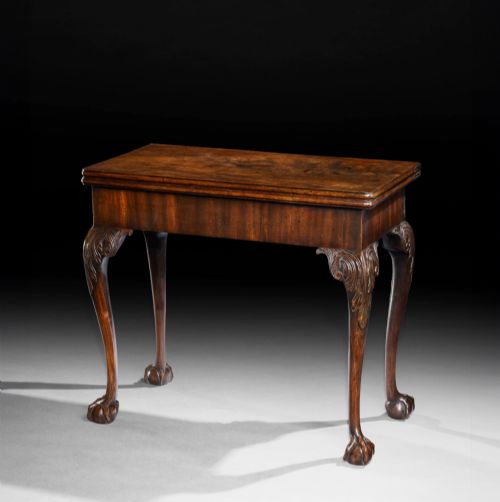
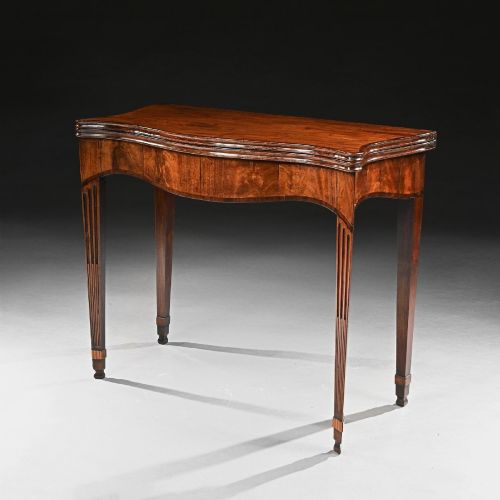
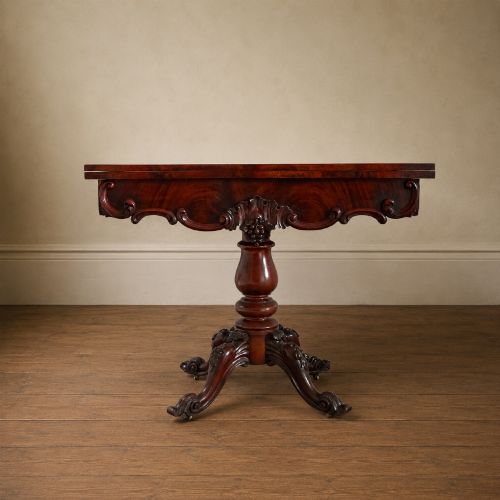
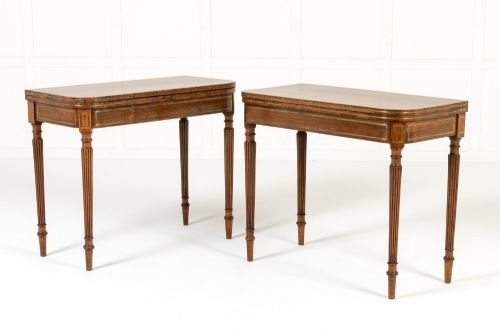
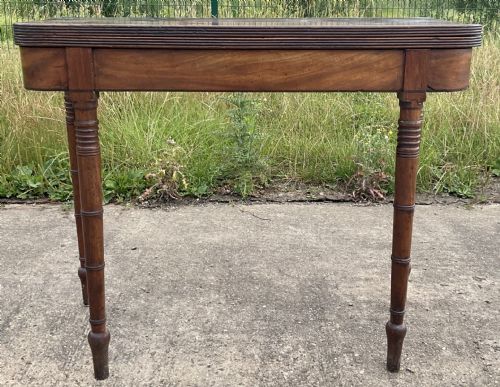
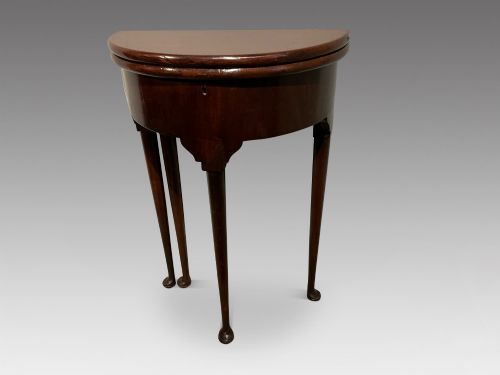
Makers shaped these tables in rectangular, demi-lune, and serpentine forms, often resting on pedestals, pillar bases, or tapering legs.
Materials and Construction
Cabinet makers relied on timbers such as mahogany, rosewood, and burr walnut, frequently applying wood veneer or figured panels to the top surface.
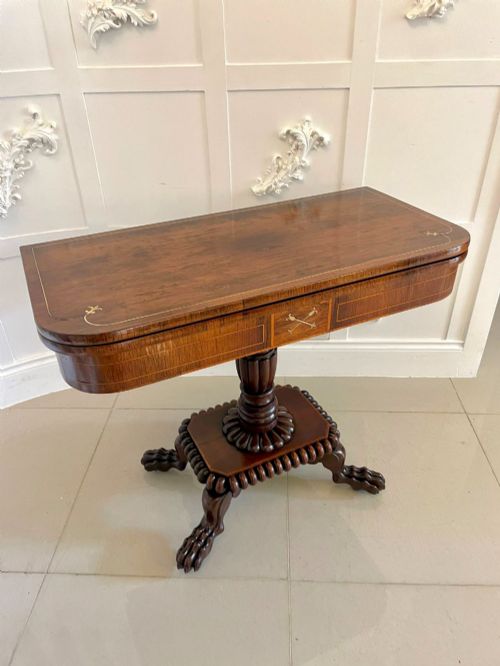
Decoration often involved intricate inlay using satinwood, boxwood, and brass stringing, alongside carved details or brass sabots and castors.
Action mechanisms varied, including concertina frames, gateleg supports, and pivoting turnover tops that concealed shallow storage wells for cards and counters.
Foldover Card Table Retail Price Guide 2026
Typical asking prices for foldover card table among the pieces listed under this phrase on Sellingantiques today, from the lower quarter to the upper quarter. They describe what is for sale here now, not the wider market.
Listings feature woods such as mahogany, rosewood, burr walnut, satinwood, and kingwood across Georgian, Regency, and Victorian periods.
Distinctions in Execution
Quality rests in the precision of the timber matching and the sharpness of the joinery where the hinged leaves meet.
Superior examples display crisp carving, thoughtful use of contrasting veneers like satinwood or ebony, and robust internal framing that supports the weight of the turnover top without sagging.
The integration of secondary details, such as finely cast brass mounts or well-executed marquetry, separates standard workshop production from exceptional cabinet work.
George Bullock·Giles Grendey·Gillows
The Foldover Card Table Glossary
- Foldover top
- A hinged table surface that doubles in area when opened flat. It rests on a swinging leg or a rotating pivot frame.
- Demi-lune
- Half-moon shape. These tables fit flush against a wall when closed.
- Concertina action
- An expanding frame mechanism that opens with the rear legs to support the unfolded leaf evenly. This style requires complex interior joinery.
- Marquetry
- Decorative patterns formed by fitted pieces of coloured wood veneer. Artisans apply these designs across the table top.
- Sabot
- A metal sleeve fitted over the foot of a furniture leg. They frequently appear in brass on Regency and Victorian pieces.
Foldover Card Table: Frequently Asked Questions
How do I use a foldover card table today?
These tables adapt easily to modern rooms by sitting against a hallway or living room wall as a console. When guests arrive, they pull out into the space to serve drinks or hold board games.
Opening the top reveals the original playing surface, making them practical surfaces for entertaining without dominating the floor plan.
What is inside a card table when opened?
Opening the hinged leaf typically exposes a flat surface lined with baize, felt, or leather. Some examples include small corner wells designed for holding coins, counters, or candlesticks during evening play.
Beneath the pivoting top, many pedestal and pillar designs conceal a shallow compartment used historically for storing playing cards and dice.
How do I tell a Georgian table from a Victorian one?
Georgian pieces often feature straight, square legs or delicate taper legs, using solid mahogany or subtle string inlay. Their proportions remain restrained and geometric.
Victorian tables tend to feature heavier timbers like rosewood and burr walnut, often built on central pedestals with carved platforms and bolder scroll feet.
Will a heavy table tip over when opened?
Properly balanced tables distribute their weight safely when the top leaf is swung open. Most designs rely on a rear leg that swings out as a gateleg or a frame that pivots to support the overhang.
Pedestal bases use heavy internal weights or wide plinth feet to counteract the cantilevered weight of the open top.