



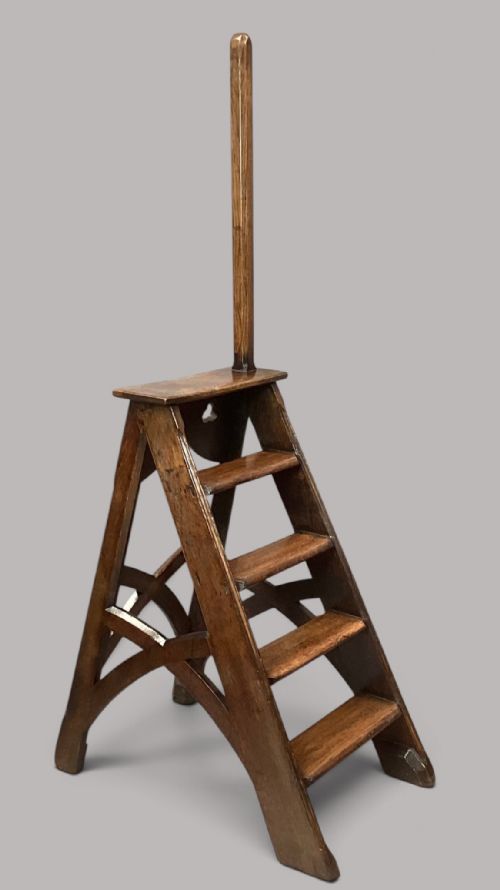


Folding Wooden Steps
These folding wooden steps offer practical height and clever dual-purpose design, turning everyday utility into handsome period furniture.
Folding Wooden Steps
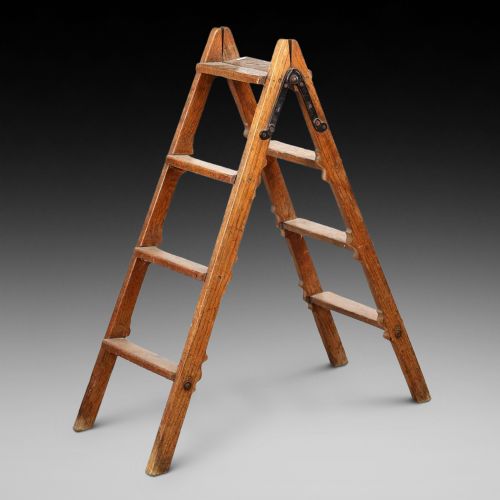
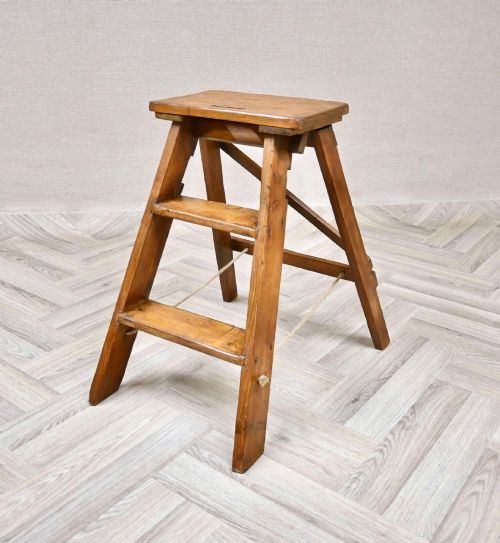
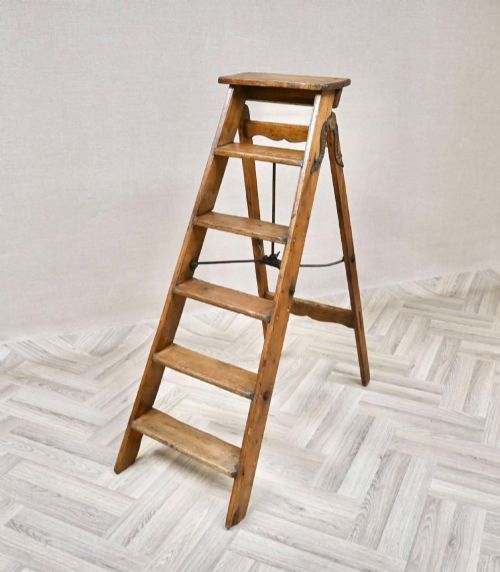
When you search for folding wooden steps, you find a practical range of timber steps, ladders, and ingenious metamorphic seating designed to reach high shelves or lofts. The selection spans utilitarian pine and fruitwood ladders alongside sophisticated mahogany and oak library steps dating from the Georgian period through the Edwardian era and into the nineteen-thirties.
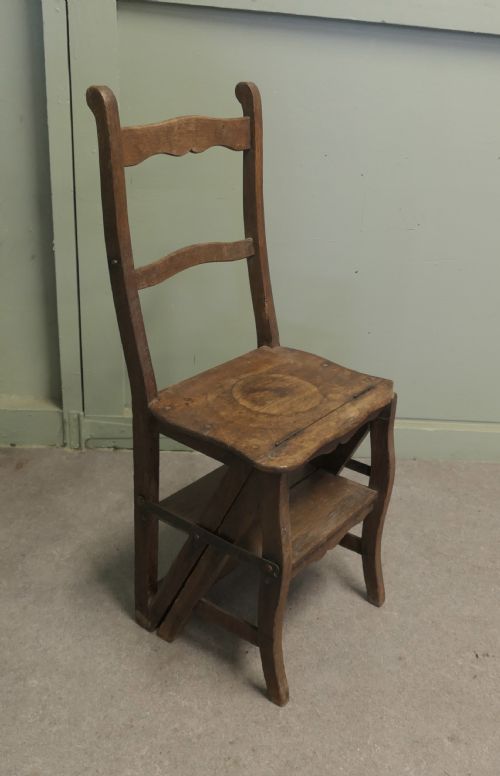
The most common forms on this page include standard folding steps, A-frame library steps, and metamorphic library chairs that convert smoothly from seating into functional stairways. You will also encounter rustic French country ladder steps, tall loft ladders, and utilitarian railway steps built for heavy daily use.
Originating primarily from nineteenth-century workshops and early twentieth-century makers, these pieces combine domestic utility with cabinet-making craft. Whether you need a sturdy set of vintage stepladders or a refined mahogany library piece, the variety reflects both humble trades and grand domestic spaces.
What Varies in Quality
The sophistication of the design also separates standard utility steps from high-end library furniture, such as dual-purpose chairs attributed to makers like Morgan and Sanders. Original brass and iron hardware, well-preserved leather treads, and tight-fitting pivot points indicate superior original manufacture.
Folding Wooden Steps Retail Price Guide 2026
Typical asking prices for folding wooden steps among the pieces listed under this phrase on Sellingantiques today, from the lower quarter to the upper quarter. They describe what is for sale here now, not the wider market.
Railway steps built for station work found a second life helping everyday bibliophiles reach the top shelf.
The Folding Wooden Steps Glossary
- Metamorphic chair
- A piece of furniture designed to transform from a chair into a set of library steps. This dual-purpose form was popular in grand domestic libraries during the Georgian and Victorian periods.
- A-frame steps
- A self-supporting ladder structure hinged at the top to form an inverted V shape. This configuration provides stable freestanding elevation without leaning against a wall.
- Library steps
- Purpose-built stairs designed to reach high bookshelves in private studies and institutional libraries. They range from simple folding ladders to architectural mahogany staircases.
- Gothic Revival
- A design style drawing inspiration from medieval architecture, seen in pointed arches, heavy oak framing, and tracery details. Pieces in this style often reflect the influence of designers like A.W.N. Pugin.
- Fruitwood
- A dense, close-grained timber harvested from fruit-bearing trees such as pear or apple. Cabinet-makers utilised it for turned supports and smaller domestic furnishings.
Folding Wooden Steps: Frequently Asked Questions
How do I date these wooden steps?
Dating relies on timber choice, construction methods, and stylistic details such as Gothic Revival tracery or Regency proportions.
Earlier Georgian and Regency pieces often feature dense mahogany and hand-cut dovetails, while Edwardian and nineteen-thirties examples display lighter pine, oak, or industrial iron fittings.
Can I use antique steps daily?
Most antique folding wooden steps remain structurally sound for regular household use if the hinges and wood joints are secure.
Heavier oak and mahogany library steps offer robust support, though utilitarian pine stepladders should be checked for timber fatigue before climbing.
Where were these steps originally used?
These steps primarily served in domestic libraries, high-ceilinged drawing rooms, offices, and commercial railway settings.
Utility ladders and step stools also found a place in domestic pantries, workshops, and early twentieth-century loft spaces.