

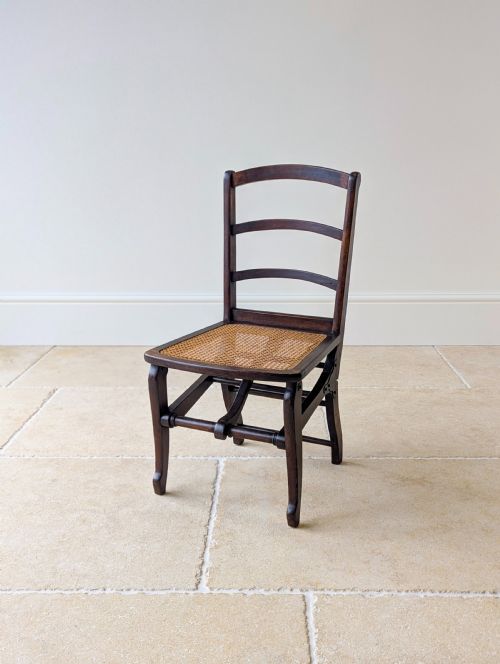


Victorian Folding Ladder
These Victorian folding ladder pieces are practical library steps and metamorphic seats that solve domestic height problems with clever hinges.
Victorian Folding Ladder
A Victorian folding ladder offers a clever solution to reaching high bookshelves and tall cupboards in the home. When you search for a victorian folding ladder, you encounter versatile library steps and metamorphic chairs that transform from seating into climbing tiers. Most examples date from the nineteenth century, reflecting an era of functional interior design and ingenious mechanical furniture.
The standard versions on this page span sturdy oak library steps, pine utility ladders, and dual-purpose metamorphic chairs in mahogany or fruitwood. Styles range from simple industrial utility pieces to elaborate Gothic Revival and Arts & Crafts designs influenced by Pugin and the Aesthetic Movement. These items served busy domestic staff, librarians, and homeowners who required safe elevation without sacrificing floor space.
How they were made
Cabinetmakers and joiners constructed these frames using durable timbers like oak, mahogany, pine, and fruitwood, often reinforcing the joints with iron and brass fixings. The pivoting mechanisms and hinges required precise engineering so the steps could fold flat or convert smoothly into chair forms.
Some sophisticated pieces incorporate inset leather treads for grip and comfort, while rustic country variants rely on plain wooden rungs and board construction. The joinery combines traditional mortise and tenon techniques with sturdy metal hardware capable of supporting regular weight.
Victorian Folding Ladder Retail Price Guide 2026
Typical asking prices for victorian folding ladder among the pieces listed under this phrase on Sellingantiques today, from the lower quarter to the upper quarter. They describe what is for sale here now, not the wider market.
Some nineteenth-century librarians literally sat on the stairs while cataloguing books, proving that multitasking is not a modern invention.
What varies in quality
The distinction between standard utility items and high-end pieces lies in the choice of timber and the sophistication of the metamorphic mechanism. Elaborate Gothic Revival carvings, Gothic oak details, and seamless chair-to-step transformations indicate a higher grade of craftsmanship than basic pine or softwood ladders.
Finishing touches such as brass hardware, fine leather upholstery on treads, and dense hardwoods like mahogany separate bespoke library furniture from everyday railway or kitchen step ladders. Superior examples retain their original structural integrity and smooth folding action after generations of use.
The Victorian Folding Ladder Glossary
- Metamorphic
- Furniture designed to transform from one functional object into another, such as a chair that unfolds into library steps. This ingenious design maximised space in Victorian homes and libraries.
- Gothic Revival
- An architectural and decorative style popular during the nineteenth century that drew inspiration from medieval design. Pieces often feature pointed arches, quatrefoils, and heavy oak construction.
- Arts & Crafts
- A design movement championing traditional craftsmanship and honest materials. Items from this tradition focus on simple utility and the natural grain of oak.
- Fruitwood
- A generic term for timber sourced from fruit-bearing trees such as pear or apple. Cabinetmakers utilised it for its dense grain and warm tone.
- Campaign Chair
- Portable furniture designed for easy transport and folding storage. These pieces feature robust hinges and durable leather or timber components.
Victorian Folding Ladder: Frequently Asked Questions
How do metamorphic library chairs work?
These clever pieces of furniture utilise hidden hinges and pivoting joints to convert from an ordinary seat into a tiered set of steps. Users simply lift and rotate the backrest or seat section to lock the treads into a stable staircase configuration.
This dual-purpose design allowed homeowners and librarians to access high shelves without keeping a separate, bulky ladder permanently in the room.
What woods were used for folding ladders?
Cabinetmakers and joiners relied on sturdy timbers such as oak, mahogany, pine, fruitwood, teak, and beech depending on the intended use. Formal library steps often featured rich mahogany or carved oak, whereas kitchen and utility versions utilised plain pine or beech.
Iron and brass hardware provided the necessary structural support for the folding mechanisms across all wood types.
Are these steps safe to use?
Most antique folding ladders remain structurally sound if the wooden joints and metal hinges are intact and stable. However, they were built for nineteenth-century domestic use, so careful inspection of the locking mechanisms is wise before climbing.
Many collectors prefer to use them primarily as display stands or occasional seating to preserve their historical integrity.
How do I identify the Victorian period?
Nineteenth-century pieces typically display hand-cut joinery, period-appropriate timber selections like solid oak or mahogany, and traditional hand-forged iron or brass hardware. Stylistic clues such as Gothic Revival tracery or Arts & Crafts simplicity also point directly to the Victorian era.
Examining the wear patterns and the construction of the folding hinges helps confirm age.