
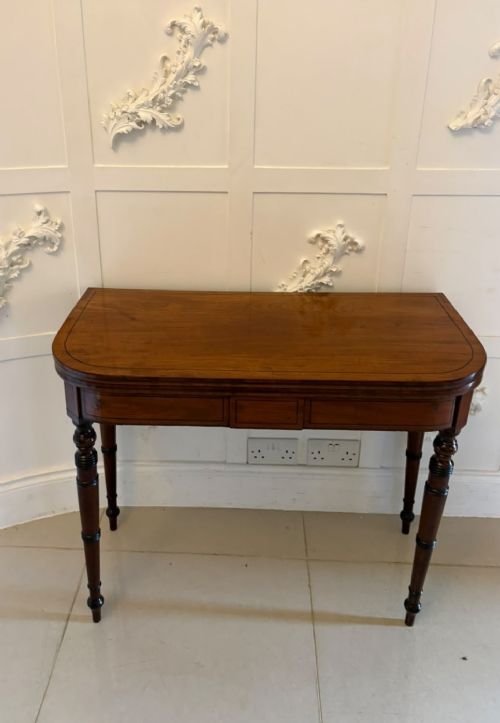
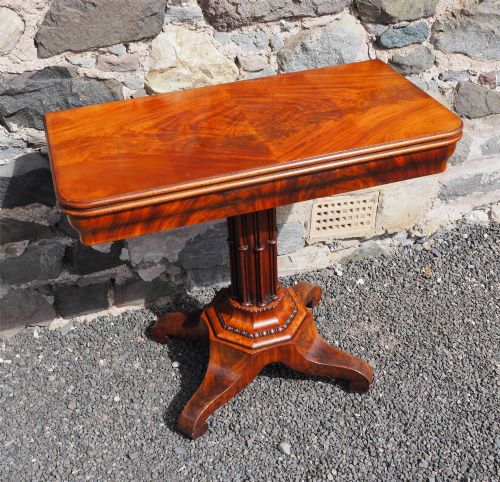
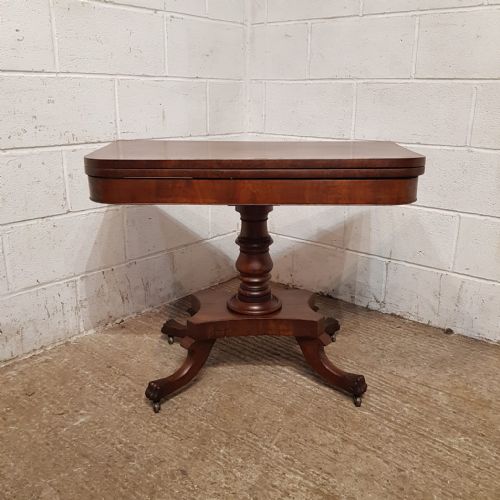
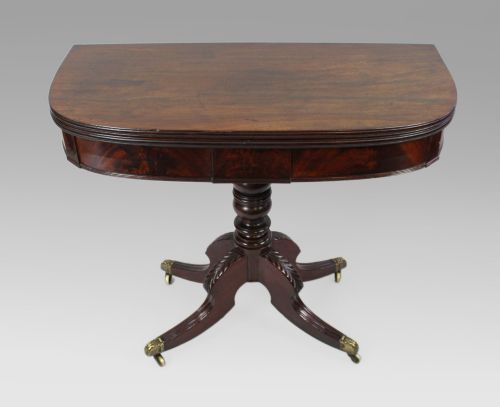
Folding Top Mahogany Table
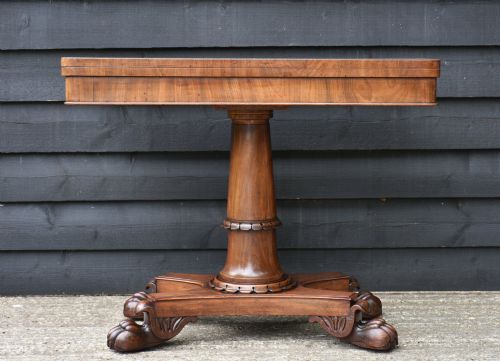
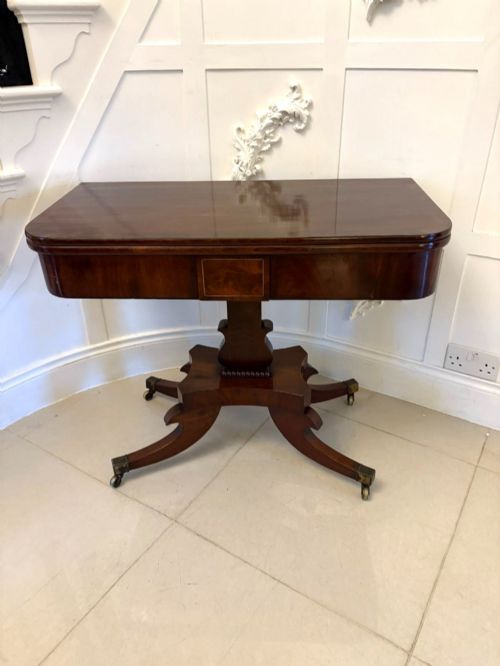
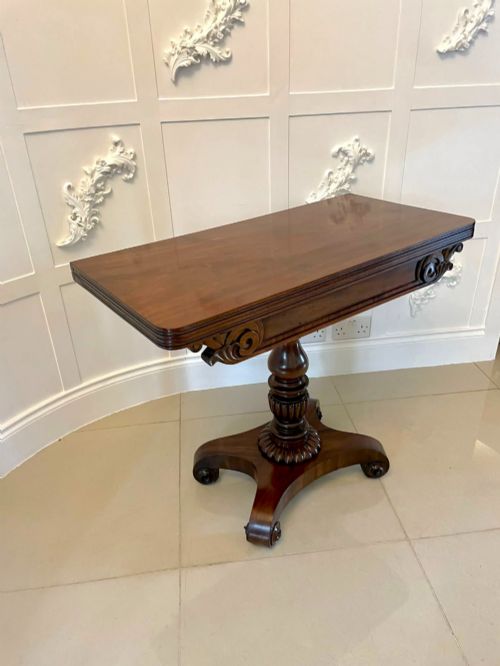
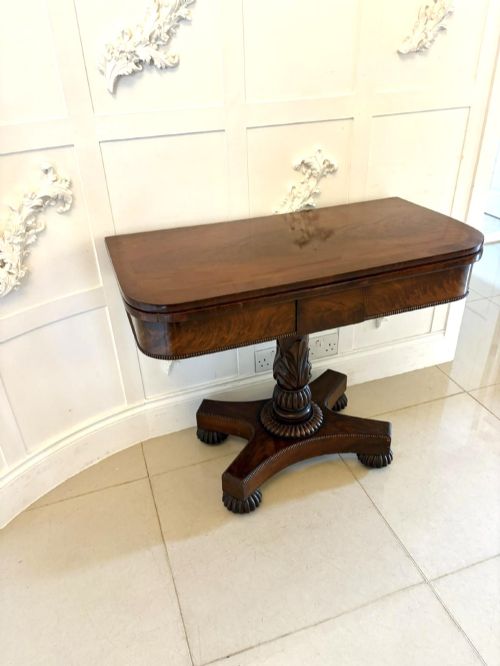
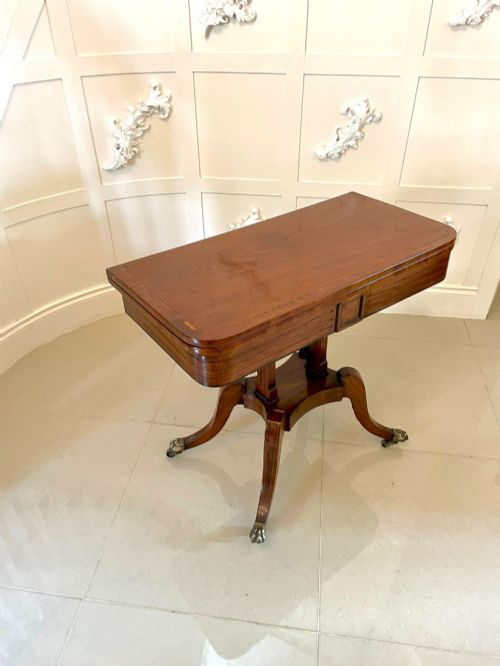
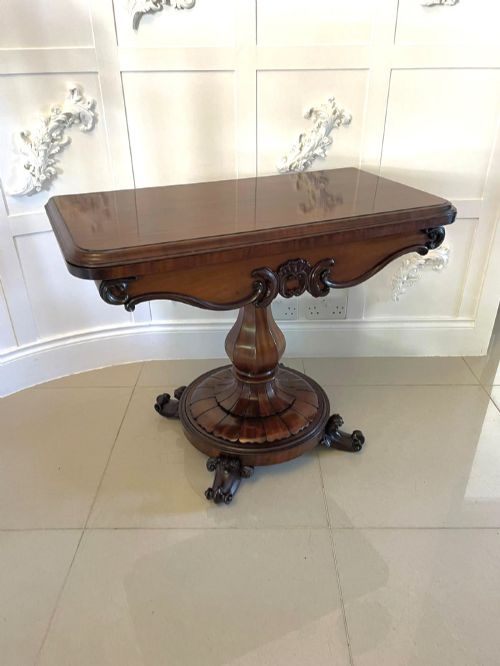
A folding top mahogany table serves multiple rooms as a card, tea, or console piece, offering adaptable surfaces in rich timber.
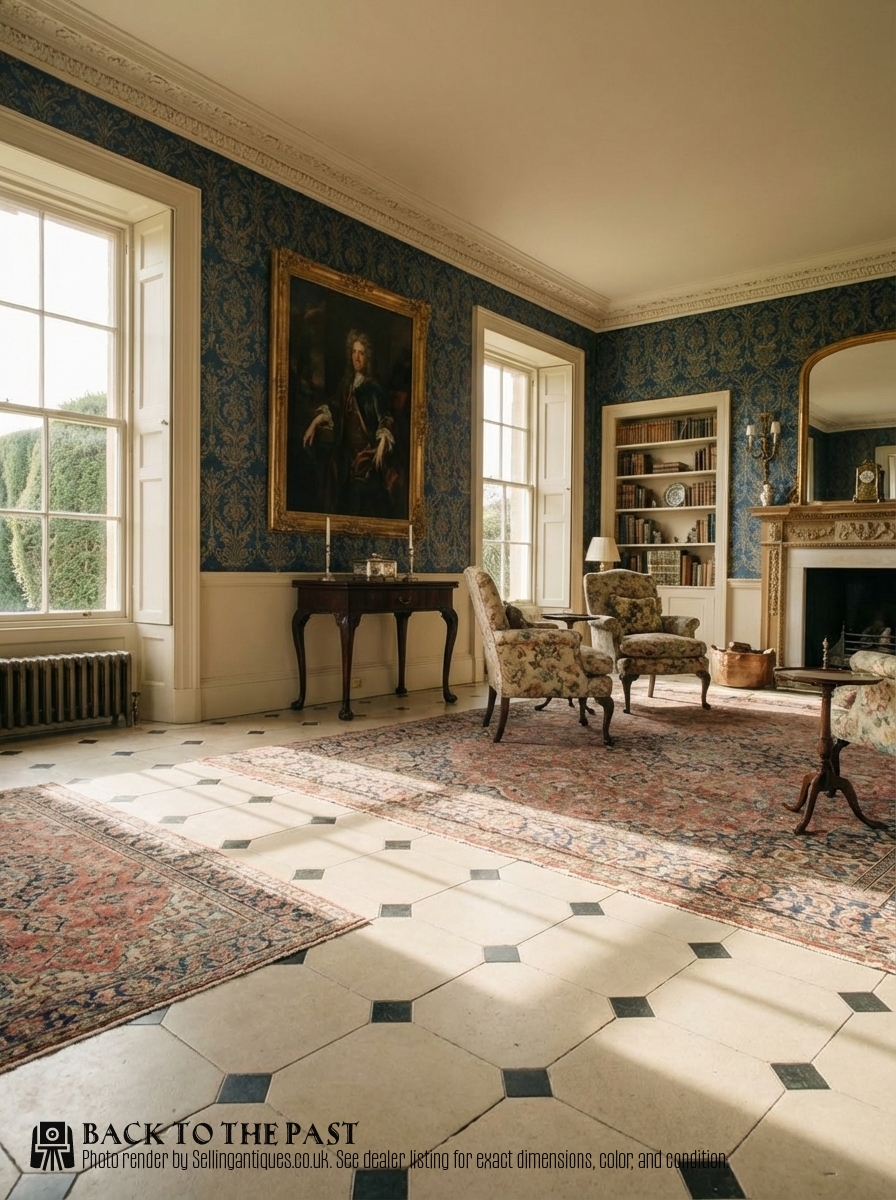
Folding Top Mahogany Table
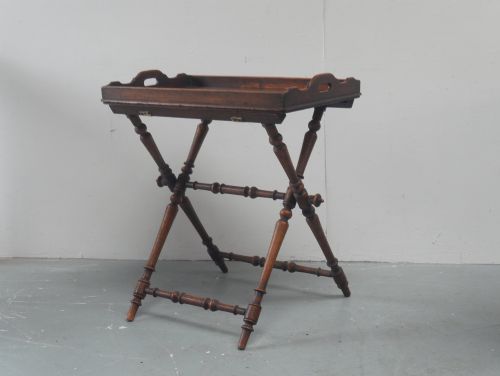
A folding top mahogany table provides a versatile surface that opens for gaming or dining and closes against a wall when space is required. These pieces appear across Georgian, Regency, Victorian, and Edwardian periods, taking forms such as card tables, tea tables, and games tables.
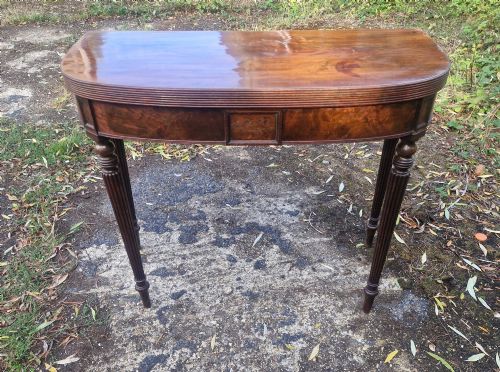
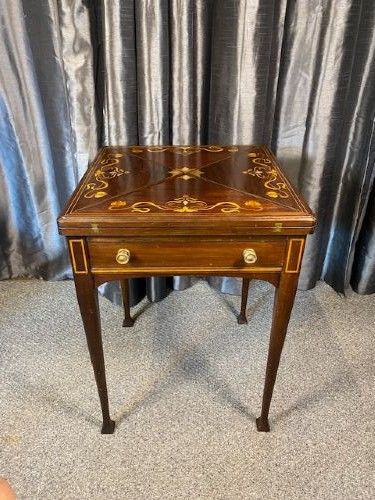
The assortment includes D-shaped, serpentine, and rectangular formats, alongside envelope card tables and occasional tray variants. Woods run primarily to mahogany, often enhanced by satinwood inlay, boxwood, and ebony details.
Originating in the eighteenth century and continuing through the nineteenth century, these items reflect changing social habits where furniture needed to adapt quickly to evening entertainments.
Construction and Materials
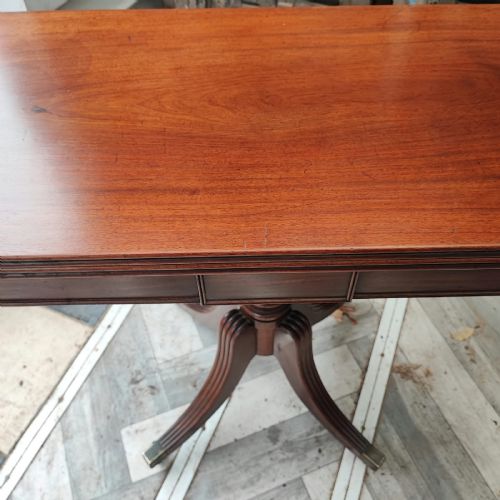
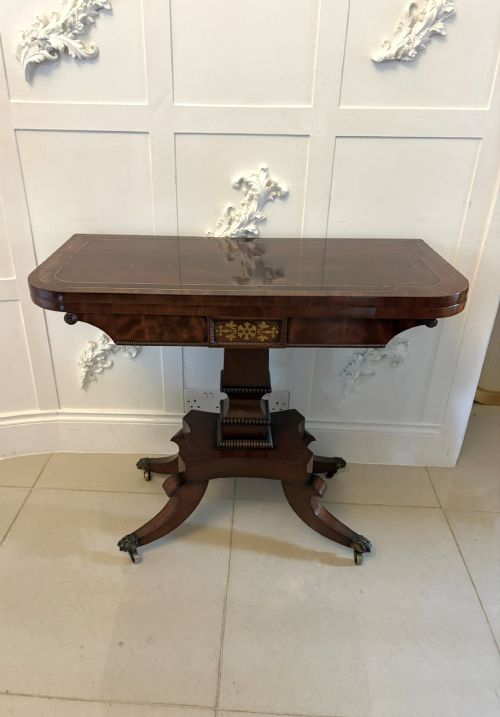
Makers utilised solid mahogany and figured veneer over secondary timbers, selecting flame mahogany for prominent surfaces to create striking grain patterns. Inlays of satinwood, boxwood, and ebony add linear contrast along borders and edges.
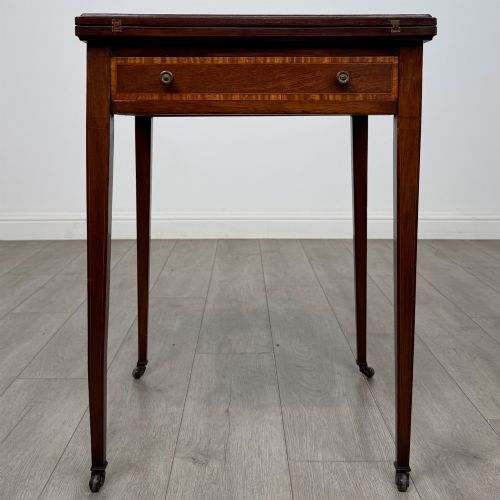
Brass inlay, brass castors, and baize-lined playing surfaces appear frequently on card and games tables, while structural support relies on sturdy leg configurations like sabre legs or carved paw feet.
Listings feature folding top mahogany tables spanning the Georgian, Regency, Victorian, and Edwardian periods, incorporating mahogany, satinwood, brass, and baize.
Assessing Quality
Quality rests in the selection of the timber, particularly where figured or flame mahogany shows depth and movement across the folding top. Crispness in carved details, such as paw feet or moulded edges, distinguishes finer workshops from standard production.
The precision of the hinge mechanism and the alignment of the top when closed reveal the standard of joinery. Secondary elements, including the quality of interior baize and inlaid stringing, complete the measure of a piece.
Gillows·Chippendale
The Folding Top Mahogany Table Glossary
- Baize
- A soft woollen fabric used to line the playing surfaces of card and games tables. It provides a smooth texture for moving cards and counters during play.
- Serpentine
- A curved outline that undulates with a convex centre flanked by concave sides. This shape appears on the front edges of finer Georgian tables.
- Envelope table
- A square table with a folding top composed of four triangular flaps that rotate and fold open like an envelope. This form became popular during the Edwardian period.
- D-shaped
- A semicircular form resembling the letter D, often utilised for tea and console tables that stood flat against a wall when closed. Opening the top reveals a full circular or square surface.
- Satinwood
- A durable exotic timber with a lustrous yellowish grain used extensively for contrasting inlay work and banding on mahogany furniture.
Folding Top Mahogany Table: Frequently Asked Questions
How were these tables used originally?
These tables served as versatile furniture for social gatherings, remaining folded against a drawing room wall when not in use. Hosts opened them for afternoon tea, card games, or general entertaining.
As evening activities changed, the top turned or unfolded to reveal a baize playing surface or an expanded timber top for writing and conversation.
How do I date a mahogany folding table?
Dating relies on leg styles, timber selection, and overall proportions. Earlier Georgian pieces often show plain mahogany or subtle carving, while Regency examples introduce brass inlay and sabre legs.
Victorian and Edwardian versions bring heavier proportions or lighter square tapered legs and envelope mechanisms.
How do I care for the baize on a game table?
Baize requires gentle brushing to remove dust and debris trapped in the woollen fibres. Moisture must be kept away to prevent staining and shrinkage.
Direct sunlight should also be avoided to maintain the original colour of the fabric over time.