



Folding Tier Display Stand
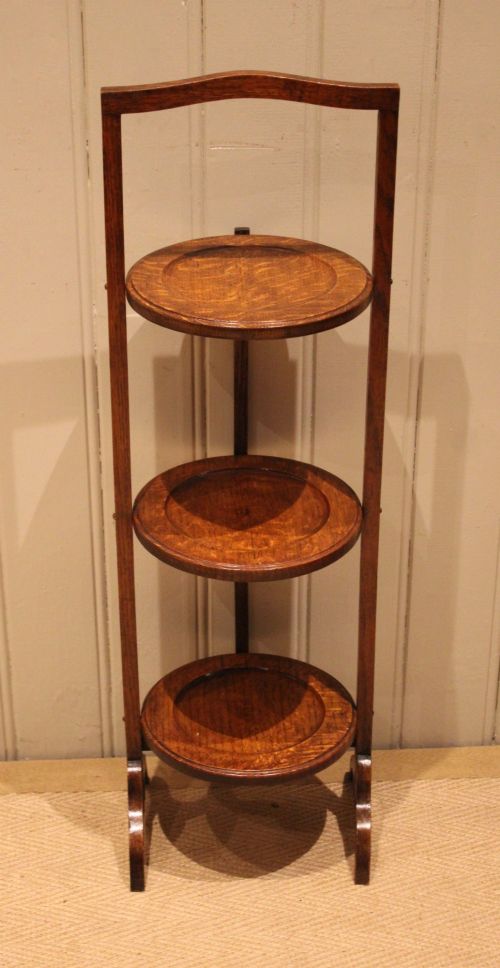
These folding tier display stand examples are practical tiered serving pieces that fold flat, offering useful multi-level display space without crowding a room.
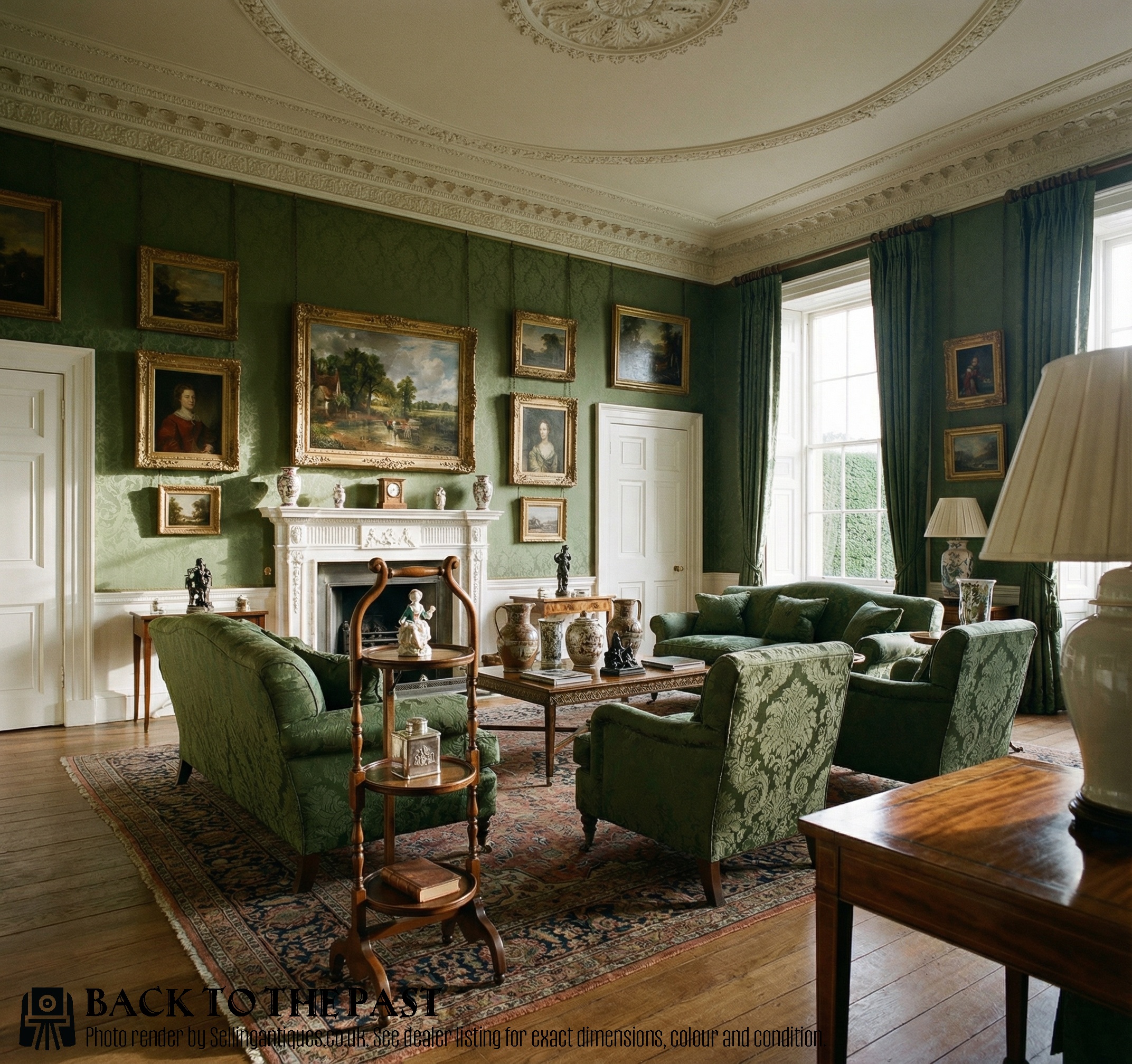
Folding Tier Display Stand
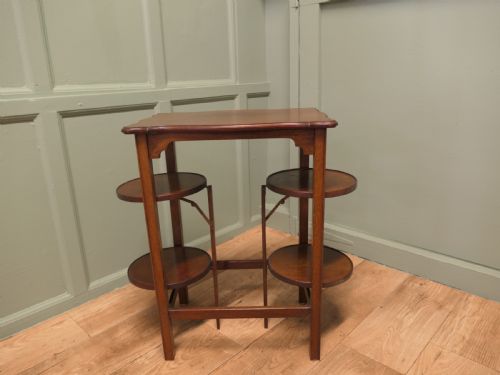
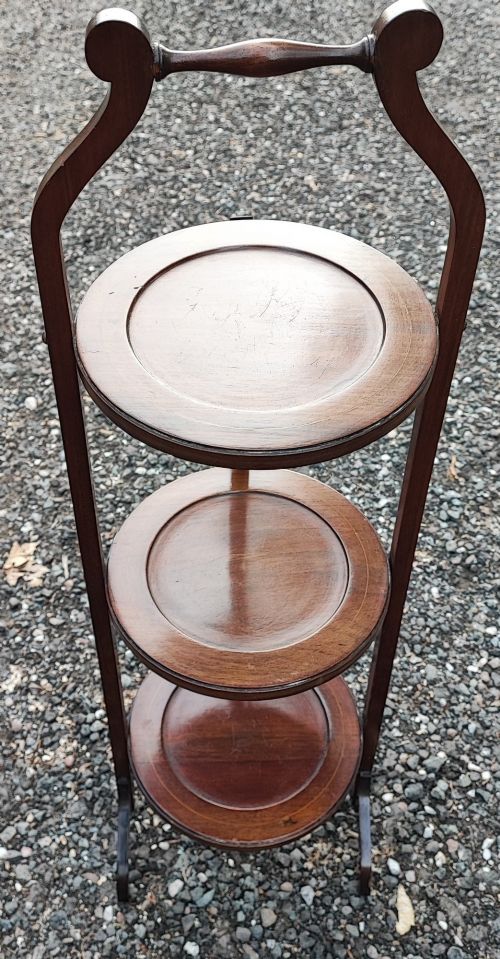
A folding tier display stand primarily takes the form of tiered cake stands and occasional tables designed to present items across multiple levels. Most specimens encountered here date from the Edwardian period or the early twentieth century, alongside occasional Georgian examples.
The dominant configurations are three-tier and four-tier wooden frames that collapse for convenient storage when not in use. These functional items served traditional domestic roles for tea service and display before finding a modern purpose as decorative accents.
How they were made
Construction relies heavily on timbers such as mahogany, oak, and rosewood, sometimes enhanced with lighter wood inlays of satinwood and boxwood. Metal fittings and brass hinges provide the necessary articulation for the folding mechanism.
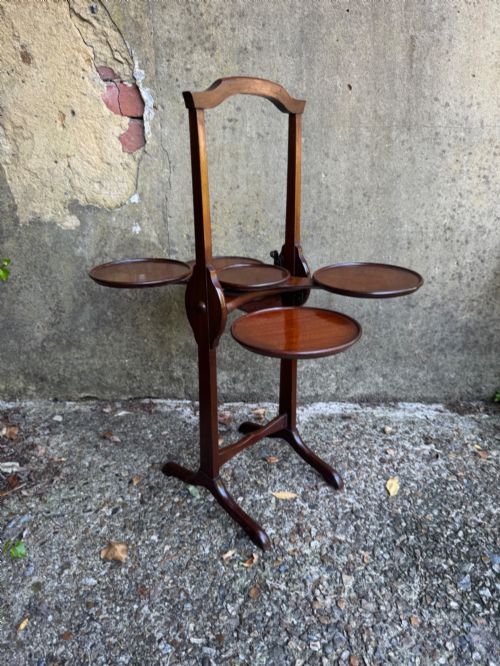
Cabinetmakers shaped these tiered surfaces using traditional joinery, integrating pivoting uprights and folding tiers that collapse smoothly into a compact footprint.
Folding Tier Display Stand Retail Price Guide 2026
Typical asking prices for folding tier display stand among the pieces listed under this phrase on Sellingantiques today, from the lower quarter to the upper quarter. They describe what is for sale here now, not the wider market.
Listings for this phrase feature materials including mahogany, oak, and rosewood, spanning periods from the Georgian era through to nineteen twenty.
What varies in quality
Quality rests upon the choice of timber and the precision of the folding mechanism, where denser hardwoods and fine inlay work elevate a piece above standard utility items. Sheraton Revival influences bring refined decorative details to the woodwork.
The stability of the tiers when fully open and the tightness of the brass hinges distinguish finer examples from simpler vernacular pieces.
The Folding Tier Display Stand Glossary
- Edwardian
- Pertaining to the reign of King Edward VII, spanning from nineteen hundred to nineteen ten, characterised by lighter and more graceful furniture designs than the preceding Victorian era.
- Sheraton Revival
- A late nineteenth and early twentieth century style drawing inspiration from the neoclassical designs of Thomas Sheraton, frequently featuring satinwood inlay and mahogany.
- Dumb waiter
- A multi-tiered freestanding piece of furniture used for holding food or tableware, serving a similar function to later tiered cake stands.
- Inlay
- A decorative technique where contrasting woods like boxwood or satinwood are inserted into recesses within the primary timber surface.
Folding Tier Display Stand: Frequently Asked Questions
How do these stands fold?
The vertical supports and individual tiers are connected via hinged joints that allow the entire structure to collapse flat into a narrow profile for storage.
This ingenious mechanism made them easy to stow away in domestic parlours when tea service concluded.
What were cake stands used for?
They held small plates, cakes, and pastries during afternoon tea, presenting multiple items within arm's reach of seated guests.
Today they function effectively as plant stands or display tiers for decorative objects.
How do I date an Edwardian stand?
Edwardian stands typically date from the first decade of the twentieth century, often combining mahogany with subtle inlay work.
Construction methods and timber selection help distinguish these pieces from later twentieth century reproductions.
Are these stands sturdy?
Properly adjusted hinges and sound timber joints ensure the tiers remain level and secure when the stand is fully opened.
Regular checking of the brass pivots keeps the folding action smooth and stable.