

Folding Serving Table
A folding serving table provides a practical surface for drinks and meals, combining removable trays with collapsible stands.
Folding Serving Table
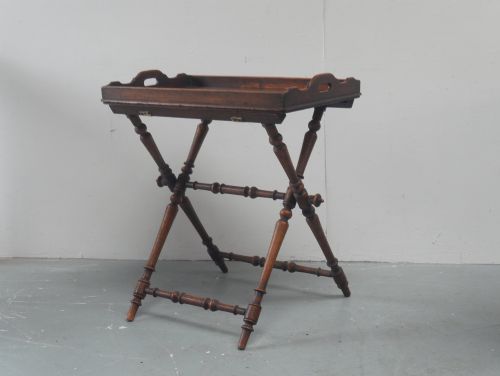
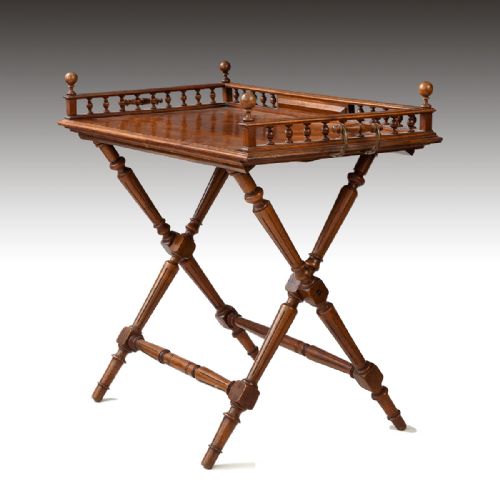
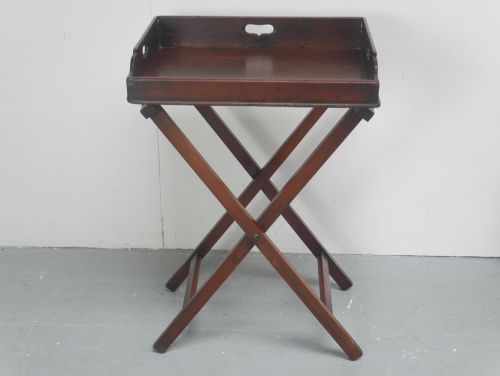
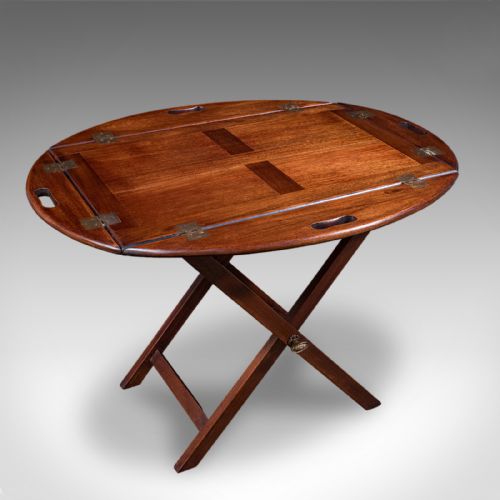
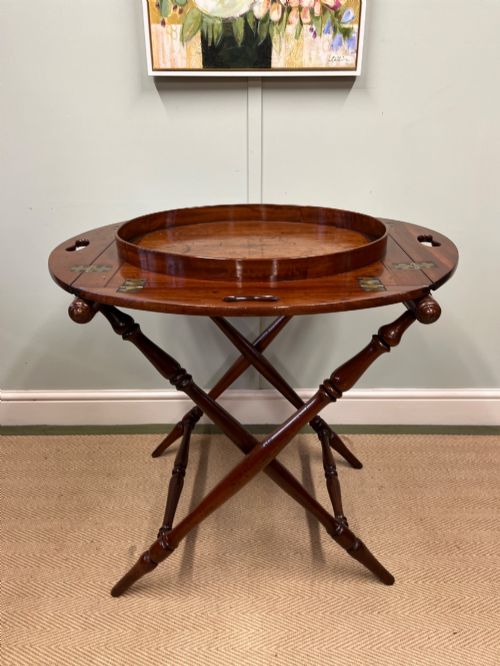
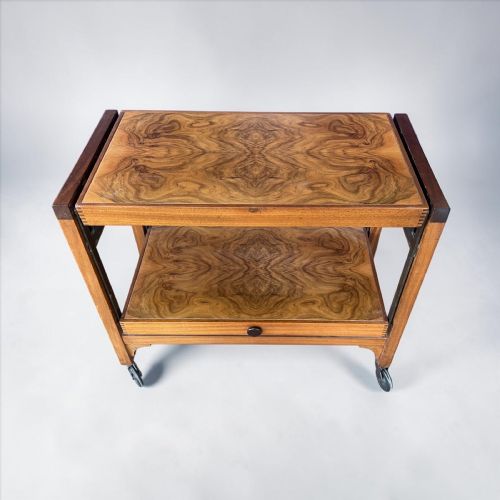
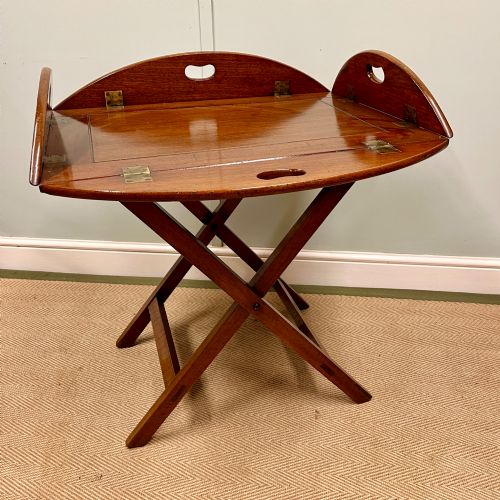
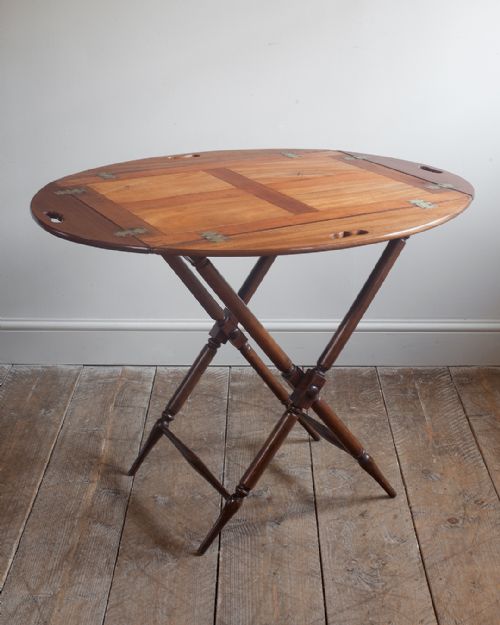
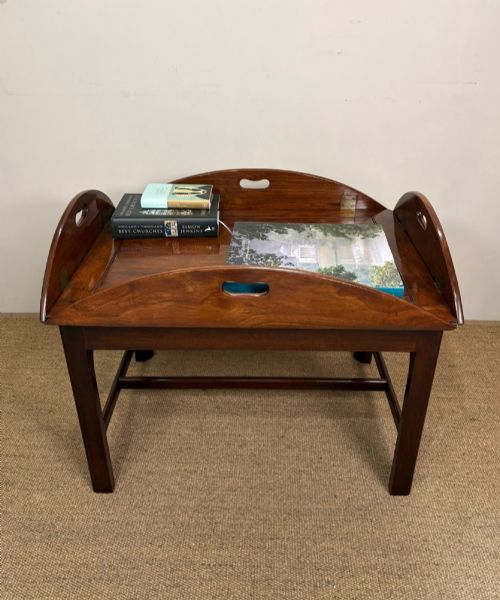
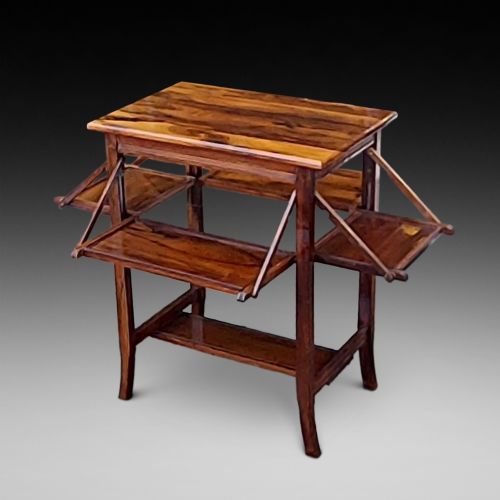
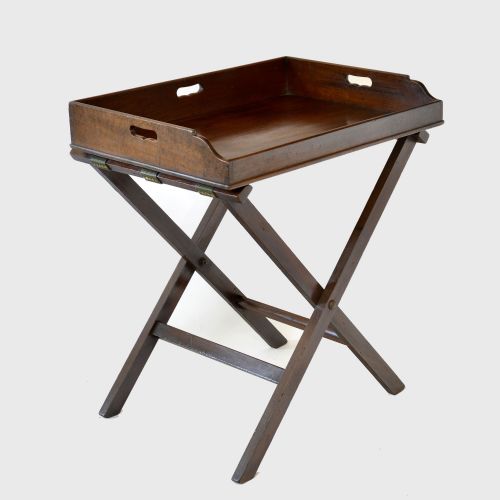
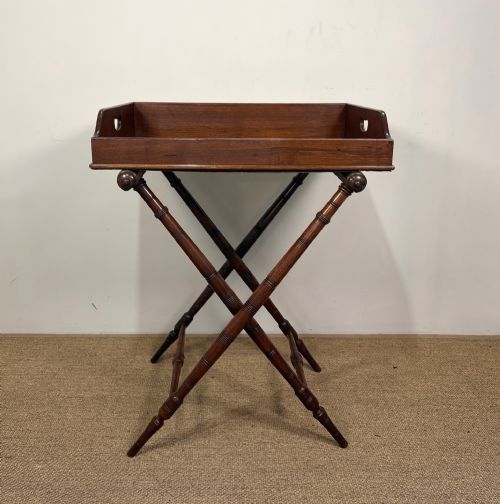
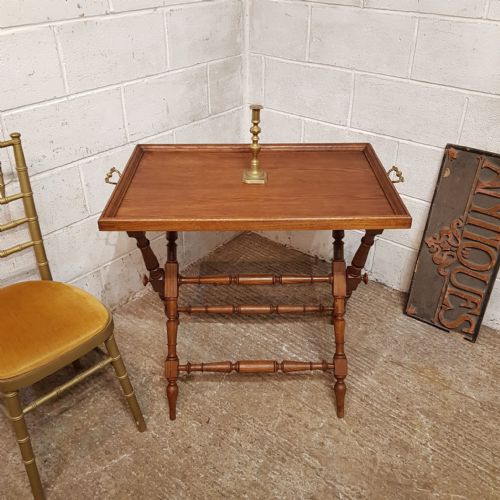
A folding serving table is a portable piece designed for moving food, drinks, and tableware around a house or garden. These items primarily manifest as butler trays paired with folding wooden stands, alongside occasional drop-flap serving stands and tea trolleys.
The pieces on this page span several centuries, with a heavy concentration of 19th-century and Victorian examples alongside Georgian, Edwardian, and 20th-century iterations. Buyers encounter forms ranging from simple oak and mahogany trays to brass Benares trays on folding metal or wood bases.
Originating in domestic service and country houses, these tables were built to be packed away or shifted between rooms as needed. Today, they serve equally well as coffee tables, side tables, or functional serving pieces in contemporary living spaces.
How they were made
Cabinet makers constructed the trays and stands using solid timbers such as mahogany, oak, walnut, rosewood, and teak. Joinery on the trays typically involves dovetail corners or gallery edges raised to keep items secure during transport.
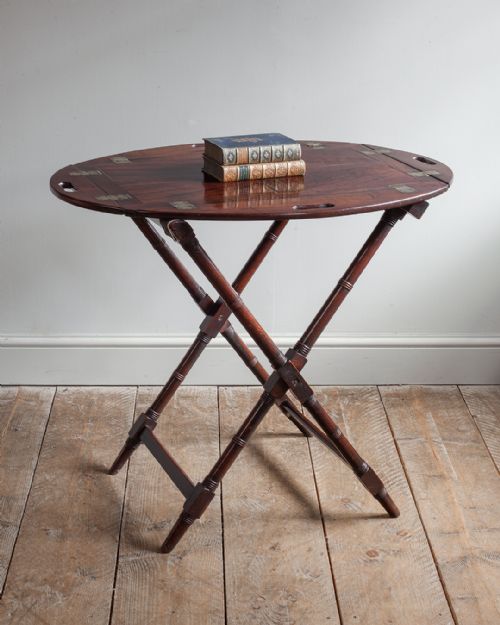
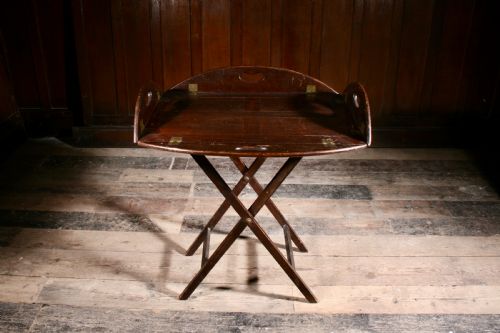
The supporting stands rely on clever folding mechanisms, often utilising cross-frame X-bases that collapse flat when the tray is lifted off. Some 20th-century variants incorporate metal fittings, brass hinges, and fabric webbing to aid stability.
What varies in quality
Quality rests heavily on the choice of timber and the crispness of the carpentry, with dense Cuban mahogany or finely figured rosewood sitting at the upper end of the scale. Grain matching across the tray base and sturdy, tight joinery on the folding stand mark out superior execution.
The presence of an original stand that matches the exact period and timber of the tray elevates a piece considerably. Finer examples also exhibit hand-carved details, well-turned legs on the stand, and original brass carrying handles inset into the tray rim.
The Folding Serving Table Glossary
- Butler tray
- A portable rectangular wooden tray with hinged or fixed sides, designed to lift off its stand for serving. These often feature cut-out handles for easy gripping.
- Dumb waiter
- A multi-tiered serving stand used for holding dishes and drinks without requiring extra servants at the table. These can include folding versions with two or more levels.
- Drop-flap
- A table or tray design featuring hinged leaves that lower down when not in use and lock into a horizontal position when extended for service.
- Benares tray
- An etched or embossed brass tray originating from India, frequently mounted onto a folding wooden stand for use as a serving table in European homes.
- Metamorphic
- A descriptive term for furniture that changes form or function, such as a serving trolley or console table that adapts into an expanded serving surface.
Folding Serving Table: Frequently Asked Questions
What is a folding serving table used for?
These tables function as movable surfaces for drinks, afternoon tea, and serving meals in sitting rooms or gardens.
Because the tray lifts straight off the stand, the entire unit packs away flat when floor space is required.
How do I date an antique folding serving table?
Dating relies on timber choice, hardware, and cabinet-making techniques visible on the tray and stand. Georgian and Regency examples favour dense mahogany, while Victorian and Edwardian pieces often utilise oak, walnut, or brass.
Original stands feature hand-cut joints and period-appropriate turnings that match the wear and patina of the tray itself.
Are the trays removable from the stands?
Most traditional butler trays sit loosely atop an X-frame folding stand without permanent fixings. This design allowed staff to carry the loaded tray directly from the kitchens before mounting it on the stand in the dining room.
How do I style a folding serving table at home?
These tables work effectively as permanent coffee tables or side surfaces in living rooms, holding books, lamps, or barware.
Their compact footprint and collapsible nature also make them practical for occasional use when entertaining guests.