



Art Deco Hostesses Cart
An art deco hostesses cart brings functional elegance to any room, offering the perfect mobile surface for serving drinks and entertaining guests in style.
Art Deco Hostesses Cart
When you search for an art deco hostesses cart, you are looking at serving trolleys, drinks trolleys, bar carts and tea trolleys designed during the 1920s and 1930s. These pieces serve as mobile units for holding beverages, glassware and tea services during gatherings.
The versions you are most likely to meet on this page hail primarily from the 1930s, alongside examples from the 1920s. They typically feature two tiers to maximise surface area while maintaining a compact footprint on castors.
Makers produced these carts in distinct geographical and stylistic varieties, including English designs such as circular walnut Savoy trolleys. Forms range from streamline modernist interpretations to classic circular and rectangular serving units.
Materials and construction
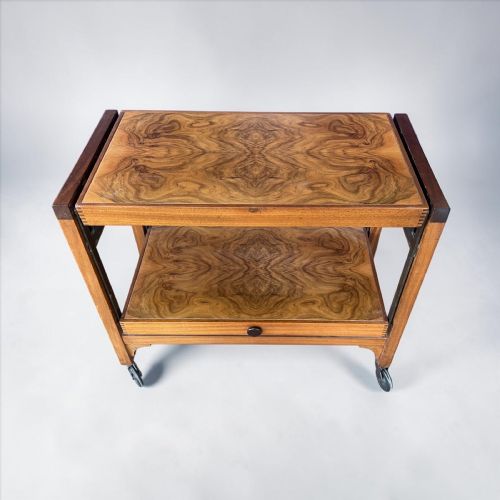
Makers utilised a combination of traditional timbers and industrial metals to achieve the desired aesthetic. Walnut, figured walnut, and mahogany provide rich wooden elements for frames and shelves, often paired with castors for mobility.
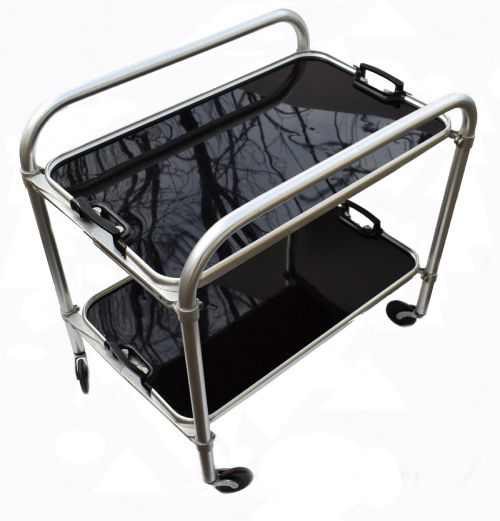
Metal components such as chrome, brass, aluminium, and steel define the modern industrial edge of these trolleys. Surfaces incorporate glass, black glass, and mirror inserts to create reflective planes that catch the light.
The Savoy trolley ensures your gin and tonic arrives with the same effortless glamour as a 1930s ocean liner lounge.
Assessing quality in execution
The distinction between standard production and superior pieces lies in the selection of materials and the sophistication of the silhouette. Figured walnut veneers with pronounced grain patterns elevate wooden models far above plain timber constructions.
The integration of polished chrome, mirror, or black glass alongside fluid streamline forms separates finer modernist examples from simpler utilitarian tea trolleys. The precision of the joinery and the robustness of the metal framework determine the enduring stability of the cart.
The Art Deco Hostesses Cart Glossary
- Art Deco
- A design style of the 1920s and 1930s characterised by sleek geometric shapes, streamlined forms, and modern industrial materials. It replaced the ornate floral patterns of earlier periods with clean lines.
- Streamline
- A late phase of the style influenced by aerodynamic design, favouring rounded corners, horizontal bands, and smooth, continuous surfaces. This aesthetic imparts a sense of speed and forward motion to stationary furniture.
- Castors
- Small wheel attachments fitted to the legs or base of a trolley to allow smooth movement across floors. They are essential for the mobility required of a serving cart.
- Two-Tier
- A furniture configuration featuring two distinct horizontal shelves stacked vertically to double the usable surface area. This layout is standard for drinks and tea trolleys to separate serving items from storage.
Art Deco Hostesses Cart: Frequently Asked Questions
What is an art deco hostesses cart used for?
These carts function primarily as mobile serving stations for drinks, cocktails, and tea services during social gatherings. They allow hosts to transport glassware and bottles easily between rooms.
Beyond entertaining, they serve as permanent display surfaces for decanters, barware, and decorative objects within a living space.
How do I date an art deco hostesses cart?
Dating relies on examining the combination of materials, such as tubular chrome paired with black glass, which points firmly to the 1930s. Earlier pieces from the 1920s often lean towards traditional timbers like mahogany and walnut.
Stylistic markers also help determine age, with streamline curves and geometric silhouettes indicating the height of the design movement.
Where should I place a bar cart at home?
A bar cart sits comfortably in a living room, dining room, or home study where entertaining typically takes place. Placing it against a wall keeps it out of the main walking traffic while remaining accessible.
Positioning the trolley near natural light sources or mirrors enhances the reflective qualities of chrome and glass surfaces.
What materials are typical for these trolleys?
Makers constructed these carts using a mix of warm woods and cool metals. Walnut, figured walnut, and mahogany provide traditional warmth, while chrome, brass, aluminium, and steel introduce a modern metallic sheen.
Inlays of clear glass, black glass, and mirror complete the top surfaces, offering durable and reflective areas for serving.