
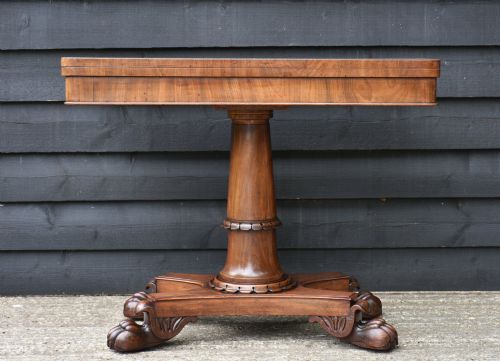
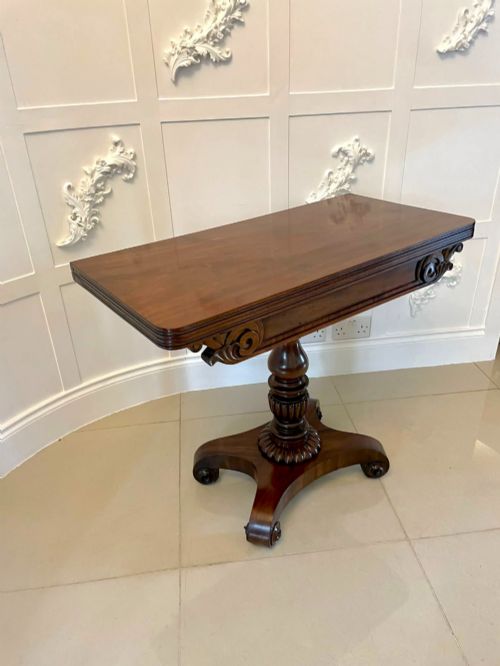
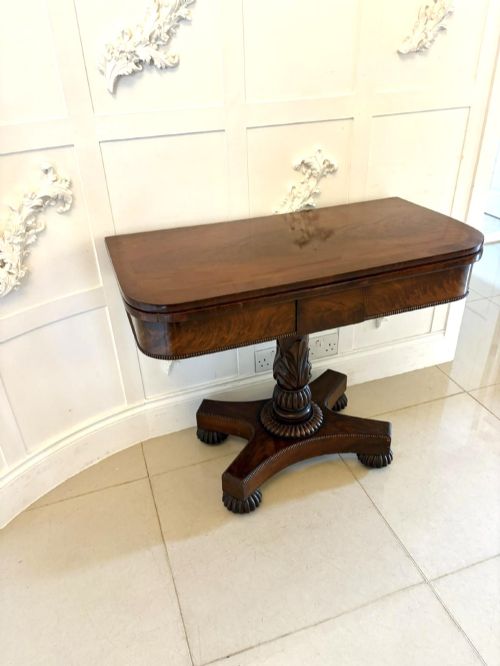
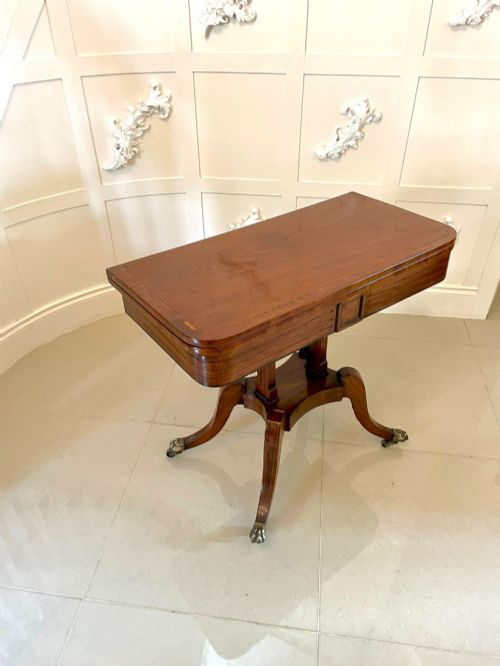

Folding Mahogany Card Table
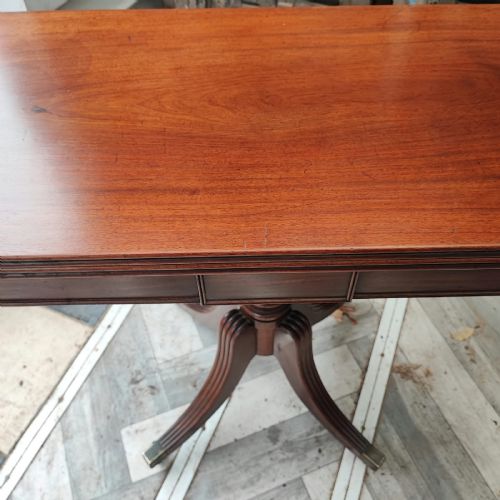
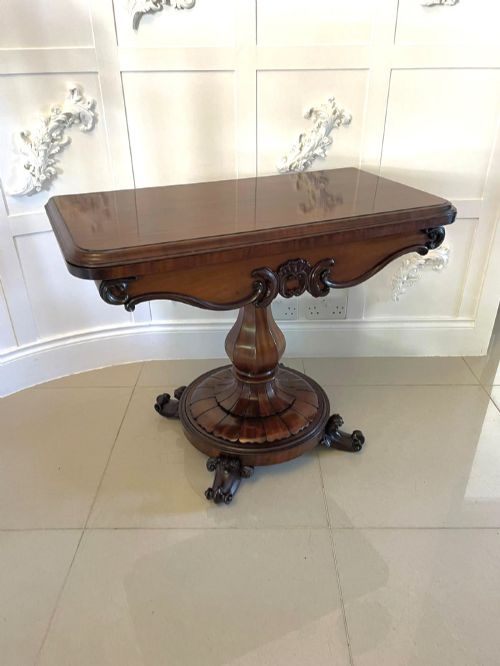
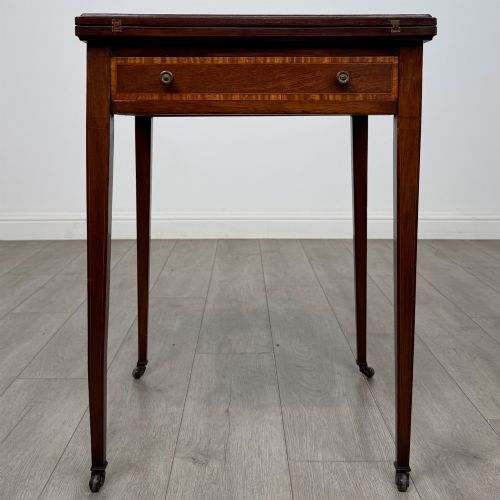
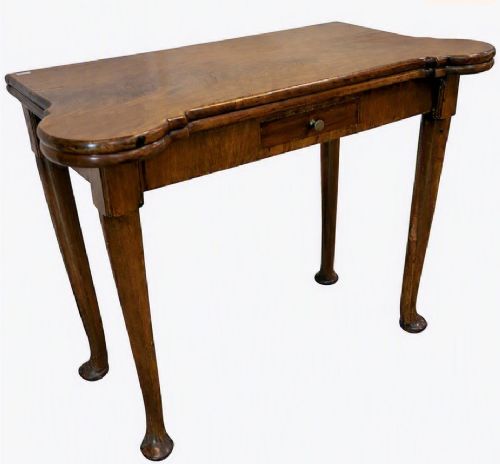
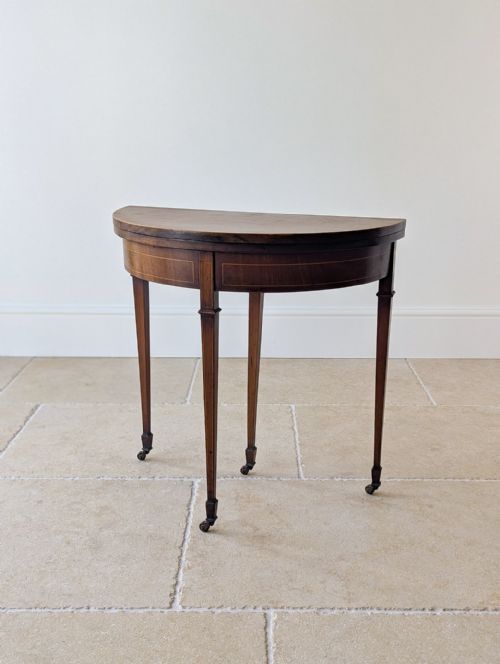
A folding mahogany card table combines clever pivoting mechanism with figured timber to serve both as a side console and a gaming surface.
Folding Mahogany Card Table
A folding mahogany card table offers a versatile surface designed to transform from a slender console or tea table into a full games board when opened.
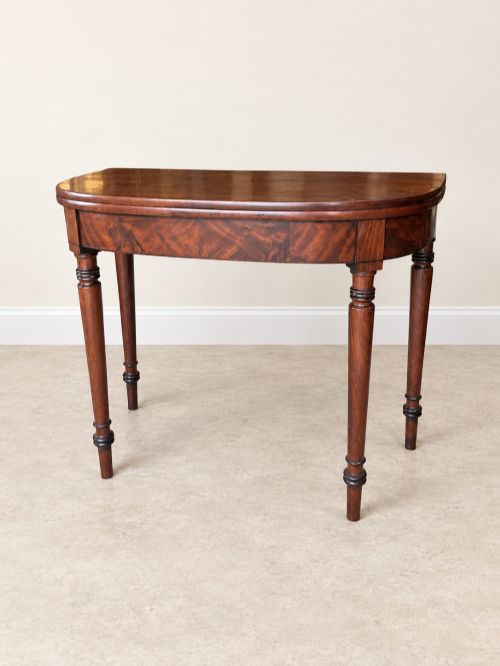
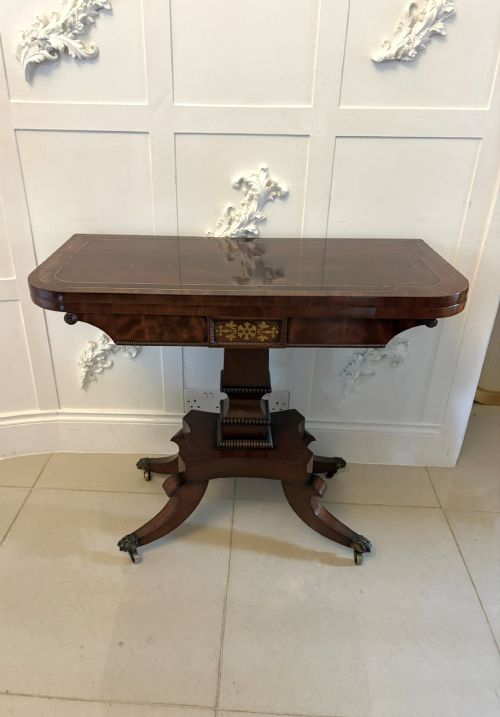
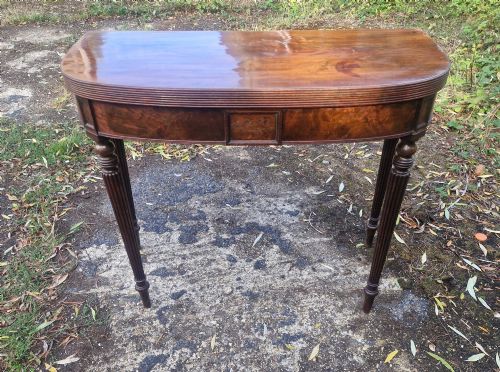
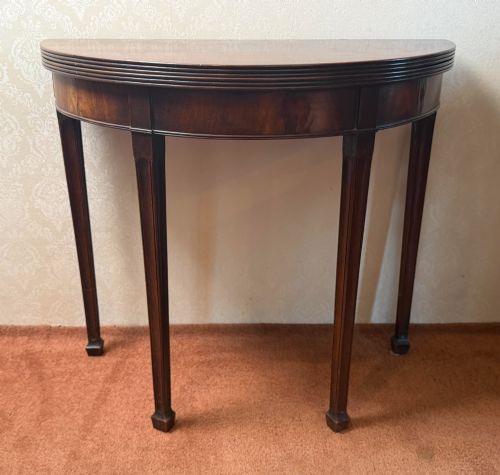
The versions most commonly met on this page span the Georgian, Regency, and Victorian periods, often appearing in D-shape, demi-lune, or rectangular formats.
Makers utilised solid timber and decorative veneers to create pieces intended for drawing rooms, where they doubled as side tables during daily use.
Construction and materials
Cabinet makers built these tables primarily using mahogany, frequently selecting flame mahogany veneer or figured stock to accentuate the primary surfaces.
Inlay work incorporated contrasting woods such as satinwood and boxwood, while brass details occasionally appeared on Regency and nineteenth-century examples.
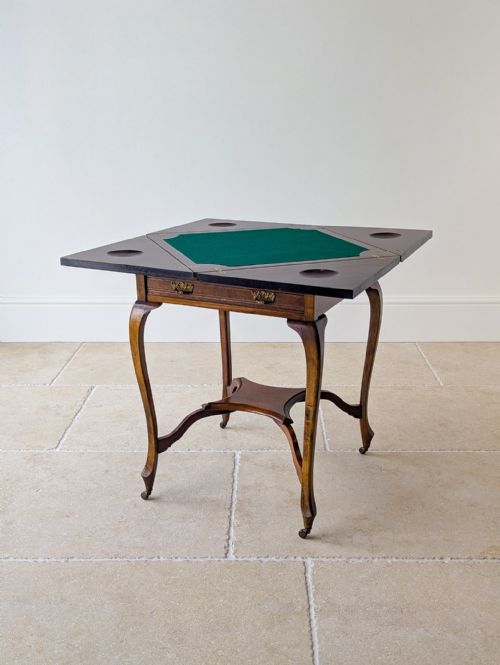
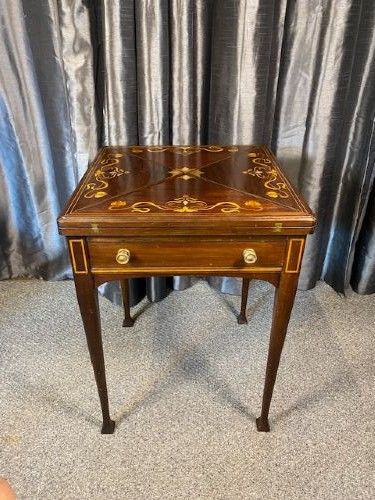
Interior surfaces typically feature baize to line the gaming area, supported by concertina actions, swivel tops, or envelope folds.
Some tables include hidden compartments beneath the folding top, originally designed to keep winnings safely out of sight.
Assessing quality and craftsmanship
Quality rests on the depth of figure in the mahogany, the crispness of any inlay, and the precision with which the folding mechanism operates.
Fine examples retain original patination and timber surfaces that have aged evenly without heavy restoration or replacement of structural sections.
James Shoolbred And Co·Giles Grendey·Antoine Lampre
The Folding Mahogany Card Table Glossary
- Demi-lune
- A half-moon shape popular for console and card tables designed to sit flat against a wall.
- Baize
- A woolen felt fabric traditionally used to cover the playing surface inside folding card tables.
- Concertina action
- An expanding frame mechanism that allows the rear legs to move outward when the top is unfolded.
- Envelope card table
- A square table with four triangular flaps that rotate and fold open to reveal the playing surface.
- Flame mahogany
- A veneer cut from the fork of the tree, producing a distinctive flickering flame pattern.
Folding Mahogany Card Table: Frequently Asked Questions
How do these tables open?
Most models use a turnover top that rotates on a pivot to rest upon an open frame, while concertina versions expand the entire rear structure to support the weight.
Other variants employ rotating envelope flaps or swing actions that reveal internal storage compartments for cards and counters.
Where were they placed?
These pieces usually stood against a drawing room wall as slim console or side tables when not in use for evening entertainment.
When guests arrived, the tables moved towards the centre of the room to accommodate card games and tea.
How do I date a table?
Stylistic markers such as square tapered legs indicate eighteenth-century Georgian origins, whereas sabre legs and brass inlay point toward the Regency era.
Victorian and Edwardian pieces often introduce heavier proportions, walnut alternatives, or mechanical envelope folding designs.
What is the green lining inside?
The interior is typically lined with baize, a durable woven woolen material designed to provide a soft surface for dealing cards and dampening sound.
Original linings add interest, though replacement baize is common due to centuries of wear.