

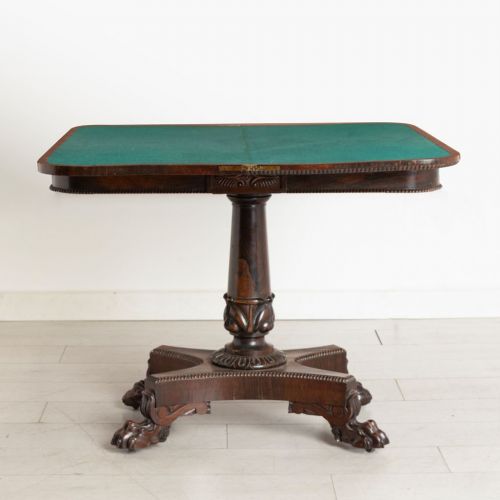


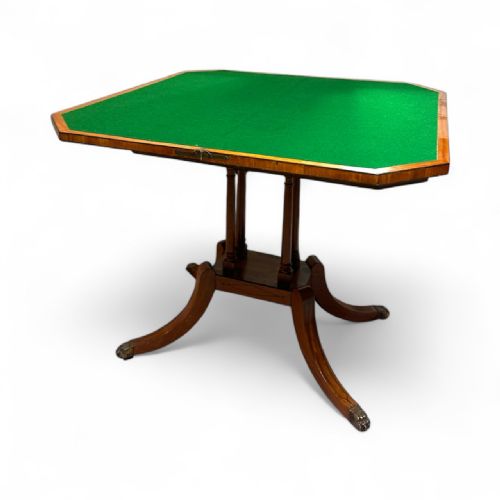
Antique Games Table Baize
An antique games table baize provides a dedicated playing surface for cards and board games, combining fine cabinetry with historical social custom.
Antique Games Table Baize
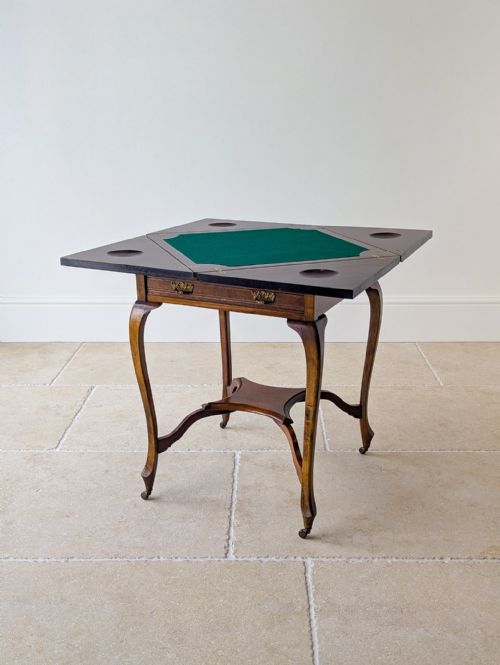
When you search for an antique games table baize, you are looking at specialised furniture designed for domestic entertainment during the Georgian, Victorian, and Edwardian periods. These pieces take various structural forms, including envelope tops, fold-over leaves, and concertina actions, all concealing or displaying a textile lining.
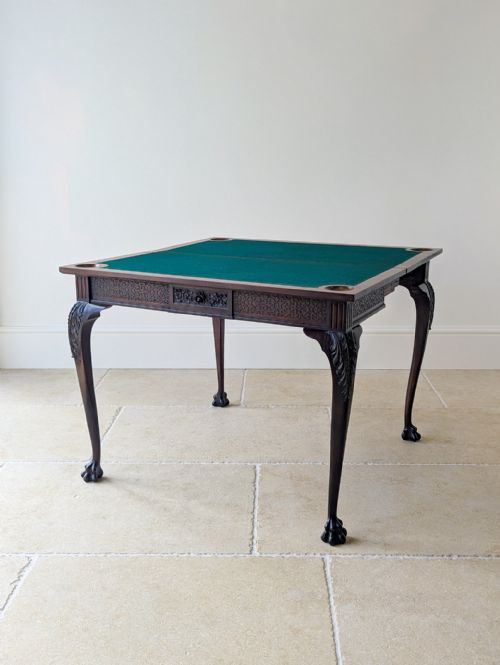
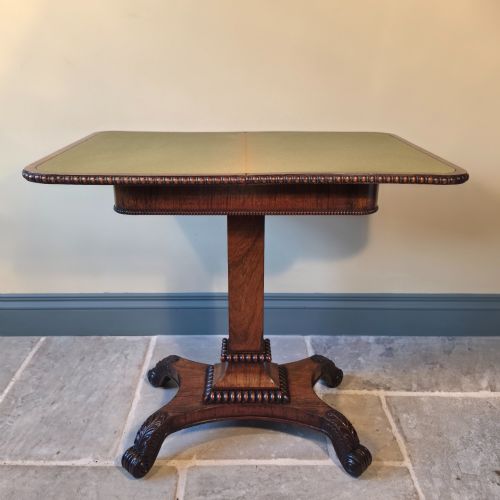
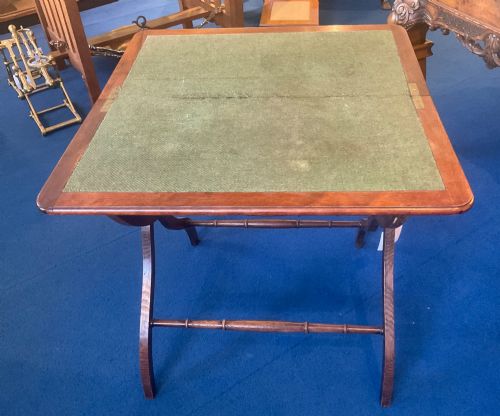
The most common versions met on this page are mahogany and rosewood fold-over card tables from the nineteenth century. They function primarily as console or occasional tables until unfolded to reveal the textile playing surface inside.
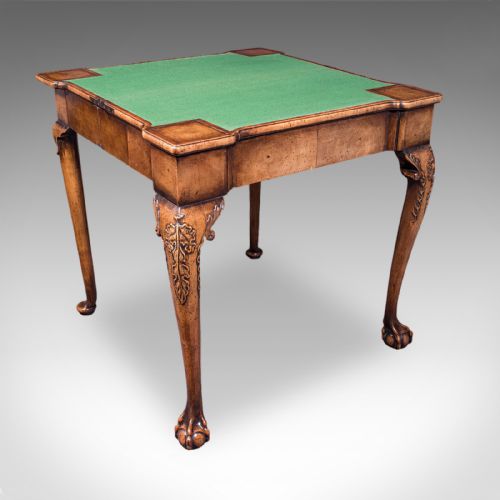
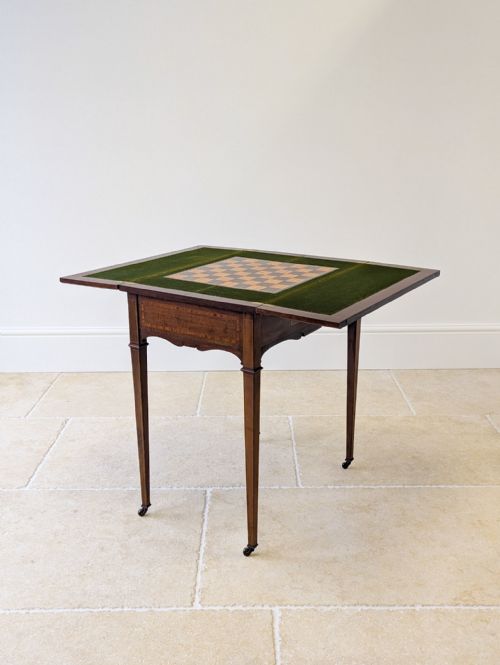
Other variations include walnut veneer demi-lune designs, occasional tables with chess boards, and larger gaming antiques such as roulette wheels with original cloth. Each type reflects the shifting parlour pastimes of British and European households across multiple centuries.
Factors separating tiers of quality
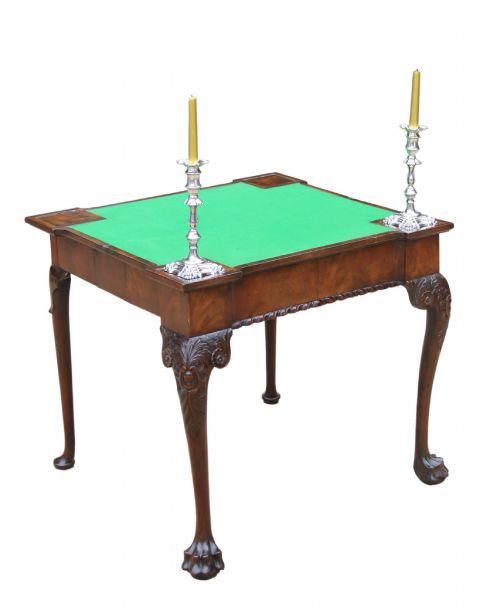
Quality rests in the precision of the joinery and the complexity of the mechanism, such as a concertina action that expands evenly on all four legs. Finer examples display superior timber selection, intricate marquetry, or cabinet work by known makers.
The execution of the interior textile lining and the integration of auxiliary drawers or pivoting tops also distinguish standard production furniture from high workshop output.
A solitary French roulette wheel waits with its original felt cloth, ready to turn any parlour into a nineteenth century casino.
James Shoolbred and Co·Gillows·Thonet·Lamb of Manchester·Howard and Sons·Edwards and Roberts
The Antique Games Table Baize Glossary
- Baize
- A coarse woolen fabric traditionally used to line the playing surfaces of card and gaming tables. This textile provides a durable, tactile mat that prevents playing pieces from slipping.
- Concertina action
- A frame construction that expands outward on hinges like an accordion when the table top unfolds. This mechanical design allows the rear legs to move centrally and support the extended weight.
- Envelope table
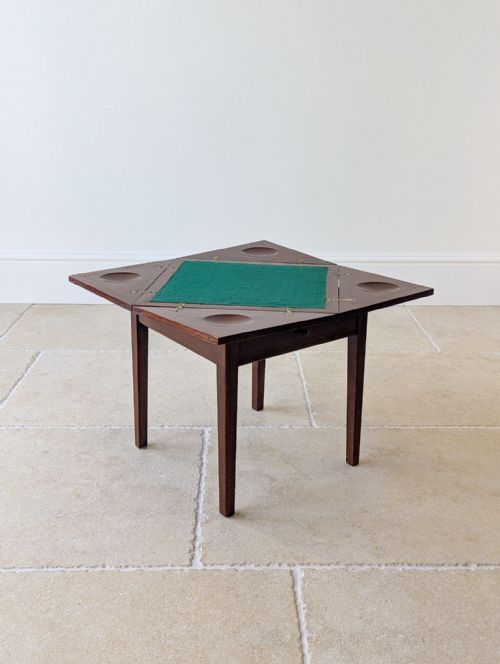
- A square table top formed of four triangular flaps that rotate and fold outward to reveal the baize surface. When closed, it resembles a closed envelope.
- Demi-lune
- A half-moon shape used for table tops and consoles. These pieces sit flat against a wall until opened into a full circle for play.
Antique Games Table Baize: Frequently Asked Questions
What is an antique games table baize?
An antique games table baize refers to the wool textile lining found inside historic card and gaming furniture. It served as the traditional playing surface for nineteenth century parlor games.
These tables were built to fold away compactly when not in use, protecting the fabric lining inside.
How do you open a fold-over games table?
Fold-over tables typically operate on a swivel top or hinge mechanism that rotates ninety degrees before opening flat. The rear legs often swing out simultaneously to support the double-sided leaf.
Concertina action models require pulling the frame outward, causing the internal wooden concertina framework to expand and support the newly revealed baize.
Which woods were used for these tables?
Cabinet makers predominantly used mahogany, rosewood, and walnut for the main frames and tops. Decorative highlights frequently featured satinwood, amboyna, and ebonised wood veneers.
Internal framing occasionally incorporated secondary timbers to support the folding hardware and textile lining.
How do I date a Victorian card table?
Dating relies on stylistic markers, construction methods, and timber choices recorded across the nineteenth century. Victorian pieces often display heavier proportions, burr walnut veneers, or specific maker stamps.
Earlier Georgian examples tend to feature lighter mahogany frames, concertina actions, and understated classical lines.