

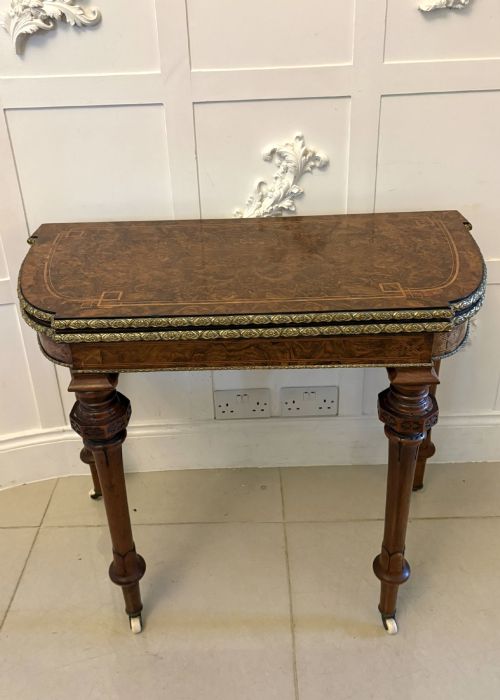
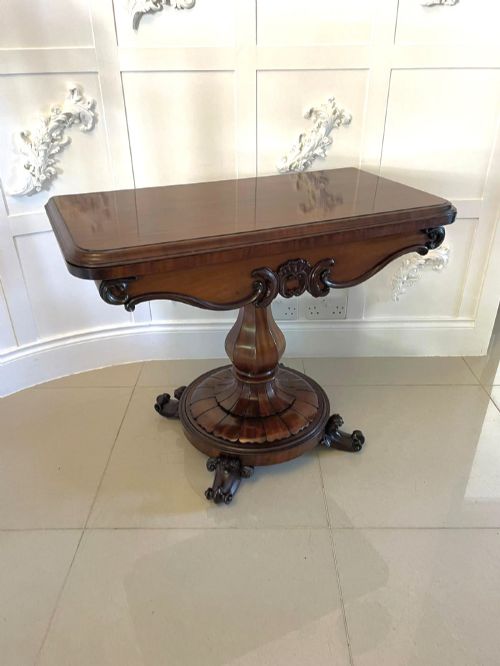
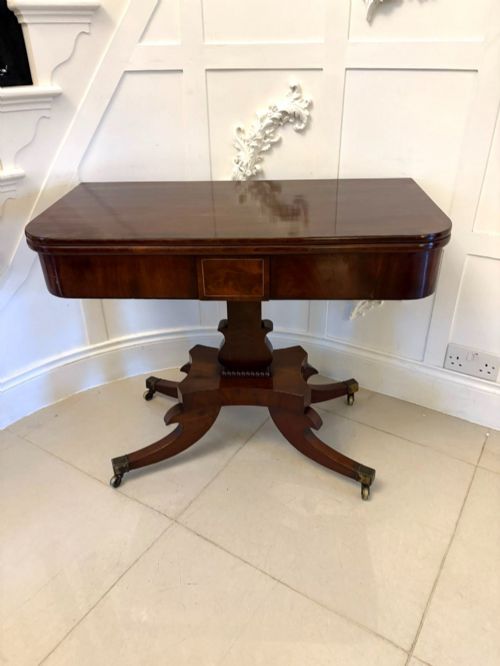
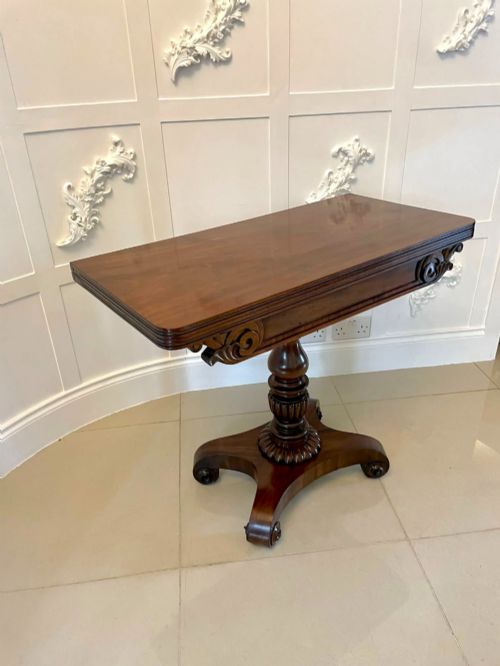
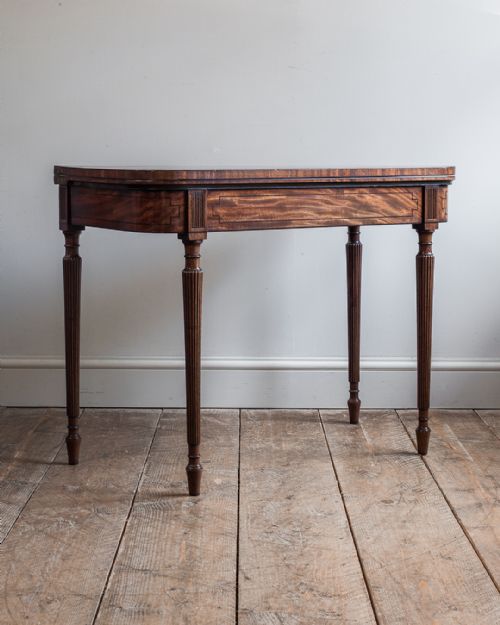
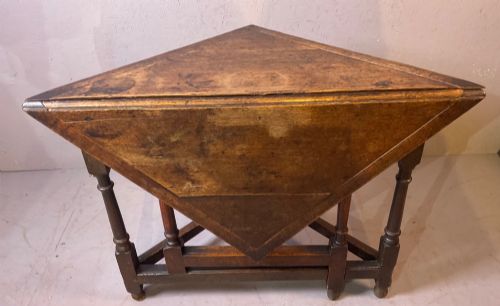
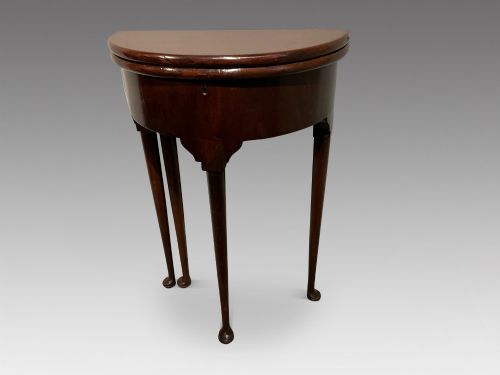

Folding Hall Console Table
Folding hall console table designs combine everyday surface space with compact cleverness, offering timber craftsmanship from the eighteenth, nineteenth and twentieth centuries.
Folding Hall Console Table
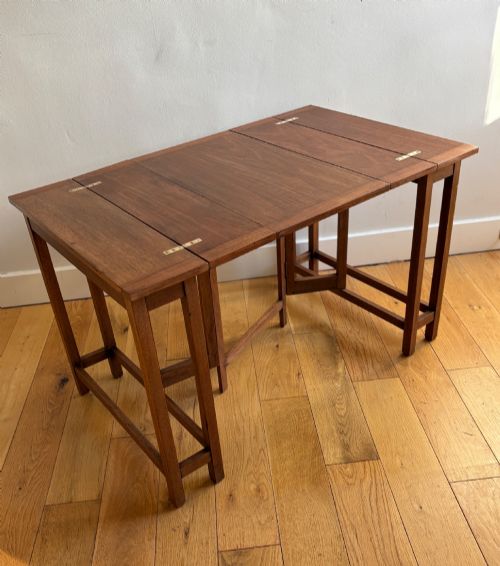
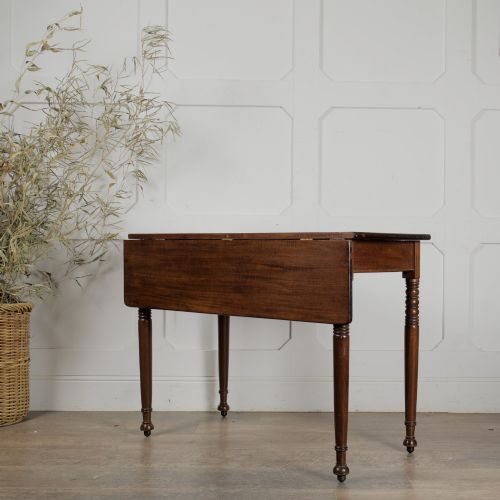
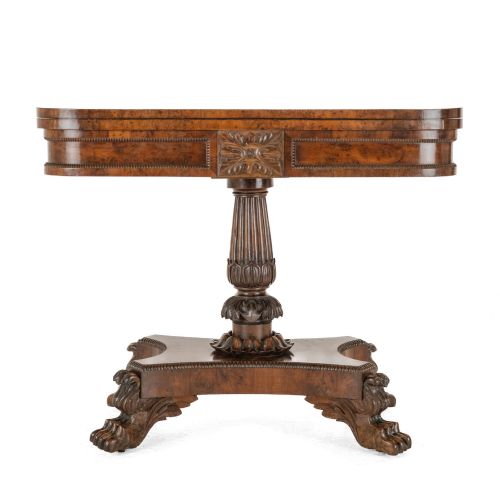
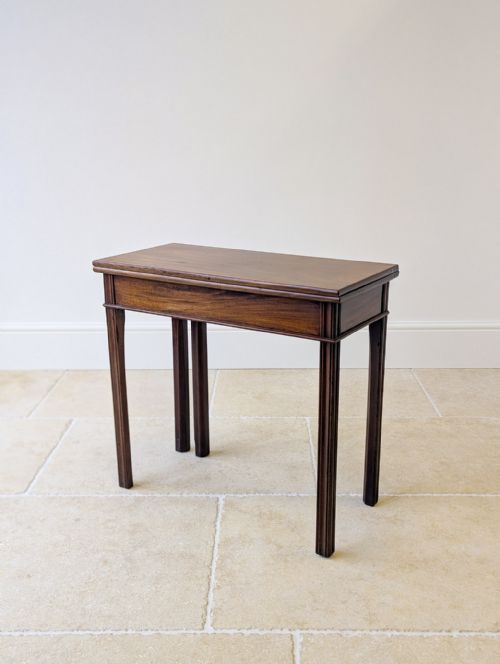
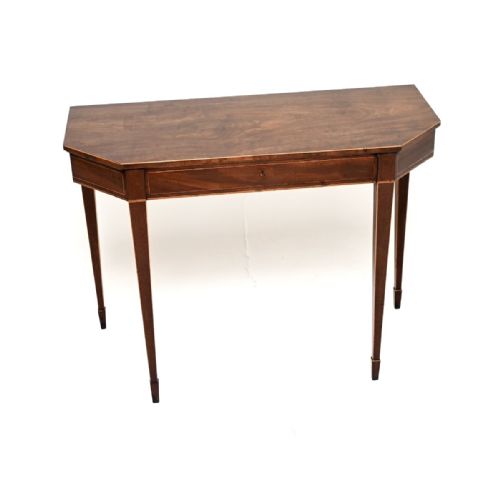
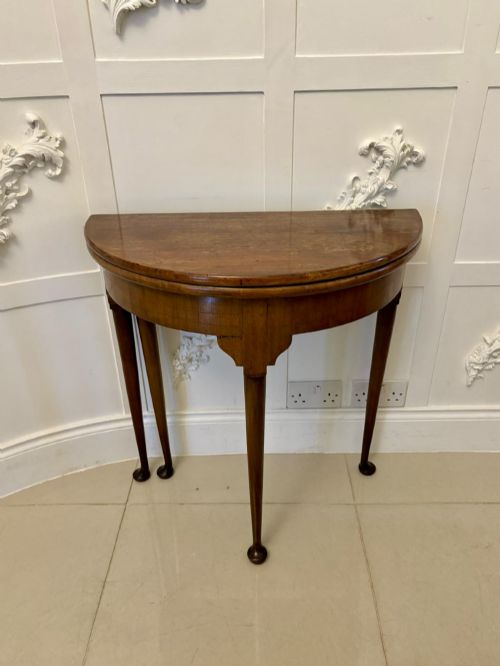
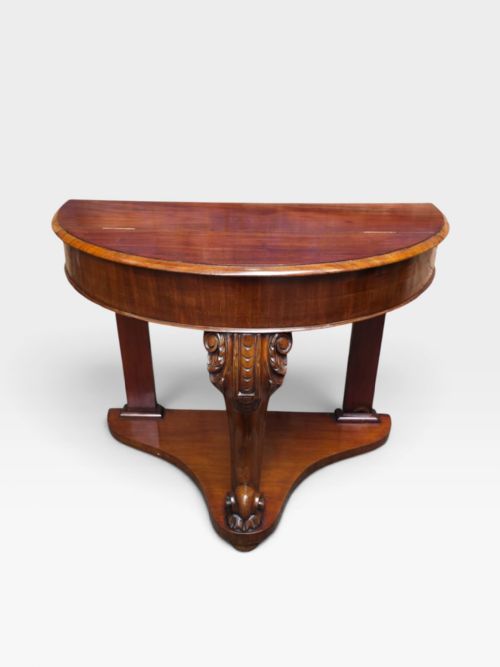
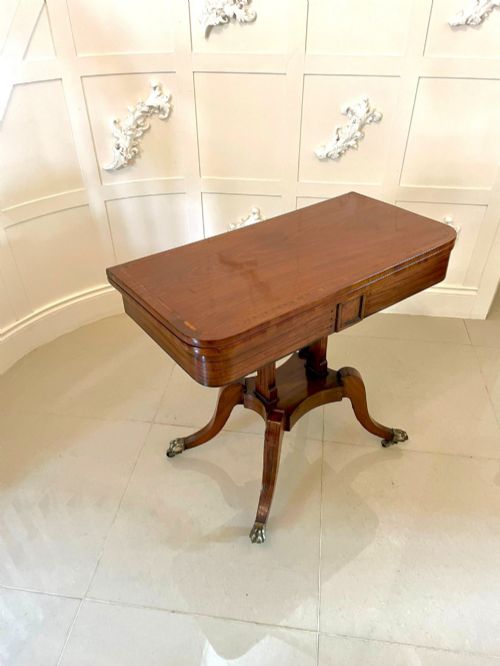
A folding hall console table sits flat against an entrance wall until a hinged leaf opens to create a larger surface for cards, tea or display. The examples on this page span the Georgian, Regency, William IV and Victorian eras, along with later twentieth-century interpretations.
Most pieces encountered here take a demi-lune, D-shape or rectangular form designed to fit narrow passageways. Cabinetmakers often built these tables to double as games surfaces or side tables when closed.
Timbers range from native oak and elm to imported mahogany, walnut and satinwood. Many feature fold-over tops supported by pivoting rear legs or swing actions.
Materials and construction methods
Makers constructed these tables primarily in solid mahogany, oak, walnut and fruitwood, frequently applying decorative veneers like burr walnut, amboyna and satinwood to the primary surfaces. Edge banding in contrasting timbers such as boxwood added crisp geometric definition to demi-lune tops.
Cabinetmakers utilised complex hinge mechanisms and pivoting framework to allow the folding leaves to operate smoothly without sagging. Brass mounts, ormolu details and subtle wood inlay completed the ornamentation on higher-end pieces.
Folding Hall Console Table Retail Price Guide 2026
Typical asking prices for folding hall console table among the pieces listed under this phrase on Sellingantiques today, from the lower quarter to the upper quarter. They describe what is for sale here now, not the wider market.
Listings feature mahogany, oak, walnut, satinwood and burr walnut across periods from the seventeenth century through the Victorian era.
Distinctions in construction and design
Quality rests in the selection of figured timber veneers and the precision of the pivoting hinge mechanism. Superior pieces maintain stable, flat leaves that align perfectly with the frieze when closed.
The sophistication of the internal pivot mechanism and the crispness of the boxwood or fruitwood inlay separate standard utility tables from finer parlour and hall examples.
Fred Foster
The Folding Hall Console Table Glossary
- Demi-lune
- A half-moon shape popular for console and card tables placed against entrance walls. This profile allowed tables to project minimally into narrow hallways.
- Fold-over
- A hinged top design where the surface unfolds to double its usable area. The folding leaf is typically supported by a swing leg or a pivoting frame.
- Inlay
- A decorative technique where contrasting woods or brass are inserted into recesses within the primary timber surface. This creates geometric or botanical patterns along the table edges.
- Frieze
- The horizontal band of wood situated directly beneath the tabletop. Drawers or decorative mouldings are frequently housed within this structural section.
- Ormolu
- Gilt-bronze mounts applied as decorative ornaments to furniture frameworks. These metal accents appeared frequently on Victorian walnut and mahogany pieces.
Folding Hall Console Table: Frequently Asked Questions
What is a folding hall console table?
A folding hall console table is a space-saving furniture piece designed to stand flat against a wall with a hinged top that opens into a full surface. These tables served multiple domestic purposes in hallways and reception rooms.
Craftsmen built them in various shapes, including D-shapes and demi-lune curves, to fit tight architectural spaces while offering flexibility for entertaining.
How do you use a folding hall console table today?
These tables function well in narrow entryways as a place to drop keys or display decorative objects against the wall. Opening the hinged leaf transforms the console into a card table or a larger serving surface.
Positioning them in living rooms or hallways allows you to switch between a slim profile and a functional table surface instantly.
How do I identify a Georgian folding table?
Georgian folding tables typically feature solid mahogany or figured veneers with restrained brass hinges and straight or tapering legs. Their proportions reflect eighteenth-century design standards, prioritising clean lines and balanced joinery.
Examining the underside reveals period construction methods, such as hand-cut dovetails and traditional pivot joints for the folding leaf.
What woods were used for these console tables?
Makers relied heavily on mahogany, oak and walnut for the primary structure of these tables. Finer examples incorporated decorative veneers like satinwood, burr walnut and amboyna.
Contrasting stringing lines in boxwood or fruitwood often highlighted the edges of the folding tops and friezes.