



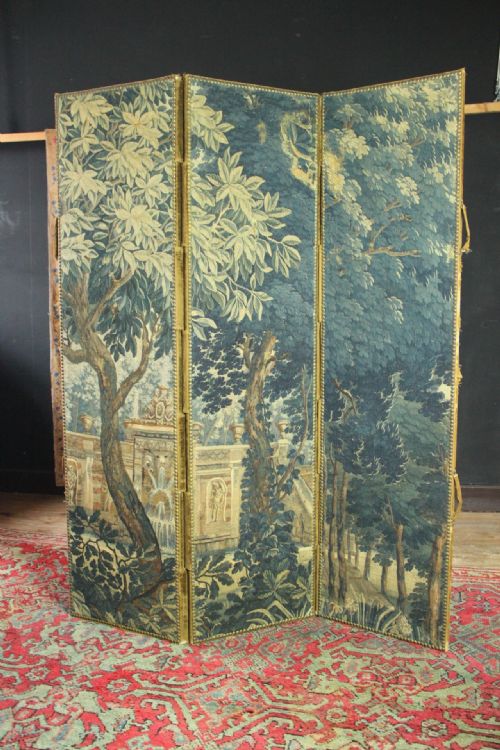
Folding Draught Screen
A folding draught screen creates private spaces and breaks cold draughts, appearing here in wood, leather, and painted finishes from the eighteenth century onwards.
Folding Draught Screen
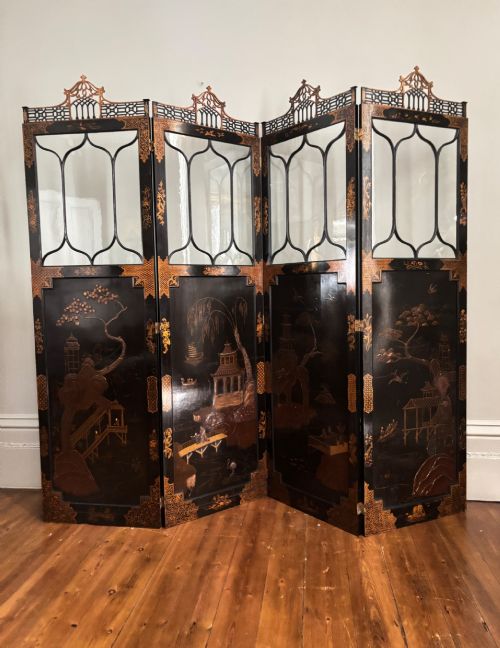
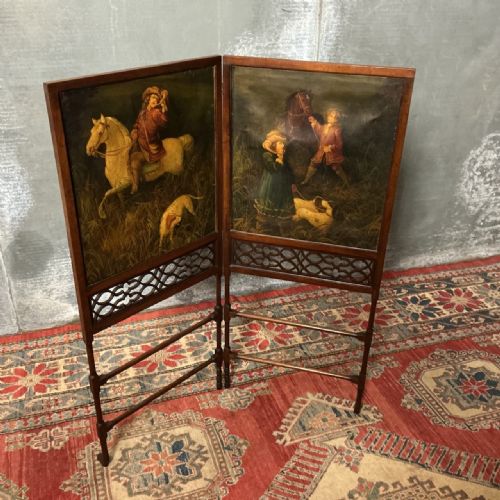
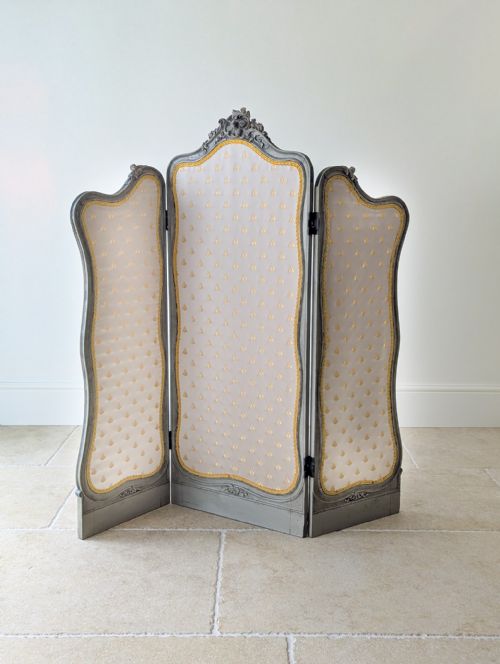
A folding draught screen is a movable partition designed to divide rooms and deflect air currents in domestic spaces. The pieces gathered here range from tall multi-fold room dividers to smaller privacy screens and modest fire screens.
Victorian and Edwardian examples sit alongside eighteenth-century works in leather and lacquer, offering varying numbers of panels connected by hinges.
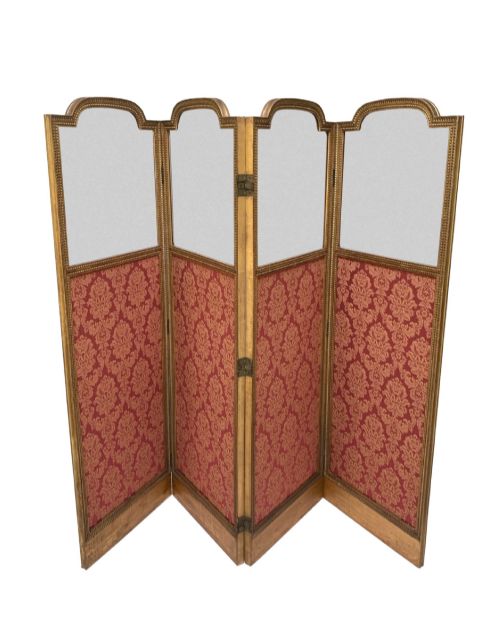
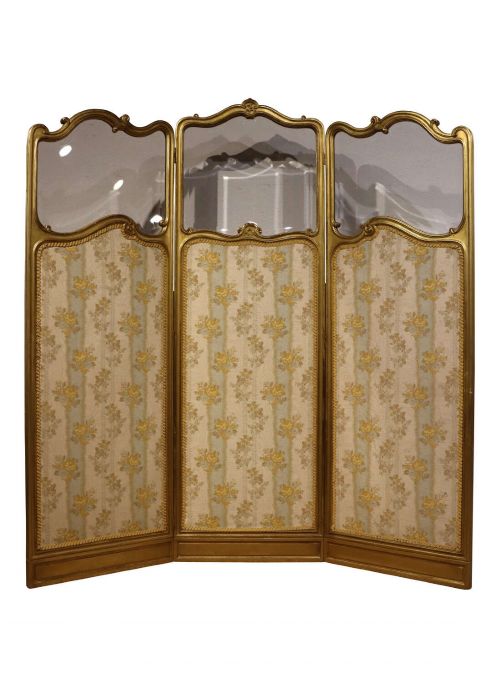
English country house pieces and French giltwood designs provide the primary forms met on this page, alongside Arts and Crafts oak frames and imported Asian screens.
Materials and construction
Carpenters constructed frames in mahogany, walnut, oak, and giltwood, housing panels of painted leather, fabric, oil paint, needlepoint, and glass. Hinge mechanisms allowed panels to fold in both directions.
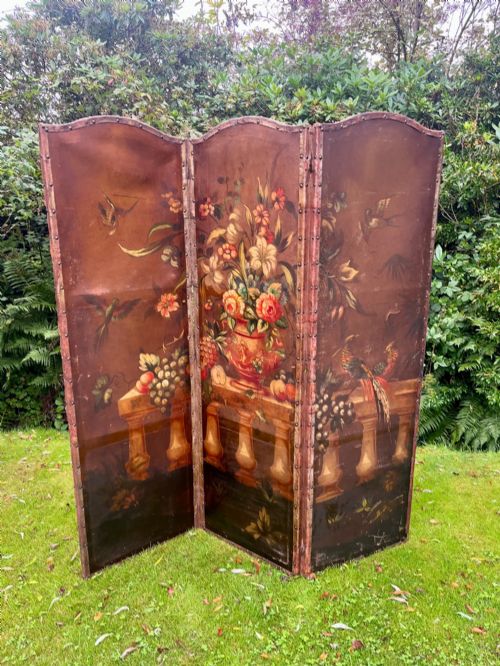
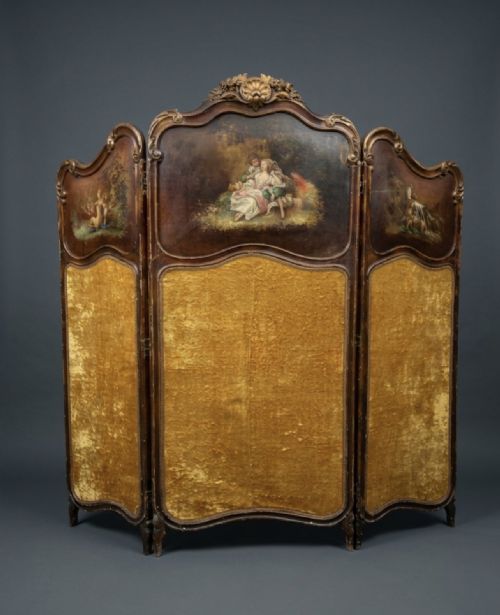
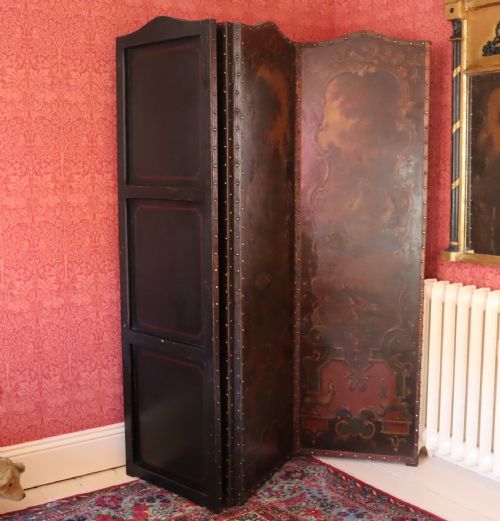
Surface decoration involved hand-painted oils, gilt embossing, lacquer, scrap work, and decoupage applied directly to leather, wood, or textile panels.
Debating societies utilised sturdy oak panels to shield speakers from view during political discussions.
Judging quality in folding draught screens
Quality rests in the execution of the painted or carved panels and the stability of the timber frame. Substantial country house examples use dense hardwoods and robust joining techniques to support multiple heavy folds.
Fine decorative work distinguishes superior screens, seen in detailed brushwork on leather panels, crisp giltwood carving, and bevelled glass. The integration of original hinges and intact textiles elevates a piece.
Paul Sormani·William Morris
The Folding Draught Screen Glossary
- Cordoban leather
- Heavy leather decorated with embossed and gilt patterns, originating from Spanish tanning methods. It was frequently used for panels in eighteenth-century screens.
- Verdure screen
- Tapestry or painted panel depicting a lush landscape of foliage and trees. These forest scenes were popular in Flemish and French interiors.
- Modesty screen
- A low folding panel placed to shield diners from kitchen draughts or to provide partial privacy. They require less height than full room dividers.
- Coromandel lacquer
- Chinese carved lacquer work featuring dark grounds incised and filled with colours. Screens using this technique often comprise multiple tall panels.
- Scrap work
- A Victorian craft technique involving the application of numerous printed paper cut-outs onto a backing surface. Screens covered in scrap work display dense collages of historical images.
Folding Draught Screen: Frequently Asked Questions
How were folding draught screens used?
These screens divided large drawing rooms into intimate seating areas and blocked cold air movements from doors and windows. They also created temporary changing spaces in bedrooms.
Shorter versions served near fireplaces to protect occupants from excessive radiant heat while allowing warmth to circulate.
How do I care for a leather screen?
Painted and gilt leather panels require stable indoor humidity to prevent the material from drying and cracking. Keep them away from direct sunlight and heat sources.
Dust surfaces gently with a dry, soft cloth, avoiding commercial cleaning liquids or saddle soaps that might damage old paint.
Are these screens stable on carpets?
Multi-fold screens stand securely when panels are arranged in a zig-zag configuration rather than pulled straight. Thick carpets can sometimes affect the alignment of hinges.
Heavier wood and leather versions maintain their footing better than lighter fabric panels, which can catch drafts if placed near open doors.
How do I distinguish eighteenth-century leather screens?
Eighteenth-century examples often feature heavy hand-tooled leather with gilt embossing in Chinoiserie or floral motifs. The weight of the panels and the patina of the hide differ markedly from later reproductions.
Construction details on the reverse, including linen backing and hand-forged hardware, help confirm the period.