
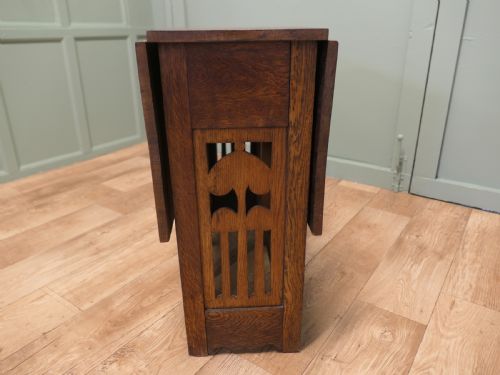
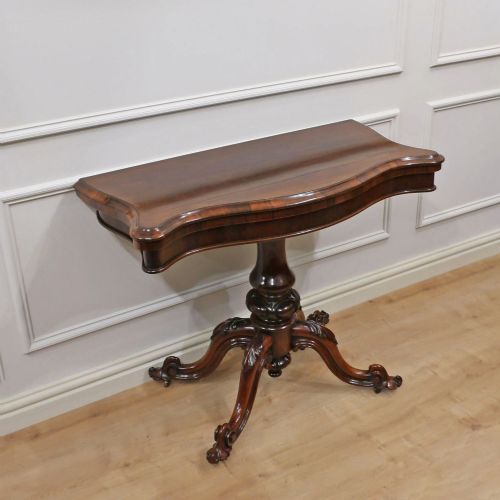
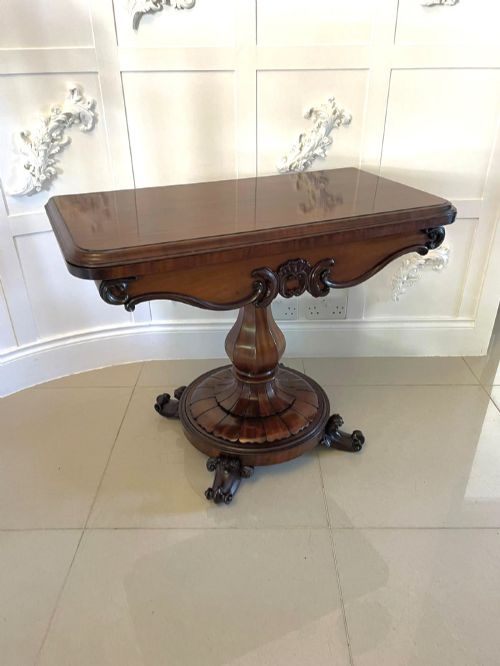
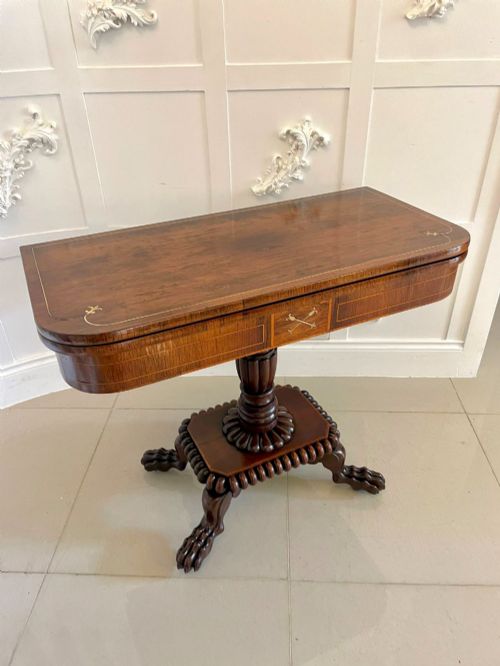
Folding Carved Side Table
These folding carved side tables bring together centuries of resourceful carpentry and intricate regional craft, offering adaptable surfaces that fold away neatly when not in use.
Folding Carved Side Table
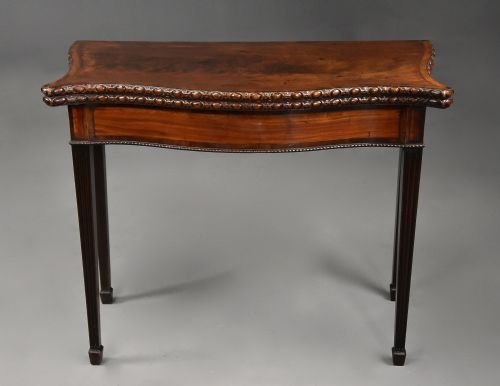
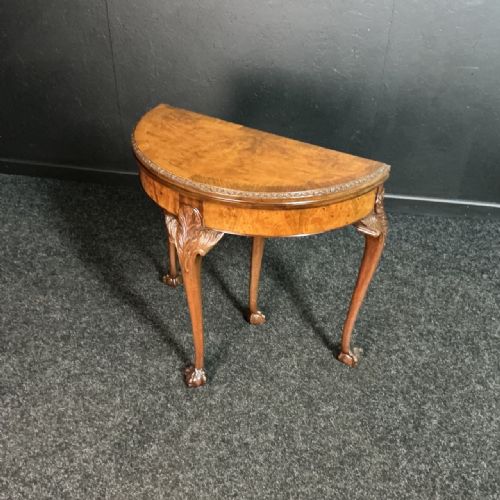
A folding carved side table serves multiple functions as an occasional, card, tea, or tray table, emerging in various forms from the seventeenth century through to the Edwardian period and the early twentieth century. Buyers seeking this phrase encounter a rich mix of English domestic pieces alongside distinct Anglo-Indian and Middle Eastern imports.
The most prevalent examples on this page span the Victorian era and the late nineteenth century, frequently incorporating drop leaves, folding actions, or removable trays on separate stands. These tables range from sturdy oak gateleg designs to octagonal tables and elaborate card tables with rotating or folding tops.
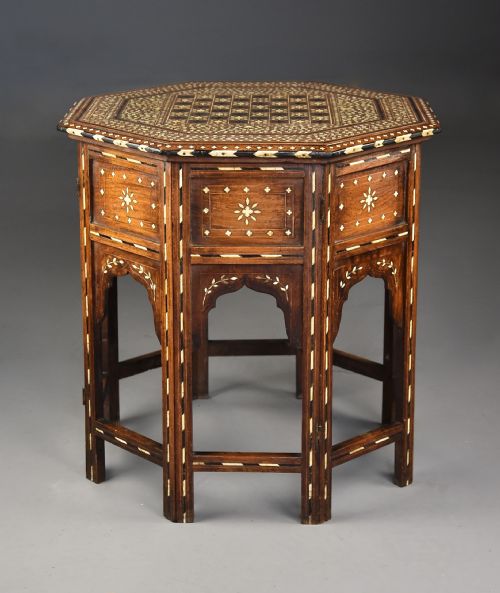
Origins stretch from regional English workshops utilising native timbers to specialised production centres such as Hoshiarpur, where artisans carved dense hardwoods with dense floral and geometric patterns. This variety allows collectors to choose between formal European period furniture and heavily ornamented export pieces.
Materials and construction
Cabinetmakers relied on a spectrum of fine timbers, notably mahogany, walnut, burr walnut, rosewood, oak, teak, padauk, and hardwood, selected for their grain and stability. These woods formed the structural carcases and folding mechanisms, often enriched with brass inlay, mother of pearl, or contrasting veneers.
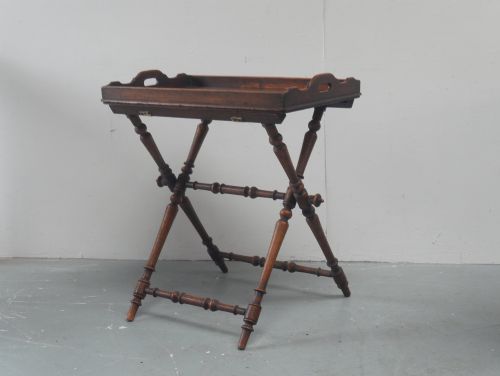
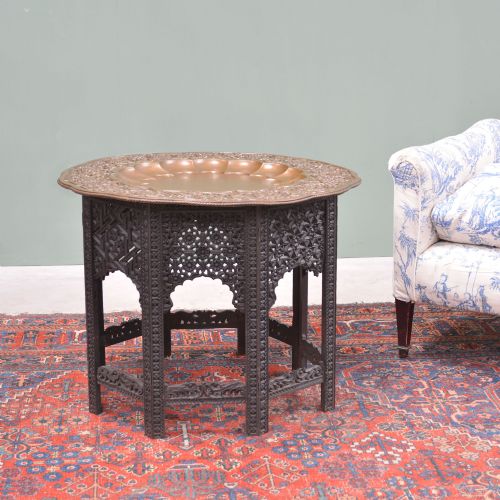
Carving technique defines the category, with artisans employing chisels and gouges to carve deep relief patterns of foliage, dragons, or geometric motifs into teak and padauk. Folding actions depend on clever joinery, from rule joints on Pembroke and drop-flap tables to hinged gatelegs and removable tray tops resting on collapsible X-frames.
Listings feature timbers ranging from native English oak and walnut to imported padauk, teak, and rosewood.
Judging quality
Quality rests upon the crispness of the hand-carving and the integrity of the timber selection, where deeply undercut foliage and well-matched burr veneers distinguish superior work from simpler production. The precision of the folding mechanism and the tightness of the original joints dictate how well a table survives centuries of movement.
Surface finish and original patination separate notable examples from later or heavily restored pieces, with rubbed-in wax finishes showing the depth of the wood rather than modern gloss. The fidelity of inlays, whether brass wire or mother of pearl elements, indicates the patience and skill of the original workshop.
The Folding Carved Side Table Glossary
- Gateleg table
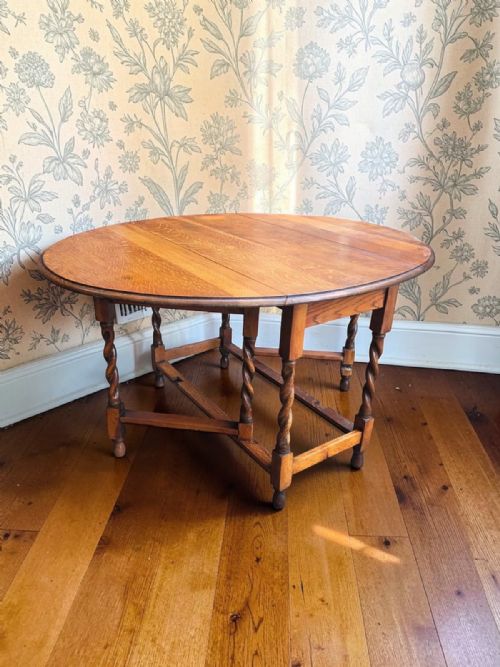
- A table with hinged drop leaves supported by legs that swing outward like a gate to hold the leaves upright. This clever mechanism provides a large surface area that collapses into a slim profile.
- Sutherland table
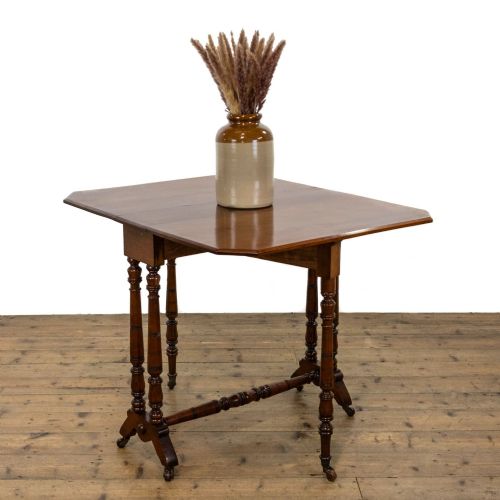
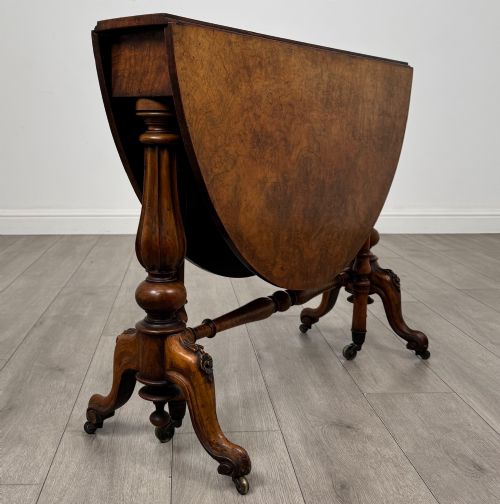
- A narrow drop-leaf table with exceptionally wide flaps and a slender folding base. It was designed in the nineteenth century to save space in crowded drawing rooms.
- Card table
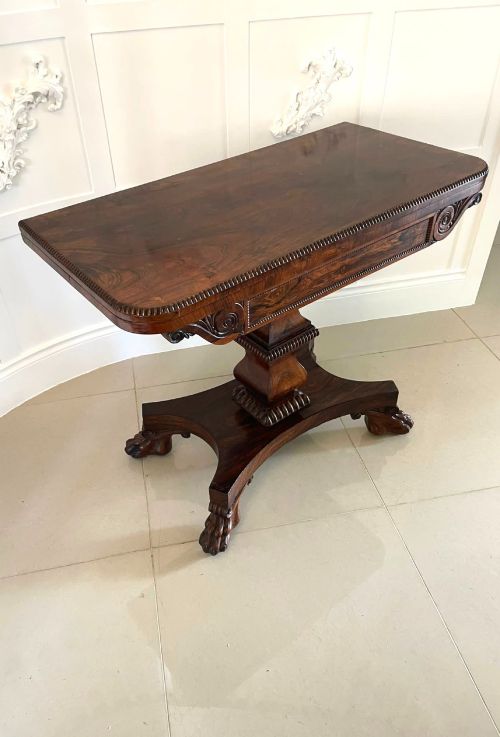
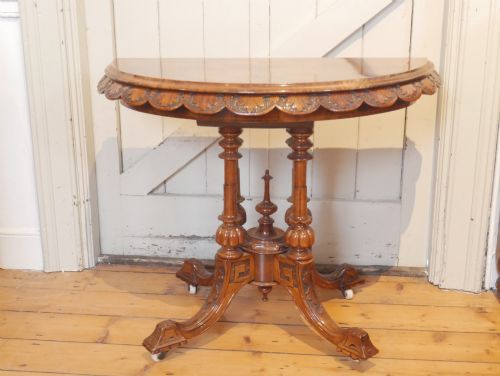
- A folding table featuring a hinged top that opens to reveal a baize- or leather-lined playing surface. Many examples include a concealed well for storing counters and cards.
- Pembroke table
- A rectangular table with two hinged drop leaves on opposing sides and a small drawer beneath the top. It appeared during the eighteenth century as a versatile breakfast or writing surface.
- Octagonal table
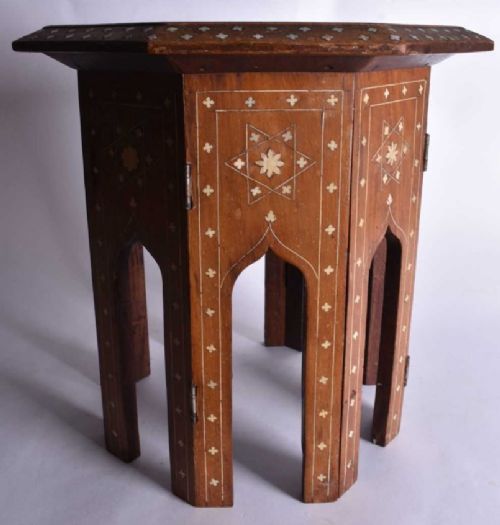
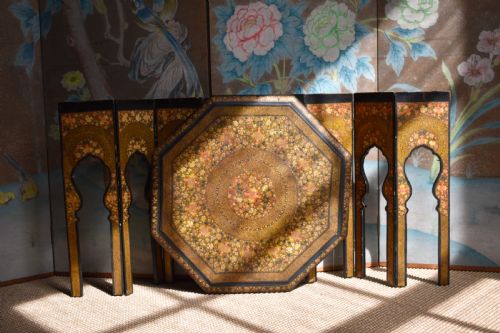
- A table featuring an eight-sided top, frequently seen in Anglo-Indian Hoshiarpur pieces decorated with intricate chip-carving. The geometric top allows for dense all-over ornamentation.
Folding Carved Side Table: Frequently Asked Questions
How do I use a folding carved side table today?
These tables adapt easily to modern rooms as bedside stands, lamp tables, or occasional surfaces for drinks and books. Because they fold or drop their leaves, they can be tucked against a wall when floor space is needed.
Their decorative carved surfaces and rich wood tones also allow them to function purely as sculptural accents in a hallway or living space. Many retain functional folding mechanisms that make them practical for flexible room layouts.
What is an Anglo-Indian Hoshiarpur table?
Hoshiarpur tables originate from a Punjab town renowned for skilled woodcarving and inlay work during the British colonial period. Artisans carved dense floral and geometric patterns into dense woods like teak and shesham.
These pieces frequently feature folding octagonal tops or collapsible stands inlaid with contrasting resins or mother of pearl. They represent a distinct cross-cultural design movement popular in late Victorian and Edwardian interiors.
How do I tell a Victorian table from an earlier one?
Victorian tables often display heavier proportions, bolder turning, and a wider variety of exotic veneers like burr walnut alongside traditional mahogany. They frequently incorporate mechanical innovations suited to expanding domestic life, such as Sutherland actions and revolving card tops.
Earlier eighteenth-century pieces, by contrast, tend to rely on restrained classical lines, pad feet, or fine mahogany timbers with understated carved bracket feet. Examining the secondary timbers inside drawers and the hand-cut nature of the joinery helps clarify the period.
Are these tables sturdy enough for daily use?
Most antique tables were built from dense hardwoods and sturdy domestic timbers designed for generations of heavy use. Proper construction using traditional tenon and mortise joints ensures they remain stable under normal household conditions.
Care should be taken with delicate folding mechanisms and intricate carved edges to avoid accidental knocks. Maintaining stable indoor humidity prevents timber shrinkage and keeps hinges operating smoothly.