


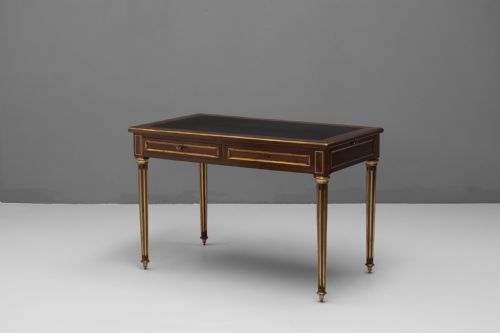
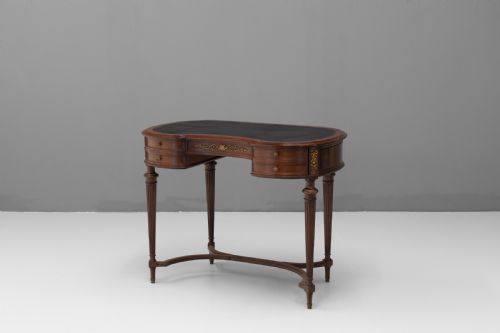
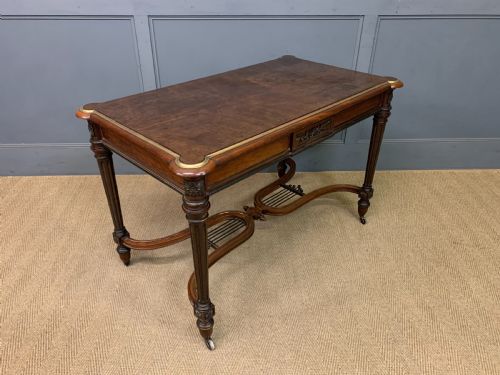


Fluted Leg Writing Bureau
A fluted leg writing bureau brings refined craftsmanship into a room, offering a dedicated surface for correspondence.
Fluted Leg Writing Bureau
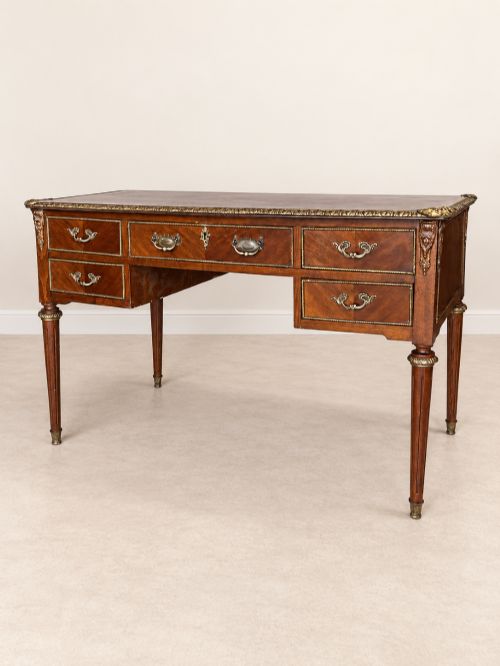
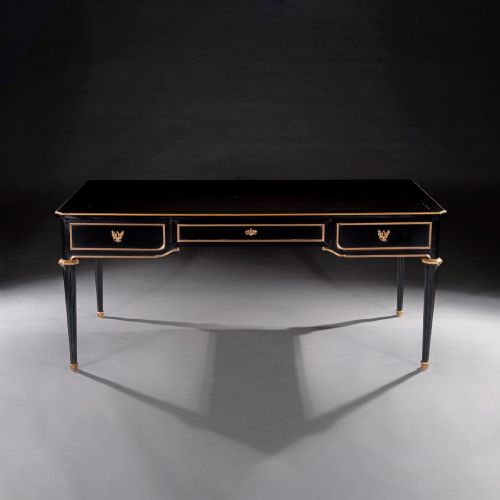
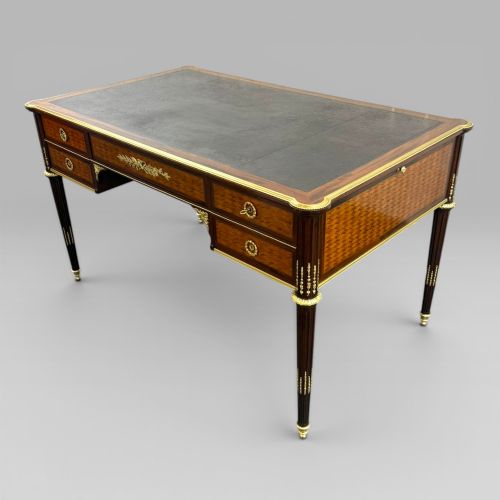
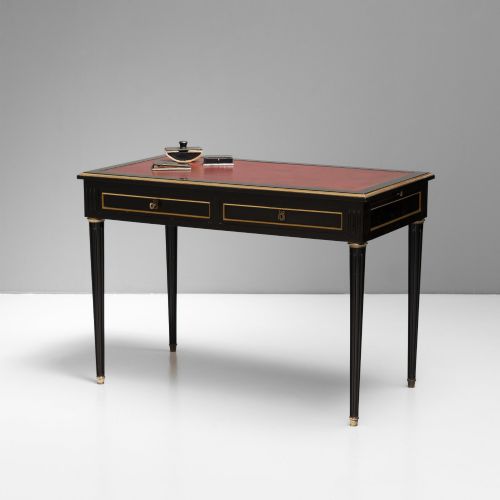
A fluted leg writing bureau encompasses refined writing desks and tables drawing on French and English traditions. Buyers frequently encounter examples executed in the Louis XVI style or Edwardian period, often featuring characteristic fluted supports.
The selection ranges from elaborate French bureau plat writing tables to English chamber writing desks. Mahogany predominates among the materials, accompanied by satiné, kingwood, and ebonised wood.
Origins span the eighteenth to the mid-twentieth century, with nineteenth-century revivals strongly represented. These pieces serve as practical writing surfaces while carrying distinct historical aesthetic signatures.
Materials and Construction
Construction relies upon cabinet timbers such as mahogany and exotic veneers including kingwood and satiné, frequently mounted with brass or gilt bronze. Carved or turned fluting decorates the legs, anchoring the structural composition.
Surfaces often incorporate inset leather writing panels and delicate parquetry work. Ormolu mounts and brass hardware are applied to accentuate structural lines and corners.
Mahogany is the most frequently recorded timber across the listed fluted leg writing bureau pieces, accompanied by ebonised wood and kingwood.
Craftsmanship and Detail
Quality reveals itself in the precision of the veneer work, the crispness of the fluting on the legs, and the integration of metal mounts. Superior examples demonstrate careful timber selection and finely jointed drawer construction.
The refinement of the brass or gilt bronze hardware and the quality of the leather writing surface distinguish the finer interpretations. Attention to internal fittings and drawer execution further separates standard production from masterwork output.
François Linke·Henry Dasson·Gillows
The Fluted Leg Writing Bureau Glossary
- Fluting
- Parallel vertical grooves cut into columns or furniture legs for decorative effect. This classical detail draws on ancient architectural precedents.
- Ormolu
- Gilt bronze ornamentation applied to furniture mounts and hardware. The technique involves coating bronze with a mercury and gold amalgam.
- Parquetry
- Geometric wood inlay forming patterned surfaces on tabletops and drawers. Artisans use contrasting timber grains to create visual depth.
Fluted Leg Writing Bureau: Frequently Asked Questions
What is a bureau plat?
A bureau plat is a freestanding table designed for writing, distinguished by drawers beneath the top and finished on all sides.
These desks were traditionally placed in the middle of a study rather than pushed against a wall.
How do I identify Louis XVI style?
Louis XVI style furniture is characterised by straight lines, symmetry, and classical motifs such as fluted legs.
This aesthetic contrasts with the preceding curved forms of the Louis XV period, favouring restrained rectangular proportions.
Where should I place a writing desk?
Writing desks with finished backs, such as bureau plat models, suit placement in the centre of a room.
Other styles with panelled backs function effectively against perimeter walls or within home library settings.
What woods are typical for these desks?
Mahogany serves as the primary structural timber across many examples from both English and French workshops.
Exotic veneers including kingwood and satiné frequently appear on French revival pieces alongside ebonised wood.