
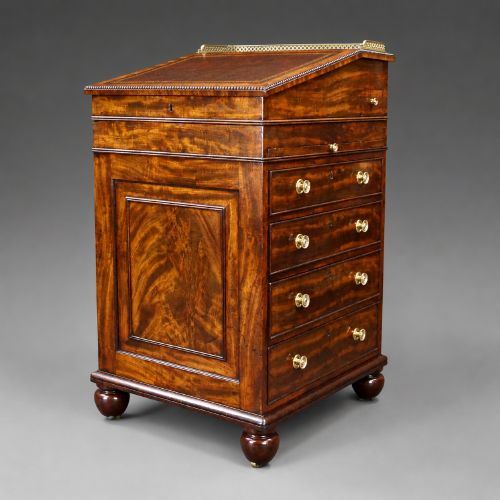
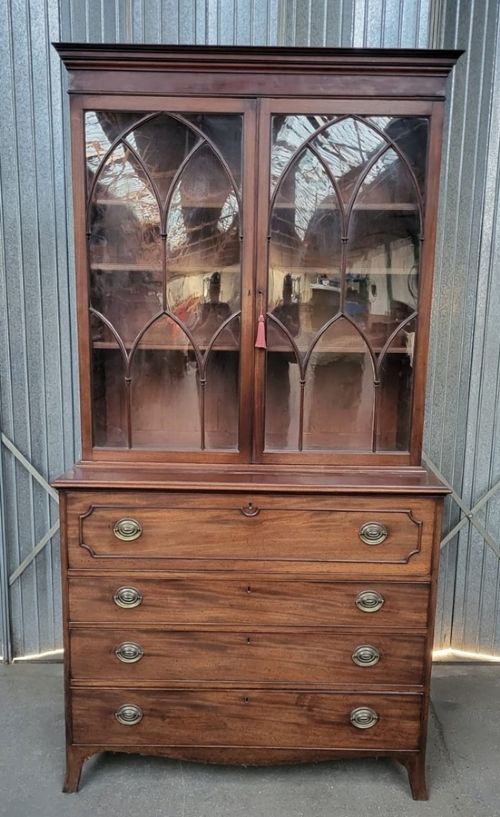
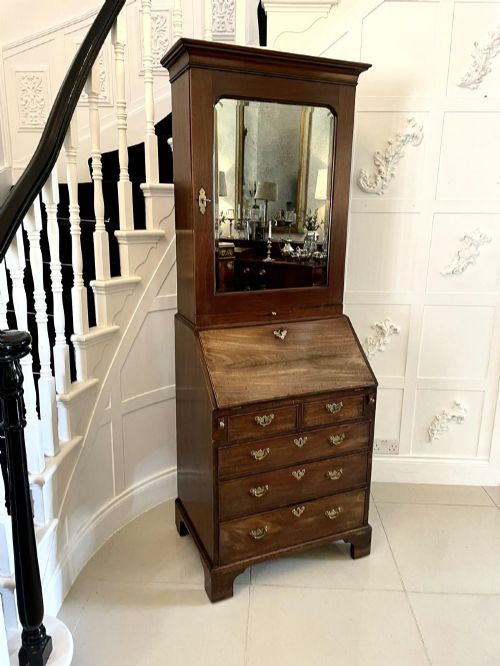
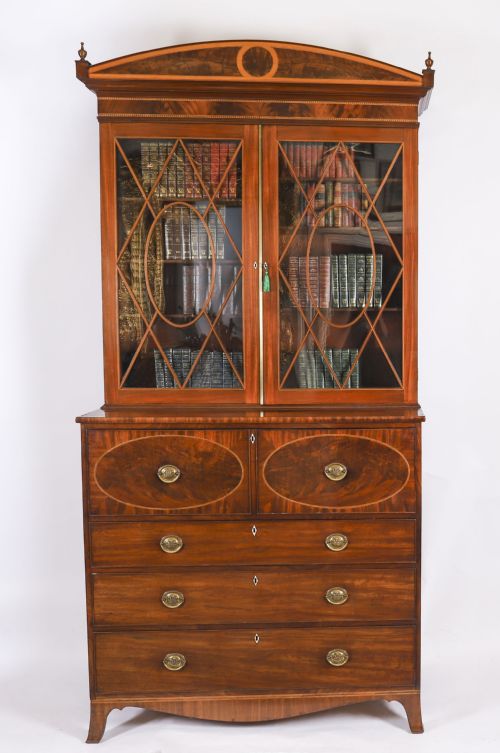

Brown Mahogany Writing Bureau
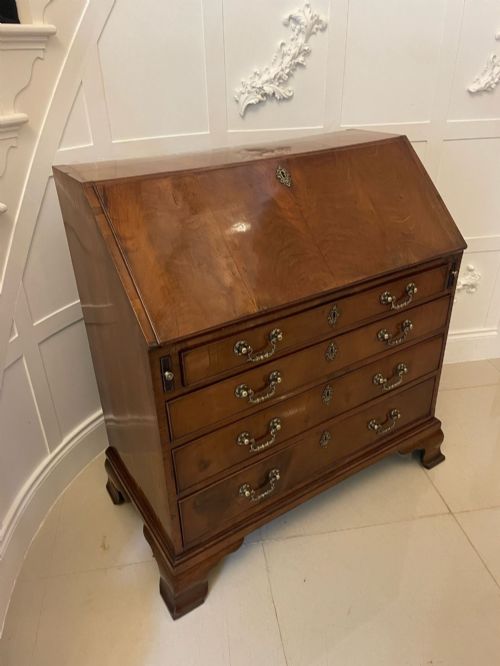
A brown mahogany writing bureau offers a practical workspace combined with concealed storage, housing papers behind a drop-front or writing flap.
Brown Mahogany Writing Bureau
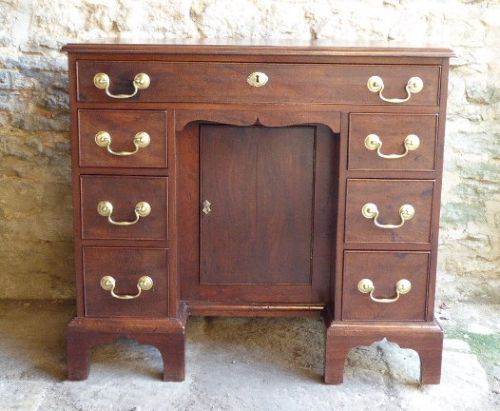
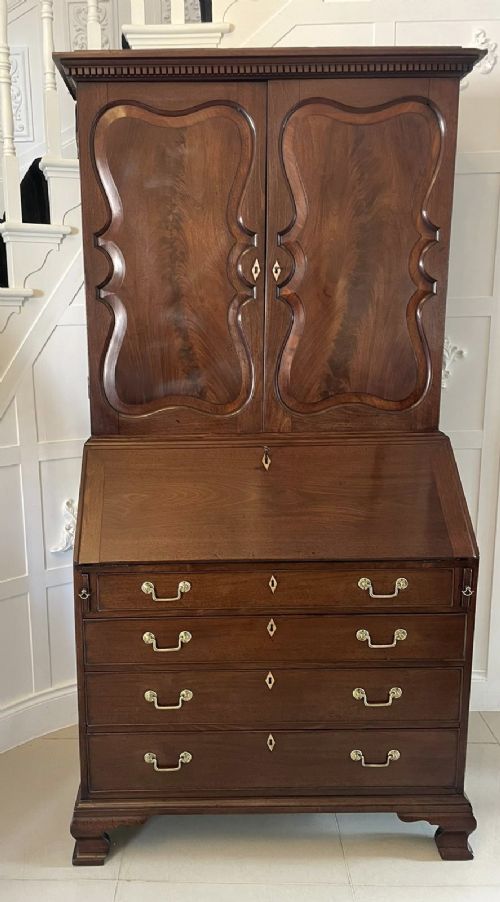
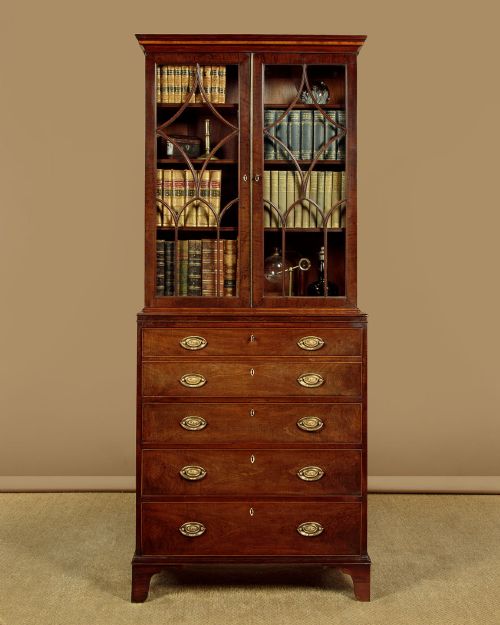
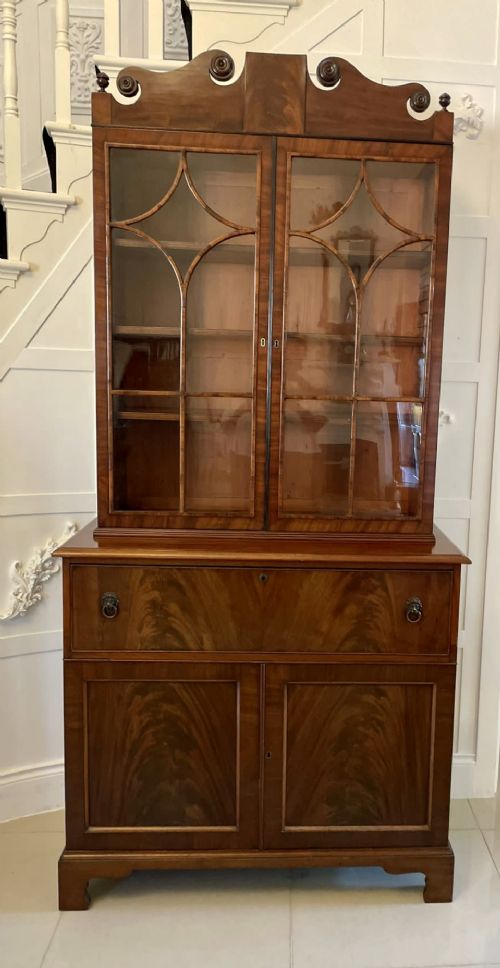
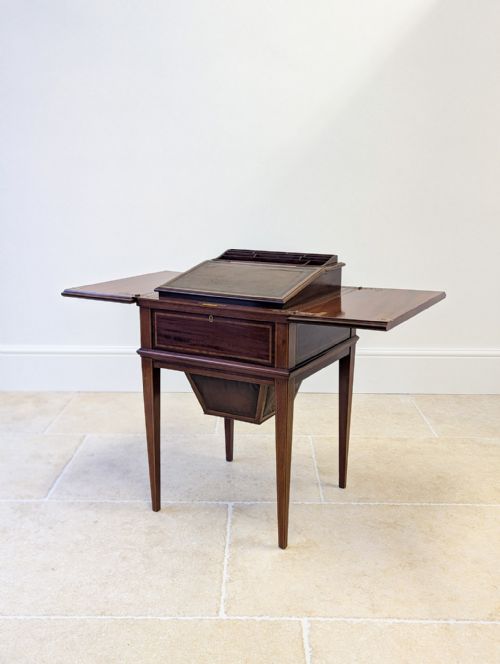
When searching for a brown mahogany writing bureau, buyers encounter various forms designed for household correspondence and record keeping. The selection ranges from compact writing tables and kneehole desks to tall bureau bookcases and secretaire bookcases.
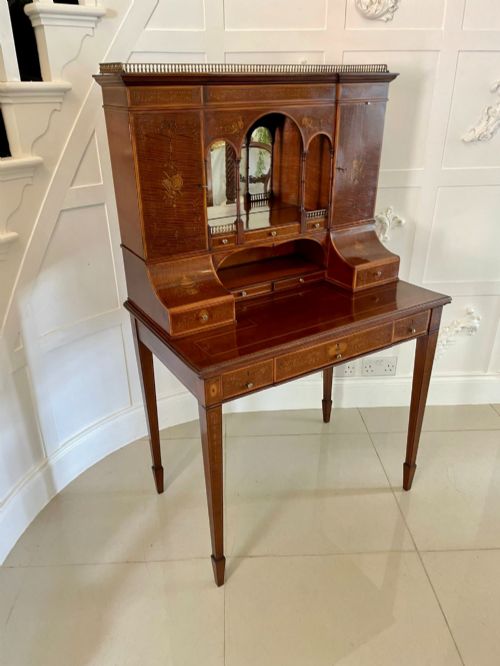
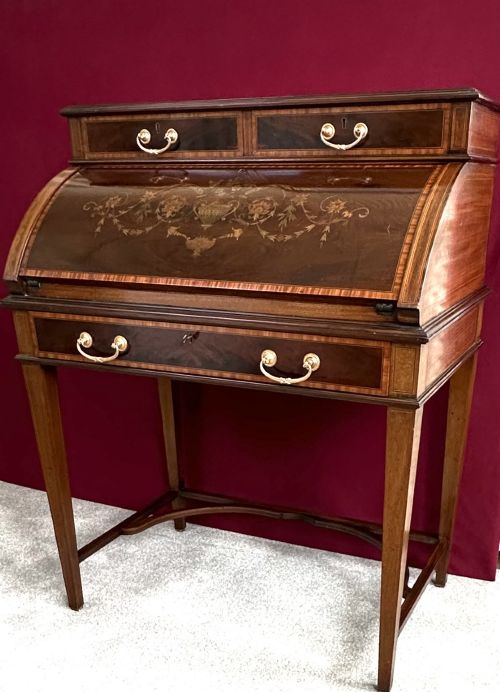
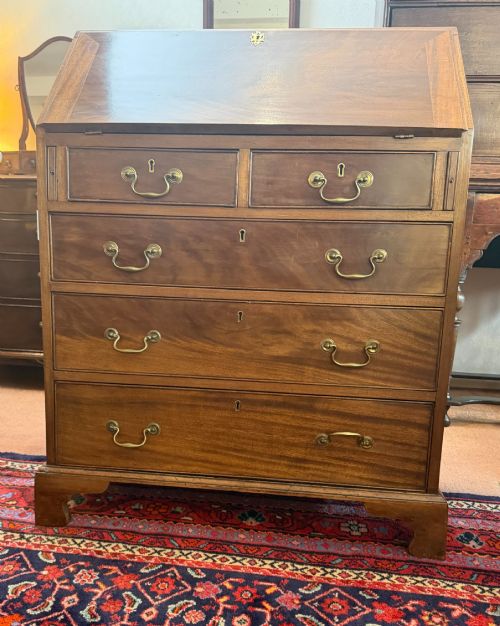
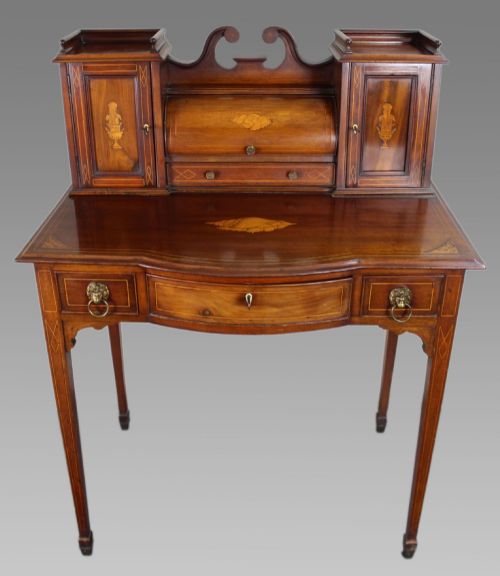
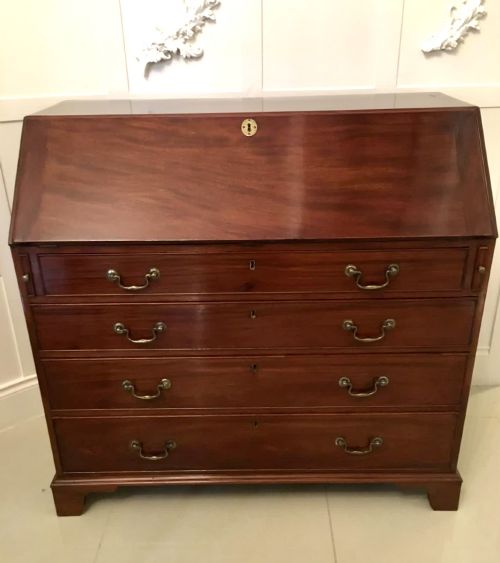
The pieces span multiple eras, appearing in Georgian, Regency, Victorian, and Edwardian designs. Georgian examples often feature straightforward fall fronts, whilst later Edwardian and Victorian pieces incorporate satinwood inlay, glass panels, and cylinder rolls.
Many items combine a sloping writing flap with internal pigeonholes and drawers. Alongside standard desks, the inventory includes specialised forms such as Davenport desks, Carlton House desks, and secretaire abattants.
Materials and construction methods
Makers utilised solid mahogany and figured flame mahogany veneers over secondary timbers to achieve rich grain patterns on exterior surfaces. Brass hardware, including drop handles and key escutcheons, provides functional contrast to the dark wood.
Writing surfaces frequently integrate fitted leather inserts for a durable writing plane. Additional decorative elements include contrasting satinwood stringing, marquetry inlay, and glazed mirror glass doors on bookcase variants.
Materials recorded include mahogany, flame mahogany, satinwood, oak, brass, leather, and glass.
Distinctions in construction and finish
Execution of internal drawer joinery and the selection of timber figure separate standard examples from finer workshops. Figured flame mahogany veneers and precise dovetailing indicate higher standards of cabinetmaking.
Survival of original brass handles and fitted leather writing surfaces preserves the integrity of the piece. The crispness of inlaid satinwood stringing and marquetry details similarly determines the refinement of the desk.
Gillows·François Linke·Edwards and Roberts·James Mein of Kelso·Maple and Co London
The Brown Mahogany Writing Bureau Glossary
- Bureau
- A desk featuring a sloping hinged flap that opens to reveal a fitted interior of small drawers and pigeonholes.
- Secretaire bookcase
- A tall cabinet combining a upper bookcase section with a lower drawer fitted as a pull-out writing desk.
- Fall front
- A vertical or angled panel hinged at the bottom that drops forward to serve as a writing surface.
- Kneehole desk
- A freestanding desk with a recessed central space for the user's legs, flanked by pedestals of small drawers.
- Cylinder desk
- A desk enclosing the writing surface beneath a quarter-cylinder rolling wooden shutter.
Brown Mahogany Writing Bureau: Frequently Asked Questions
How do I use a bureau desk?
Lower the hinged writing flap to reveal the internal compartments and use the flat surface for writing.
Close the flap and secure it with a key when the workspace is not in use to conceal papers.
What is a secretaire bookcase?
A secretaire bookcase combines upper shelving for books with a lower drawer that pulls down to form a desk.
This dual function saves floor space by merging a library bookcase with a writing bureau.
How are different periods identified?
Georgian and Regency pieces tend to display heavier proportions, solid mahogany construction, and minimal exterior decoration.
Edwardian and Victorian versions frequently incorporate satinwood inlay, painted details, and lighter freestanding forms.
Where should I place a bureau in a room?
Freestanding kneehole desks and cylinder desks suit central room placement with finished backs visible.
Standard bureau bookcases work best against flat walls to support the height of the upper bookcase.