


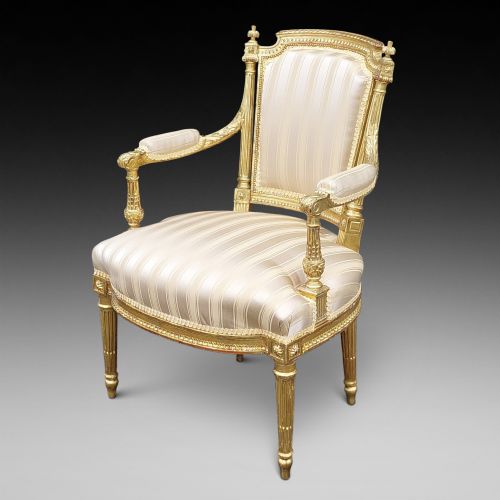


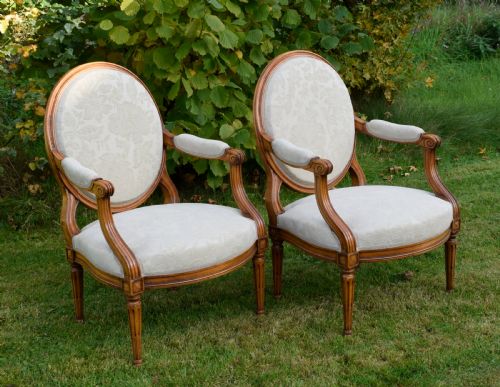


Fluted Leg Open Chair
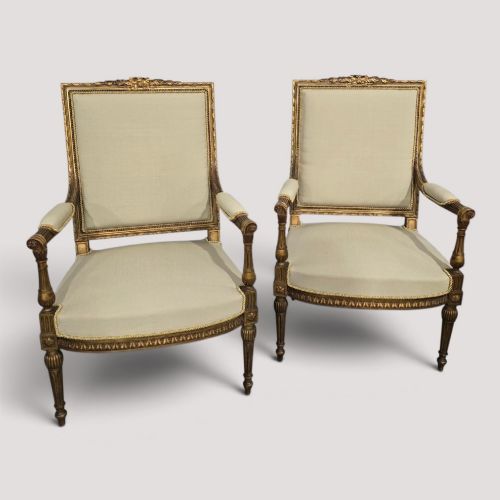
These fluted leg open chair examples bring neoclassical elegance and classical proportions to any room.
Fluted Leg Open Chair
A fluted leg open chair provides an open armchair form supported by characteristic vertical channels carved into the woodwork. These seating pieces span the eighteenth century through the Edwardian period, drawing heavily on French and English neoclassical design vocabulary.
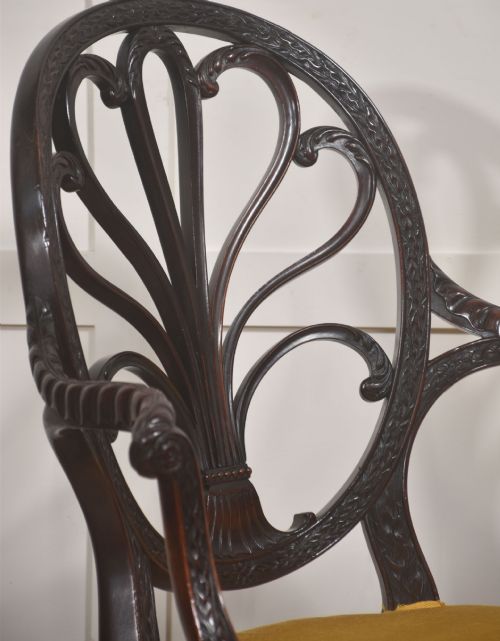
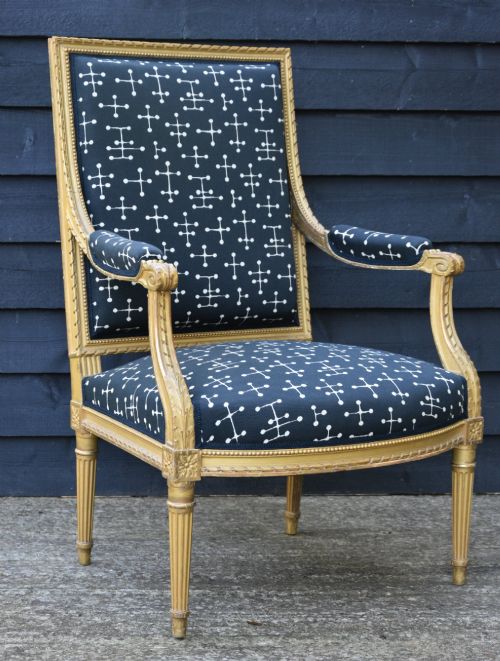
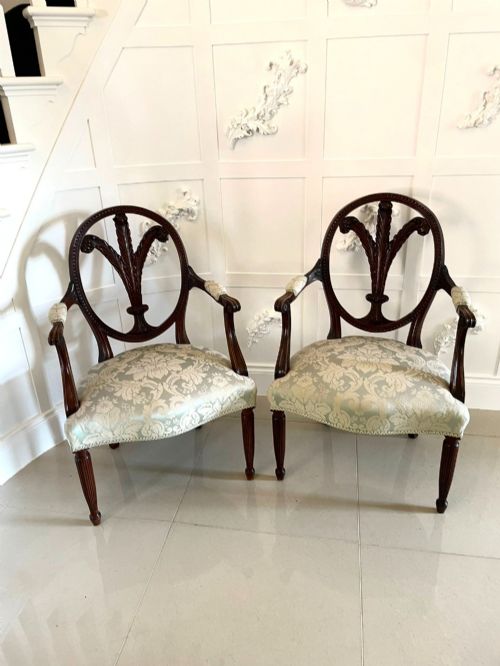
The most common form encountered here is the French Louis XVI style or its nineteenth-century revival, frequently appearing in pairs or sets with giltwood or painted finishes. Georgian and George III iterations in mahogany also feature prominently, often displaying the refined straight lines typical of the period.
Originating primarily from French workshops and English makers, these open armchairs served formal salon and parlour functions. The surviving inventory leans heavily towards nineteenth-century interpretations of earlier eighteenth-century aesthetics.
Materials and construction methods
Makers utilised solid timbers such as mahogany, beech, walnut, and painted wood as structural foundations for carving the delicate flutes into the legs. Giltwood finishes and parcel gilt details applied over gesso enhance the formal neoclassical appearance of the frames.
Upholstery relies on traditional textiles including damask fabric, standard fabric, and intricate tapestry panels with needlepoint. Webbing and stuffing techniques secure the comfort of these open armchairs, distinguishing French fauteuils and English salon chairs alike.
Fluted Leg Open Chair Retail Price Guide 2026
Typical asking prices for fluted leg open chair among the pieces listed under this phrase on Sellingantiques today, from the lower quarter to the upper quarter. They describe what is for sale here now, not the wider market.
The selection covers French fauteuils, George III mahogany open armchairs, and nineteenth-century revival salon seating.
Assessing quality in execution
The crispness of the carved fluting on the legs separates superior examples from softer, more mechanically produced alternatives. Sharp hand-carved detail across the arm supports and frame mouldings indicates skilled craftsmanship.
The choice of primary timber and the execution of the giltwood or painted finish dictate the overall grade of the piece. Original upholstery textiles and well-preserved frame joints further elevate the standing of these armchairs.
The Fluted Leg Open Chair Glossary
- Fluting
- Vertical parallel grooves carved into the shaft of a leg or column. This decorative feature derives from classical architecture and defines neoclassical furniture.
- Fauteuil
- An open-framed upholstered armchair with wooden arms originating in France. These chairs typically feature exposed carved woodwork around the back and seat.
- Giltwood
- Timber coated with a thin layer of gold leaf applied over a prepared ground. It appears frequently on formal nineteenth-century French salon seating.
- Bergère
- An enclosed upholstered armchair with solid upholstered sides resting on a wooden frame. Unlike standard open armchairs, these provide a more enclosed seat.
- Neoclassical
- A style spanning the eighteenth and nineteenth centuries that revived classical Greek and Roman motifs. Straight lines and symmetrical ornamentation dominate this aesthetic.
Fluted Leg Open Chair: Frequently Asked Questions
What is a fluted leg open chair?
A fluted leg open chair is an armchair featuring vertical channels carved into its straight legs, commonly associated with eighteenth and nineteenth-century neoclassical design.
These pieces typically include exposed wooden frames and open sides, drawing on French and English salon traditions.
How do I identify Louis XVI style?
Louis XVI style seating is distinguished by straight fluted legs, symmetrical geometric forms, and classical architectural motifs. This aesthetic contrasts sharply with the earlier curved lines of the Rococo period.
Craftsmen often utilised giltwood or painted finishes to highlight the restrained elegance of these frames.
Where were these armchairs placed?
These open armchairs originally served formal reception rooms, parlours, and drawing rooms where guests gathered for conversation. Their decorative frames were designed to be viewed from all sides.
Today, buyers frequently utilise them as occasional seating in living rooms or bedrooms.
How do I care for giltwood frames?
Giltwood frames require gentle dusting with a soft, dry cloth to protect the delicate gold leaf application. Moisture and harsh cleaning agents must be avoided entirely.
Keeping these chairs away from direct sunlight preserves the painted and gilded surfaces over time.