
Giltwood Fauteuil Chairs
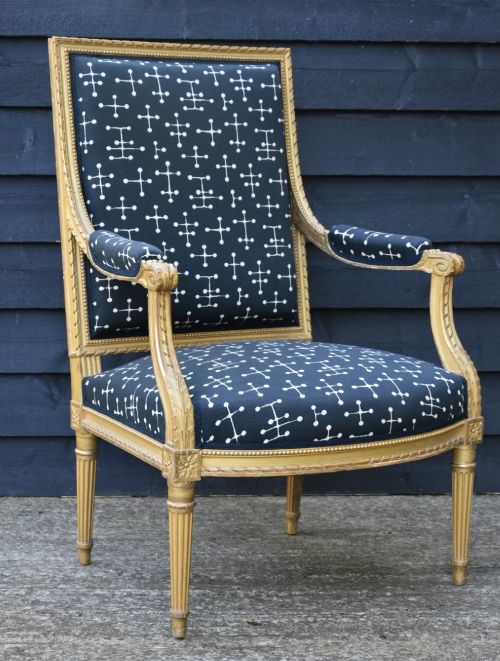
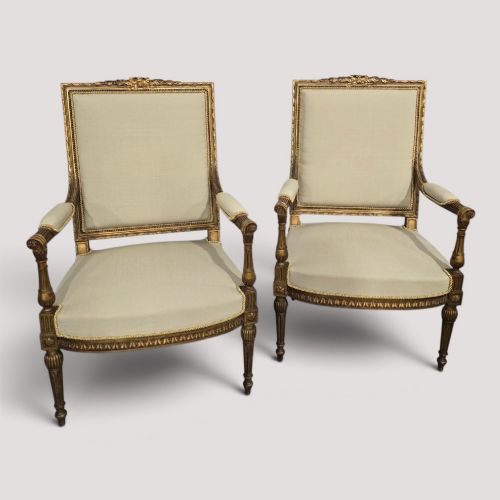
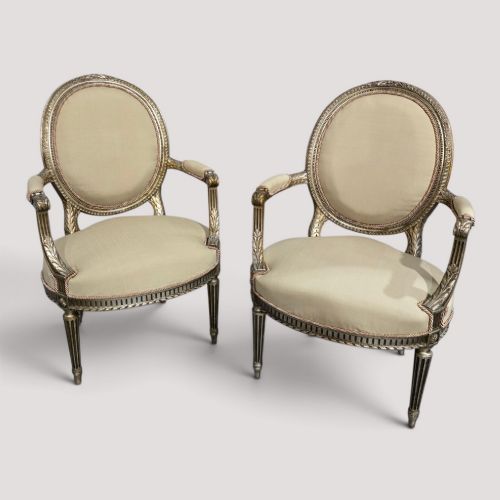
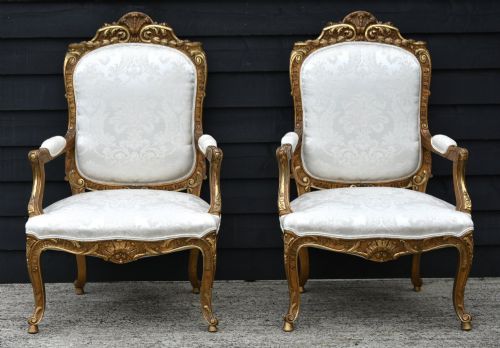
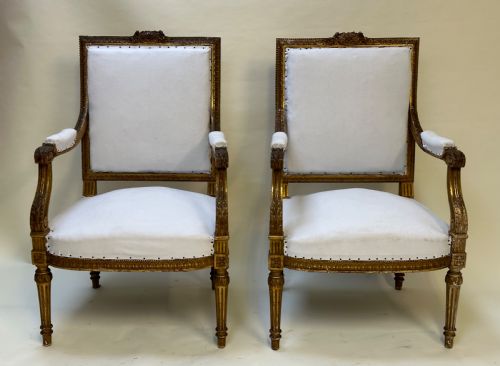
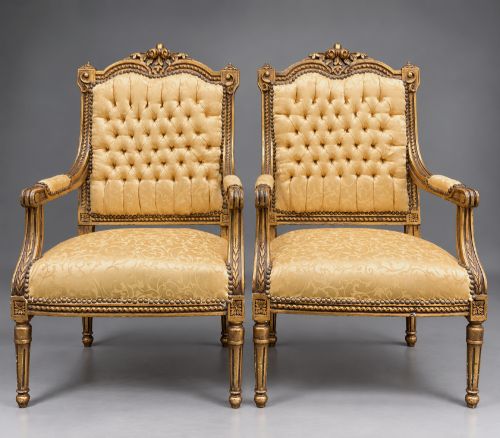
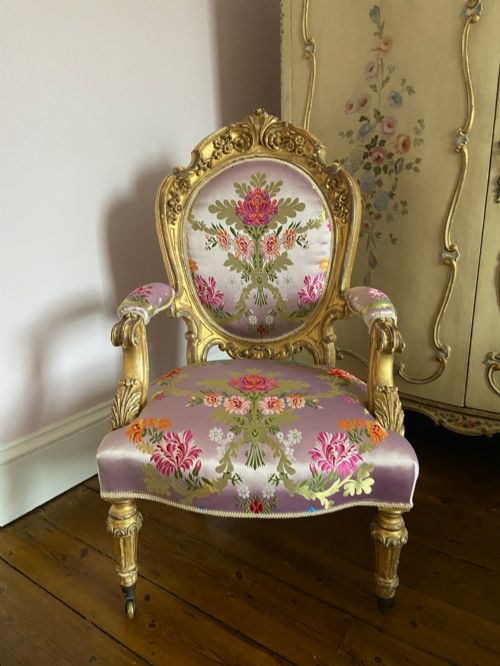
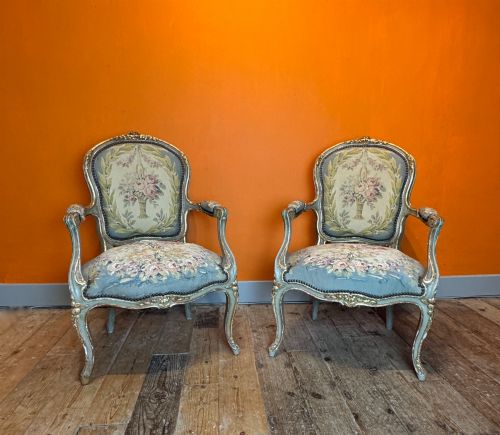
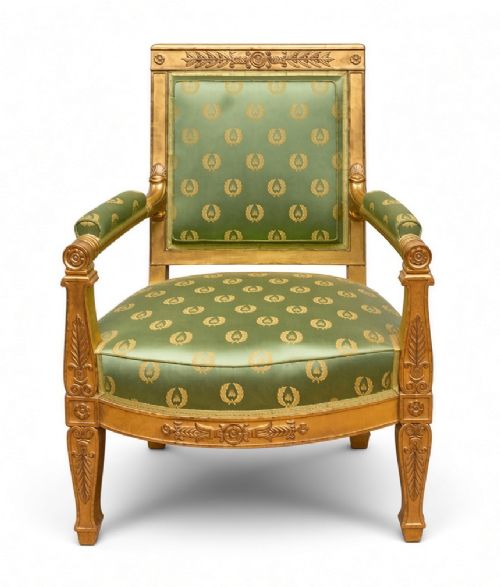
Giltwood fauteuil chairs are grand upholstered seats with exposed gilded wooden frames designed for formal rooms.
Giltwood Fauteuil Chairs
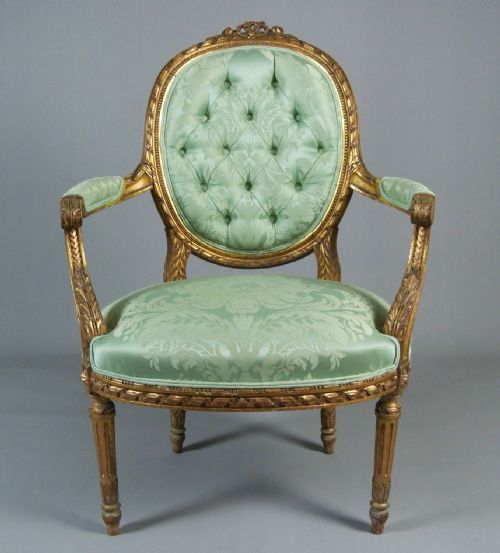
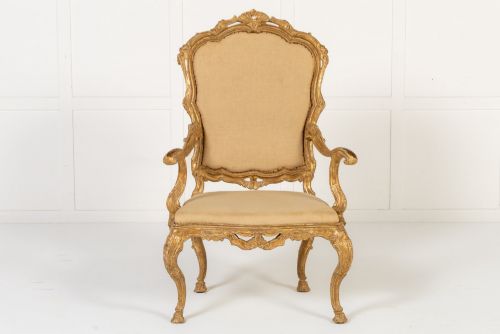
When searching for giltwood fauteuil chairs, buyers encounter open-armed seating primarily originating from French and Italian workshops across the eighteenth and nineteenth centuries. These pieces reflect historical design movements including the Regence, Louis XVI, and later revival styles which emulate courtly seating.
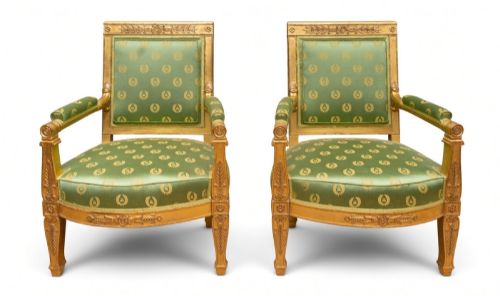
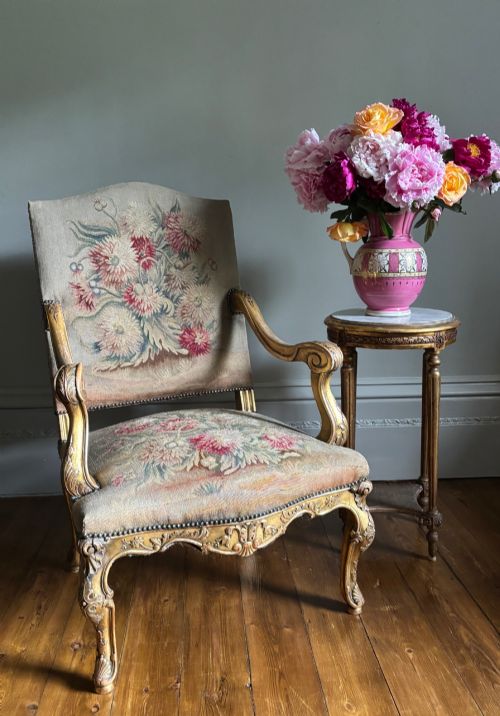
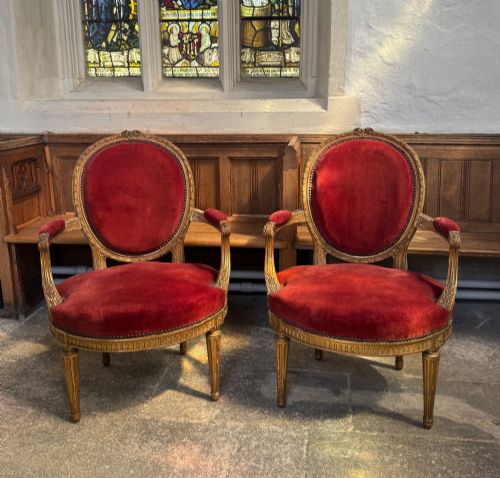
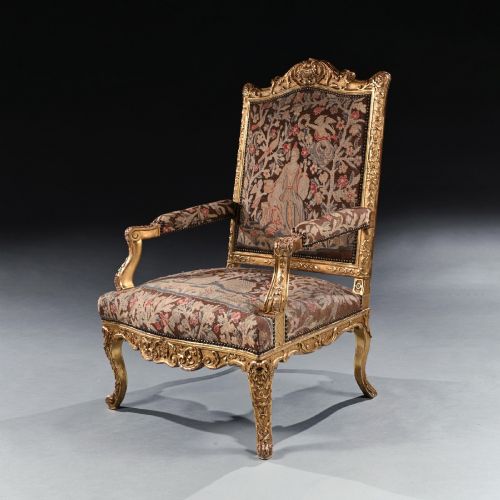
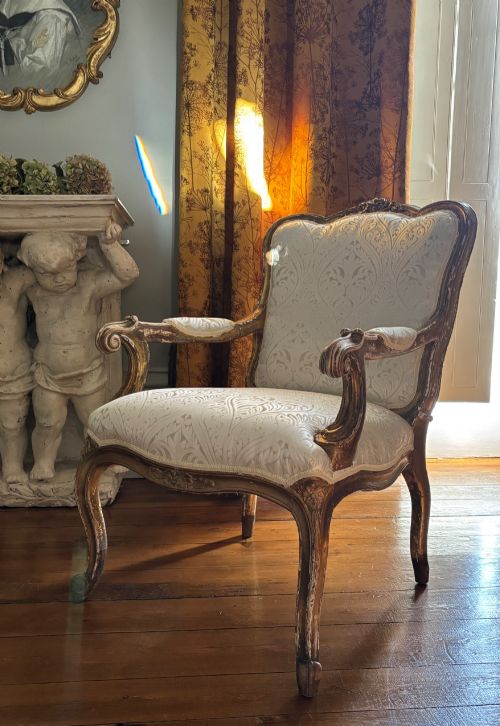
The selections on this page commonly present as pairs or single armchairs upholstered in silk, tapestry, velvet, or contemporary textile coverings. Forms range from modest bedroom chairs to large scale salon seating and throne chairs.
Origin spans continental workshops alongside occasional English interpretations reflecting similar aesthetic principles. Structural timber underneath the metallic leaf typically consists of beech or general wood substrates.
Materials and construction methods
Maker workshops shaped structural timber such as beech and general wood into curved frames featuring hand-carved ornamentation. Artisans applied thin layers of gold or silver leaf over a prepared ground surface on the wooden skeleton.
Upholstery techniques combined traditional stuffing methods with textile coverings including tapestry, velvet, and silk fabric secured to the open arm framework. Metal leaf application required meticulous sizing to adhere the delicate metallic sheets to the carved wooden contours.
Listings feature pieces spanning from the 18th century through the 20th century, encompassing French Chateau and Rococo Revival styles.
Distinctions in quality and execution
The refinement of the hand-carved wooden details dictates the visual distinction between standard production and masterwork pieces. Crisp execution of floral motifs, scrollwork, and structural joints indicates superior craftsmanship.
The integrity and preservation of the original giltwood surface layer heavily influence desirability. Superior examples retain cohesive metallic leaf application that harmonises with the underlying timber form.
Jacob Desmalter·Thomas Chippendale·Blaise Maucuy·Holland and Sons
The Giltwood Fauteuil Chairs Glossary
- Fauteuil
- An open-armed upholstered armchair with exposed wooden framing originating in France. These chairs traditionally feature padded armrests and a distinct upholstered back.
- Giltwood
- Timber decorated with a thin layer of gold leaf applied to its surface. This finish creates a luminous metallic appearance across the carved frame.
- Régence
- A transitional stylistic period bridging seventeenth-century baroque and eighteenth-century rococo design. Characterised by lighter proportions and dynamic symmetry.
- Louis XVI Style
- A neoclassical design aesthetic defined by straight tapering legs and geometric symmetry. Named after the French monarch, it frequently incorporates classical architectural motifs.
- Tapestry
- A heavy hand-woven textile featuring pictorial or decorative designs used historically for upholstery. It provides durable and ornate covering for formal seating.
Giltwood Fauteuil Chairs: Frequently Asked Questions
How do I identify a true fauteuil chair?
A true fauteuil is defined by its open upholstered wooden arms which leave the structural sides uncovered by fabric.
This specific armchair construction emerged in France to accommodate voluminous period attire while offering formal sitting comfort.
Where should I place these chairs at home?
These chairs suit formal drawing rooms, grand reception spaces, or bedrooms requiring a striking decorative accent piece.
Their ornate gilded frames and upholstered profiles allow them to function effectively as standalone focal points.
How can I tell different period styles apart?
Early eighteenth-century designs lean towards curved rococo asymmetry and elaborate floral carving across the wooden frame.
Later nineteenth-century revivals adopt stricter neoclassical symmetry with straight fluted legs and disciplined geometric ornamentation.
What maintenance do giltwood surfaces require?
Giltwood surfaces require gentle dusting with a soft dry cloth to protect the delicate metallic leaf from abrasion.
Moisture and harsh cleaning agents must be avoided entirely to preserve the historical finish.