

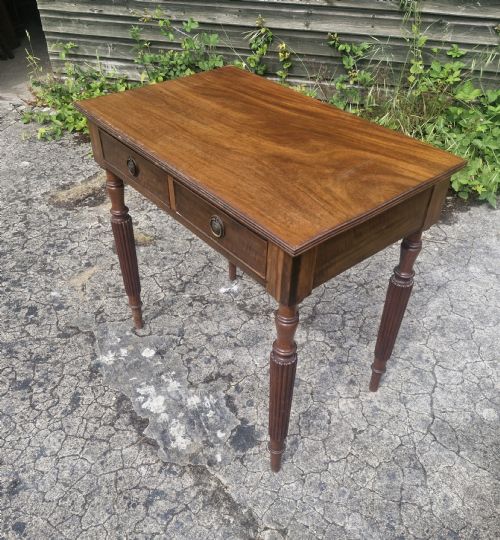
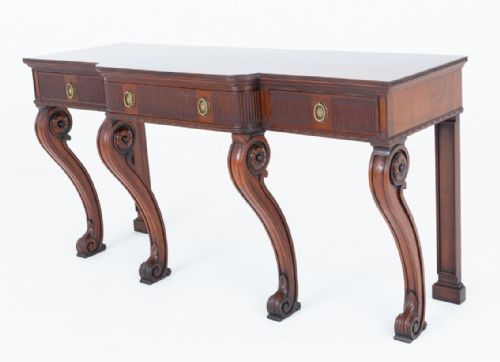

Fluted Leg Console
A fluted leg console provides a disciplined architectural anchor for a hallway or reception room, bringing structural clarity and refined classical proportion.
Fluted Leg Console
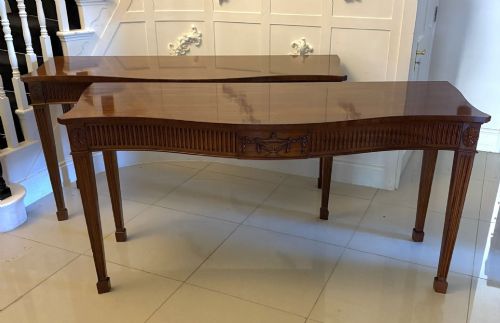
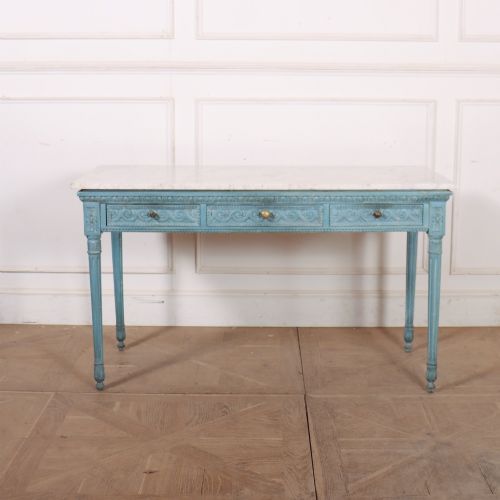
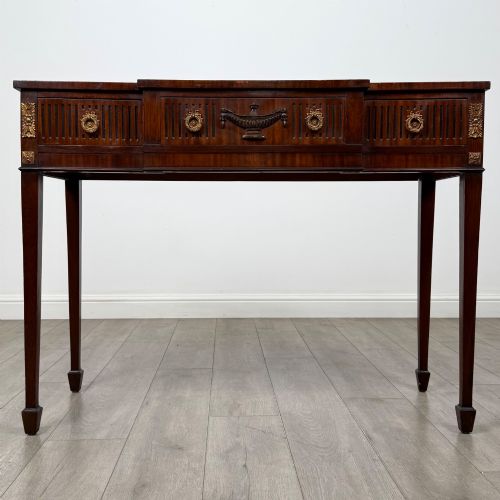
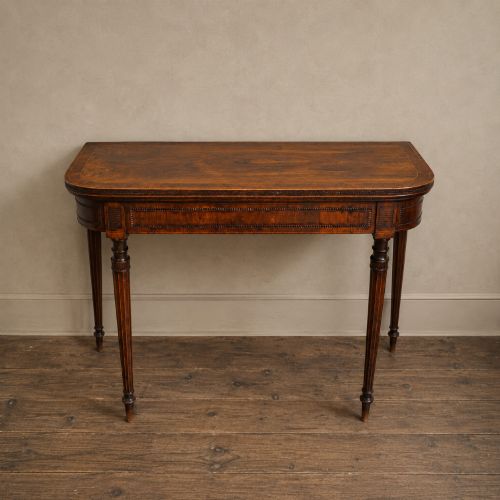
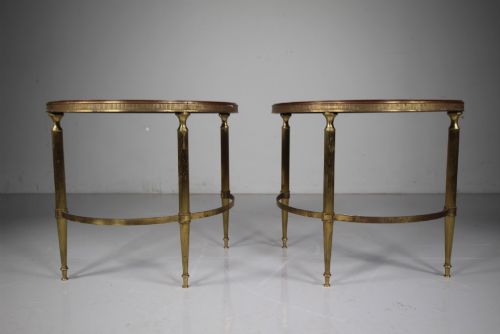
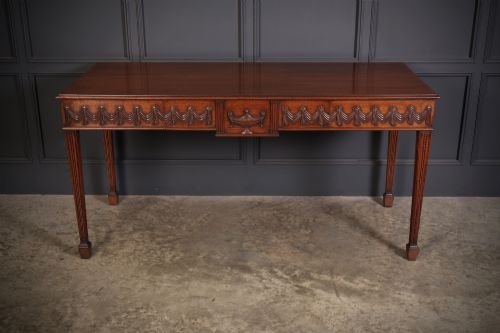
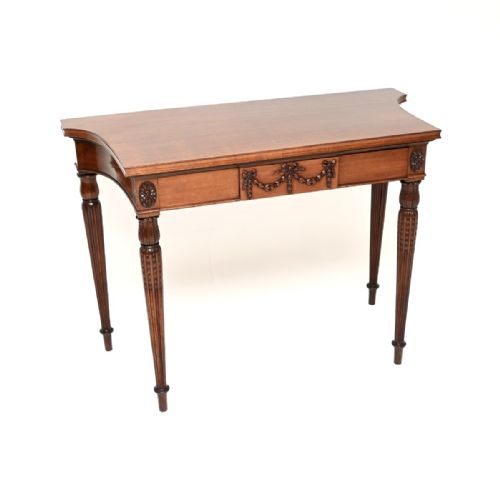
A fluted leg console sits flush against a wall or serves as a slim side support, taking the form of console tables, serving tables, and side tables across this selection. These pieces emerge from periods spanning the eighteenth century through to the Edwardian era and the early twentieth century.
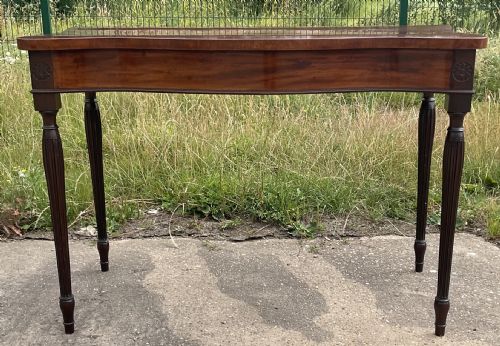
The most common version met here relies on mahogany timbers, often shaped with serpentine fronts or demi-lune profiles that soften the linear perimeter of a room. Stylistic influences draw heavily from the Georgian, Regency, and Neoclassical vocabularies, frequently echoing Adam or Louis XVI designs.
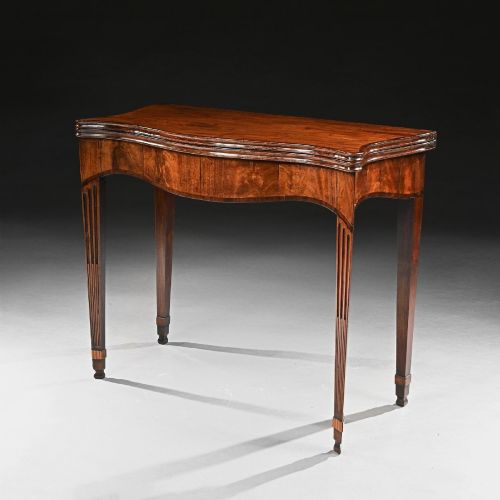
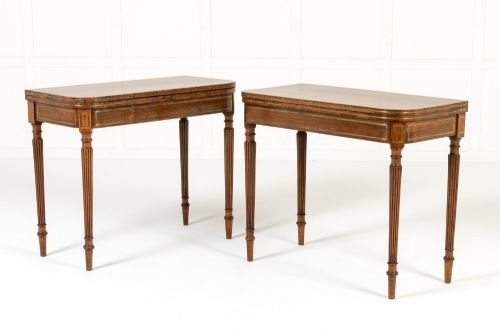
Makers adapted these formats into writing desks, card tables, and narrow servers while retaining the characteristic vertical channelling along the support legs. The resulting furniture balances functional surface area with a restrained, pillar-like aesthetic.
Materials and construction methods
Carpenters relied primarily on mahogany and rosewood solids and veneers, occasionally turning to oak, walnut, or painted wood surfaces for specific regional tastes. Timber selection dictated whether a piece could hold sharp carved details or accept fine crossbanding and string inlay.
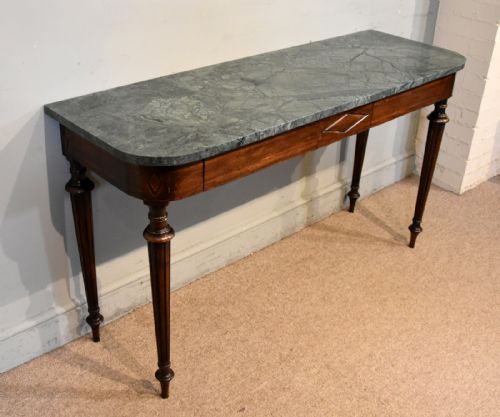
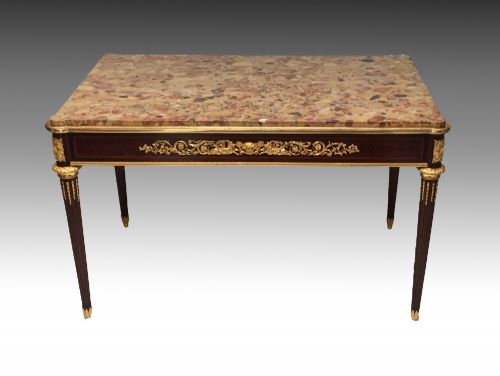
Metalwork played a structural and decorative role, incorporating brass mounts, hardware, and ormolu details alongside inset leather writing surfaces. Marble tops, including rouge and specimen varieties, appeared on French and Italian pieces to provide cool, durable display surfaces.
Carving techniques brought the characteristic vertical grooves into the wood of the legs, often accompanied by neoclassical motifs such as paterae or swags. Joinery remained traditional, securing fold-over mechanisms on card tables and stabilizing serpentine frames.
Fluted Leg Console Retail Price Guide 2026
Typical asking prices for fluted leg console among the pieces listed under this phrase on Sellingantiques today, from the lower quarter to the upper quarter. They describe what is for sale here now, not the wider market.
Listings feature mahogany as the dominant timber, accompanied by rosewood, brass, marble, and giltwood across various nineteenth and twentieth-century periods.
Separating standard examples from superior pieces
The degree of hand-carving in the leg fluting and apron details dictates much of the visual merit, distinguishing crisp chisel work from softer mechanical shaping. Timber selection also divides the range, with dense mahogany showing deep natural patination and matched grain patterns commanding attention.
Hardware integrity and the quality of secondary elements, such as original brass mounts, inset marble slabs, or tooled leather inserts, mark the difference between an average workshop product and an ambitious commission. Structural harmony in complex serpentine or demi-lune curves ensures the piece reads as a unified whole rather than an assembly of parts.
The Fluted Leg Console Glossary
- Fluting
- Vertical parallel grooves carved into the shaft of a leg or column. This classical detail draws the eye upward and lightens the visual weight of the support.
- Demi-lune
- A half-moon shape used for table tops and frames. This profile allows the furniture to stand tightly against a wall while projecting outward in the centre.
- Serpentine
- A curved line that undulates inward and outward in a continuous wave. It requires precise woodworking to shape both the wooden top and the supporting apron.
- Ormolu
- Gilded bronze mounted onto furniture for decorative effect. It gained widespread use in French neoclassical and Louis XVI inspired designs.
- Crossbanding
- A narrow strip of veneer laid across the grain of the primary surface. This technique frames the top of a table and creates a contrasting border.
Fluted Leg Console: Frequently Asked Questions
Where should I place a fluted leg console?
These tables suit hallways, narrow landings, and reception rooms where floor space is limited. Their shallow depth allows them to sit against perimeter walls without obstructing walkways.
Pooled beneath a mirror or artwork, they create a formal focal point while offering a convenient surface for everyday items.
How do I identify a Georgian console from a later revival piece?
Examination of the timber density, construction joints, and tool marks helps reveal the underlying age of the piece. Georgian and Regency examples often exhibit hand-cut secondary woods and natural wax patination developed over generations of use.
Revival pieces from the Edwardian period or the early twentieth century typically show more uniform machine-assisted construction and standardised internal framing.
Can these tables be used for writing or dining?
Certain variations feature fold-over tops or fitted drawers designed specifically for correspondence and games. Standard console and serving formats provide sturdy display space but generally lack knee clearance for prolonged seating.
Checking the internal mechanism and height will confirm whether a specific table functions as a desk or card table.
How do I care for marble-topped console tables?
Stone surfaces require gentle cleaning with a damp cloth and neutral soap to preserve the polish and prevent staining. Avoid acidic liquids and harsh chemical cleaners that can etch the marble.
Wooden bases benefit from occasional waxing with traditional beeswax to maintain the moisture balance of the grain.