


Fluted Lead Crystal Stemware
These pieces of fluted lead crystal stemware bring distinct Georgian and later character to the table, offering tactile weight and historic form.
Fluted Lead Crystal Stemware
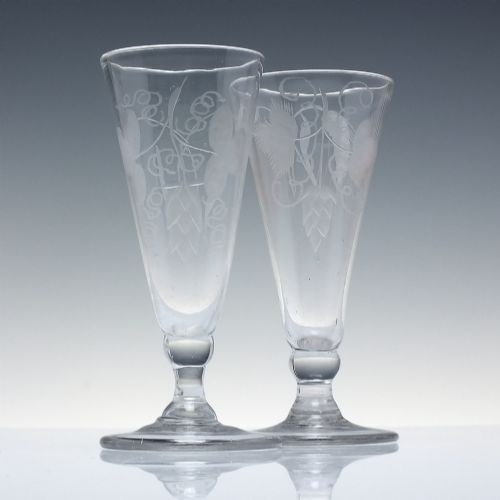
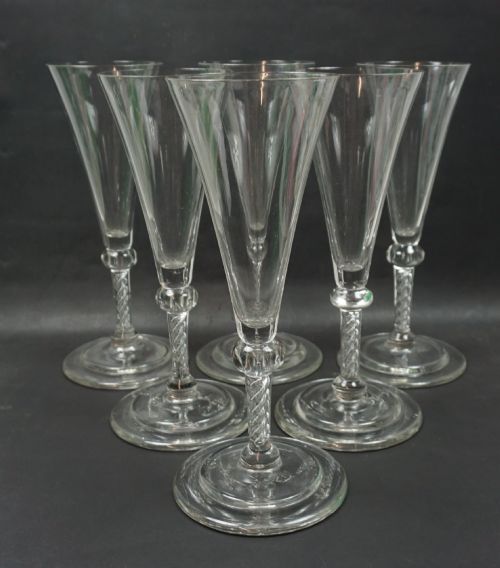
When you search for fluted lead crystal stemware, you are looking at drinking glasses and vases shaped by historic periods from the eighteenth century to the twentieth century. The selection leans heavily towards Georgian examples, including air twist ale glasses, engraved beer glasses, and tall champagne flutes.
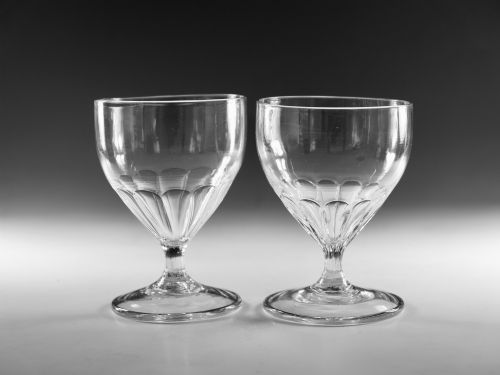
The forms encompass wine flutes, rummers, and sherry glasses alongside specialised jelly glasses and vases. Pieces from the Georgian Revival and Edwardian eras also appear, bringing varied decorative treatments to familiar utilitarian shapes.
Materials and construction
Makers utilised lead crystal, lead glass, and flint glass to achieve clarity and weight in each vessel. Hand-blown techniques created the underlying bodies before cutters and engravers applied facets and surface patterns.
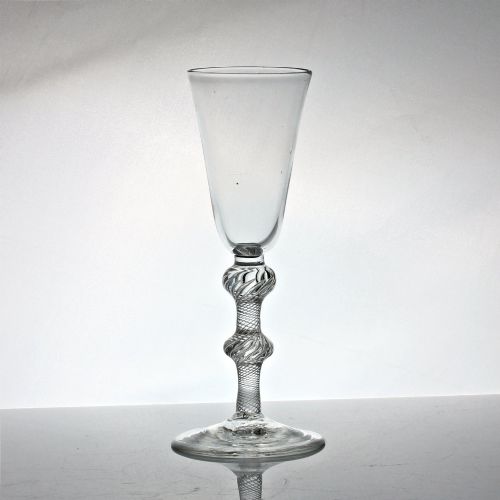
Internal optical effects were achieved through air twist and opaque twist methods within the stems. Surface enrichment frequently includes facet cutting and engraved details such as hop and barley motifs.
Georgian ale glasses were built tall to handle the vigorous froth of eighteenth-century brews without spilling a drop.
Quality factors in historic stemware
Clarity of the metal and crispness of the cutting distinguish finer examples from simpler production. The precision of an air twist or opaque twist stem requires considerable skill, influencing the overall balance and visual appeal of the piece.
Proportion and execution of engraved details further set apart superior vessels. Uniformity across matched sets indicates careful workshop standards during production.
The Fluted Lead Crystal Stemware Glossary
- Air twist
- A stem formation containing elongated enclosed bubbles drawn into spirals. This technique creates a delicate internal pattern within the glass.
- Opaque twist
- A stem style featuring white or coloured enamel threads enclosed within clear glass. These threads are typically twisted into single or double series cables.
- Facet cut
- A decorative surface treatment formed by grinding flat planes into the glass. This method enhances the sparkle and weight of lead crystal.
- Ogee bowl
- A bell-shaped vessel with an S-curve profile that curves inward at the rim. This form was common on eighteenth-century wine glasses.
- Flute-moulded
- A surface pattern featuring vertical channels or hollows pressed or cut into the lower body of a vessel. It adds texture and strength to the glass.
Fluted Lead Crystal Stemware: Frequently Asked Questions
How do I clean antique crystal stemware?
Wash these pieces by hand in warm water using a mild detergent. Avoid sudden temperature changes to protect the historic glass.
Dry them immediately with a lint-free cloth to maintain clarity and prevent water spots.
Can I use these glasses for daily dining?
Many people enjoy using eighteenth and nineteenth-century stemware for special occasions. Hand-blown lead crystal is surprisingly resilient when handled with care.
Keep in mind that historic glasses often have smaller capacities and delicate stems compared to modern tableware.
What is an air twist stem?
An air twist is a decorative stem containing tiny elongated bubbles stretched into spiral threads. Craftsmen manipulated the molten glass to trap air inside before drawing and twisting the stem.
This technique was particularly popular during the mid-eighteenth century for ale and wine glasses.