


English Cut Crystal Glassware
English cut crystal glassware brings weight and brilliance to the table, spanning functional drinking vessels and decorative table pieces crafted across three centuries.
English Cut Crystal Glassware
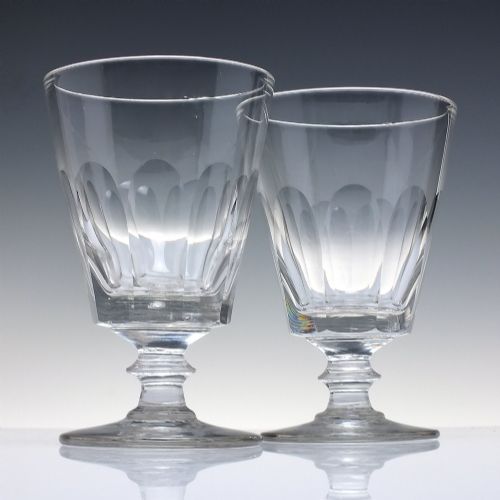
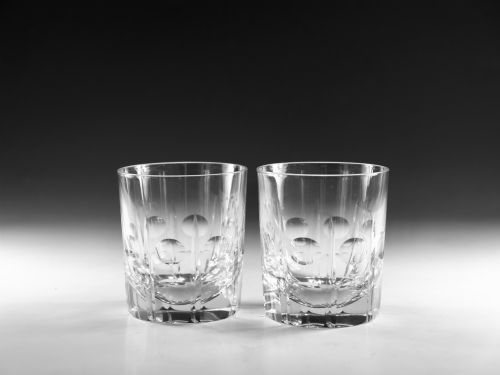
When you search for English cut crystal glassware, you encounter items ranging from drinking vessels and carafes to vases and commemorative pieces. The selection includes Georgian rummers, Victorian tumblers, and Edwardian coupes, reflecting domestic routines of dining and entertaining across successive eras.
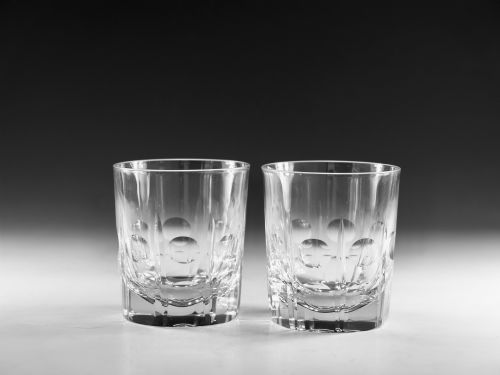
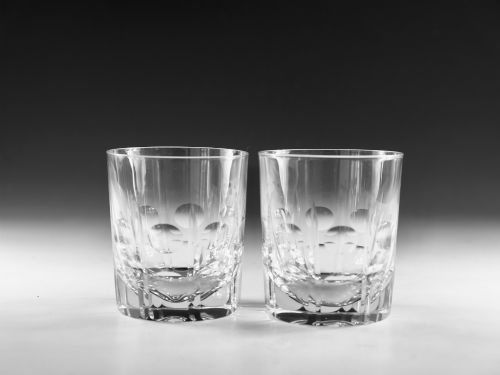
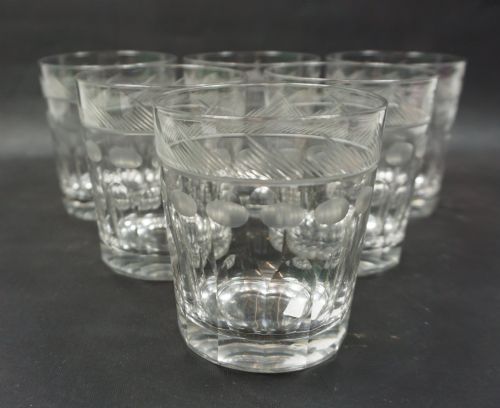
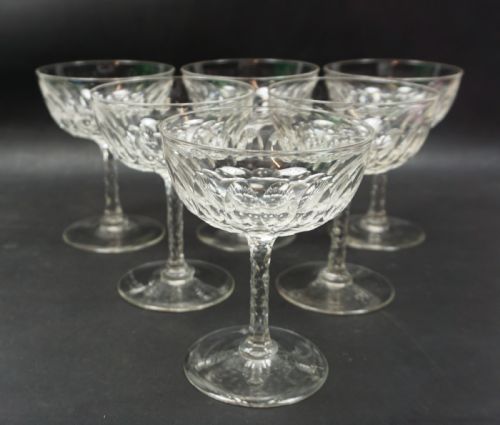
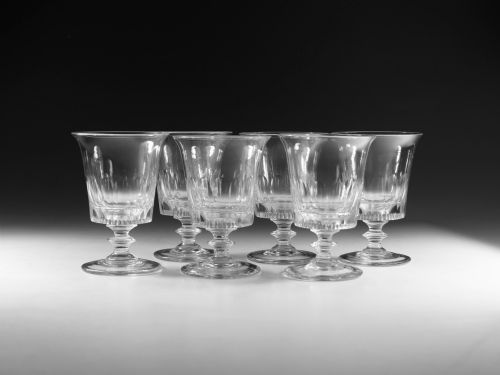
You are most likely to meet Victorian and 19th Century forms on this page, particularly matched sets of whiskey tumblers, champagne coupes, and wine glasses. These pieces demonstrate standard domestic uses from an era of expanded glass production and varied table service.
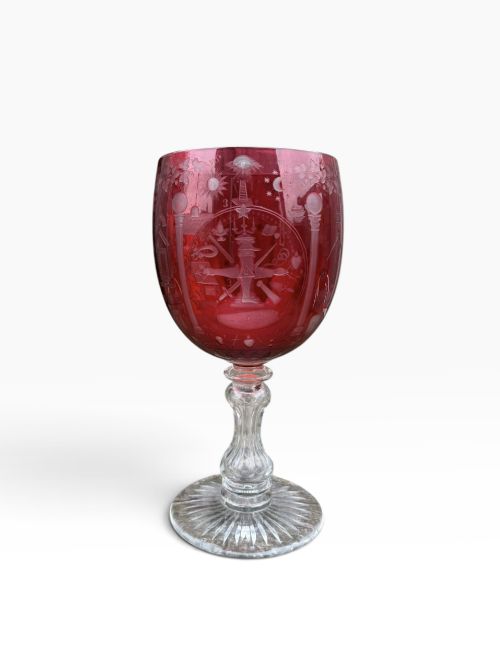
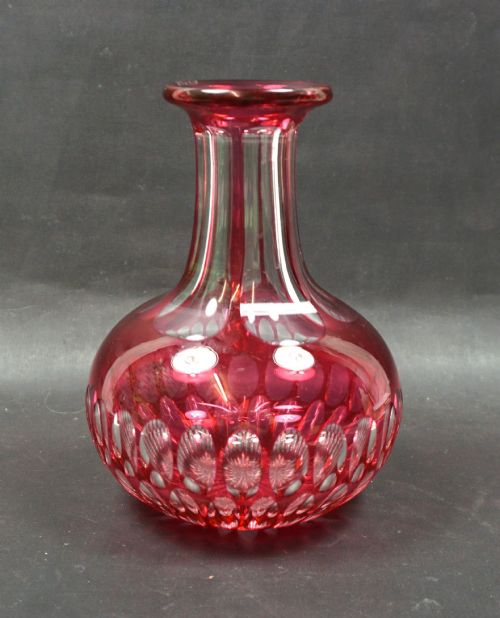
The material origins trace through Georgian, Regency, Victorian, and Edwardian periods, demonstrating shifts in weight, clarity, and decorative depth. Pieces include both clear lead crystal and layered coloured glass such as cranberry and yellow over crystal.
Materials and production techniques
Makers utilised lead glass and crystal glass as the primary medium, valued for its relative softness which allowed deep wheel cutting and engraving. This heavy material gave vessels a substantial feel in the hand and high refractive index.
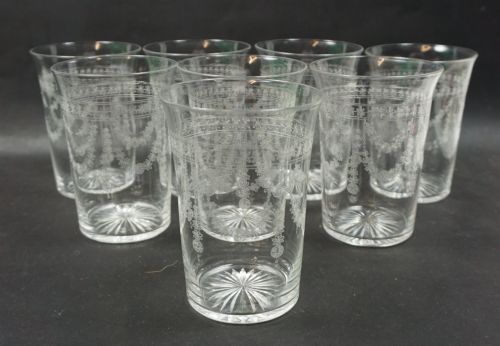
Decoration relied on wheel cutting, facet cutting, pillar cutting, and acid etching to produce geometric patterns, flutes, and floral motifs. Artisans also applied overlay techniques, cutting through a coloured glass layer to reveal the clear crystal beneath.
Listings span the 18th, 19th, and early 20th centuries, including Georgian, Regency, Victorian, and Edwardian periods.
Assessing quality and craftsmanship
Quality rests in the crispness of the wheel cutting and the optical clarity of the metal itself. Finer pieces display deep, sharp facets with well-defined edges that catch the light cleanly, whereas lower tiers show softer, shallower incisions.
The balance and proportion of the object dictate its standing, from the thickness of a stem to the uniformity of a matched set. Hand-blown blanks with precise symmetry and minimal internal optical distortion separate standard production items from superior works.
Stevens & Williams
The English Cut Crystal Glassware Glossary
- Rummer
- A large, sturdy drinking glass popular in the 18th and 19th centuries, typically used for ale, wine, or punch. These vessels feature thick bowls and short, solid stems.
- Tazza
- An ornate shallow cup or plate mounted on a stem and foot, used for serving fruit or sweetmeats on the dining table. They frequently employ coloured overlay crystal.
- Facet cut
- Geometric surface decoration comprising multiple flat polished planes that reflect light from various angles. This technique is common on the stems and bodies of 19th-century drinkware.
- Intaglio
- A design carved into the surface of the glass rather than left in relief. The recessed engraving creates a subtle, tactile pattern.
- Overlay
- A manufacturing method where a layer of coloured glass is fused over a clear crystal base. Subsequent cutting removes parts of the outer layer to create contrasting patterns.
English Cut Crystal Glassware: Frequently Asked Questions
What is English cut crystal?
English cut crystal refers to decorative and functional glassware produced in England using lead glass compositions. Artisans applied mechanical cutting techniques to shape geometric and floral facets into the heavy material.
This tradition encompasses table services, decanters, and display items spanning the Georgian, Victorian, and Edwardian eras.
How do I date cut glass?
Dating relies on stylistic clues, pontil mark characteristics, and the depth or sharpness of the cutting. Georgian pieces often feature heavier foot rims and simple facet cuts, while Victorian items show greater variety in coloured overlays and acid etching.
Changes in glass technology and prevailing design movements help narrow down the manufacturing decade.
Can I use antique glassware daily?
Many people choose to use antique crystal for special occasions or daily dining, provided it receives careful handling. Hand washing in lukewarm water prevents thermal shock and protects the polished surfaces.
Avoid using modern dishwashers, as harsh detergents and high temperatures can damage the crystal over time.
What is cranberry glass?
Cranberry glass is a pinkish-red decorative glassware coloured by the addition of gold chloride to the molten batch. It gained popularity during the Victorian period for tableware and novelty items.
When combined with clear crystal in overlay techniques, the deep red layer was selectively cut away to form contrasting patterns.