

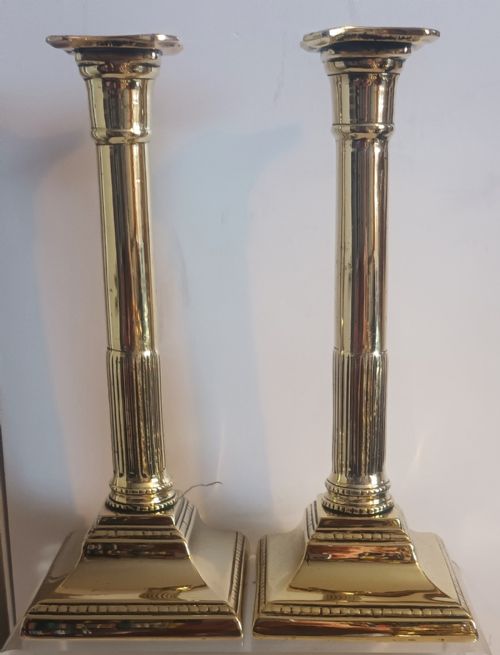
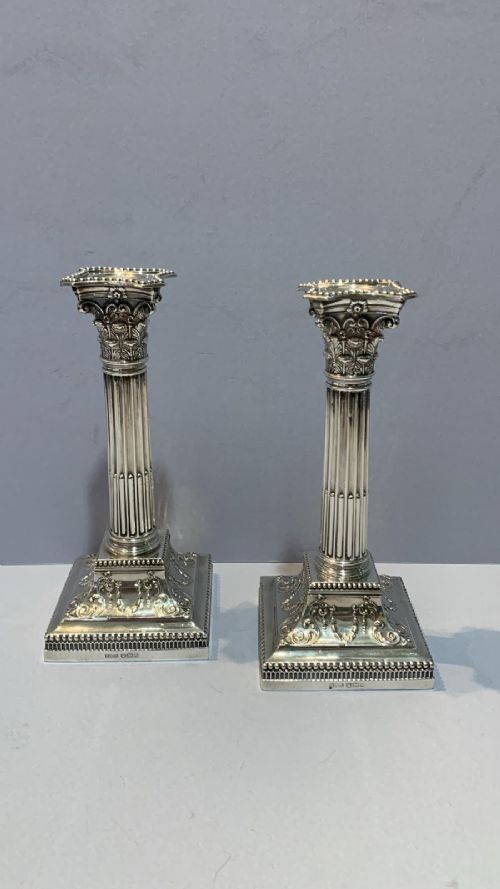
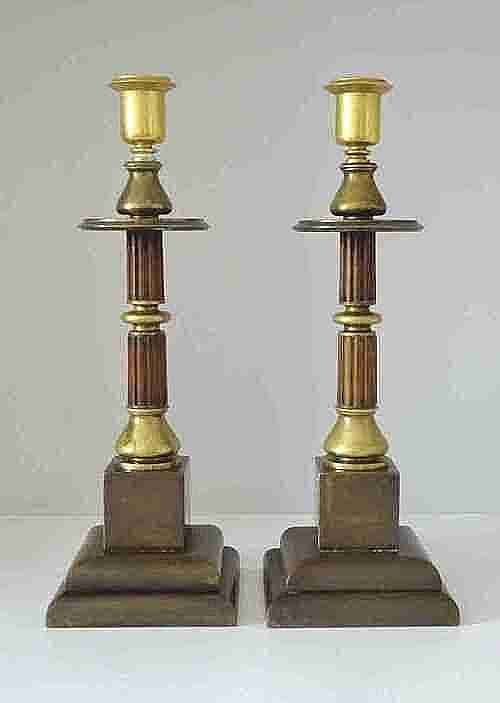


Fluted Column Candle Holders
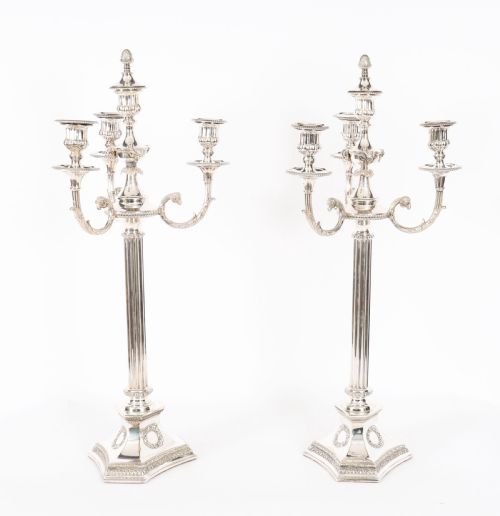
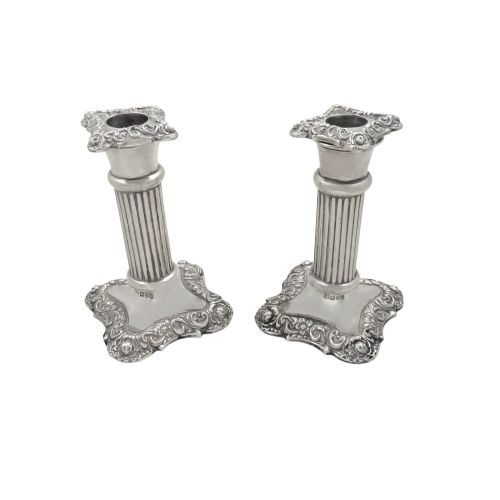
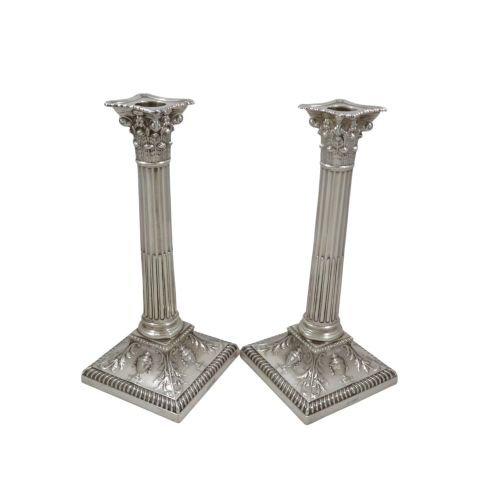
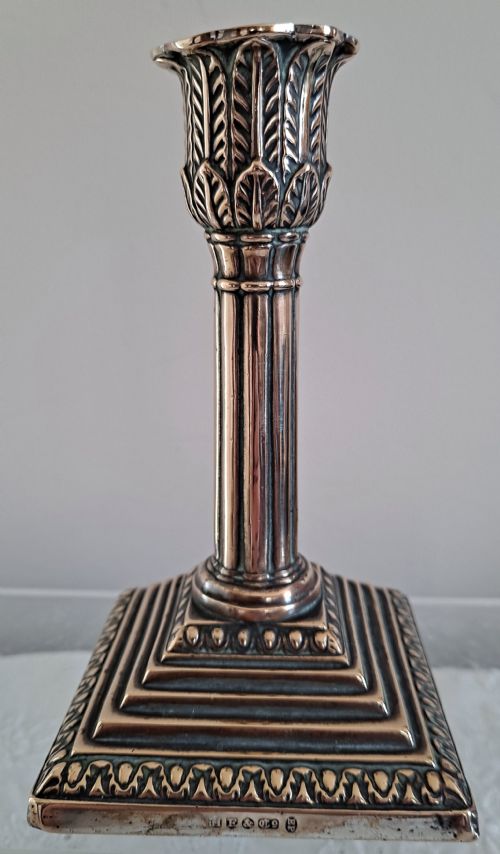
Fluted column candle holders bring architectural order to a table, standing as miniature classical pillars cast in brass, silver plate, or sterling silver.
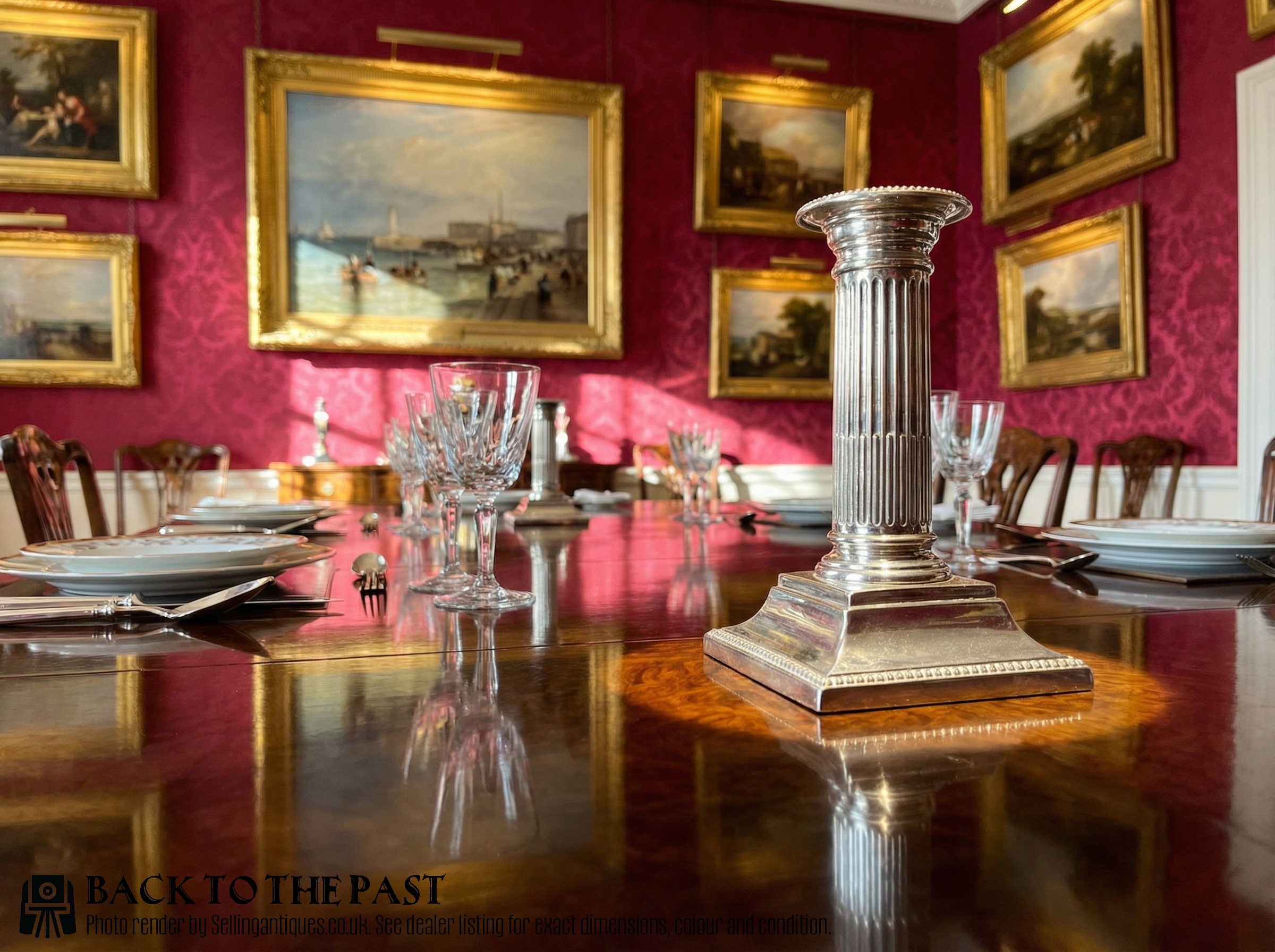
Fluted Column Candle Holders
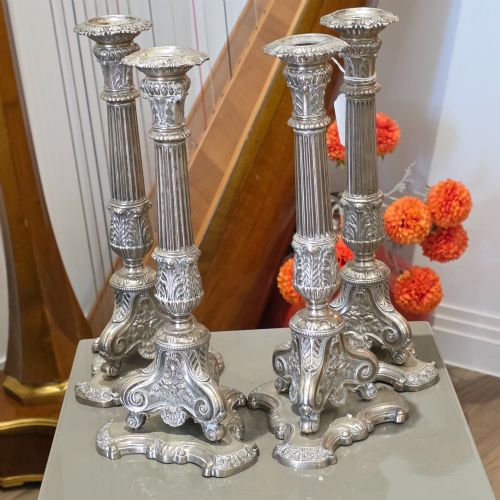
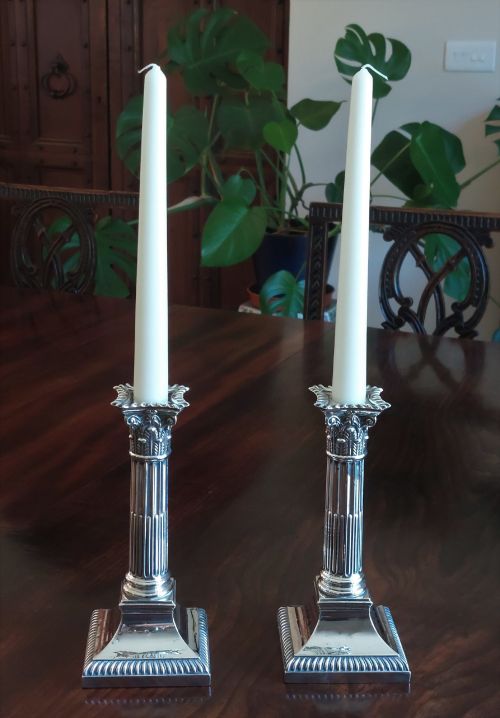
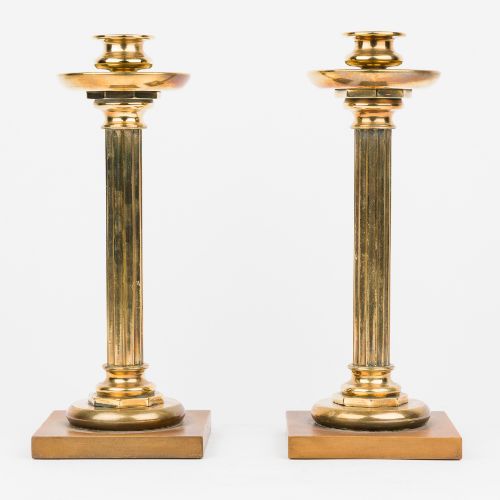
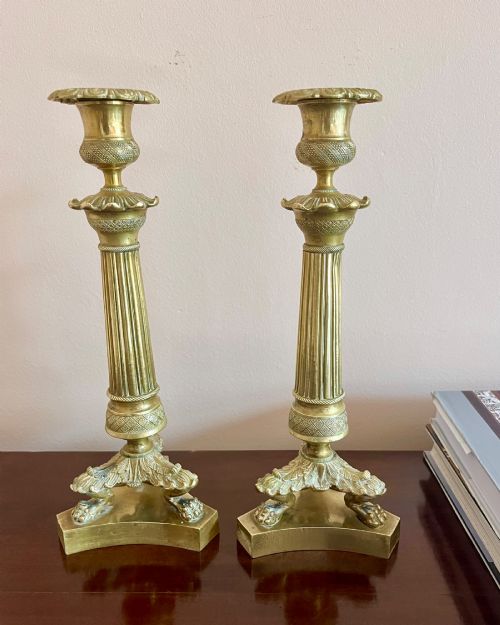
When searching for fluted column candle holders, you encounter vertical shafts carved or cast with shallow parallel grooves, mimicking the classical orders of architecture. These pieces primarily manifest as candlesticks, alongside occasional multi-light candelabras, table lamps, and torcheres.
The selections span several centuries and stylistic revivals, with Georgian, Victorian, and Edwardian examples appearing frequently alongside Neoclassical, Empire, and Art Deco designs. Brass and silver plate dominate the material record, supplemented by sterling silver, bronze, copper, and cast brass.
Most items survive in pairs or matched sets, often retaining original removable sconces or drip pans. Makers and assay offices from London and continental Europe sometimes mark the silver and plated pieces, grounding the architectural forms in specific historical workshops.

Materials and Construction Techniques
Metalworking techniques dictate the construction of these items, utilising brass, bronze, copper, and various silver compositions. Founders cast brass and bronze components in moulds before turning them on lathes to sharpen the vertical flutes and decorative collars.
Silver plating methods involve fusing thin sheets of silver onto copper or base metal matrices, notably seen in Old Sheffield Plate techniques. Sterling silver examples often rely on weighted bases filled with pitch or resin to provide stability beneath the tall columnar shafts.
Some column candlesticks incorporate scarlet red tortoiseshell boulle-work, proving that even classical architecture enjoys a bright flash of colour.
Evaluating Quality and Execution
Distinction in quality rests upon the crispness of the casting and the depth of the fluting along the shaft. Superior examples maintain sharp, clean lines in the Corinthian or Doric capitals, whereas lesser pieces exhibit softened details from worn production moulds.
Proportion and weight also divide the range, as finer specimens balance heavy column shafts upon substantial stepped or square bases without feeling precarious. The integration of removable drip sconces that fit flush into the nozzle indicates careful initial manufacture.
Conrad Eduard Mappe·Garrard & Co·Humphrey Hopper
The Fluted Column Candle Holders Glossary
- Fluting
- Vertical parallel grooves cut or cast into the surface of a column shaft. This decorative technique originates from classical stone architecture and creates play of light and shadow.
- Sconce
- The detachable metal pan or nozzle fitted at the top of a candlestick to catch dripping wax. These components are frequently lost or separated from the main body over time.
- Torchere
- A tall stand or candlestick designed originally to carry a torch or single prominent candle. They often feature elevated column heights compared to standard table candlesticks.
- Old Sheffield Plate
- An early composite material made by fusing a thin layer of sterling silver to a copper base ingot. This technique precedes modern electroplating and produces a warm, characteristic sheen.
Fluted Column Candle Holders: Frequently Asked Questions
How do I clean silver plated column candle holders?
Use a soft microfiber cloth and a mild cream polish specifically formulated for silver plate. Avoid harsh abrasive dips that strip the thin silver layer from the underlying base metal.
Take care around raised capitals and deep vertical flutes where polish residue tends to accumulate. A soft-bristled brush helps clear dried residue from the recessed channels.
How do I distinguish Georgian brass from Victorian pieces?
Georgian brass often displays softer golden tones with hand-finished tool marks visible beneath the base. Victorian manufacturing introduced sharper machine-cast details and heavier proportions.
Examining the underside reveals construction methods, as Georgian items frequently employ distinct casting seams and hand-cut threading. Victorian pieces utilise more standardised mechanical fastenings.
What is the purpose of removable sconces?
Removable sconces catch melting wax before it runs down the fluted column shaft. They lift out independently to simplify cleaning after use.
Finding a pair with matching original sconces adds desirability for collectors. Replacements often show slight discrepancies in fit or metal colour.