




Fluted Drinking Glasses
These fluted antique drinking glasses bring tactile ridges and Georgian grace straight to the table.
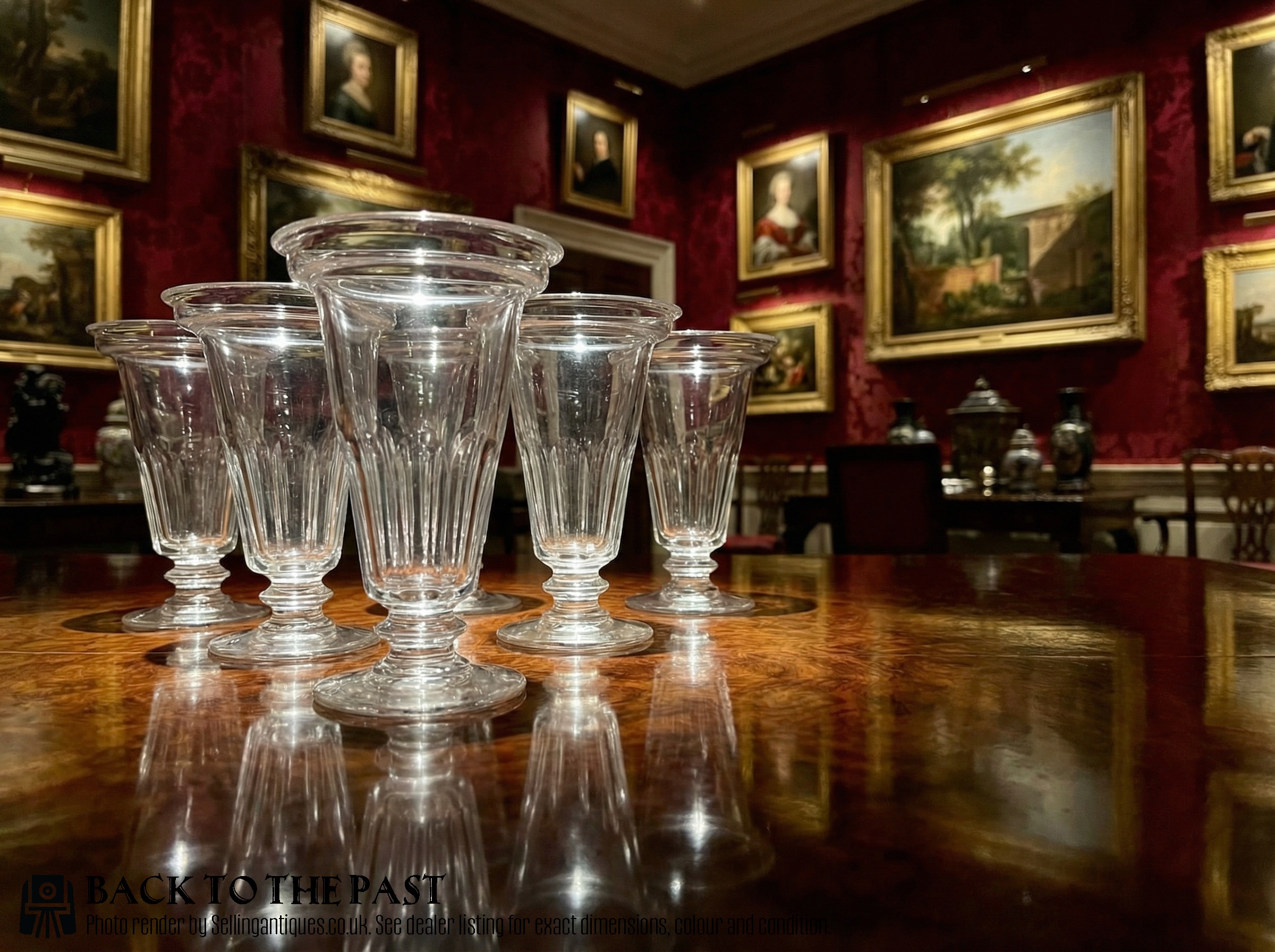
Fluted Drinking Glasses
When you search for fluted antique drinking glasses, you encounter vessels shaped for historical tables, most frequently represented here by Georgian and 18th-century ale glasses, rummers, and wine flutes. These forms range from slender dwarf ale glasses to robust rummers and delicate champagne flutes.
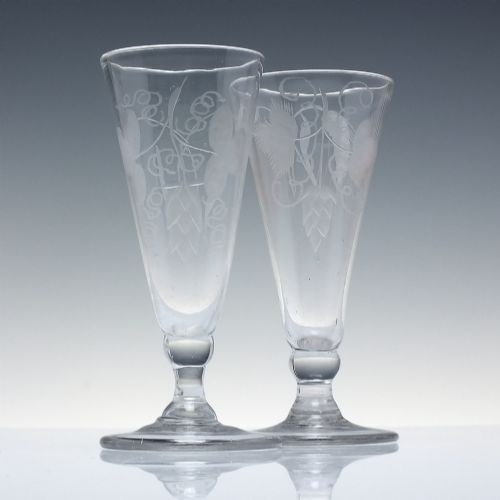
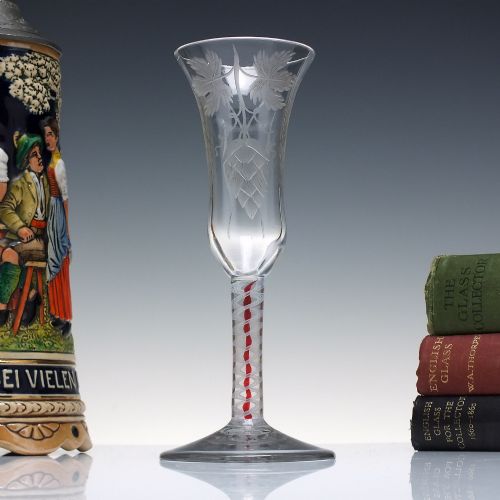
The selection on this page leans heavily into Georgian lead glass and flint glass productions, featuring characteristic optical moulding and engraved decoration such as hops and barley. Collectors also meet Victorian and Edwardian examples including tumblers and larger engraved ale glasses.
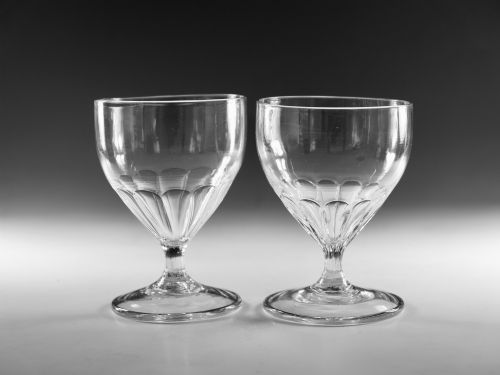
Each piece serves as a tangible link to past dining customs, whether intended for ale, wine, or ratafia. The fluting and moulding on the bowls catch the light, defining the character of these drinking vessels.
Materials and manufacture
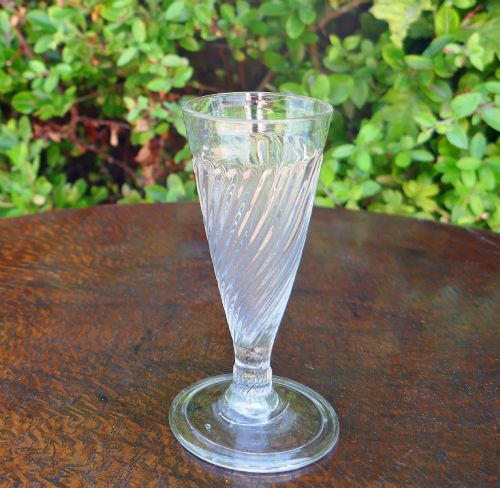
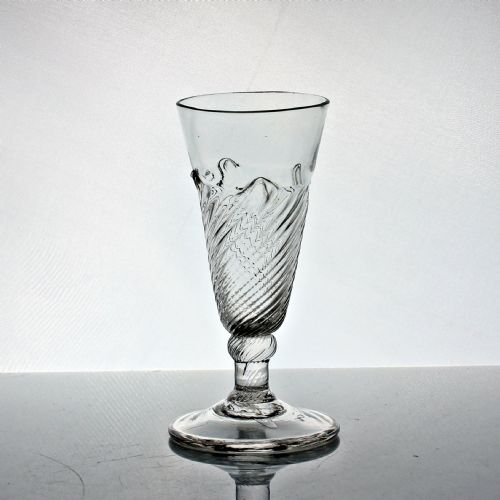
These glasses are formed primarily from lead glass, flint glass, and clear or coloured glass, shaped through hand-blowing techniques. Artisans utilised optical moulds to create the characteristic fluting and wrythen patterns seen on the bowls.
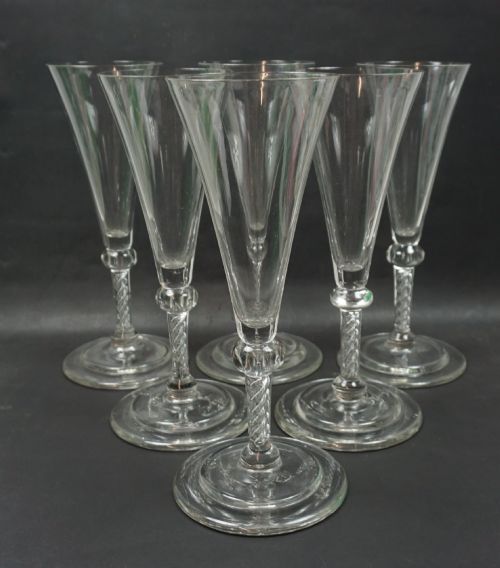
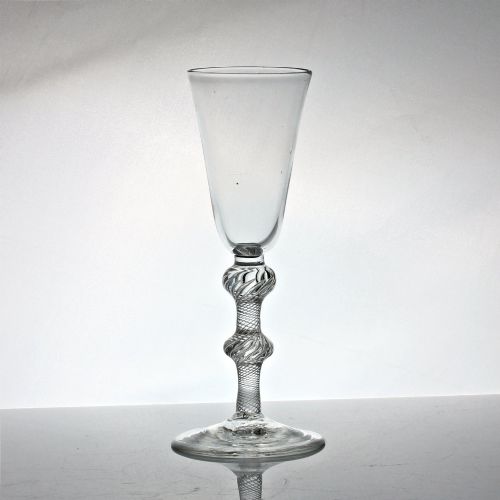
Stems incorporate intricate internal structures such as air twists, opaque twists, and mixed twists, formed by manipulating threads of white or clear glass within the molten material. Facet cutting and delicate engraving were often applied to finish the surface of the bowl.
Several dwarf ale glasses stand ready to serve small, historic toasts without tipping over.
Factors of quality
Quality in these drinking glasses rests upon the crispness of the optical moulding and the dexterity shown in forming the internal twists within the stem. Superior examples display balanced proportions, clear metal without excessive clouding, and finely executed hand engraving.
The Fluted Drinking Glasses Glossary
- Flute-moulded
- A decorative technique where vertical channels or ribs are impressed into the glass bowl.
- Air twist
- A spiral of elongated air bubbles trapped inside the stem of a glass during formation.
- Opaque twist
- A stem containing white or coloured enamel glass threads twisted into a spiral pattern.
- Wrythen
- A pattern of diagonal or spiral ribs created by twisting the glass while hot.
- Rummer
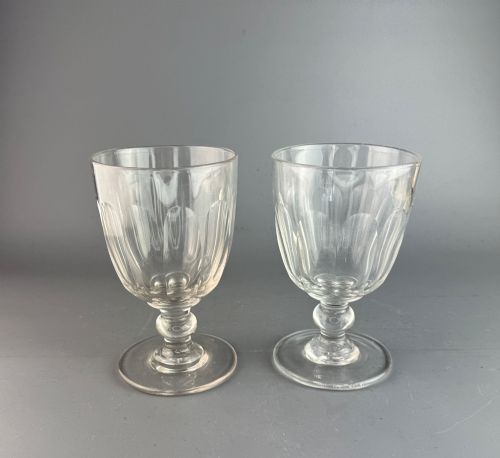
- A capacious drinking glass popular in the Georgian and Victorian periods, often featuring a short stem and bucket bowl.
- Folded foot
- A rim folded under the base of the glass to provide extra strength and stability.
Fluted Drinking Glasses: Frequently Asked Questions
How do I clean antique glasses?
Wash these pieces by hand in warm, soapy water without soaking them. Dry them immediately with a soft linen cloth to preserve the historic metal.
Avoid dishwashers and sudden temperature changes, as old glass is sensitive to thermal shock.
Can I drink from them?
You can use these glasses for special occasions, provided you handle them with care. Their age and historic lead content mean gentle usage suits them best.
Hand-washing is mandatory after any use to protect the fragile surfaces and engraved details.
What is an air twist stem?
An air twist is a decorative stem containing continuous spiral threads of tiny air bubbles. Makers achieved this by pricking hot glass and drawing it out.
This technique dates predominantly to the 18th century and requires high skill to execute evenly.
How do I date an ale glass?
Dating relies on form, stem construction, and manufacturing traits like pontil marks and foot styles. Georgian pieces often show distinct twist stems or facet cutting.
Comparing the bowl shape and engraving style against documented examples helps narrow down the decade.