


Flush Handle Desk
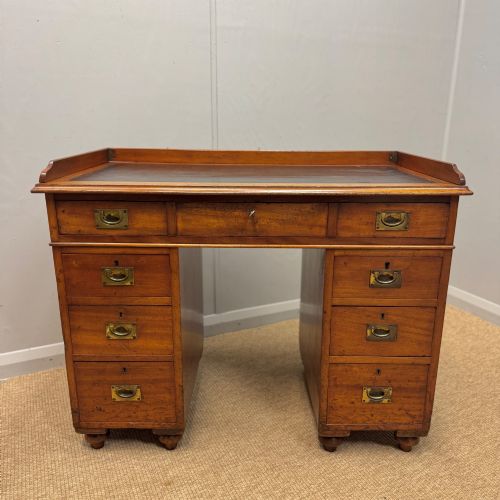
A flush handle desk delivers sturdy utility and compact writing space, built to travel through the nineteenth century and beyond.
Flush Handle Desk
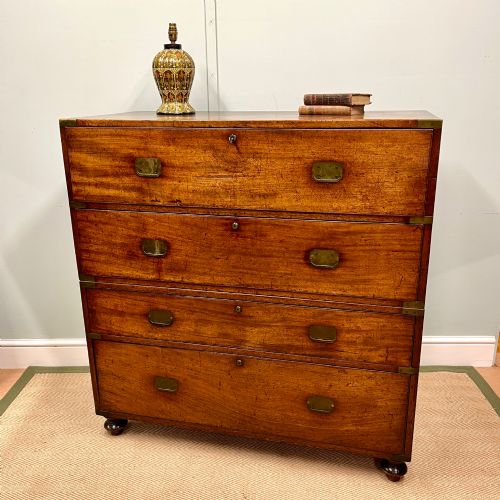
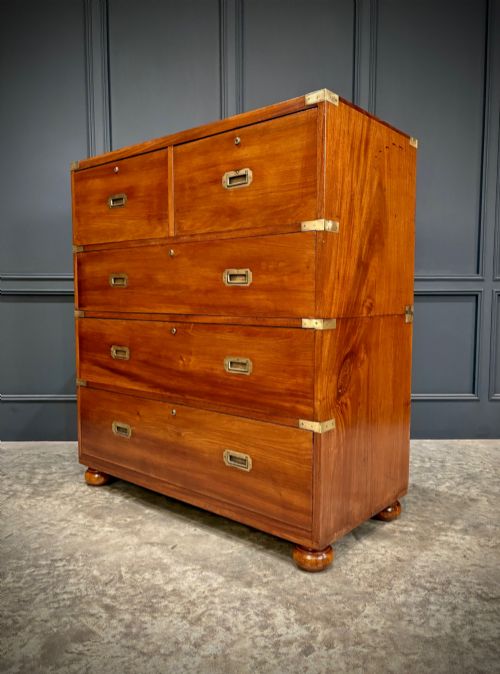
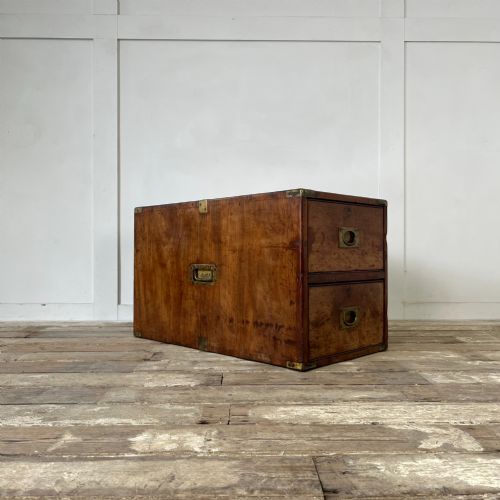
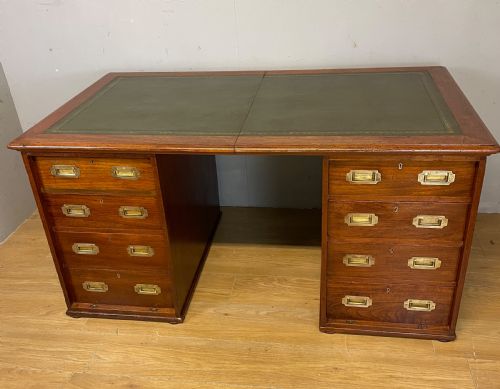
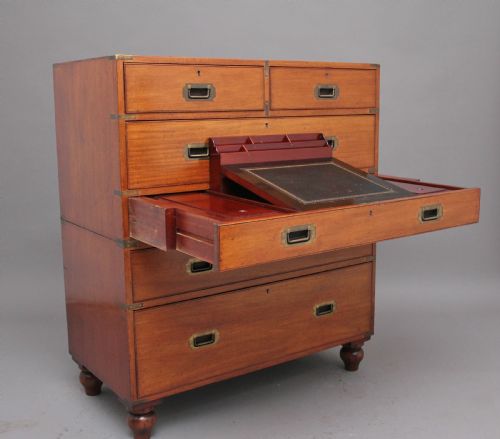
A flush handle desk spans nineteenth century campaign designs, Victorian military secretaire chests, and Edwardian writing tables built for travel or official service. You will frequently meet mahogany and teak military secretaire chests featuring recessed brass pulls and compartmentalised interiors designed for transport.
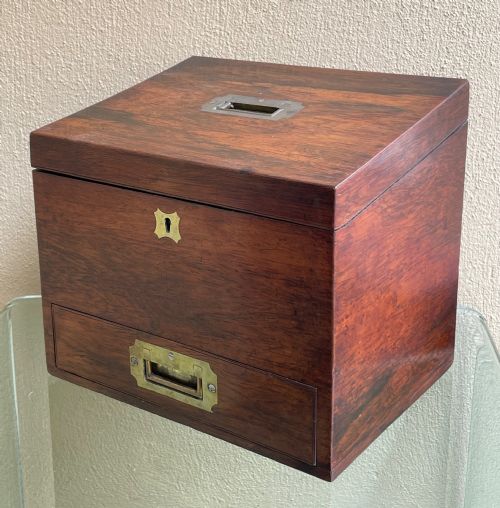
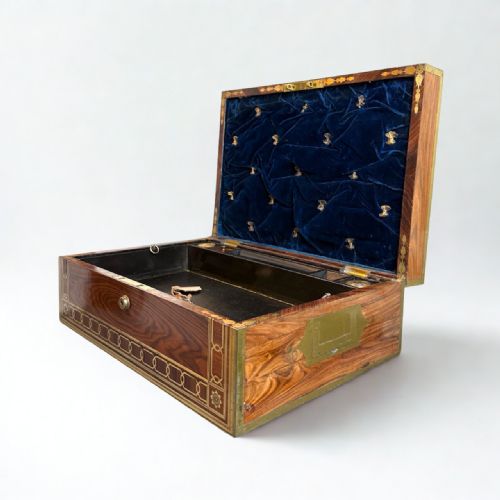
These items originate from periods ranging across the Victorian era into the Edwardian years, taking forms such as writing boxes, correspondence boxes, and three-part desks. The selection includes Anglo-Indian items and Chinese export pieces alongside standard British military furniture.
How they were made
Carpenters constructed these desks using dense timbers like mahogany, teak, camphor wood, and rosewood to withstand difficult journeys and shifting climates. They incorporated brass mountings and flush handles to protect the wood from catching during transport.
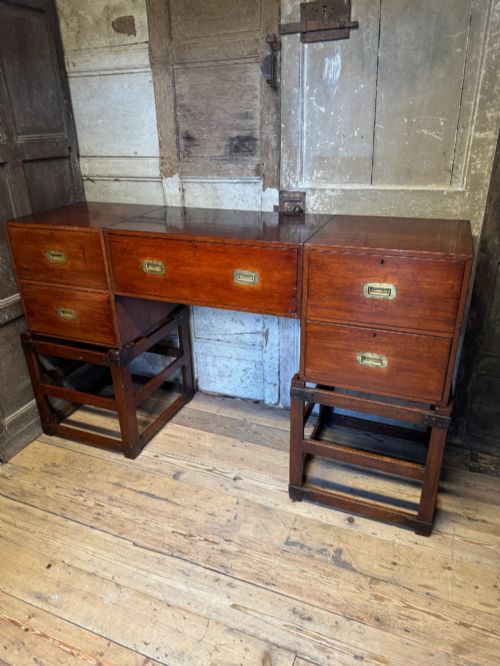
Surfaces often feature inset leather tops and fitted interiors with hidden compartments operated by clever mechanical releases. Multi-part construction allowed larger chests and desks to separate into manageable sections for movement.
Major Whitmore apparently needed a sturdy desk close at hand while sorting out correspondence in distant outposts.
What varies in quality
The degree of refinement in the internal drawer layout and the choice of secondary timbers determine the standing of each piece. Superior examples utilise solid hardwoods throughout, whilst simpler ones rely on veneered surfaces.
The precision of the brass corners, flush handles, and locking mechanisms dictates the standard of execution. Better items show careful dovetailing and well-fitted secretaire drawers that drop smoothly on quadrant hinges.
Major Whitmore
The Flush Handle Desk Glossary
- Secretaire chest
- A chest of drawers featuring a fitted pull-down top drawer that serves as a writing desk. This dual-purpose form provides storage and a writing surface in a single unit.
- Campaign furniture
- Portable furnishings designed for military officers to pack and transport easily during campaigns. Pieces typically disassemble and feature protective brass corners.
- Flush handle
- A recessed handle set level with the wood surface so it does not catch on transit covers or other items. This fitting is essential on travel furniture.
- Writing slope
- A portable box with an angled lid designed to hold paper and provide a sloping writing surface. Interiors usually contain inkwell compartments and pen trays.
- Chinese export
- Items manufactured in China specifically for Western markets during the nineteenth century. These pieces often employ native woods like camphor or huanghuali.
Flush Handle Desk: Frequently Asked Questions
How do I use a secretaire drawer?
Pull the top drawer forward and release the internal catches to lower the front panel into a writing desk. This reveals small pigeonholes and letter drawers.
Close the fall-front securely before pushing the main drawer back into the chest framework.
Why are these desks split in sections?
Military campaign furniture separated into two or three stacked modular parts for easier loading onto pack animals or wagons. Iron carrying handles on the sides aided transport.
Brass brackets helped align the stacked sections securely during assembly.
What woods are typical for these pieces?
Mahogany and teak predominate, chosen for their resistance to warping and heavy handling in colonial outposts. Camphor wood and rosewood also appear frequently in export pieces.
Ebonised wood finishes provide a darker alternative on specific Victorian models.
How do I date a campaign chest?
Examine the construction methods, handle styles, and secondary woods used inside the drawer linings. Victorian examples from the mid nineteenth century generally display crisp brasswork and solid mahogany.
Edwardian iterations tend to show lighter framing and simpler internal arrangements.