



Brass Corner Desk
These pieces gather the solid timber, inset handles and reinforced corners of a brass corner desk, built for travel and study alike.
Brass Corner Desk
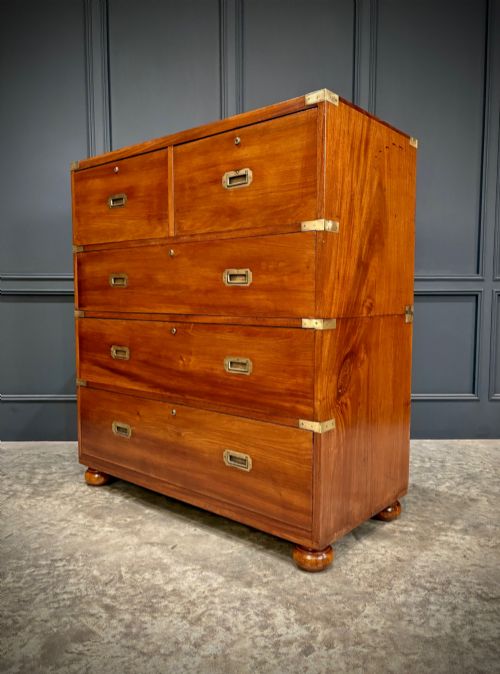
A brass corner desk encompasses sturdy campaign chests, folding writing slopes and fitted writing boxes from the Georgian, Victorian and Edwardian eras. These forms were designed for travel, engineered with recessed brass corners and flush handles to withstand the rigours of transport.
Mahogany, teak and walnut form the primary timbers of these pieces, often highlighted with brass mounts and red leather writing surfaces. Most examples on this page date from the nineteenth century, including campaign secretaire chests and compact writing slopes.
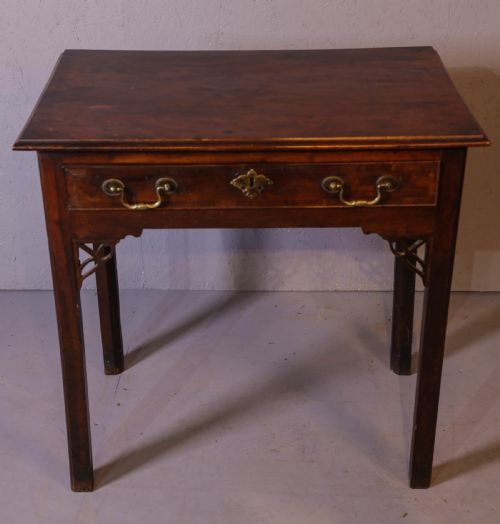
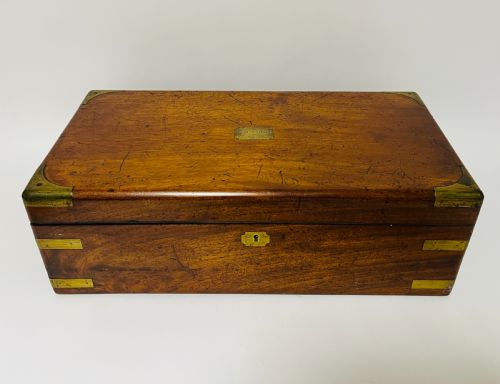
The selection ranges from yew wood side tables and walnut jewellery boxes to two-piece military chests with secret drawers. Buyers encounter both full-sized campaign desks and smaller desk-top boxes equipped with brass corner guards.
How they were made
Cabinet makers utilised dense hardwoods such as mahogany, teak, walnut and yew, chosen for their resilience against splitting in transit. These timbers were frequently polished to reveal rich grain patterns, including figured walnut and burr walnut variations.
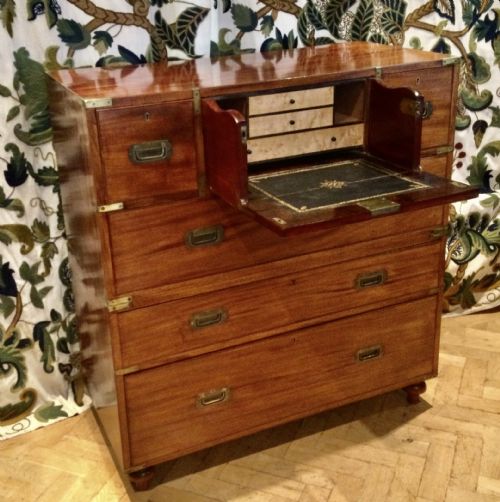
Corner plates, bracket feet and strap hinges made from solid brass were countersunk into the timber to protect vulnerable edges and joints. Internal compartments often featured secret drawers, folding mechanisms and leather-lined writing slopes.
One box includes secret drawers, proving that even a nineteenth-century officer needed a place to hide spare nibs.
What varies in quality
The grade of timber and the precision of the brass work distinguish superior pieces from standard workshop output. Finely figured veneers, well-matched wood grains and hand-cut dovetail joints mark out the better examples in this group.
The complexity of the interior fittings, such as secret drawers, hidden compartments and original leather inserts, elevates the standing of a writing slope or chest. Complete brass hardware suites, where every corner plate and escutcheon matches, carry greater authority.
Fisher
The Brass Corner Desk Glossary
- Campaign chest
- A heavy storage chest built in two or more stackable sections for military transport. These pieces feature recessed brass handles and corner brackets to prevent damage during movement.
- Writing slope
- A portable box with a sloping lid that opens to reveal a leather or velvet-lined writing surface and compartments for ink and pens. They often include hidden drawers beneath the stationery fittings.
- Secretaire
- A cabinet or chest incorporating a fitted drop-front desk drawer that conceals small pigeonholes and drawers. This combination allowed officers to write dispatches and store papers securely.
- Escutcheon
- A protective brass plate surrounding a keyhole. On these pieces, they are countersunk into the wood flush with the surface.
- Burr walnut
- Timber taken from a tree growth displaying intricate, swirling grain patterns. It was sliced into thin veneers for decorative furniture fronts and boxes.
Brass Corner Desk: Frequently Asked Questions
What is a campaign desk?
A campaign desk is portable furniture constructed in sections with recessed brass corners and flush handles, originally used by military officers on the move.
These items prioritise durability and modular transport without sacrificing a stable writing surface.
How do I identify a Victorian writing slope?
Victorian writing slopes are wooden boxes featuring brass corner mounts, shield escutcheons and a hinged lid that opens into a slanted writing plane.
Inside, you typically find fitted compartments for inkwells, pens and secret drawers concealed beneath internal panels.
What woods were used for these desks?
Cabinet makers relied on durable hardwoods including mahogany, teak, walnut, yew and oak.
Finer versions often utilised figured walnut or burr walnut veneers to decorate the exterior surfaces.
Are brass corners purely decorative?
Brass corners on campaign furniture served a structural purpose, protecting the vulnerable edges of the wood from knocks during transit.
They were countersunk flush with the timber so items could pack tightly together in wagons or ships.