


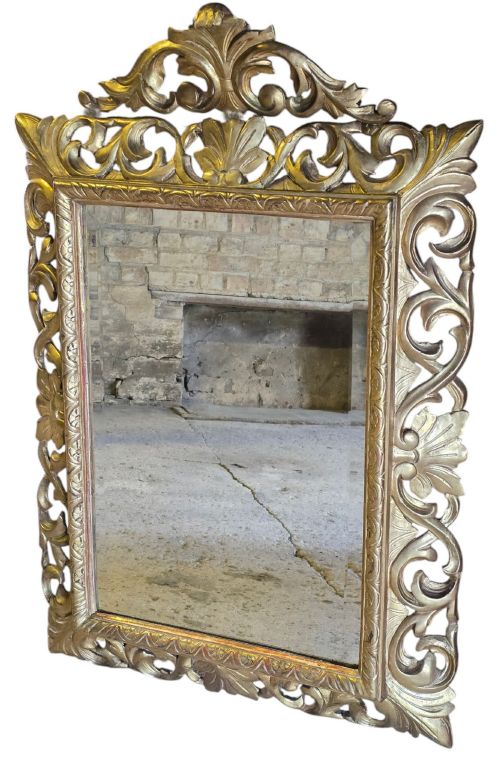
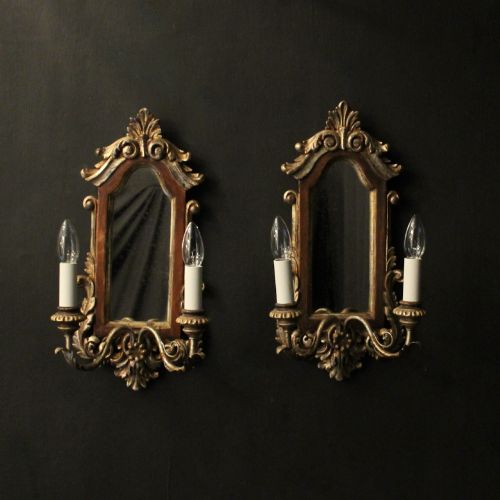

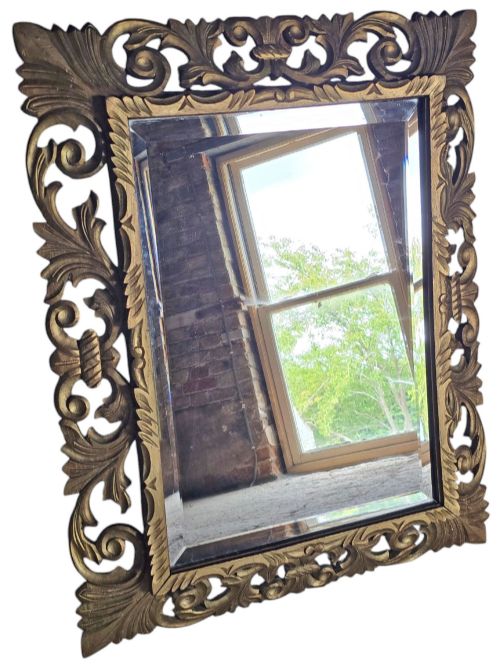

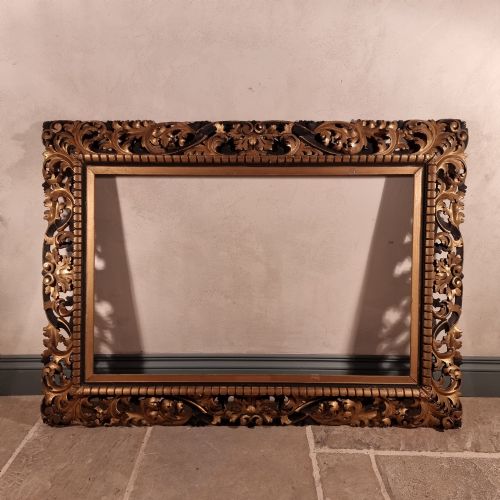

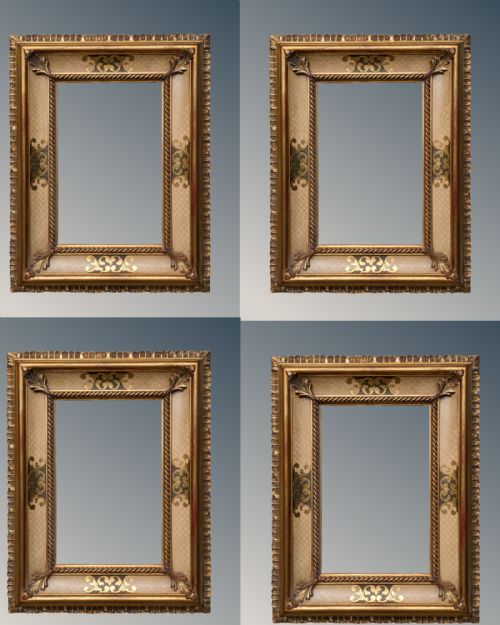
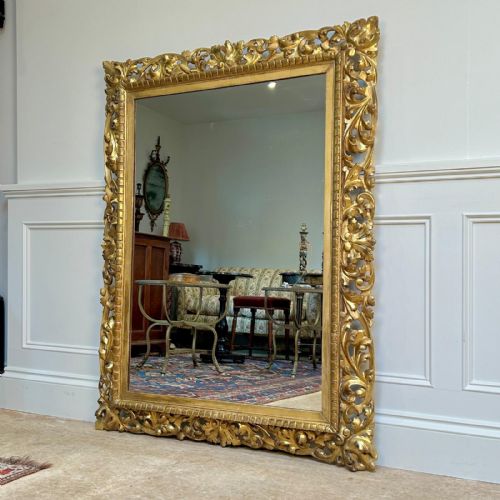


Florentine Carved Gold Frame
A florentine carved gold frame brings Italian opulence to a room, offering rich gilded detail for mirrors and art.
Florentine Carved Gold Frame
A florentine carved gold frame typically takes the form of a wall mirror, overmantle mirror, or picture frame, originating from Italy across the eighteenth and nineteenth centuries. Buyers frequently encounter nineteenth-century giltwood examples shaped by Florentine, Baroque, and Rococo revival styles.
The selection includes decorative girandoles, cushion mirrors, and rectangular wall mirrors carved from timber and coated in gold leaf. These items serve as functional looking glasses or ornate housing for charcoal portraits and master drawings.
What varies in quality
Depth and precision of the wood carving separate standard examples from superior items, particularly where acanthus leaves and scrolls display sharp undercut details rather than soft contours. The integrity of the underlying gesso and the warmth of the gold leaf influence the overall visual impact of the piece.
Proportion and scale dictate the success of larger overmantle mirrors and girandoles, where balanced symmetry or deliberate asymmetrical Rococo composition sustains historical character. The quality rests on the crispness of the hand-carved motifs and the preservation of the original gilded surfaces.
Florentine Carved Gold Frame Retail Price Guide 2026
Typical asking prices for florentine carved gold frame among the pieces listed under this phrase on Sellingantiques today, from the lower quarter to the upper quarter. They describe what is for sale here now, not the wider market.
Some nineteenth-century artisans hid tiny carved insects among the foliage of their gilded vine frames just to test observant viewers.
The Florentine Carved Gold Frame Glossary
- Giltwood
- Wood coated with gold leaf or gold paint. This finish creates a luminous metallic appearance characteristic of traditional Italian framing.
- Gesso
- A plaster mix applied to carved wood to create a smooth base. It holds fine details before gilding takes place.
- Girandole
- A branched wall sconce or mirror with candle holders attached. These items combine reflective glass with functional illumination.
- Overmantle
- A large mirror designed to hang above a fireplace mantel. They often feature grand proportions and decorative crestings.
- Cushion mirror
- A looking glass with a convex frame profile resembling a soft cushion. The angled sides catch the light from multiple directions.
Florentine Carved Gold Frame: Frequently Asked Questions
How do I hang a heavy giltwood mirror safely?
Substantial frames require professional wall anchors suited to the weight of the timber and glass. Secure the hanging wire or brackets directly into wall studs for stability.
Position the piece at eye level to ensure the proportions anchor the surrounding room furniture effectively.
What is the difference between Baroque and Rococo Florentine styles?
Baroque designs emphasise symmetry, grand scale, and robust architectural elements. They project a sense of drama and heavy solemnity.
Conversely, Rococo examples lean towards asymmetry, delicate scrolls, and organic shell motifs. These pieces feel lighter and more whimsical in execution.
How should I clean a antique gold leaf frame?
Dust the carved wooden surfaces gently with a soft, dry brush to remove particles without disturbing the delicate gold leaf. Avoid liquid cleaners and chemical sprays entirely.
Moisture can penetrate the gesso layer beneath the gold, causing the finish to flake or lift over time.
Can these frames be used in modern interiors?
Ornate Italian mirrors and frames introduce a striking focal point against minimalist contemporary walls. The contrast highlights the intricate craftsmanship of the carved timber.
Pairing a gilded piece with simple furnishings allows the historical texture to stand out in the space.