


Floral Wall Lights
These floral wall lights bring organic forms and botanical detail to interior illumination through enduring metal, ceramic and glass constructions.
Floral Wall Lights
Floral wall lights unite decorative illumination with botanical motifs, taking the form of sconces and multi-branched fixtures designed to mount directly onto a wall. Buyers searching for floral wall lights encounter pieces configured with single, twin, or triple arms designed to hold candles or electric lamps.
The selections span distinct periods including Victorian and Edwardian iterations alongside 1930s continental designs. Common formats range from painted metal petals and porcelain blossoms to giltwood carvings and mirrored backplates.
French workshops dominate the visible inventory, alongside German porcelain manufactories and Italian makers. Pieces frequently arrive as matched pairs, though individual sconces and assorted framing styles also appear.
Construction and Materials
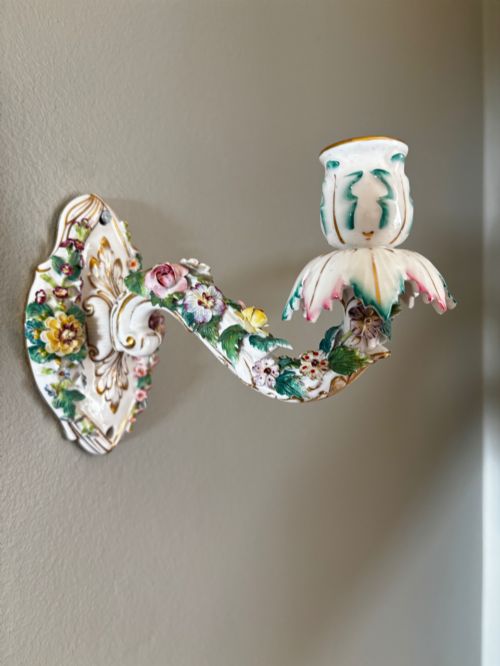
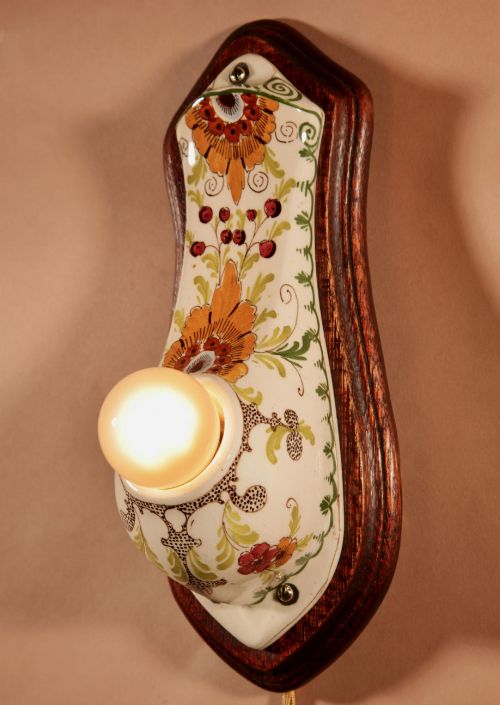
Ceramic elements utilise porcelain and Delft earthenware, often moulded directly into three-dimensional flower heads and polychrome petals. Giltwood and mirrored glass provide reflective backplates on specific decorative iterations.
French workshops account for a significant portion of the recorded inventory, frequently producing twin-arm toleware floral designs.
Judging Quality
Quality rests upon the delicacy of the botanical modelling and the integrity of the structural metalwork. Hand-painted polychrome surfaces and intricate porcelain petals demonstrate superior craftsmanship compared to plain stamped alternatives.
The refinement of the casting and the depth of the gilt or painted finish dictate the tier of the piece. Matching pairs with intact original decoration represent the upper standard of surviving examples.
Meissen·Von Schierholz
The Floral Wall Lights Glossary
- Toleware
- Painted or lacquered sheet metal items popular in domestic lighting and decorative accessories. This technique allowed artisans to shape durable iron into convincing botanical forms.
- Sconce
- A wall-mounted light fixture designed to hold candles or electric lamps. These fixtures project illumination outward from vertical surfaces.
- Polychrome
- Decorated in multiple colours. This multi-coloured finish brings realistic hues to hand-painted floral petals and leaves.
- Giltwood
- Wood carved and covered with a thin layer of gold leaf or gold paint. This treatment offers a reflective and ornate surface for decorative frames.
- Art Nouveau
- A stylistic movement characterised by sinuous, organic lines and floral motifs. This aesthetic heavily influences the flowing stem designs seen in these lighting fixtures.
Floral Wall Lights: Frequently Asked Questions
How do I wire antique wall lights?
Professional electricians should handle the internal wiring of vintage and antique wall sconces to ensure safety compliance with modern standards. Many pieces retain older fittings that require conversion for contemporary wall circuits.
Qualified practitioners can integrate modern wiring channels without damaging delicate toleware arms or fragile porcelain flower structures.
Are these lights supplied as pairs?
Many listings feature matching pairs designed for symmetrical placement on either side of a mirror, fireplace, or architectural feature. Single sconces also appear for narrower wall spaces.
Checking individual descriptions clarifies whether a fixture is offered independently or as part of a matched set.
How do I clean painted metal flowers?
Dusting gently with a soft, dry brush preserves the delicate hand-painted surfaces of toleware and polychrome metal petals. Moisture can damage older painted finishes and accelerate metal corrosion.
Harsh chemical cleaning agents should be avoided entirely to protect the original pigments and gilt details.
What periods do these wall lights represent?
The available selection spans from the late nineteenth century through the 1950s, encompassing Victorian, Art Nouveau, and 1930s continental design movements. Each era brings distinct manufacturing techniques and stylistic interpretations of botanical forms.
Earlier examples often incorporate hand-carved giltwood or Delft ceramics, while later mid-century pieces favour streamlined painted metal constructions.