
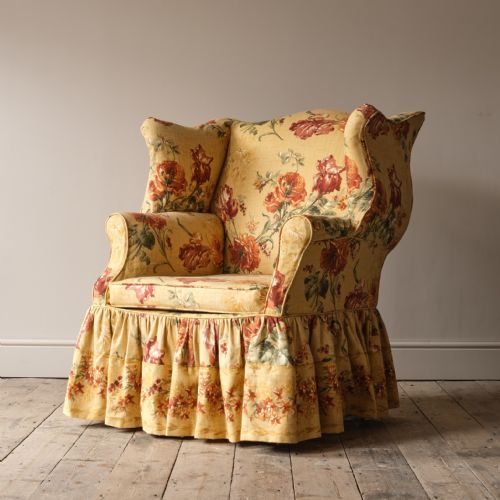
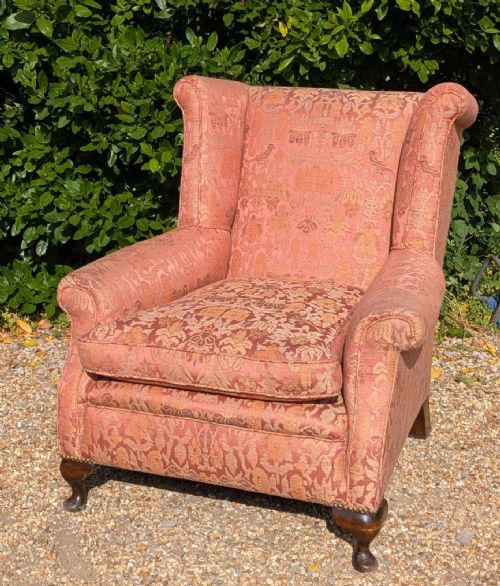
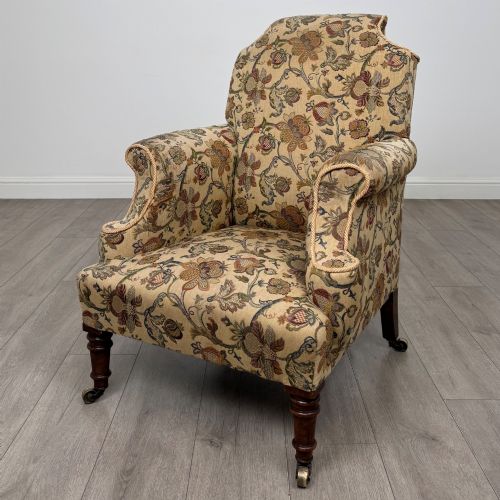
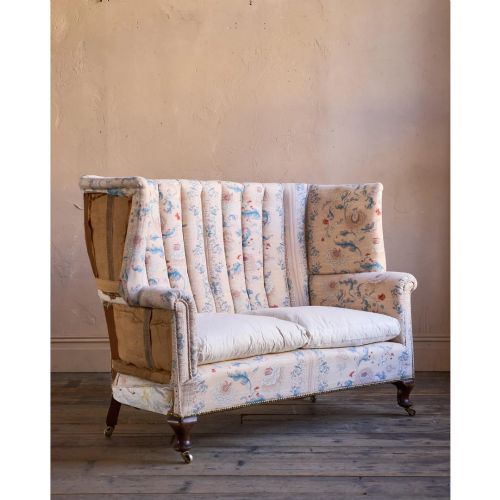
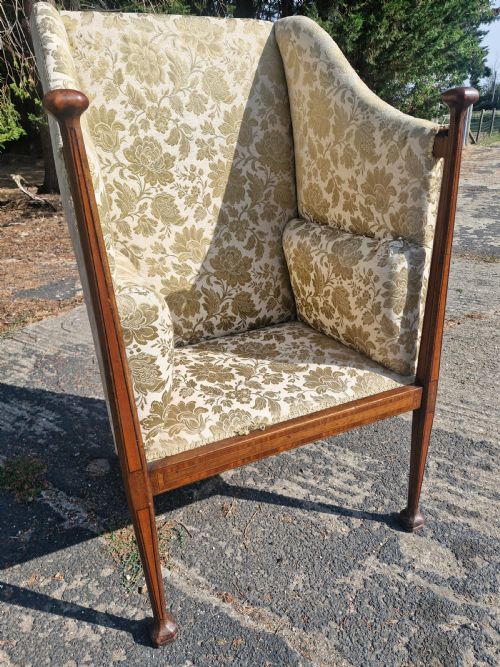
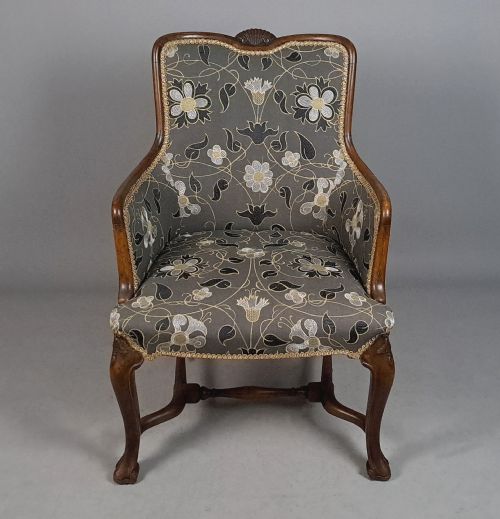


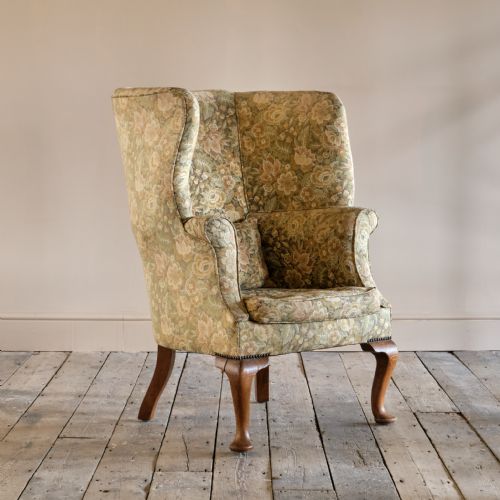


Floral Upholstered Wing Chair
A floral upholstered wing chair brings deep comfort and traditional presence to a room, drawing on centuries of classic seating design.
Floral Upholstered Wing Chair
A floral upholstered wing chair is a high-backed seat designed to shield the occupant from draughts, featuring distinctive side panels or wings. These armchairs appear in periods ranging from the 18th century through the Georgian and Edwardian eras up to the 1930s. The selection most commonly includes Queen Anne Revival, Chippendale style, and Edwardian pieces.
Beyond standard armchairs, related forms in the evidence include barrel-backed armchairs and winged sofas. Frames span the 19th century, 1900, 1910, and 1920, often adopting traditional revival manners. The defining characteristic remains the upholstered wings paired with supportive armrest structures.
Fabric upholstery carries the floral patterns, frequently combined with feather filling for added comfort. Many examples serve as fireside armchairs, designed specifically for domestic warmth and relaxed sitting.
How They Were Made
Frames are constructed from sturdy timbers such as mahogany, walnut, oak, and general hardwood. These woods provide the structural integrity required to support the high backs and projecting wings.
The frames receive fabric or tapestry upholstery, sometimes enhanced with brass detailing. Interior cushioning relies on traditional methods like feather filling to achieve the desired softness and support.
Early designers added wings to block cold air, accidentally creating the ultimate spot for an undetected afternoon nap.
What Varies in Quality
The refinement of the wooden frame shapes the piece, distinguishing restrained vernacular carpentry from detailed revival work in the manner of Queen Anne or Chippendale. Carved cabriole legs and well-proportioned wings reflect greater maker skill.
The choice and execution of the upholstery materials set individual examples apart. Higher quality versions integrate substantial timber frames with enduring fabric choices and superior feather filling.
The Floral Upholstered Wing Chair Glossary
- Wingback
- An armchair design featuring projecting side panels attached to the arms to deflect draughts. These wings also helped trap heat from an open fireplace.
- Cabriole leg
- A furniture leg that curves out and then in, resembling the leg of an animal. This form frequently appears on Queen Anne and Chippendale style seating.
- Barrel back
- A seating shape where the back and arms form a single, continuous semi-circular curve. This encloses the user more completely than a standard straight-backed chair.
- Fireside armchair
- A low or standard chair designed for placement near a hearth. They often feature high backs and upholstered wings for thermal comfort.
- Tapestry fabric
- A heavy, thick textile woven with complex decorative patterns. It provides a durable and ornate covering for traditional seating.
Floral Upholstered Wing Chair: Frequently Asked Questions
What is a wing chair?
A wing chair is an upholstered seat featuring high sides designed to protect the user from cold draughts. The projecting panels trap heat from the fire.
These chairs developed from earlier wooden seating to offer greater comfort in domestic parlours and drawing rooms.
How do I date a wing chair?
Dating relies on examining the timber frame, leg style, and construction methods. Details like Queen Anne cabriole legs or Edwardian framing indicate the period.
Upholstery often changes over time, so the underlying wooden structure provides the most reliable guide to age.
Where should I place a wing chair?
These chairs suit living rooms, studies, and bedrooms, particularly near a fireplace or in a quiet reading corner. Their high backs create a distinct focal point.
They pair well with both traditional interiors and mixed contemporary spaces needing a substantial fabric armchair.
What materials are used?
Frames are built from hardwoods such as mahogany, walnut, oak, and general timber. Brass components sometimes appear on the structure or castors.
The exterior uses fabric or tapestry upholstery, while interiors frequently utilise feather filling for comfort.