
Floral Textile Wall Hanging
When you search for a floral textile wall hanging, you are looking at centuries of woven and embroidered botanicals designed to soften a room.
Floral Textile Wall Hanging
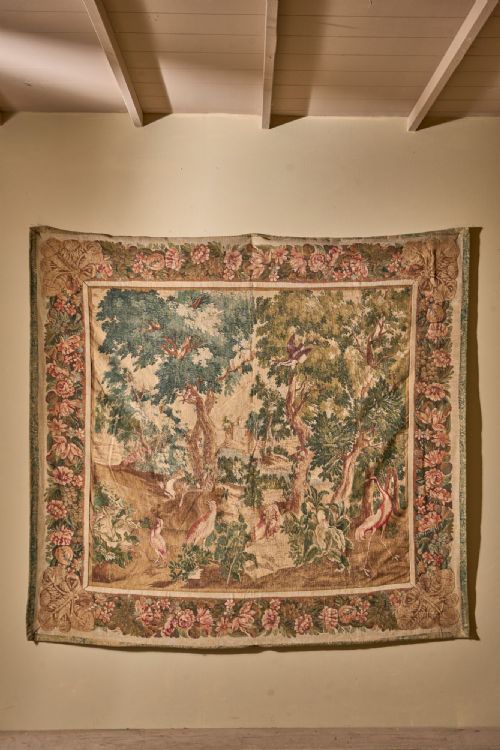
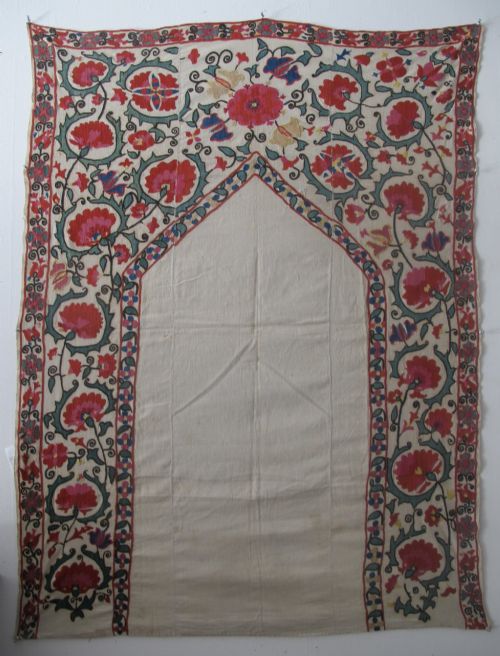
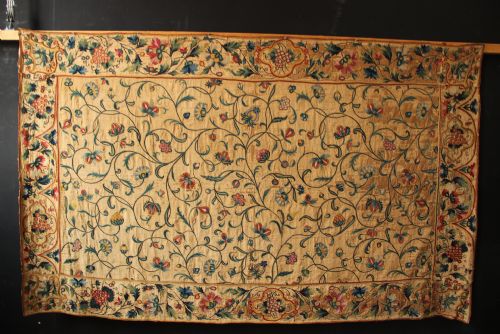
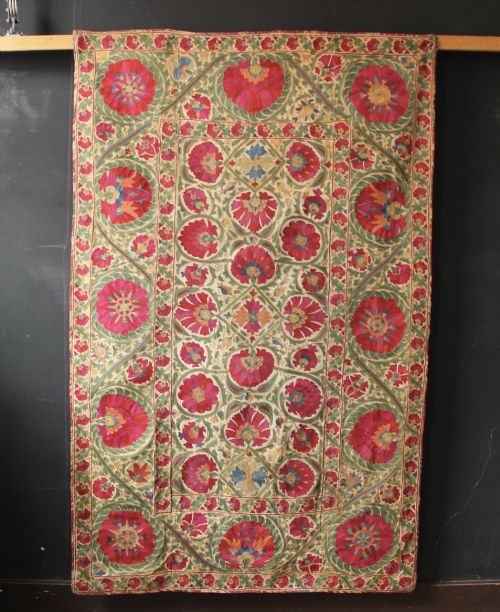
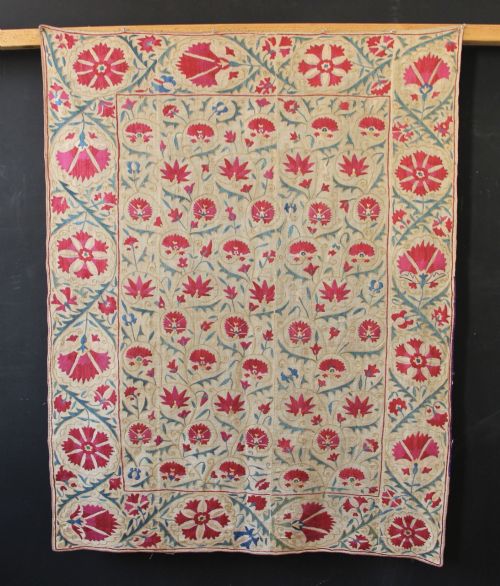
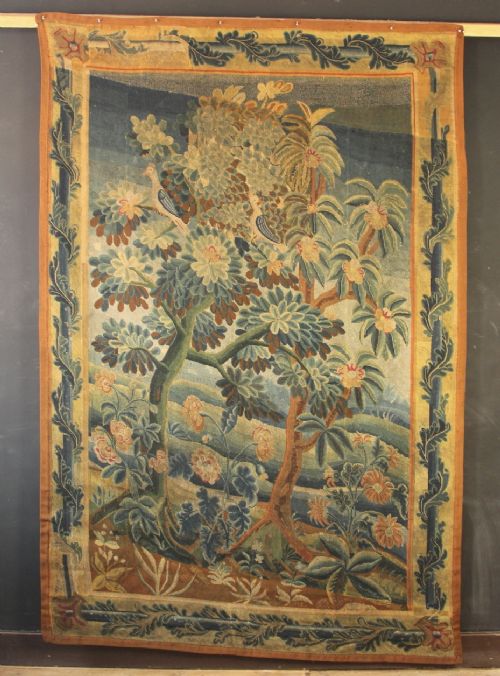
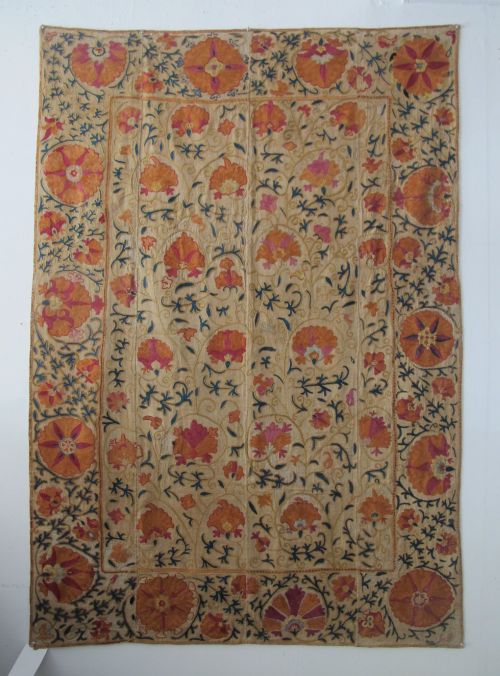
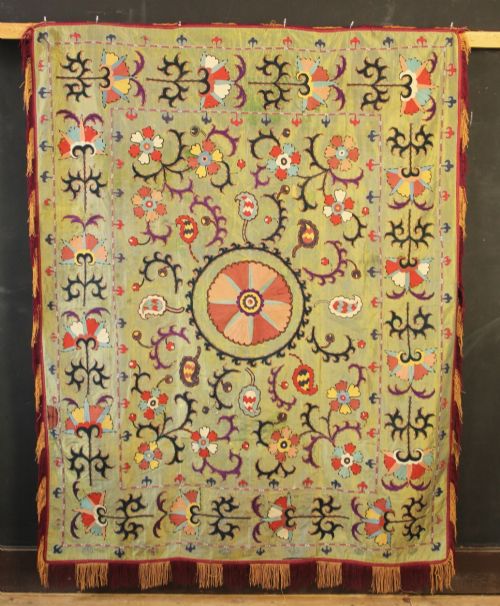
A floral textile wall hanging encompasses everything from large European verdure tapestries to intricate Central Asian suzanis and English crewelwork panels. These pieces served historically as insulation, decoration, and displays of status within grand homes and nomadic tents alike.
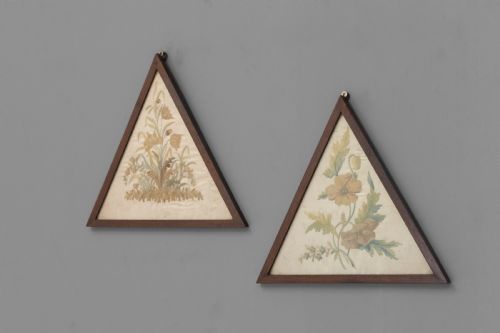
On this page, you will most frequently meet Central Asian suzanis from the nineteenth and early twentieth centuries, alongside French and English tapestries spanning several hundred years. They arrive as framed art, mounted panels, or long vertical hangings ready for interior display.
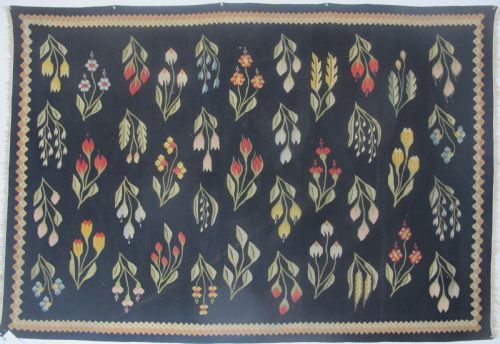
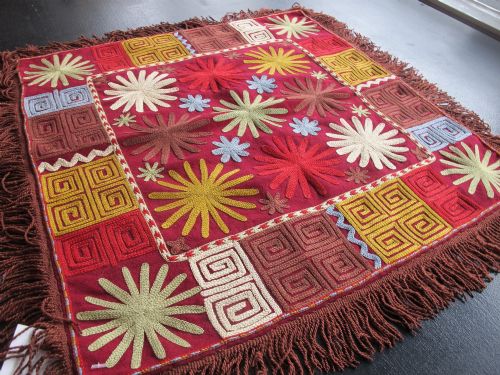
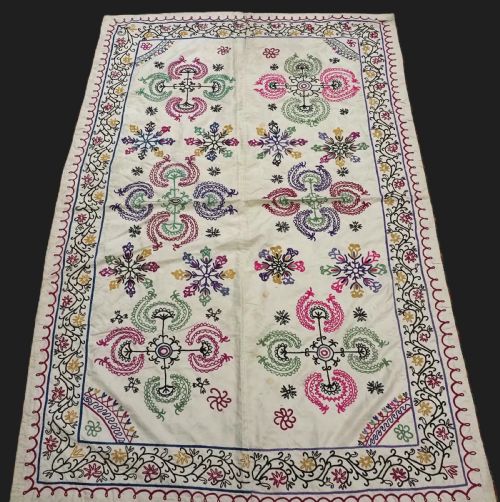
The regional variety ranges from Uzbek Bokhara and Lakai embroideries to Persian Rasht works on felt and Scandinavian rya rugs repurposed for walls. Each origin brings distinct botanical motifs, from grand central medallions to scrolling floral vines.
What Varies in Quality
Quality rests upon the density of the stitchwork and the fineness of the ground material, where tightly worked silk on silk or fine wool denotes superior workshop output. Greater complexity in botanical motifs and well-executed symmetry signal an elevated standard of handcraft.
The preservation of original grounds and the vibrancy of natural dyed threads govern the overall integrity of a textile. Pieces retaining their structural balance without heavy modern restoration stand clearly apart at the upper end of the range.
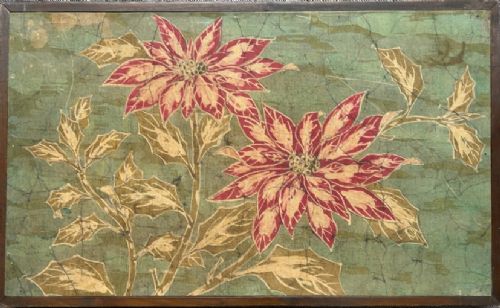
Listings span multiple centuries, ranging from seventeenth-century crewelwork and verdure tapestries to mid-twentieth-century batik art panels.
The Floral Textile Wall Hanging Glossary
- Suzani
- An embroidered tribal hanging originating from Central Asia, typically featuring bold floral motifs on a cotton or silk ground. These textiles were traditionally made by brides as part of their dowry.
- Crewelwork
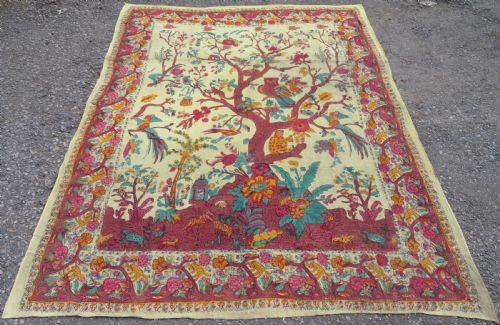
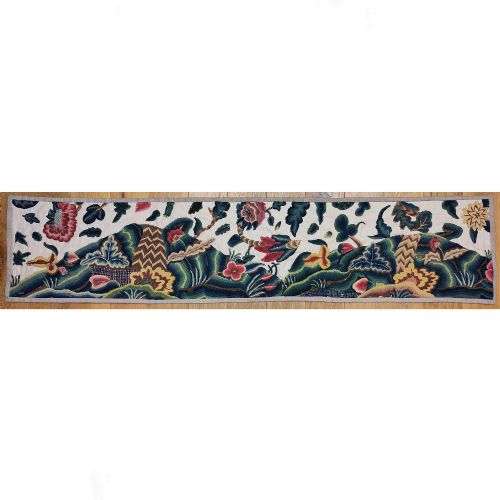
- A traditional form of surface embroidery using wool yarn on a linen or cotton twill foundation. English examples from earlier centuries frequently display heavy floral scrolling and tree-of-life designs.
- Verdure tapestry
- A European woven wall hanging dominated by stylized foliage, trees, and botanical landscapes. Animals and small flowers often hide among the dense green and earthy tones.
- Nim suzani
- A smaller version of the standard Central Asian suzani, generally measuring roughly half the full area. These compact pieces were often utilised as small covers or wall panels.
- Mille-fleurs
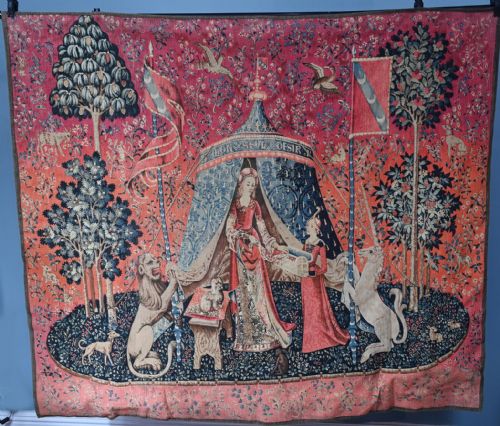
- A French term translating to a thousand flowers, describing a background filled with a dense field of small blooming plants. This style appears frequently on medieval and Renaissance revival tapestries.
- Ciselé velvet
- A velvet technique combining cut and uncut pile to create raised patterns against a ground. It often appears in structured pilaster hangings from European traditions.
Floral Textile Wall Hanging: Frequently Asked Questions
How were textile wall hangings displayed originally?
In European interiors, large tapestries and velvet panels were hung directly on stone or plaster walls to trap heat and insulate drafty rooms.
Nomadic Central Asian households used suzanis inside yurts or as decorative covers during important domestic ceremonies and weddings.
What is the difference between a suzani and a tapestry?
A suzani is fundamentally an embroidered textile where needle and thread build patterns onto a pre-woven cotton, linen, or silk foundation cloth.
A tapestry is woven on a loom where the pattern is created simultaneously with the structural fabric itself.
Can heavy tapestries be hung safely?
Heavy woven tapestries and large velvet panels require a professional weight-distributing hanging system.
A common method involves stitching a strong cotton sleeve to the top reverse edge and sliding a padded wooden batten through it.