



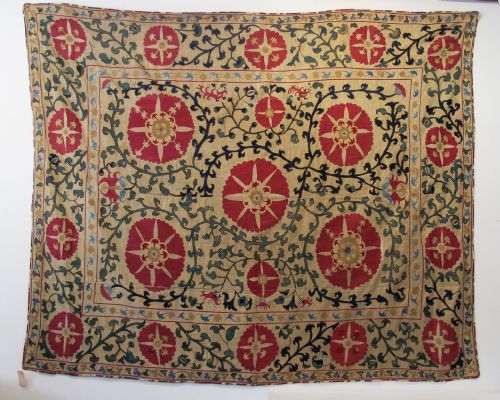


Floral Suzani Bedspread
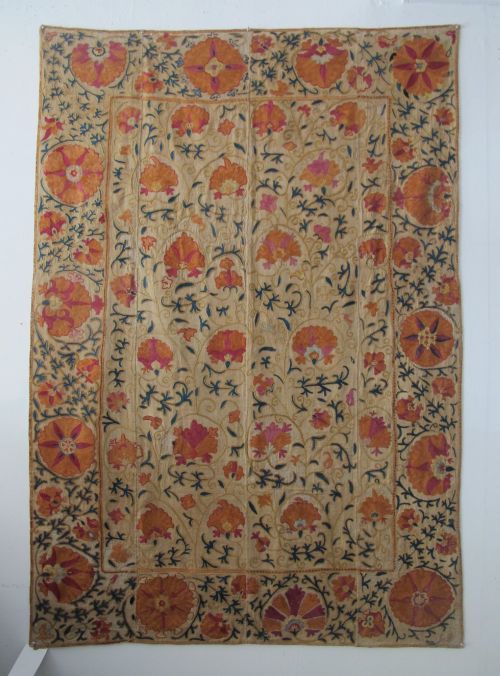
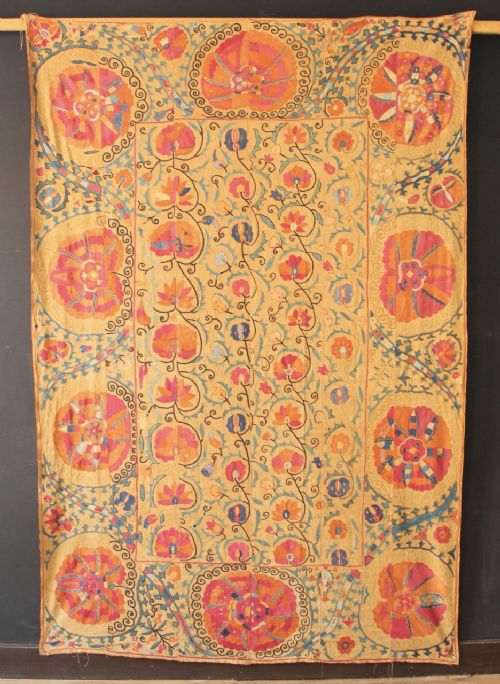
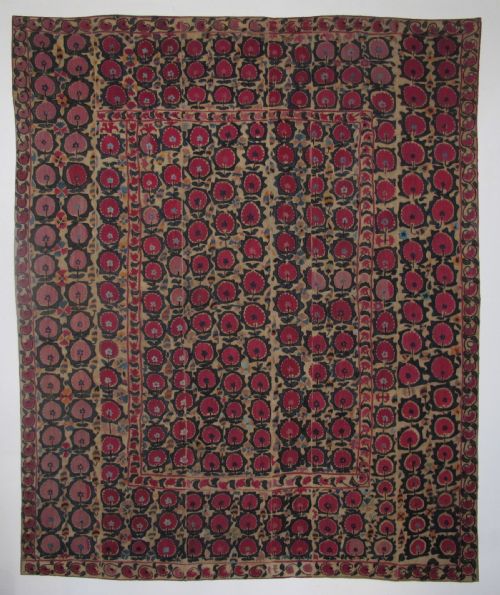
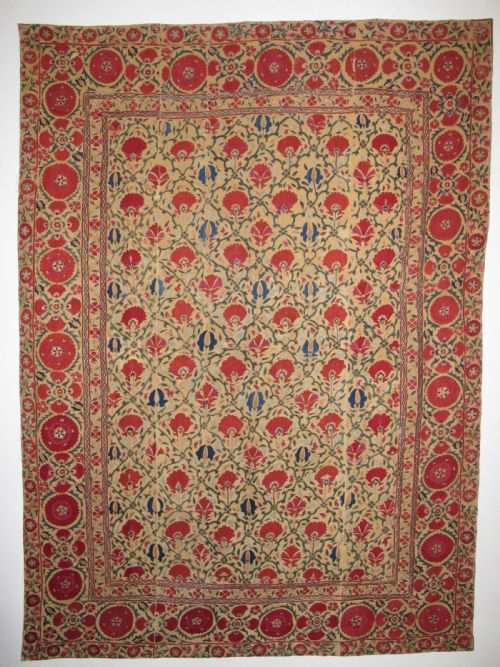
These floral suzani bedspread pieces bring Central Asian needlework into a room, offering rich embroidery on cotton ground.
Floral Suzani Bedspread
A floral suzani bedspread represents traditional Central Asian textiles, originating from regions such as Uzbekistan, Samarkand, and Bukhara. These embroidered covers trace their origins from the early nineteenth century through to the early twentieth century.
Buyers encounter various formats on this page, including large medallion variants, nim suzani covers possibly attributed to Lakai makers, and general antique embroidery textiles functioning as wall hangings or covers.
Materials and Construction
The foundation of these pieces relies on a cotton ground, sometimes appearing in a yellow tone, upon which artisans worked their designs. This sturdy base supports substantial decorative needlework.
Silk thread provides the medium for the embroidery, creating vibrant colour and texture across the surface. This technique aligns with Central Asian traditional folk art methods.
Floral Suzani Bedspread Retail Price Guide 2026
Typical asking prices for floral suzani bedspread among the pieces listed under this phrase on Sellingantiques today, from the lower quarter to the upper quarter. They describe what is for sale here now, not the wider market.
Listings span from eighteen-fifty to nineteen-thirty, uniting cotton grounds and silk thread embroidery from Central Asian traditions.
Assessing Quality
Quality differentiates through the intricacy of the silk thread embroidery and the clarity of the traditional design execution across the cotton ground. Finer examples display denser needlework and more elaborate regional variants.
The scale and proportion of the composition, such as large medallion layouts, influence the visual impact of the textile. Condition and regional attribution from centres like Bukhara or Uratube further define the standing of a piece.
The Floral Suzani Bedspread Glossary
- Suzani
- An embroidered textile from Central Asia, traditionally worked by women for dowries or household use. The word derives from the Persian term for needle.
- Nim suzani
- A smaller or half-size variant of the standard suzani cover. These were often utilised for smaller beds or specific domestic purposes.
- Bokhara
- A historic city in Uzbekistan known for distinctive regional styles of embroidery and textile production. Pieces originating here often display specific floral motifs.
- Samarkand
- A major trading hub along the Silk Road associated with notable textile traditions. Items from this area reflect distinct local design variations.
- Lakai
- A distinct tribal group within Central Asia known for bold and energetic embroidery styles. Their work often shows unique variant patterns compared to city-made pieces.
Floral Suzani Bedspread: Frequently Asked Questions
How were floral suzani bedspread pieces originally used?
These textiles served primarily as decorative covers for beds within Central Asian households. Families also displayed them on walls during important domestic occasions and celebrations.
Over time, many of these embroidered covers transitioned into decorative elements for modern interiors, functioning as wall hangings or soft furnishings.
Where do these embroidered textiles originate?
The pieces originate from Central Asia, specifically referencing locations within modern-day Uzbekistan such as Bukhara, Samarkand, and Uratube. Regional workshops and tribal groups developed distinct local styles.
Each geographic centre imparted specific characteristics to the floral patterns and the arrangement of the silk thread embroidery upon the cotton ground.
How do I care for an antique suzani?
Protect antique textiles from direct sunlight to prevent the silk thread colours from fading over time. Gentle handling and minimal physical stress preserve the integrity of the cotton ground.
Professional textile conservation methods should be consulted for cleaning, avoiding standard washing techniques that might damage the historical embroidery.
How can I tell different periods apart?
Dating relies on stylistic shifts in the floral motifs, the saturation of the silk thread, and the weave of the cotton ground. Earlier nineteenth-century examples often display specific regional compositions.
Later pieces from the early twentieth century introduce different design variants while maintaining traditional Central Asian folk art techniques.