


Floral Porcelain Teacup
A floral porcelain teacup brings painted blossoms to the morning table, offering a small tangible piece of botanical history for daily use.
Floral Porcelain Teacup
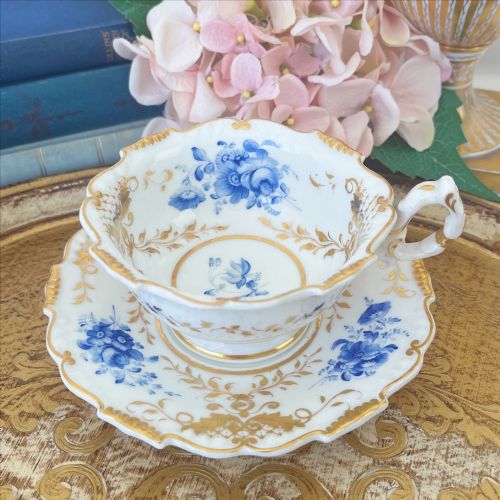
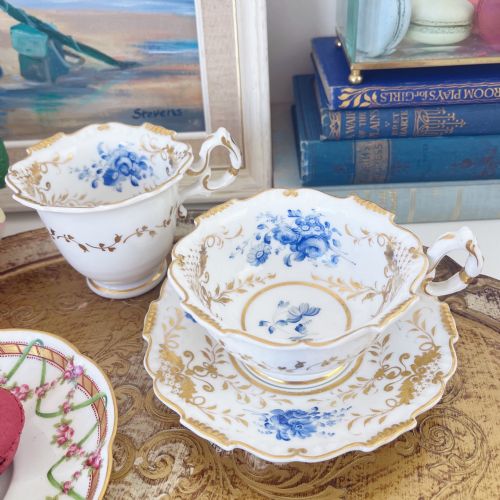
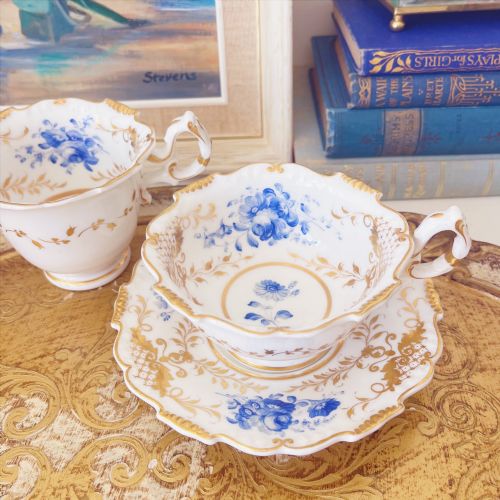
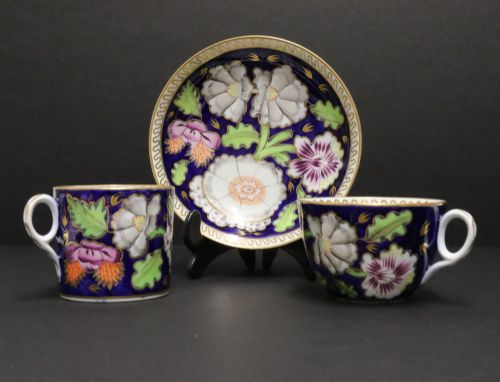
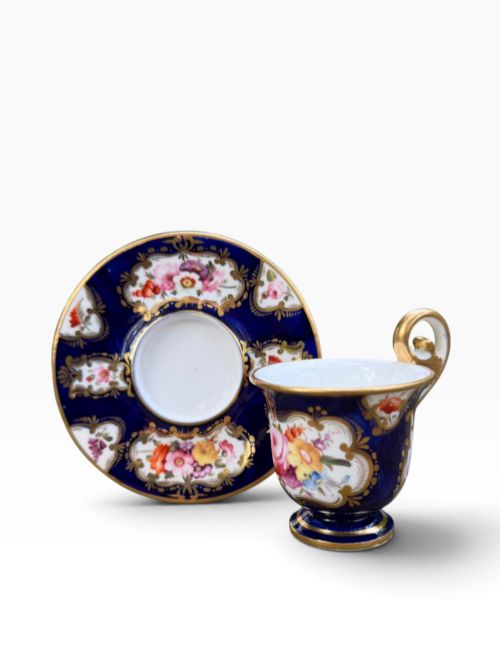
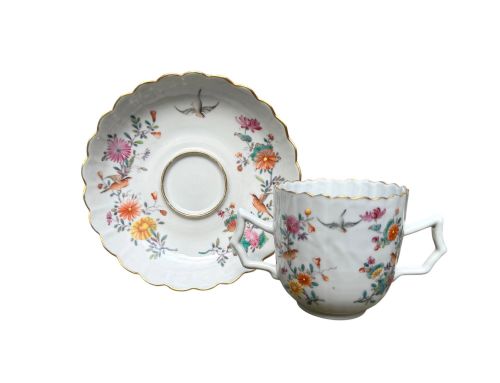
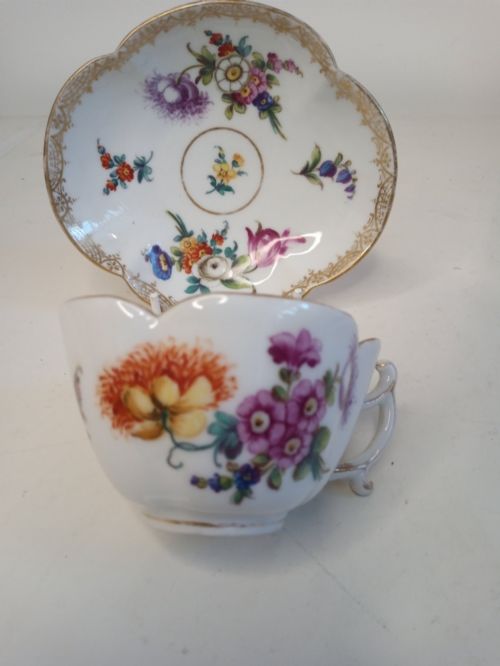
A floral porcelain teacup represents a diverse category of drinking vessels decorated with painted botanical motifs, stretching from eighteenth-century examples to twentieth-century sets. These pieces appear in forms ranging from single coffee cups and saucers to complete tea services and breakfast sets.
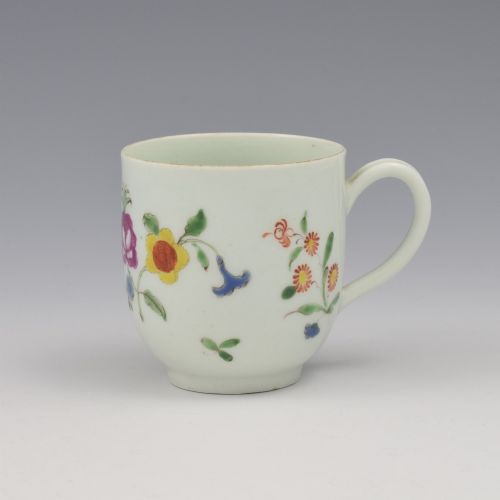
Buyers on this page most commonly encounter nineteenth-century English cups and saucers, alongside continental porcelain and earlier eighteenth-century formations. The selection spans distinct periods including Georgian, Regency, Victorian, and late nineteenth-century manufacture.
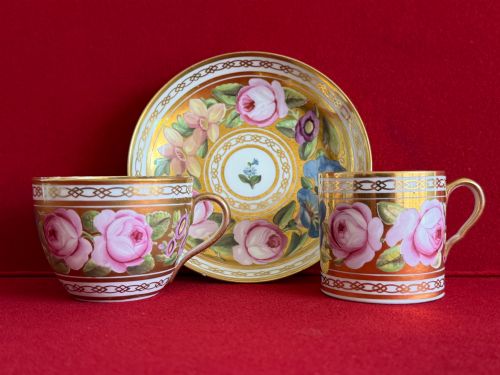
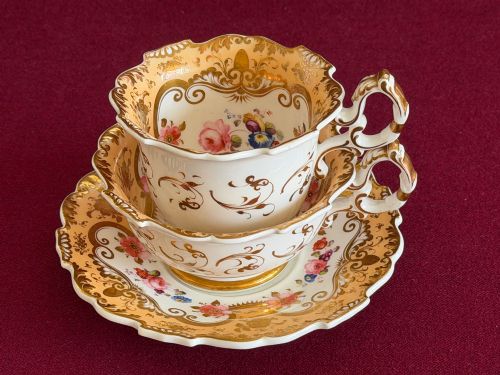
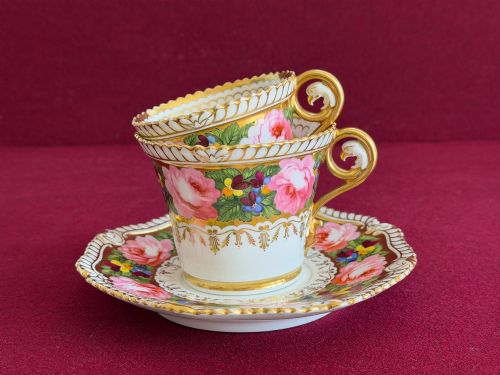
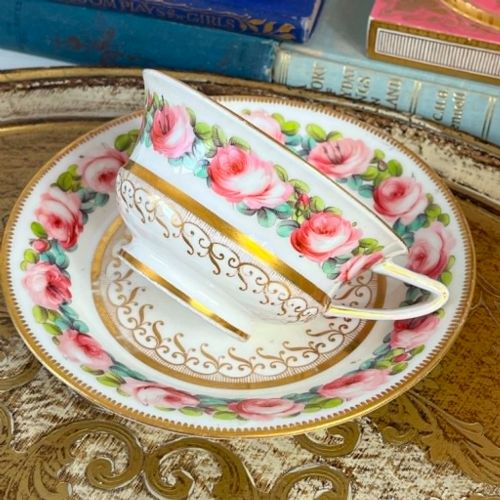
Makers and factories from Worcester, Coalport, Davenport, and continental kilns dominate the offerings, often presenting hand-painted flowers, cabinet trios, and gilt accents. Each object carries the specific aesthetic of its decade, from early handpainted roses to later transfer-printed and blush ivory designs.
Manufacturing methods and materials
Potters utilised hard-paste and soft-paste porcelain, alongside bone china, shaping cups and saucers by hand or on the potter's wheel before kiln firing. These ceramic bases provided a smooth white canvas suited for detailed enamel painting.
Decoration relied on hand-painted botanical studies enhanced by gold leaf, gilding, and gold gilt applied to handles, rims, and borders. Artisans fused these metallic elements and enamel colours through subsequent low-temperature firings.
Factories also incorporated transfer printing to outline floral patterns before artists added washes of colour by hand, ensuring consistency across larger tea services and breakfast sets.
Early nineteenth-century factory pattern books record whimsical decorative themes like the Bengal Tiger and Crazy Cow.
Determinants of quality
The precision and artistic merit of the hand-painted botanical decoration separate standard production from superior pieces. Fine brushwork, accurate floral detail, and nuanced colour shading indicate skilled studio work rather than hasty factory output.
The weight, translucency, and thinness of the porcelain body reflect the refinement of the paste and the control achieved during high-temperature kiln firing. Heavier, coarser bodies sit at the lower end of the scale compared to delicate cabinet cups.
The preservation of original gilding and enamel vibrancy dictates the overall desirability of a piece. Intact gold leaf on handles and rims without excessive rubbing demonstrates careful handling over centuries.
H & R Daniel·Chamberlain Worcester·Richard Chaffers·Davenport·Coalport·Royal Worcester·Royal Albert Crown China·Moscow Factory·Meissen·Yates·Minton·Wileman Foley Shelley·Hirsch Dresden·KPM
The Floral Porcelain Teacup Glossary
- Cabinet cup
- A decorative teacup produced primarily for display rather than robust daily use. These often feature elaborate gilding and hand-painted scenes.
- Trio
- A matched three-piece porcelain set consisting of a teacup, a coffee cup, and a saucer. They frequently appear in Regency and Georgian formations.
- Gilding
- The application of gold leaf or gold paint to ceramic surfaces. It highlights rims, handles, and painted motifs.
- Bone china
- A type of porcelain containing bone ash, known for its high strength, chip resistance, and warm white translucency. English factories adopted this material widely in the nineteenth century.
- Enamel
- Opaque glass used to paint colours onto fired porcelain. It requires a secondary kiln firing to bond permanently with the glaze.
Floral Porcelain Teacup: Frequently Asked Questions
How do I date an old teacup?
Dating relies on factory marks stamped or painted on the base, combined with the shape of the handle and the painting style. Early nineteenth-century pieces often feature distinct handle profiles and hand-written pattern numbers.
Changes in porcelain body composition, such as the introduction of bone china, provide further clues for placing an item within the Georgian or Victorian eras.
Can I use antique teacups daily?
Many sturdy nineteenth-century cups tolerate careful hand washing and gentle daily use. However, pieces with heavy gold leaf or delicate enamel work require more thoughtful handling.
Cabinet cups and eighteenth-century soft-paste porcelain pieces suit gentle display rather than regular morning tea.
What is a breakfast set?
A breakfast set typically includes larger-scale cups, saucers, and sometimes associated plates designed for the morning meal rather than afternoon tea. These items feature more robust proportions.
They often include matched teapots and sugar bowls to accommodate larger portions of hot beverages.
What does cabinet cup mean?
A cabinet cup refers to a highly decorative vessel intended for display in a collector's glass cabinet. These pieces showcase exceptional artistry and delicate materials.
They frequently lack the wear associated with everyday kitchen use and retain pristine gilding.