

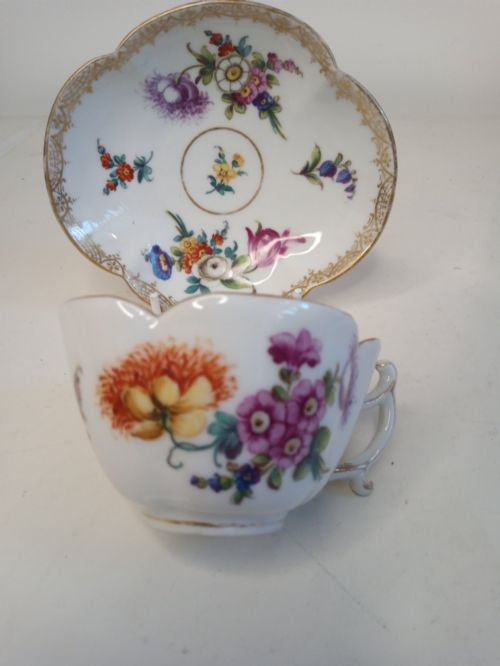


Vintage Bone China Cup
A vintage bone china cup brings tactile warmth to morning tea, forged from centuries of English ceramic tradition.
Vintage Bone China Cup
A vintage bone china cup embodies the refined drinking vessels produced across English potteries from the eighteenth century through the mid twentieth century. These pieces encompass individual teacups and saucers, larger trios, and expansive afternoon tea services designed for formal entertaining.
Buyers will most frequently encounter nineteenth century and early twentieth century examples, ranging from delicate Edwardian sets to robust Victorian imari patterns. The selection spans single cabinet cups alongside matched services intended for regular daily use.
How they were made
Potters shaped these vessels primarily from bone china and porcelain, incorporating animal bone ash to achieve a durable yet translucent body. Skilled artisans then applied hand painted enamel pigments and intricate gold leaf gilding across the surface.
Many workshops utilised specialised transfer printing methods alongside freehand brushwork before subjecting the pieces to high temperature kiln firings to vitrify the glaze.
Vintage Bone China Cup Retail Price Guide 2026
Typical asking prices for vintage bone china cup among the pieces listed under this phrase on Sellingantiques today, from the lower quarter to the upper quarter. They describe what is for sale here now, not the wider market.
What varies in quality
The distinction between standard production and exceptional work rests on the precision of the hand painting and the weight of the applied gold gilding. Superior examples exhibit crisp brushwork and well balanced forms that sit comfortably in the hand.
The fineness of the porcelain body and the complexity of decorative motifs such as bat wing patterns or Imari palettes further elevate the standing of individual pieces.
Royal Crown Derby·Coalport·Royal Worcester·Spode·Doric China
The Vintage Bone China Cup Glossary
- Bone china
- A type of soft paste porcelain containing bone ash, known for its high strength, chip resistance, and milky translucency. This material allows for thinner walls without sacrificing durability.
- Imari
- A decorative style featuring rich underglaze blue and overglaze iron red, often highlighted with gold. Originating in Japan, it was widely emulated by English porcelain factories.
- Trio
- A matching set comprising a teacup, a saucer, and a corresponding tea plate. These were standard components of traditional English tea services.
- Gilding
- The application of gold leaf or gold paint to ceramic surfaces for ornamentation. Higher quality pieces often feature raised or burnished gilding.
- Demitasse
- A small cup used to serve Turkish coffee or espresso, typically paired with a matching saucer. They frequently appear in early twentieth century porcelain sets.
Vintage Bone China Cup: Frequently Asked Questions
Can I use my vintage cup for daily tea?
Most sturdy bone china cups handle regular use well, provided they are washed by hand rather than placed in a dishwasher. Avoiding extreme thermal shock will preserve the glaze and delicate gold leaf.
For pieces featuring intricate hand painted enamel or heavy gilding, gentle cleaning ensures the surface decoration remains intact for years of enjoyment.
How do I identify an eighteenth century cup?
Early eighteenth century pieces usually display softer porcelain bodies without modern factory stamps, often featuring hand painted motifs unique to the maker. Examining the translucency under a strong light reveals the specific density of the paste.
Consulting recorded patterns and consulting known soft paste characteristics helps distinguish these early works from later nineteenth century reproductions.
What is the difference between a tea cup and a coffee cup?
Coffee cups and demitasse vessels tend to be taller and narrower to concentrate aromas, whereas teacups are wider and shallower to allow the tea to cool more evenly. Saucers follow these proportions accordingly.
Sets designated for coffee service often include smaller vessels intended for stronger brews, while afternoon tea sets prioritize the wider teacup form.
How should I display a cabinet cup?
Cabinet cups benefit from stable shelving away from direct sunlight to protect enamel colours and delicate gilding from fading over time. Using specialised plate stands secures the saucer upright behind the cup.
Ensuring adequate spacing prevents accidental knocks and allows the craftsmanship of the painted details to remain fully visible.