
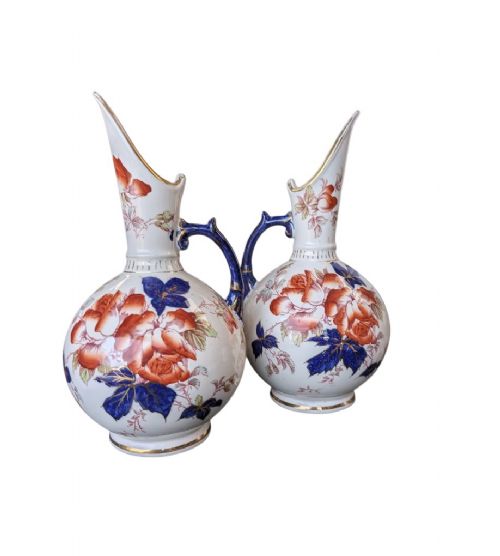


Floral Painted Ewer
These floral painted ewer pieces are decorative vessels bearing botanical motifs, prized by collectors for their intricate hand-painted floral panels and gilt enrichment.
Floral Painted Ewer
When searching for a floral painted ewer, a buyer encounters a variety of ceramic vessels designed for display rather than utility. The selections span standard ewers, wine ewers, cream jugs, and pedestal vases bearing painted botanical imagery.
The objects originate from multiple eras including Georgian, Victorian, and early twentieth-century periods. Royal Worcester factory examples dominate the selection, often featuring blush ivory grounds and hand-painted floral decorations.
Forms range from small cream jugs with dolphin handles to large pedestal ewers and Japanese Imari influenced pitchers. Staffordshire China and Derby porcelain also appear alongside pieces from Coalport, Minton, and Rockingham.
How they were made
Potters shaped hard-paste porcelain and earthenware bodies on the wheel or in moulds to create the characteristic graceful handles and spouts of the ewer form. Artisans then applied enamel pigments by hand to render floral panels before firing the glaze.
Gilding and gold leaf accents were frequently added to rims, handles, and borders, enhancing the decorative impact of the ceramic body. Bronze and cast metal occasionally support or frame specific examples within the range.
Early Derby cream jugs occasionally feature dolphin-shaped handles diving into the ceramic foam.
What varies in quality
The standard of painting on the floral panels dictates much of the distinction between pieces, where fluid, detailed brushwork surpasses rigid decoration. The crispness of moulded details and the preservation of original gilding significantly influence the visual weight of the vessel.
Factory origin and body material also establish the standing of an ewer, with established porcelain manufactories demonstrating superior paste refinement compared to domestic earthenware. The harmony between the painted botanical motifs and the underlying ceramic form completes the assessment.
Royal Worcester·John Rose Coalport·Doulton Burslem·Rockingham Porcelain·Minton
The Floral Painted Ewer Glossary
- Ewer
- A large jug or pitcher with a wide spout and handled grip, historically used for pouring water but frequently produced purely for display in ceramic forms.
- Blush Ivory
- A specialised Royal Worcester ceramic finish featuring a pale, matte cream ground that imitates ivory, typically decorated with polychrome floral painting and gilding.
- Hard-paste Porcelain
- A dense, vitrified ceramic compound composed of kaolin and petuntse, fired at high temperatures to produce a durable, translucent body.
- Imari
- A style of Japanese export ceramics featuring a distinctive palette of underglaze blue, iron red, and gilt highlights, which influenced European makers.
- Gilding
- The application of gold leaf or powdered gold to the ceramic surface, either fired in the kiln or applied using oil mordants.
Floral Painted Ewer: Frequently Asked Questions
How do I date a Royal Worcester ewer?
Royal Worcester pieces often carry factory date ciphers and puce or green marks stamped underneath the base, allowing precise chronology from the Victorian period onwards.
Stylistic shifts, such as the introduction of the blush ivory finish in the late nineteenth century, provide further visual confirmation of the production era.
Were these ewers used for wine?
Certain larger forms, designated as wine ewers in period records, were manufactured for dining table service and hospitality.
Smaller examples served as decorative ornaments, cream jugs, or scent bottles rather than functional vessels for liquid.
How should I clean a hand painted ewer?
Dust ceramic ewers gently with a dry, soft brush to protect fragile enamel pigments and delicate gold leaf embellishments from abrasion.
Avoid immersing antique gilt pieces in water or using chemical solvents that might degrade the historic paint surface.