
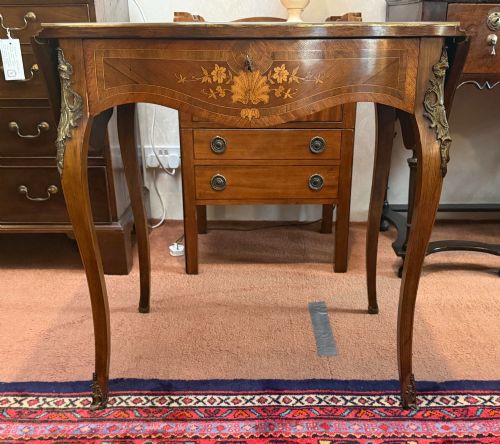
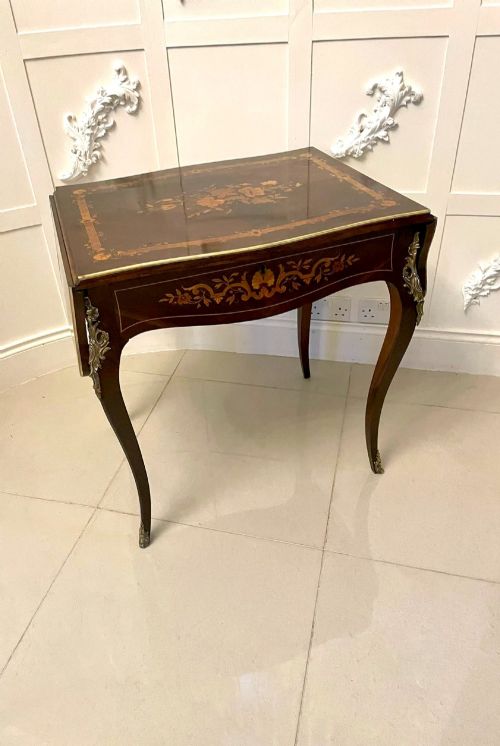
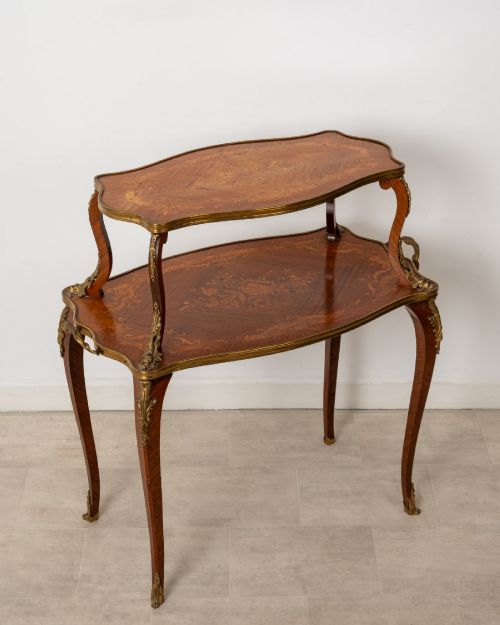
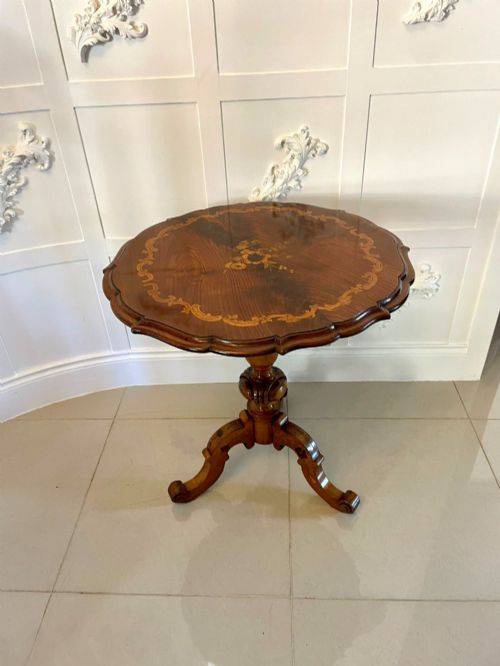


Floral Marquetry Accent Table
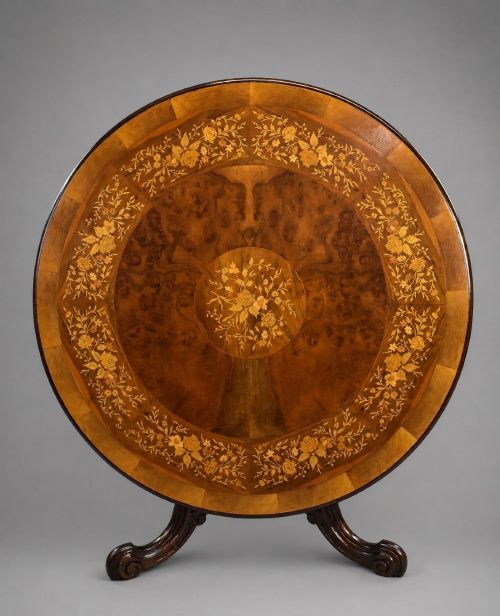
A floral marquetry accent table brings intricate wood-inlaid botanical patterns to smaller surface areas in a room.
Floral Marquetry Accent Table
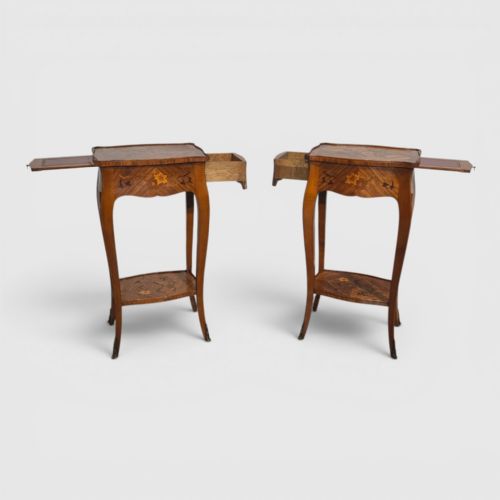
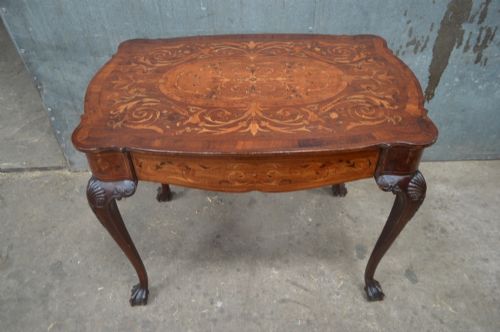
A floral marquetry accent table serves functional roles as a side, occasional, or centre table while displaying detailed wood veneer plant motifs.
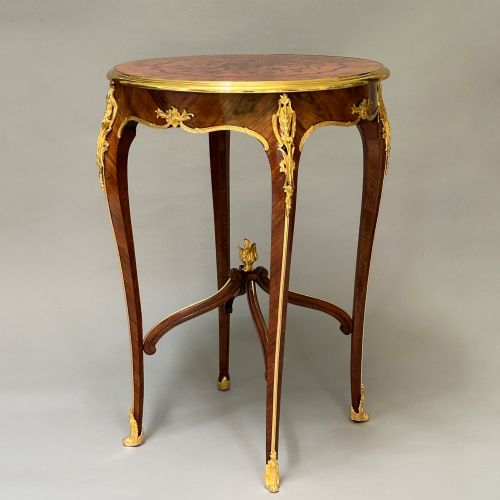
The pieces seen here span the Victorian, Edwardian, and nineteenth-century periods, alongside French revival styles such as Louis XV and Napoleon III.
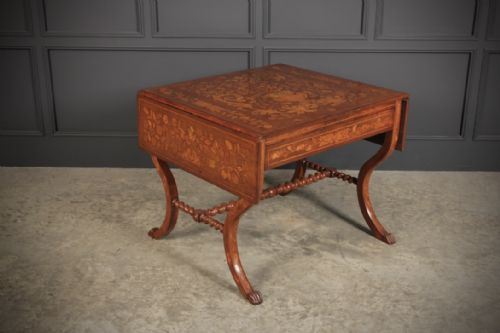
Forms range from compact lamp tables and two-tier étagères to larger sofa tables, Sutherland tables, and nest tables.
How they were made
Cabinet makers utilised dense hardwoods such as walnut, burr walnut, rosewood, kingwood, and mahogany as the foundational structures and contrasting veneer backgrounds.
Craftsmen cut delicate botanical shapes from various coloured timbers to form the pictorial marquetry inlay, frequently accented with satinwood or bone details.
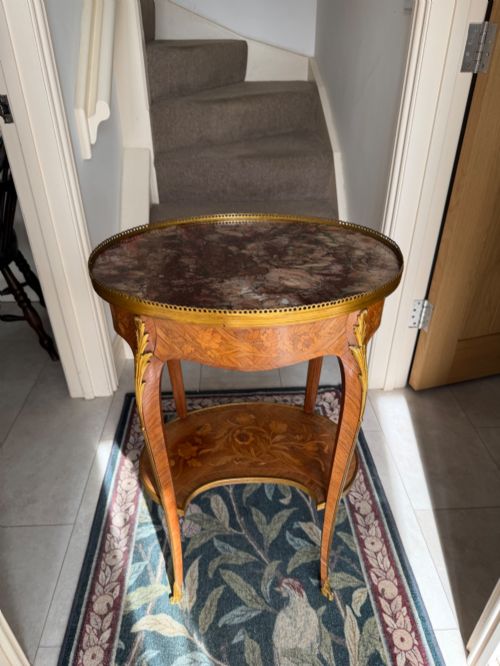
Many French and continental examples incorporate cast or gilt ormolu mounts and brass galleries to frame the edges and protect the legs.
Some tables double as tiny dressing desks or work tables with hidden compartments for your secret letters.
What varies in quality
The intricacy and precision of the marquetry cutting define the upper tier of these tables, where individual leaf and petal pieces fit tightly without excessive filler.
Timber selection sets the better examples apart, utilising heavily figured burr walnut, rich kingwood, or select rosewood rather than plain veneers.
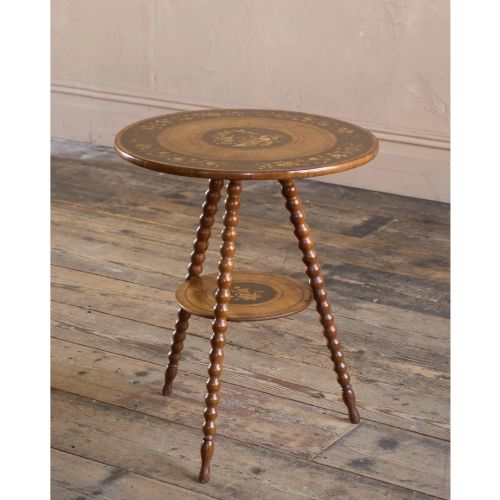
Secondary framing elements, such as chased ormolu mounts, sturdy turned or bobbin legs, and well-executed bone inlay, indicate higher workshop standards.
Edwards & Roberts
The Floral Marquetry Accent Table Glossary
- Marquetry
- Decorative veneer work forming pictures or patterns by fitting together small pieces of various woods. It covers tabletops with floral and geometric designs.
- Ormolu
- Gilded bronze mounts applied to furniture. It decorates the edges and legs of French revival tables.
- Étagère
- A set of open shelves for displaying small items. These tiered pieces often feature marquetry tops.
- Parquetry
- Geometric wood inlay resembling a mosaic pattern. It appears alongside floral designs on tabletops.
- Poudreuse
- A French dressing or work table with folding compartments. These frequently include fitted interiors and detailed top inlays.
Floral Marquetry Accent Table: Frequently Asked Questions
Where should I place an accent table?
These pieces suit smaller spaces where a functional surface is required beside a chair or sofa. Their decorated tops allow them to stand independently as focal points in a room.
Because they appear in forms such as lamp tables, plant stands, and nests, they adapt easily to corners or hallways without dominating the floor plan.
How do I care for wood marquetry?
Protect the veneered surfaces from direct sunlight and excessive heat fluctuations to prevent the delicate woods from drying or lifting. Regular dusting with a soft cloth maintains the finish.
Avoid placing wet items directly on the polished timber to protect both the clear coating and the underlying inlay work.
How do I distinguish French styles from Victorian ones?
French pieces from the nineteenth century frequently employ kingwood, rosewood, and ormolu mounts with curved Louis XV revival silhouettes. Victorian examples often lean towards walnut and burr walnut with darker tones and sturdier structural proportions.
Maker attributions and specific leg turnings, such as bobbin legs or tripod bases, also help identify the regional origin of the piece.
What is the difference between marquetry and parquetry?
Marquetry uses fitted wood veneers to create pictorial scenes, such as the floral arrangements seen on these tabletops. It requires careful hand-cutting of diverse timber types.
Parquetry constructs geometric or repeating patterns like squares and cubes. Both techniques often appear together on the same table.