


Floral Inlaid Cabinet
A floral inlaid cabinet brings together precise cabinet-making and botanical imagery, offering both practical storage and ornate surface decoration.
Floral Inlaid Cabinet
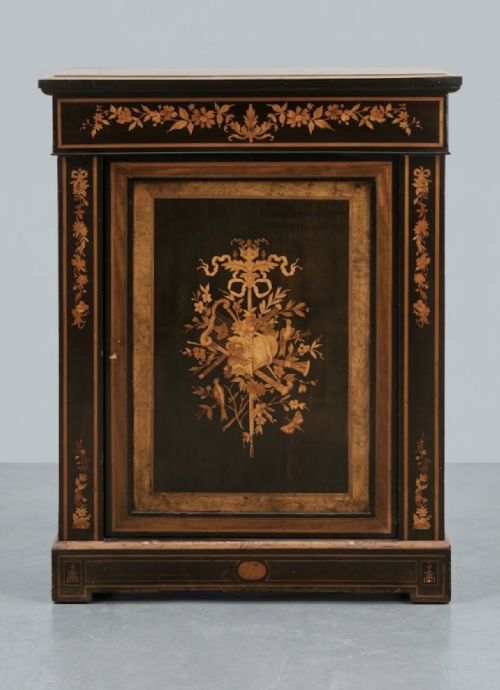
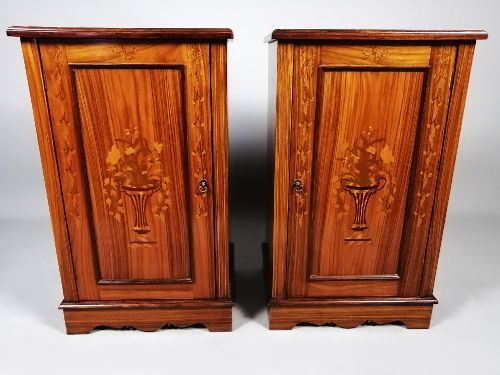
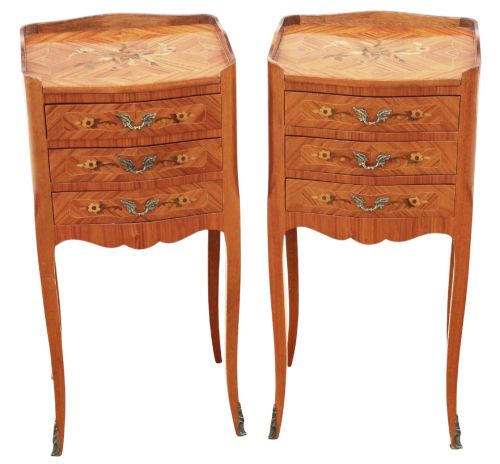
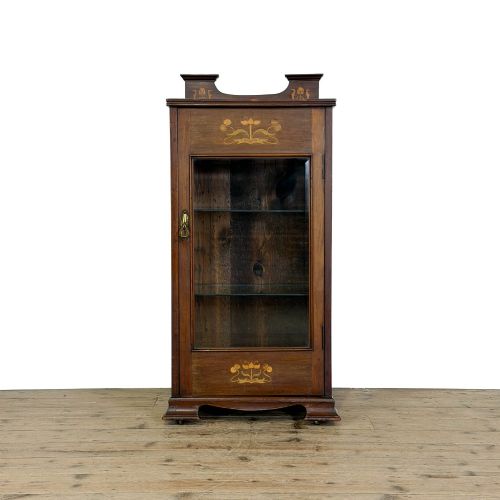
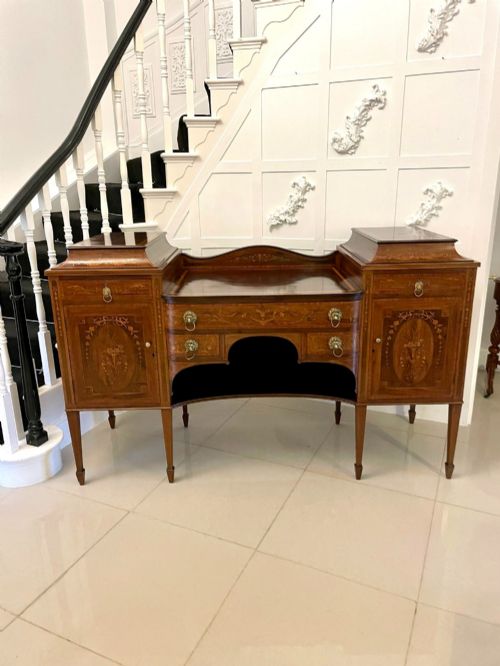
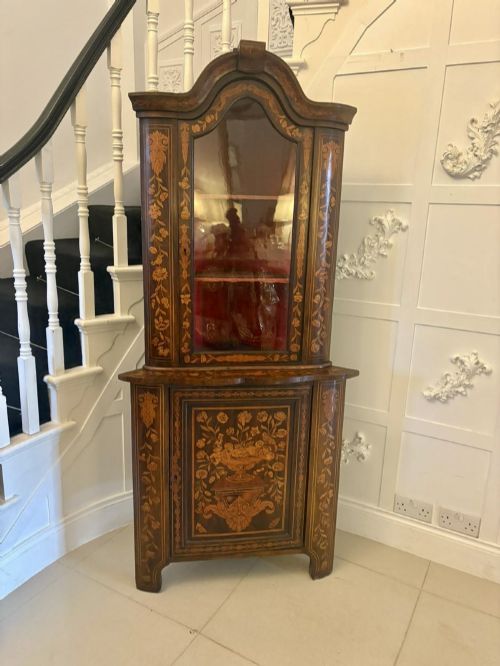
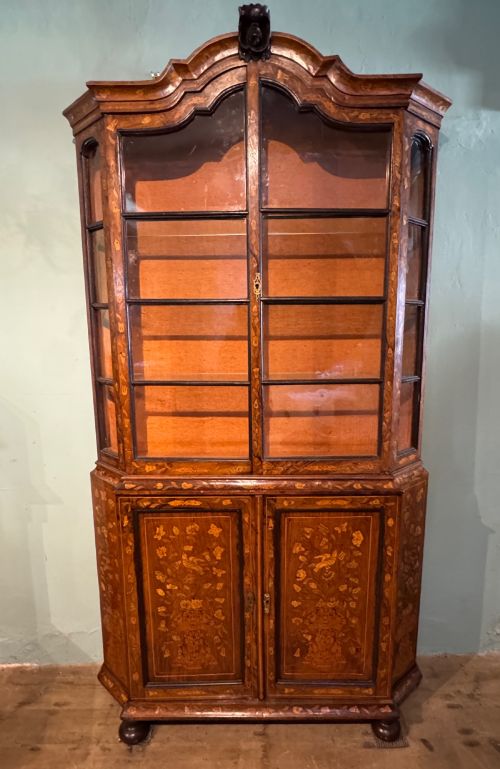
When you examine a floral inlaid cabinet, you are looking at centuries of decorative woodworking spanning display cabinets, bedside cupboards, corner units, and grand credenzas.
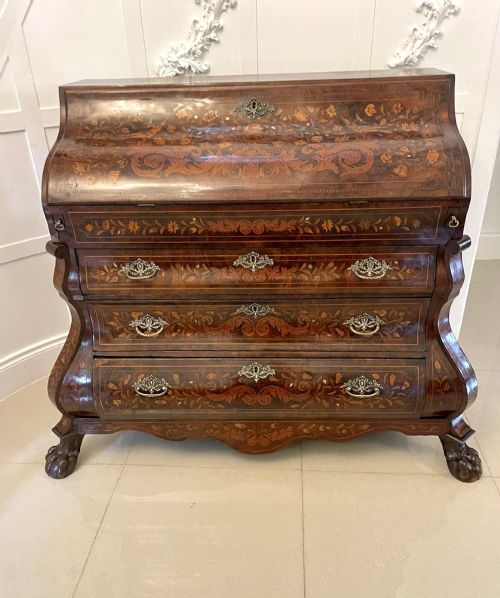
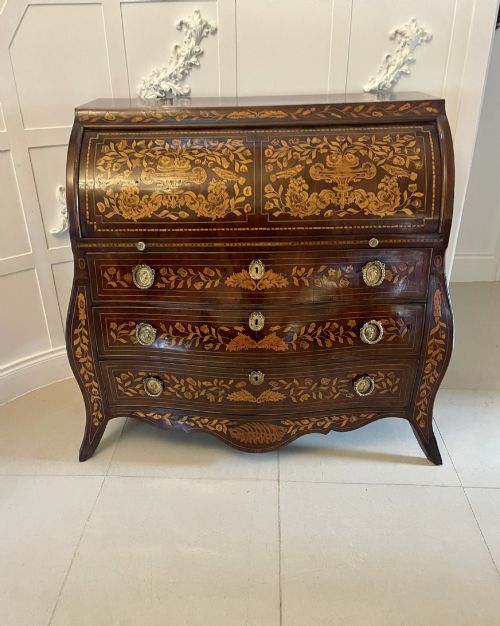
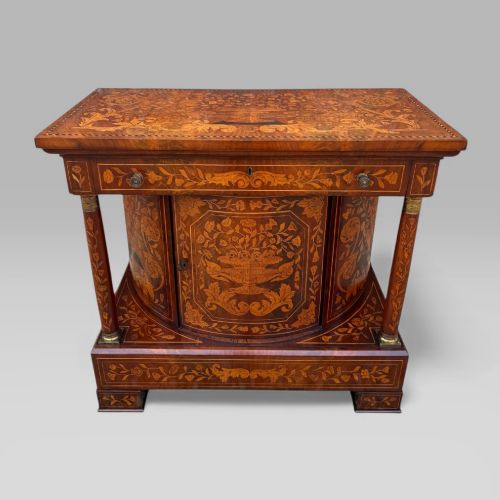
The pieces on this page lean heavily towards Victorian burr walnut and 18th century Dutch marquetry, alongside Edwardian satinwood and French styles.
You will encounter everything from compact bedside tables to tall linen presses and bureau bookcases, each surface telling a story through wood and floral motifs.
Materials and Technique
Cabinet-makers relied on rich primary timbers such as walnut, mahogany, rosewood, and kingwood, often enhanced by intricate marquetry using fruitwoods and satinwood.
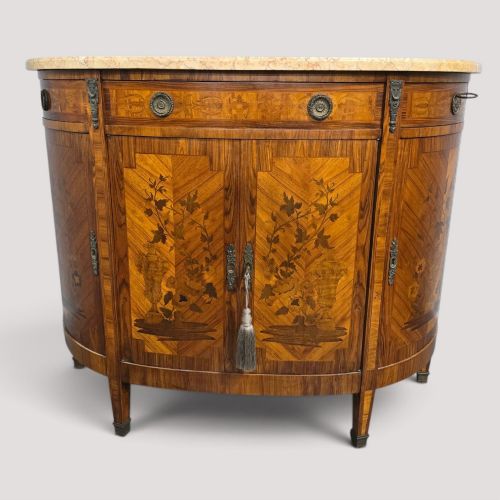
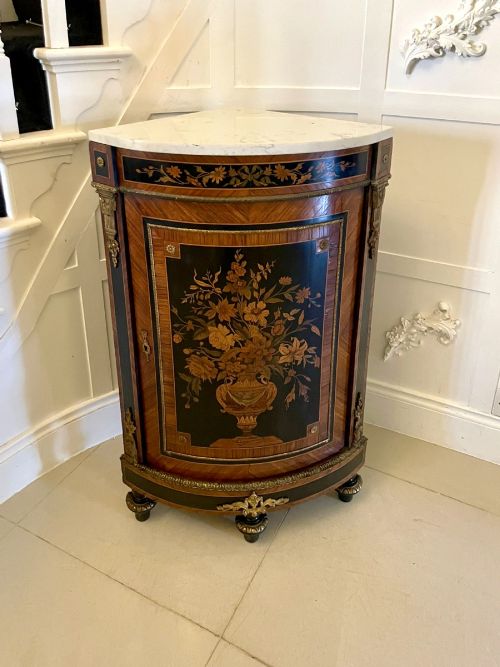
Many examples incorporate brass handles, ormolu mounts, and white marble tops to contrast with the dark grain of the timber.
Floral designs were painstakingly cut from thin veneers and laid into the carcase, creating detailed botanical patterns across doors, drawers, and panels.
Object types range from tall linen presses and bureau bookcases down to compact bedside lamp tables.
Assessing Craftsmanship
Quality rests in the crispness of the marquetry cutting and the choice of timber, where burr walnut or figured mahogany elevates a standard carcase into a significant piece.
The integration of mounts, the fit of doors, and the preservation of the original botanical shading separate ordinary workshop output from exceptional examples made by notable makers.
Hewetsons London·Edwards and Roberts
The Floral Inlaid Cabinet Glossary
- Marquetry
- A decorative technique where pieces of veneer are fitted together to form pictorial patterns on a wooden ground. It differs from inlay by covering the entire surface rather than resting inside carved recesses.
- Credenza
- A low sideboard or cabinet, frequently fitted with glass doors or cupboards, popular in Victorian drawing rooms. These often feature elaborate marquetry panels and ormolu mounts.
- Ormolu
- Gilt bronze mounts applied to furniture edges and feet during the 18th and 19th centuries. This decorative metalwork adds architectural weight to the composition.
- Veneer
- A thin slice of figured wood applied to a stable secondary timber to create a decorative surface. This method prevents warping while displaying expensive grain patterns.
Floral Inlaid Cabinet: Frequently Asked Questions
What periods do these cabinets come from?
The pieces span from the 17th century through the Georgian and Victorian eras up to the early 20th century. You will find Dutch Baroque examples alongside Edwardian and 1930s interpretations.
Victorian burr walnut pieces are particularly common, representing the height of mid-19th-century revival interest in floral marquetry.
How do I care for the timber?
Keep the wood away from direct sunlight and radiators to prevent the delicate marquetry veneers from drying out and lifting. Regular dusting with a dry, soft cloth is sufficient for maintenance.
Avoid using silicone polishes, applying a traditional beeswax sparingly only when the wood appears dry.
How were these cabinets originally used?
Depending on the form, they served varied domestic purposes from displaying porcelain in drawing rooms to storing linens or holding bedside essentials. Larger sideboards and credenzas anchored formal dining spaces.
Bureau bookcases combined a writing surface with enclosed shelving for books and paperwork.
How do I distinguish Dutch from English pieces?
Dutch examples often feature dense, complex floral marquetry covering almost the entire surface of walnut or oak carcases, sometimes dating back to the 18th century. English and Victorian pieces frequently utilise burr walnut with more restrained floral reserves.
French pieces tend to incorporate kingwood, tulipwood, and prominent ormolu mounts alongside the marquetry.