


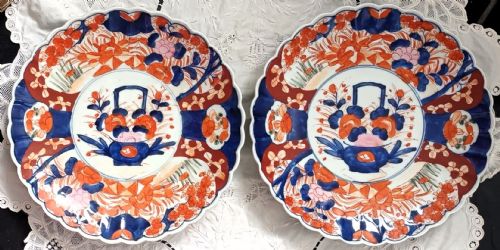
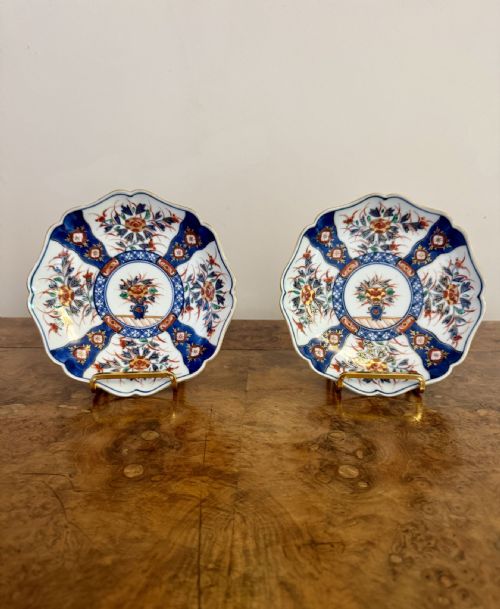
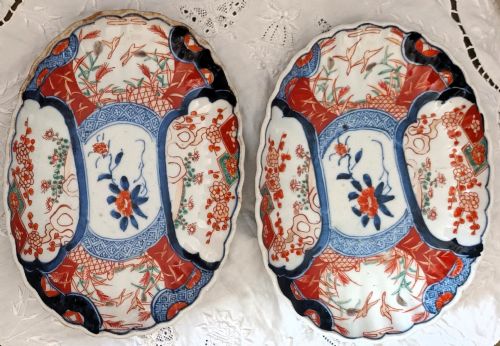
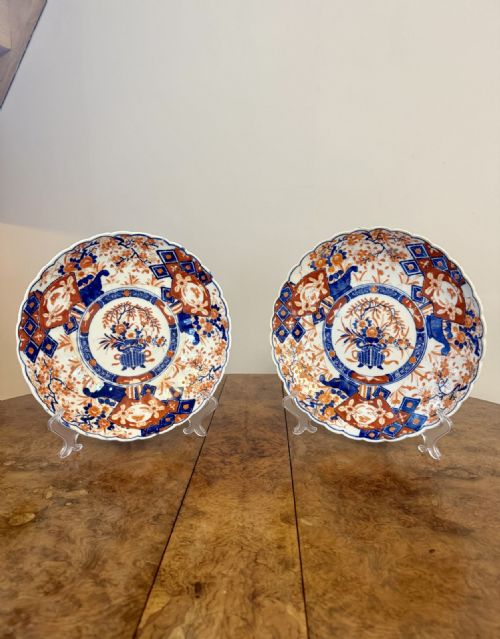
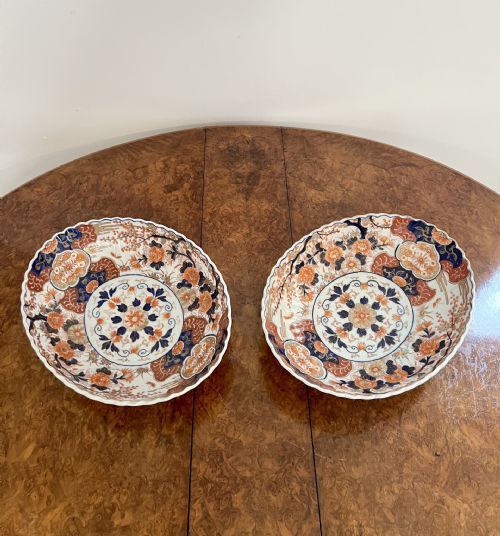


Floral Imari Dish Pair
These floral imari dish pair examples bring the vibrant palette of traditional export ceramics into a room, offering matched symmetry for display.
Floral Imari Dish Pair
A floral imari dish pair brings together matched sets of decorative ceramics featuring distinct iron-red, cobalt blue, and gilt decoration. When searching for a floral imari dish pair, collectors encounter pieces primarily originating from Japanese production centres during the Meiji period and the wider nineteenth century, alongside occasional eighteenth-century Chinese export equivalents.
The forms span standard decorative plates, large chargers, scalloped edge bowls, and hexagonal display dishes. Most examples share an intense focus on floral motifs rendered across porcelain surfaces, occasionally extending to ironstone bodies produced by nineteenth-century English makers.
Buyers frequently find these matched items preserved in pairs specifically intended for symmetrical interior display on walls, cabinets, or sideboards. The material execution relies heavily on underglaze blue and overglaze enamel colours, anchored by historical ceramic traditions from the Edo and Meiji eras.
Judging the range
The distinction between standard decorative items and finer examples lies in the precision of the hand-painted brushwork and the richness of the enamel and gilding. Superior pieces display crisp cobalt definition and thickly applied iron-reds that sit proud of the glaze, whereas lesser items show flat, hurried application.
The integrity of the porcelain body and the crispness of moulded details, such as scalloped rims and shell shapes, determine the overall refinement. Matched consistency between the two individual items in the pair also dictates how successfully the set functions as a balanced decorative unit.
Current listings feature porcelain and ironstone bodies spanning the eighteenth, nineteenth, and early twentieth centuries, alongside Chinese export wares.
The Floral Imari Dish Pair Glossary
- Imari
- A style of Japanese export porcelain originating from the port of Arita, traditionally characterised by a palette of cobalt blue, iron-red, and gold. The technique spread to other manufacturing centres over subsequent centuries.
- Meiji Period
- The era of Japanese history spanning from 1868 to 1912, noted for a significant output of decorative arts destined for Western export markets. Pieces from this time frequently demonstrate highly detailed enamel painting.
- Charger
- A large decorative plate intended primarily for display on a wall or dresser rather than for practical dining use. These items measure considerably broader than standard dinner plates.
- Ironstone
- A heavy, durable type of ceramic developed in the nineteenth century as a robust alternative to porcelain. English makers utilised this dense body for utilitarian wares and decorative tureens.
- Gilding
- The application of gold leaf or gold paint to the surface of ceramics to accentuate patterns and borders. Finer examples retain bright, unrubbed gold highlights.
Floral Imari Dish Pair: Frequently Asked Questions
How do I hang a pair on the wall?
Wall chargers require sturdy spring-loaded brass hangers that grip the rim securely without applying undue pressure to the ceramic body. Ensure the mounting fixings in the wall engage directly with masonry or wooden studs to support the combined weight of both items safely.
Position the matching pair at eye level with adequate spacing between them to preserve the symmetry of the display. Avoid hanging plates in areas subject to direct sunlight or sudden temperature shifts that might stress the old glaze.
Were these made for dining or display?
While the smaller plates originated from general tableware traditions, larger chargers and highly decorated examples served primarily as ornamental display pieces in European and Japanese interiors. The inclusion of delicate gilding and vibrant enamels meant many were kept on sideboards or hung on walls rather than subjected to everyday use.
Examining the reverse of the ceramic reveals whether foot rings contain suspension holes intended for early wall hanging. Most surviving pairs show minimal wear to the central wells, confirming their long-standing role as decorative objects.
Can I mix pieces from different periods?
Creating a symmetrical display works best when the two items share identical dimensions, palette, and potting characteristics. Mixing pieces from different centuries often exposes noticeable variations in the tone of the cobalt blue and the weight of the ceramic body.
True pairs left the kiln together and share subtle nuances in hand-painting that single items lack. Maintaining a matched set preserves both the visual harmony and the historical integrity of the display.