




Flemish Style Wood Carving
Flemish style wood carving brings robust revival forms into interiors, offering collectors heavy relief work and rich historical ornament.
Flemish Style Wood Carving
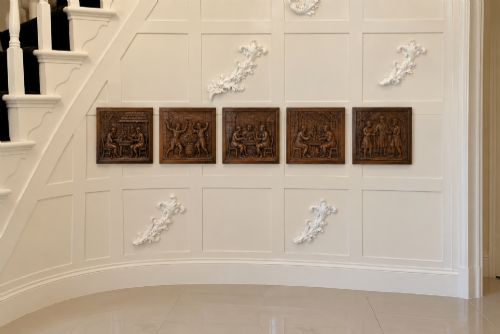
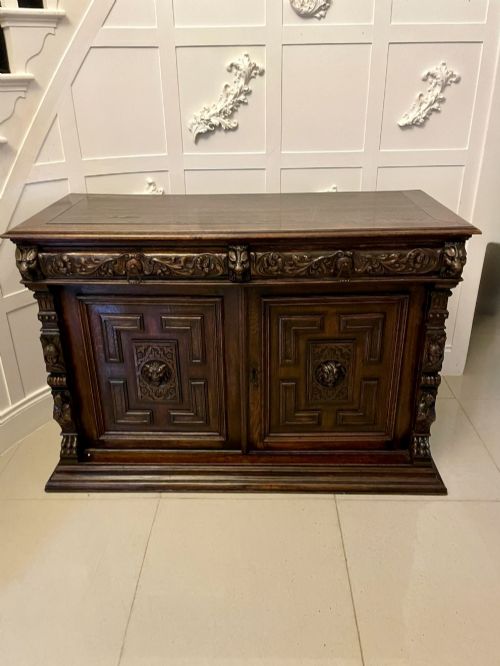
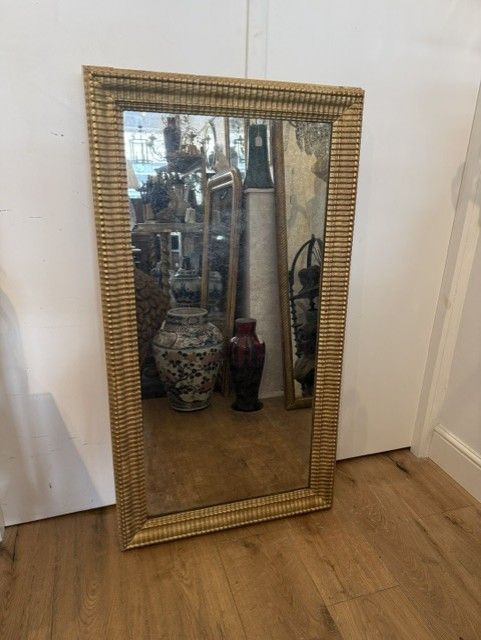
The objects take the form of tavern scene wall panels, heavy sideboards, dining chairs, and cushion frame mirrors. Oak dominates the selection, accompanied by walnut and gilded wood, showing deep relief and architectural framing.
Pieces span from sixteenth-century carvings to nineteen-twenty dining chairs, reflecting a sustained Victorian and Edwardian appetite for Renaissance Revival and Jacobean Revival motifs. These items bring substantial historical presence to domestic spaces through dense figural and foliate ornamentation.
How they were made
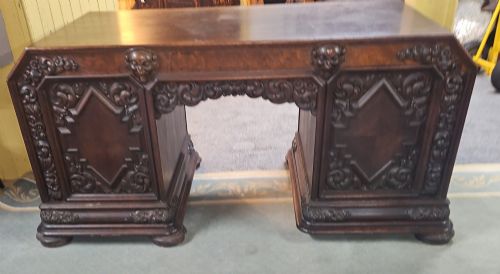
Makers shaped these pieces primarily from solid oak and walnut, utilising dense hardwoods capable of holding sharp, deep chisel work. Craftsmen built structural elements like sideboards and desks using traditional joinery before executing elaborate relief carving across doors, panels, and frames.
Surface enhancement involved gesso and gilding on specific mirrors and decorative frames, contrasting with waxed or polished timber. Artisans incorporated leather inserts on seating and structural glass within mirror frames to complete the functional design.
The execution relies on high relief and undercut carving techniques, creating pronounced shadows across figural scenes, strapwork, and scrollwork. Ripple moulding appears on specialised mirror frames, demonstrating precise mechanical cutting during the nineteenth-century revival phases.
Flemish Style Wood Carving Retail Price Guide 2026
Typical asking prices for flemish style wood carving among the pieces listed under this phrase on Sellingantiques today, from the lower quarter to the upper quarter. They describe what is for sale here now, not the wider market.
The furniture and decorative objects employ stylistic revivals, prominently featuring Renaissance Revival, Flemish Revival, and Jacobean Revival aesthetics.
What varies in quality
Quality rests upon the depth and animation of the chisel work, distinguishing flat, mechanical stamping from expressive hand-carved relief. Superior pieces exhibit crisp undercutting and well-proportioned figural anatomy, particularly within tavern scenes and revival panels.
The selection of timber dictates overall durability and visual weight, with dense, figured oak and rich walnut occupying the upper tiers of production. Finer items integrate balanced architectural proportions, where architectural mouldings and applied ornamentation complement the structural carcass rather than crowd it.
The Flemish Style Wood Carving Glossary
- Renaissance Revival
- A nineteenth-century design movement drawing inspiration from sixteenth-century artistic forms. This style heavily influences the architectural motifs and figural panels found in revival furniture.
- Cushion Frame
- A mirror or picture frame featuring a broad, rounded profile that swells outward from the sight edge. This framing technique creates strong shadow play around central glass plates.
- Ripple Moulding
- A decorative wood moulding featuring undulating, wave-like patterns created by specialised mechanical scraping engines. It frames seventeenth-century and revival mirrors with rhythmic geometric precision.
- Gesso
- A plaster-based mixture applied to wood surfaces as a smooth foundation for gilding. It provides the crisp base necessary for fine metallic leaf application on antique frames.
- Strapwork
- An ornamental motif resembling interlaced leather bands or flat ribbons. It frequently appears on seventeenth-century and revival panels alongside scrollwork and cartouches.
Flemish Style Wood Carving: Frequently Asked Questions
What defines Flemish style wood carving?
These pieces are characterised by dense, high-relief ornamentation, figural scenes, and robust structural timbers like oak and walnut. They draw heavily on Renaissance and seventeenth-century motifs adapted during Victorian revival periods.
Collectors encounter everything from tavern scene wall panels to dining chairs and cushion frame mirrors. The style prioritises theatrical depth and historical storytelling over plain surfaces.
How do I date an oak sideboard?
Dating relies on examining the construction methods, tool marks, and stylistic revival markers present in the timber carcass. Nineteenth-century interpretations often combine earlier Jacobean revival motifs with machine-sawn interior secondary woods.
Earlier seventeenth-century examples display hand-split boards and trammel markings that differ from later revival workshop practices. Comparing the carving depth and hardware helps place the piece within the Victorian, Edwardian, or earlier eras.
Where were these wall panels displayed?
Historic wall panels decorated principal entertaining rooms, halls, and dining parlours within domestic interiors. They served to insulate stone walls while demonstrating the owner's taste for historical narratives.
Revival examples from the nineteenth century brought this architectural gravitas into Victorian homes. Today, they function as focal wall art within period and contemporary settings alike.
How do I care for antique carved oak?
Maintenance requires maintaining stable relative humidity and avoiding direct sunlight to prevent timber shrinkage and splitting. Dusting with a soft brush keeps the deep recesses of the relief carving clear without abrading the surface.
Occasional application of appropriate microcrystalline wax preserves the finish without building up heavy residues. Professional advice is recommended before undertaking any significant conservation work.