






Flatwoven Cushion Cover
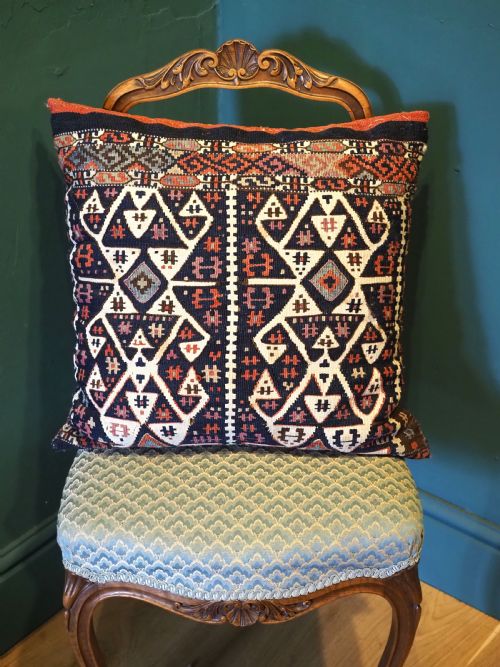
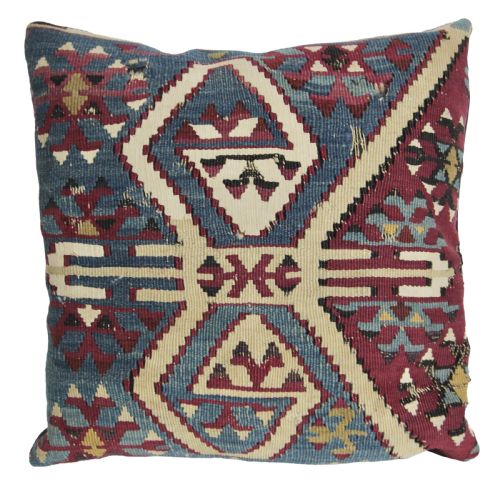
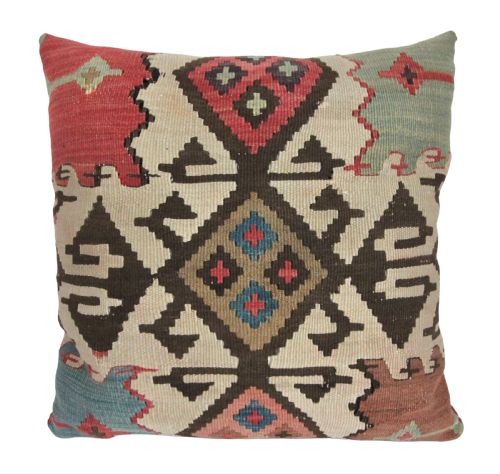
These flatwoven cushion cover examples transform antique tribal bags and nomadic textiles into practical furnishings for the modern interior.
Flatwoven Cushion Cover
When you search for a flatwoven cushion cover, you encounter textiles derived from nomadic and village traditions across Anatolia, Persia, Central Asia, and the Caucasus. These pieces frequently repurpose historic saddle bags, mafrashes, torbas, and storage faces into functional decorative cushions.
The objects stem from distinct tribal groups such as the Shahsavan, Yomut Turkmen, Bakhtiari, Qashqa'i, and Afshar, dating from the mid nineteenth century through the early twentieth century. Most examples utilise older kilim, soumak, or banded weft work panels paired with plain weave backs.
The formats range from square pillow configurations to larger bag face arrangements. Buyers find that these covers preserve authentic tribal motifs, geometric symbols, and bird or dragon iconography adapted from utilitarian nomadic gear.
Materials and construction
The construction relies heavily on hand-spun wool and occasionally goat hair, woven tightly on horizontal or vertical ground looms by tribal makers. These fibres provide the structure for flatweave, soumak, and kilim techniques that produce pattern without pile.
The listings span tribal traditions from Anatolian, Persian, Central Asian, and Caucasian origins, utilising wool, cotton, and goat hair.
Judging quality in tribal covers
Quality rests upon the fineness of the weave, the crispness of the tribal design, and the integrity of the original textile used to form the cover. Pieces featuring complex iconography, such as Shahsavan birds and dragons or detailed Yomut banded flatweaves, demonstrate superior craftsmanship.
The depth and brilliance of the vegetable dyes and the condition of the hand-spun wool further distinguish finer examples. The skill with which a historic saddle bag or bag face is repurposed into a cushion preserves the balance and proportion of the original tribal artistry.
The Flatwoven Cushion Cover Glossary
- Kilim
- A flatwoven textile produced by tightly interweaving warp and weft strands to create a smooth surface without pile. This technique forms the primary structure of many traditional cushions.
- Soumak
- A brocade-like flatweaving technique where decorative weft threads are wrapped over and under the warp threads. This method adds textural relief and durability to tribal bag faces.
- Mafrash
- A large rectangular storage bag or bedding chest created by nomadic tribes in Persia and the Caucasus. Portions of these woven containers frequently become cushion covers.
- Torba
- A small horizontal storage bag traditionally used in Turkmen tents. Their banded flatweave designs translate directly into decorative cushion formats.
- Bag Face
- The decorative front panel of a nomadic transport or storage bag. These surviving panels display the primary pictorial or geometric motifs utilised in cushion production.
Flatwoven Cushion Cover: Frequently Asked Questions
What is a flatwoven cushion cover?
A flatwoven cushion cover is a decorative textile casing made by adapting antique nomadic bags, saddle bags, and rug fragments into home furnishings.
These pieces utilise historical flatweave techniques like kilim and soumak rather than knotted pile.
How do I care for antique wool cushions?
Protect the antique wool and natural dyes by keeping them out of direct sunlight and using gentle vacuuming methods without a rotating brush.
Professional specialist cleaning is recommended for historic textiles to preserve the integrity of the hand-spun fibres.
How are tribal regions identified?
Tribal origins are determined by specific geometric motifs, colour palettes, and weaving structures characteristic of groups like the Shahsavan, Yomut, or Qashqa'i.
Structural details such as soumak wrapping or banded weft work point directly to particular nineteenth-century nomadic traditions.
Are these covers made from old textiles?
These items are constructed from authentic nineteenth and early twentieth-century tribal artefacts, including saddle bags and storage pouches.
The original flatweave panels are carefully repurposed into cushions while retaining their historic character and handmade materials.