
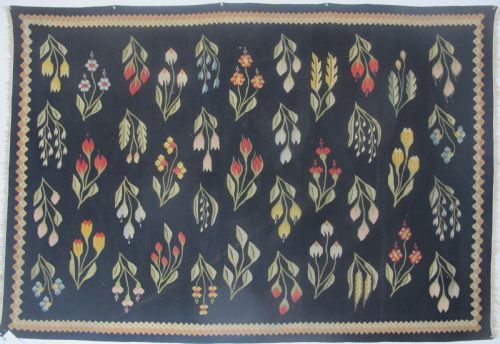
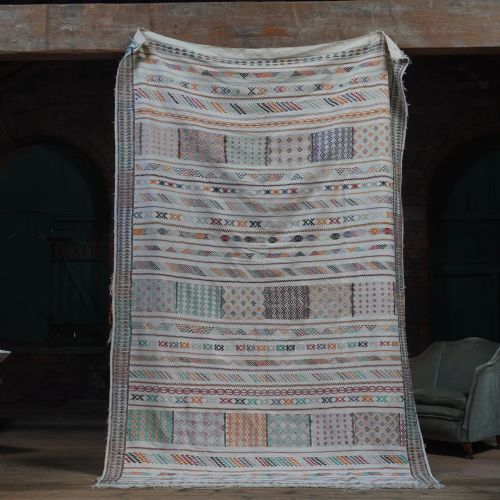
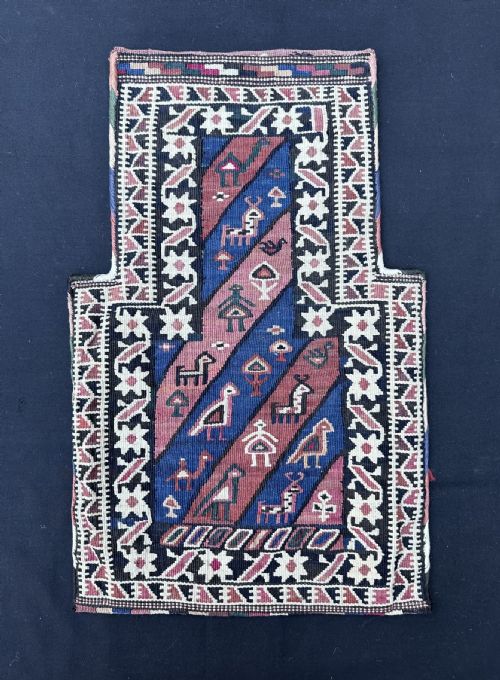
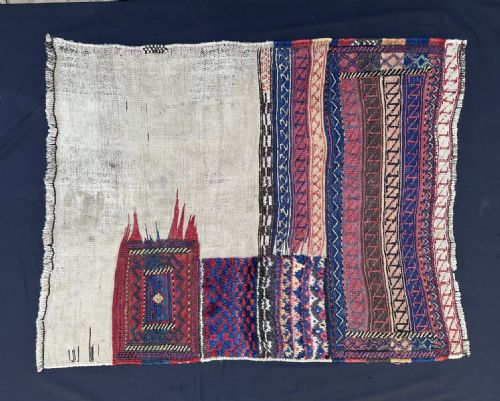





Flatweave Wall Hanging
A flatweave wall hanging brings tactile depth and tribal geometry into an interior, drawing on nomadic textiles originally crafted for utilitarian purposes.
Flatweave Wall Hanging
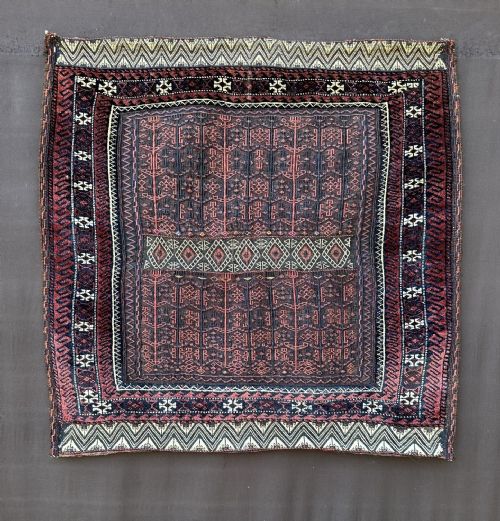
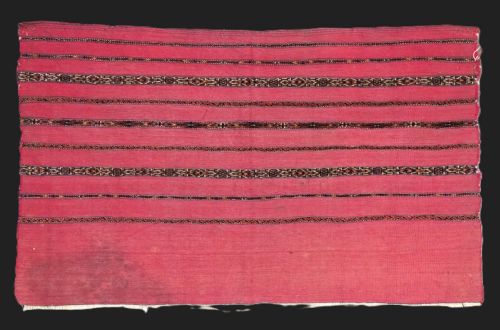
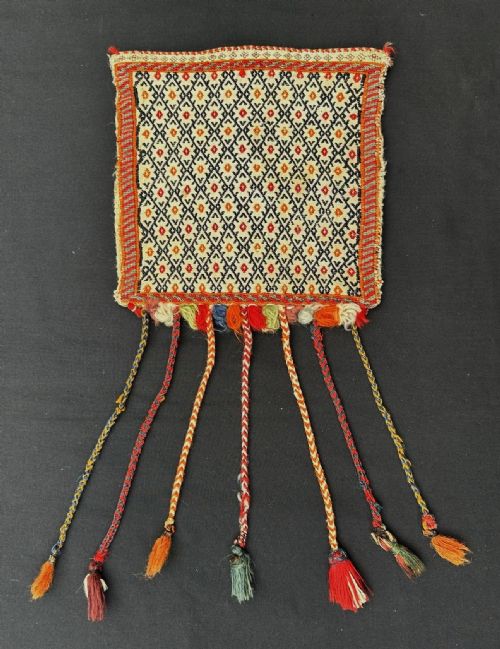
When searching for a flatweave wall hanging, buyers encounter a diverse selection of antique tribal textiles originally created as utility bags, floor coverings, and animal trappings. These pieces span from the mid-nineteenth century through the early twentieth century, originating primarily from Persian, Central Asian, and Caucasian tribal groups.
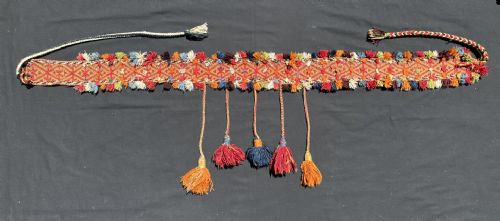
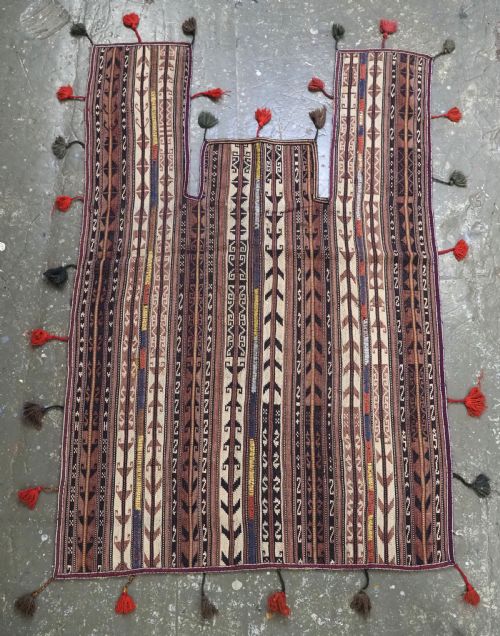
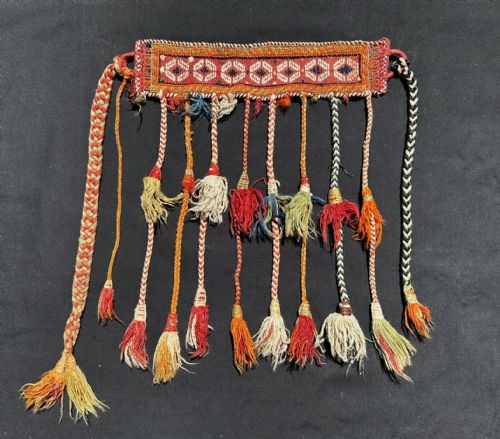
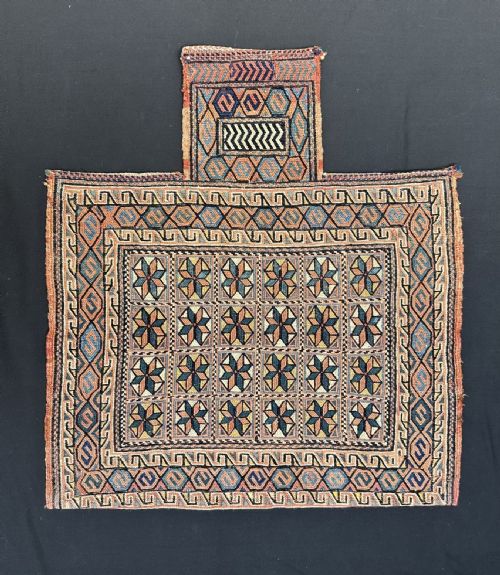
The inventory on this page consists predominantly of repurposed utilitarian textiles, including salt bags, bread sofrehs, horse covers, and kilim panels. Because these items were structurally flat-woven without a pile, their lightweight construction adapts easily to suspension on interior walls.
How they were made
Weavers utilised natural materials such as hand-spun wool, cotton, goat hair, and occasional silk, dyed with natural colorants derived from local flora and fauna. These fibres were worked into tight, flat structures using techniques like tapestry weaving and soumak wrapping.
Many items incorporate structural elements such as cowrie shells or employ specific regional constructions, including multi-strip joined panels and banded weft work designs.
Nomads occasionally stitched cowrie shells directly onto storage bags to ward off the evil eye, a decorative flourish that still jingles gently today.
What varies in quality
Quality rests in the tightness of the weave, the clarity and saturation of the natural dyes, and the intricacy of the tribal geometry. Pieces demonstrating exceptional handling show meticulous edge finishing and intact original backs or tassels.
Finer examples retain the crisp graphic precision of their motifs, whereas lesser pieces display muddied colour transitions or irregular structural distortion from heavy historical use.
The Flatweave Wall Hanging Glossary
- Sofreh
- A woven spread or cloth used traditionally for dining or bread preparation by nomadic tribes. These rectangular flatweaves often display striking minimalist or geometric layouts.
- Soumak
- A brocade-like weaving technique where pattern wefts are wrapped over and under warp threads to create a textured, ribbed surface. It provides greater structural durability than standard plain weave.
- Chuval
- A large storage bag made by Turkmen and other nomadic groups to hold household goods inside a tent. Their face panels are frequently repurposed as decorative wall hangings.
- Kilim
- A tapestry-woven carpet or hanging made without a pile, relying on visible warp and weft threads to form geometric patterns. The technique creates slit-like gaps where different colour blocks meet.
- Jajim
- A tightly woven flatweave band or textile typically constructed from multiple narrow strips stitched together. They display characteristic bold linear or striped patterns.
Flatweave Wall Hanging: Frequently Asked Questions
How do I hang a flatweave safely?
Mounting a textile requires distributing the weight evenly across the upper edge rather than piercing the fabric with nails. A conservation-grade velcro strip or a fabric sleeve stitched to the reverse allows a slim wooden batten to support the piece securely.
For smaller items like saddlebag faces, professional framing behind UV-filtered glass provides maximum protection against dust and environmental degradation in busy rooms.
Were these textiles made for walls?
Almost none of these pieces were originally intended for display on domestic walls. They began as functional objects within nomadic and tribal daily life, serving as grain sacks, animal decorations, eating cloths, and storage containers.
Their conversion into wall hangings is a modern adaptation that highlights their graphic design, rich natural dyes, and intricate tribal iconography as textile art.
How do I clean an antique flatweave?
Gentle surface vacuuming through a mesh screen on a low setting removes loose dust without stressing the old wool or cotton fibres. Water washing or chemical spot treatments risk bleeding natural dyes and weakening brittle foundation threads.
Any deep cleaning or conservation work should be left to a specialist textile conservator who understands nineteenth-century dyeing and weaving methods.
How can I tell tribal groups apart?
Distinctive colour palettes, border arrangements, and specific geometric symbols identify the weaving group or region of origin. For instance, Afshar and Qashqa'i pieces often feature deeply saturated reds and blues with animal or medallion motifs, while Turkmen weavings lean heavily on repeated guls in rust and madder tones.
Structural traits like soumak wrapping or specific slit-kilim techniques also point directly to the specific traditions of makers such as the Shahsavan or Yomut.