


Flat Top Library Desk
A flat top library desk is a substantial writing table built to anchor a serious room.
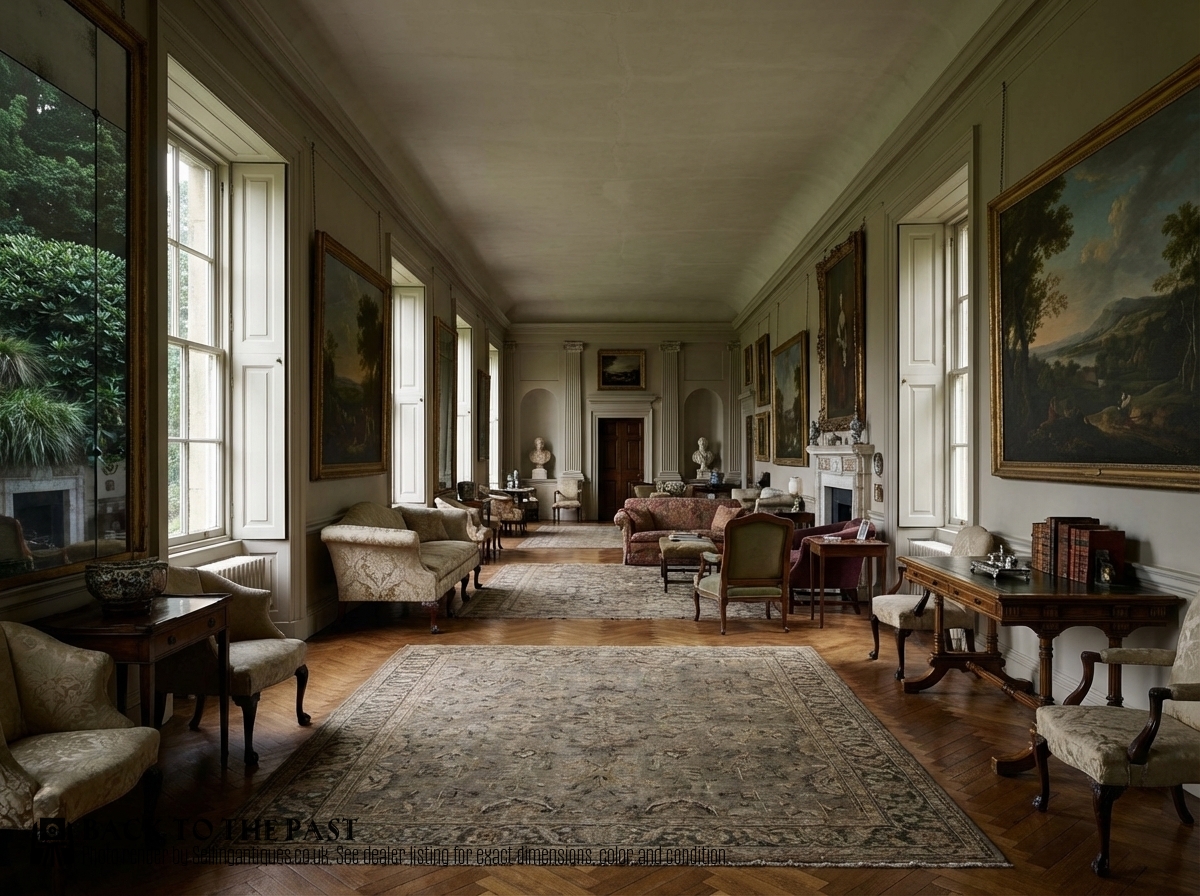
Flat Top Library Desk
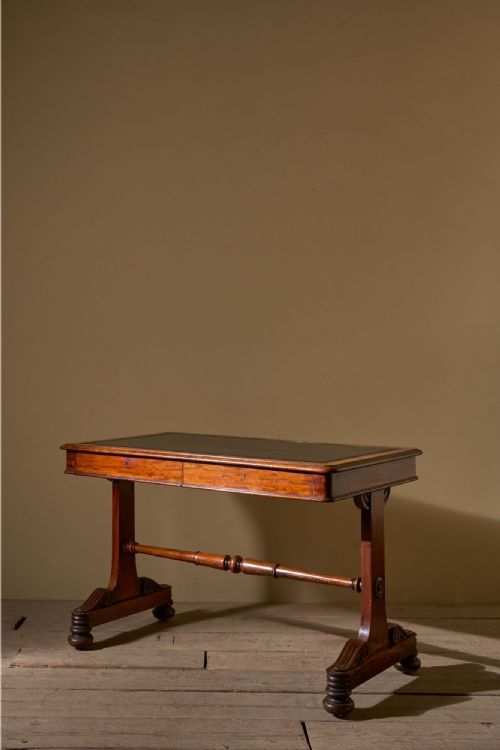
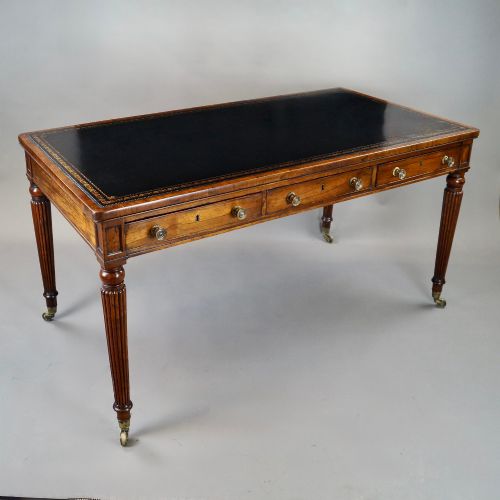
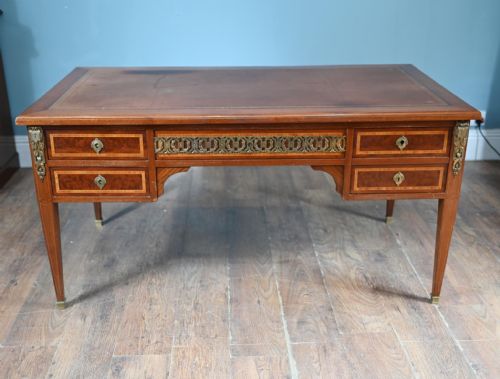
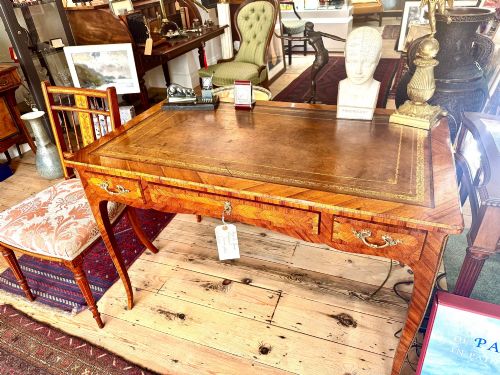
When you search for a flat top library desk, you are looking at substantial writing tables designed for serious study and correspondence. The pieces available here span the nineteenth century, taking forms such as the traditional English library table and the continental bureau plat.
You are most likely to meet mahogany and rosewood examples from the Regency and Early Victorian periods, alongside French nineteenth-century interpretations in the Louis XV and Directoire styles. These tables offer a generous top surface, often inset with leather, supported by robust timber frames.
The form bridges the gap between domestic furniture and official workspace, intended to sit in the centre of a room rather than against a wall. Makers adapted the writing table format to suit British libraries and French salons alike, balancing utility with classical proportion.
How They Were Made
Cabinet makers built these desks using solid timbers like mahogany, rosewood, and walnut, frequently applying figured veneers over stable secondary woods. Workshops employed precise joinery to construct the deep frieze drawers that characterise these tables, ensuring smooth operation without modern runners.
Surface decoration relies on contrasting veneers, kingwood banding, and cast brass or ormolu mounts that accent the corners and legs. Writing surfaces are traditionally inset with tooled leather, bordered by blind tooling or gilt leaf work to frame the central workspace.
Some nineteenth-century writing desks conceal secret drawers behind dummy frieze fronts, built to store private correspondence out of sight.
What Varies in Quality
The distinction between standard cabinet work and exceptional production lies in the selection of timber and the crispness of the secondary enrichment. Workshops of high repute used dense, highly figured grain for the primary surfaces and executed bronze mounts with sharp, clean chasing.
Structural integrity also separates the output, visible in the thickness of the drawer linings and the fidelity of the period revival styles. Lesser examples rely on heavy surface stain to mask inferior timber, whereas better tables display honest grain and substantial brass hardware.
Johnstone & Jeanes·Gillows·William Trotter·Gillow & Co·Henry Dasson
The Flat Top Library Desk Glossary
- Frieze
- The horizontal band beneath the top surface of a desk that houses the drawers. In better pieces, this section is veneered with continuous grain.
- Ormolu
- Gilt bronze mounts applied to furniture for decoration. High quality mounts display crisp hand chasing after casting.
- Kingwood
- A dense, richly figured tropical timber used extensively for crossbanding and decorative veneers on nineteenth-century desks. It provides a striking contrast against darker primary woods.
- Crossbanding
- A border of veneer laid so that the grain runs at right angles to the main surface. This technique frames the top of the desk and demonstrates careful craftsmanship.
Flat Top Library Desk: Frequently Asked Questions
How do I care for the leather top?
The leather inset requires gentle cleaning with a slightly damp cloth followed by a suitable leather balsam to prevent drying. Avoid harsh chemical cleaners that can strip the original colour.
Keep the desk away from direct sunlight and strong heat sources to protect both the leather and the underlying timber veneers from warping.
Where should I place a library table?
Because these desks are finished on all sides, they are intended to float in the centre of a study or library rather than sit flush against a wall. This positioning allows access to the drawers from the front.
Ensure you leave adequate clearance around the table for chairs and movement, treating the piece as a central focal point in the room.
How do I tell Regency from Victorian desks?
Regency tables often show clean classical lines, rosewood veneers, and restrained brass mounts inspired by ancient Greek and Roman forms. They date from the early part of the nineteenth century.
Early Victorian examples tend to use heavier mahogany timbers, incorporating bolder revival styles like Chippendale influence and deeper mouldings as manufacturing techniques shifted.