
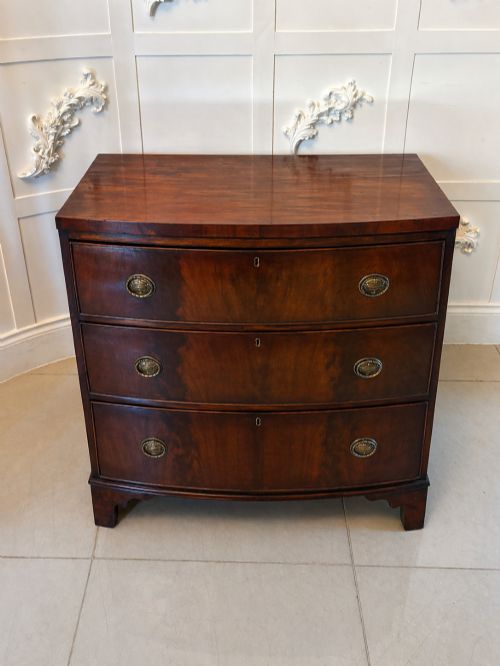
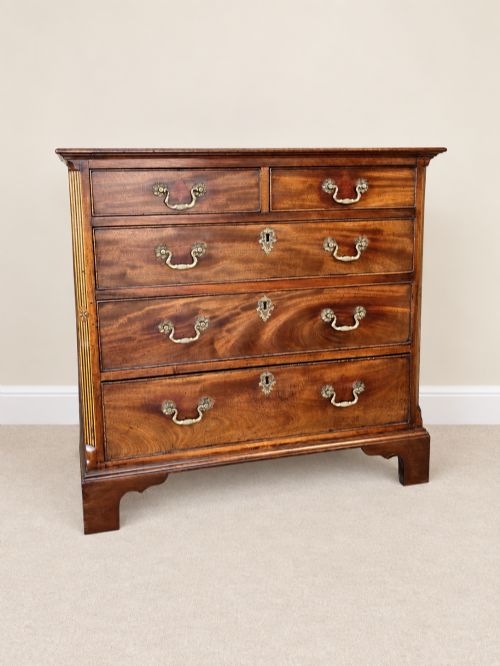
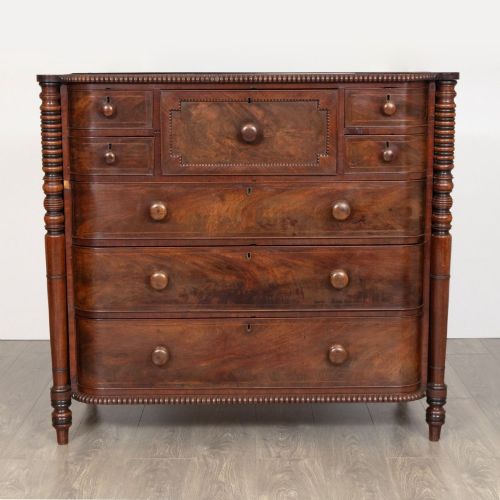
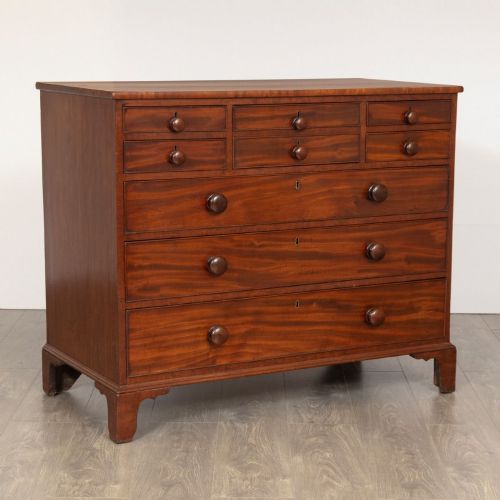
Flame Mahogany Tallboy Chest
A flame mahogany tallboy chest offers striking figuration and vertical storage, bringing warmth and presence to a traditional interior.
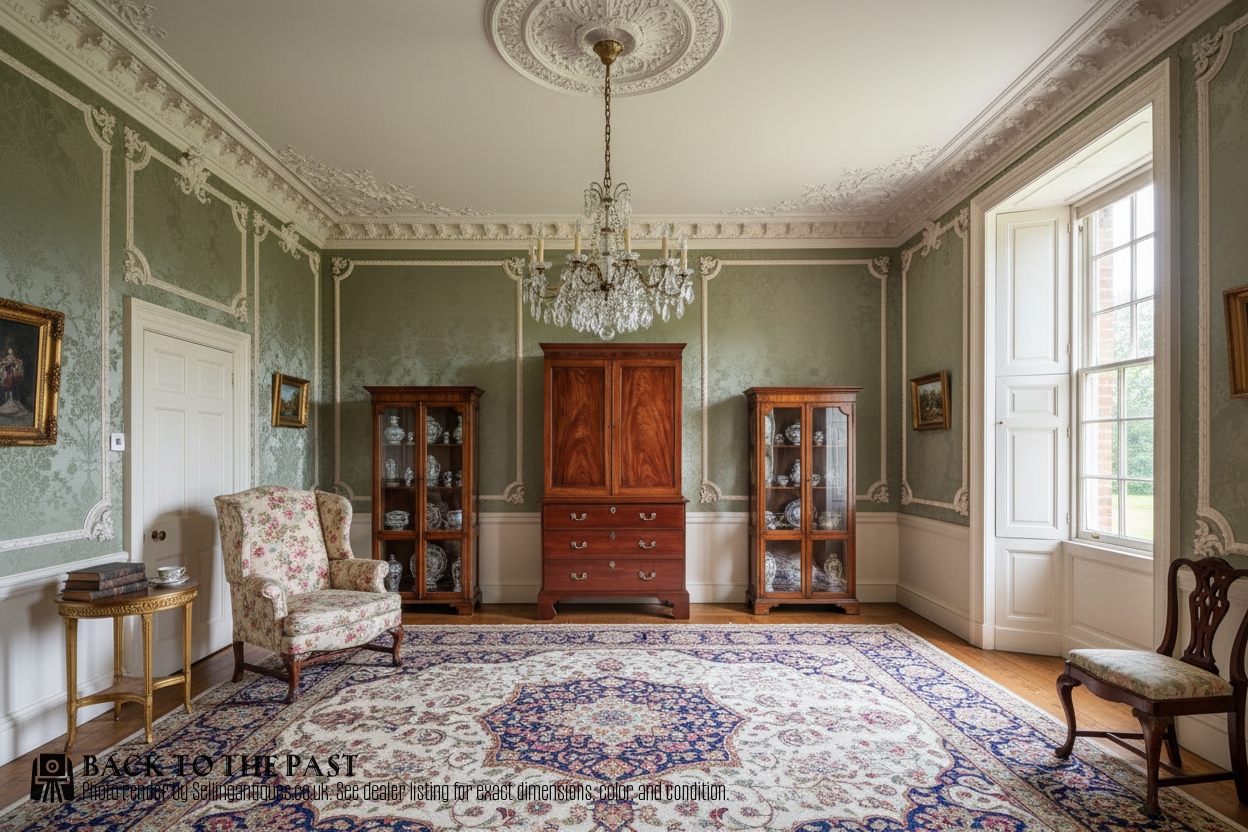
Flame Mahogany Tallboy Chest
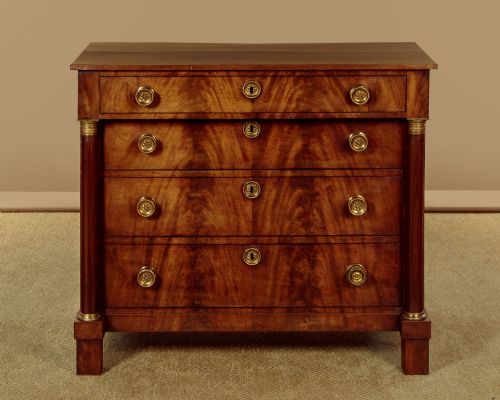
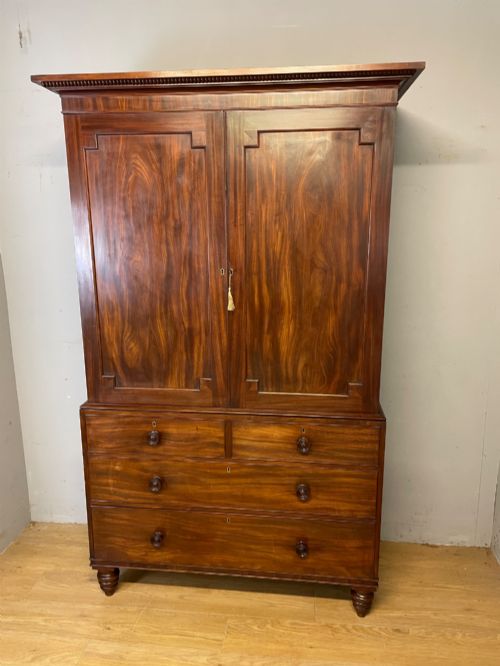
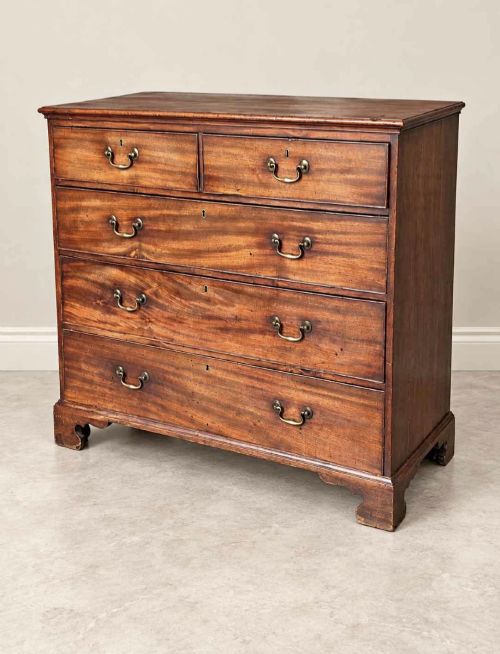
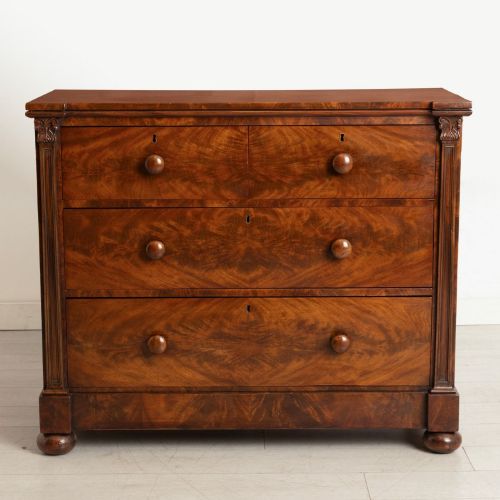
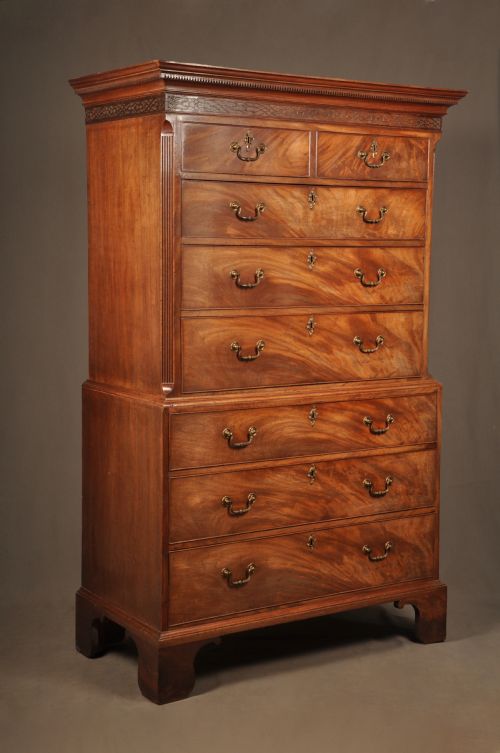
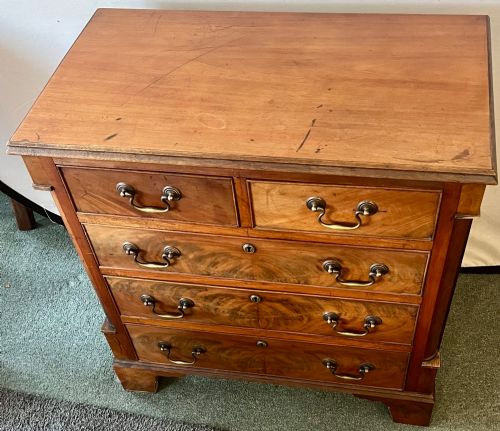
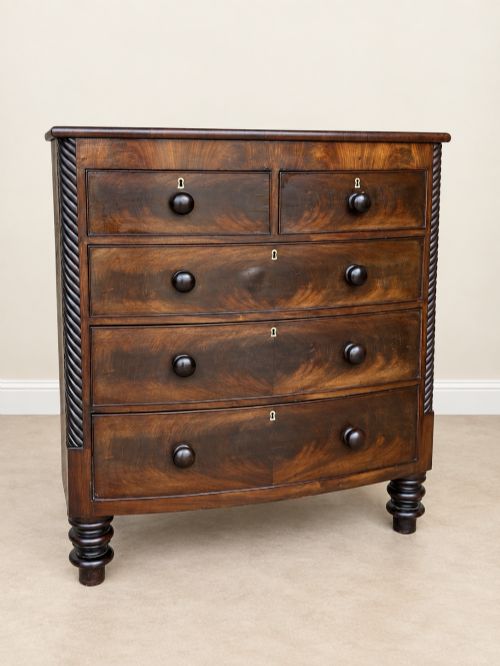
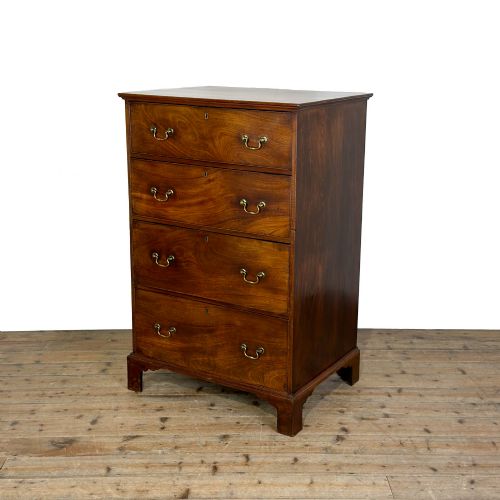
A flame mahogany tallboy chest is a substantial storage piece combining a tall chest of drawers with figured timber veneers. These items originate predominantly from the eighteenth and nineteenth centuries, spanning Georgian, Regency, and Victorian periods.
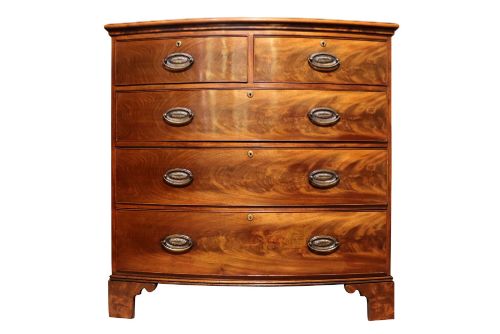
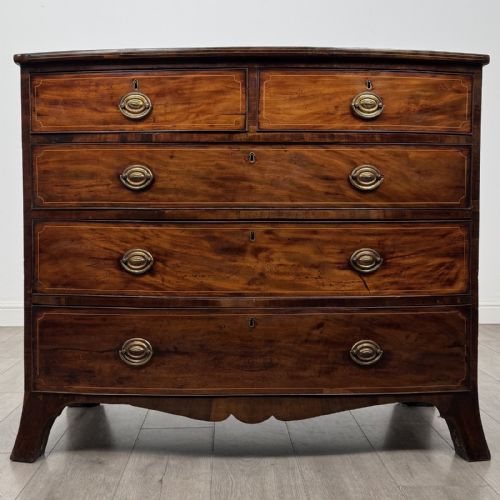
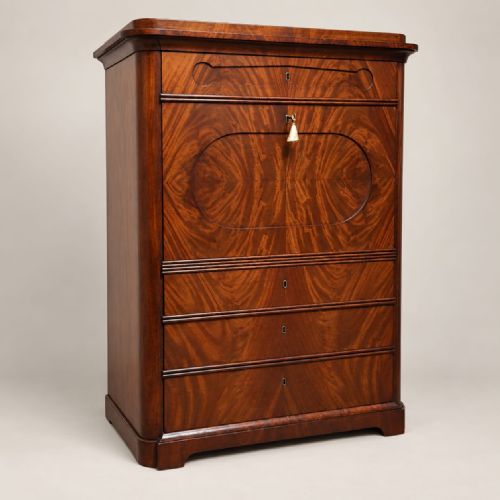
The aesthetic centres on the dramatic grain patterns of the wood, which manufacturers arranged symmetrically to create distinctive flame-like visual effects across the drawer fronts.
How they were made
Cabinetmakers constructed these pieces primarily using solid oak for secondary framing and drawer linings, overlaid with thin slices of flame mahogany veneer. Selected sections of timber with undulating grain patterns were sliced to create book-matched figures.
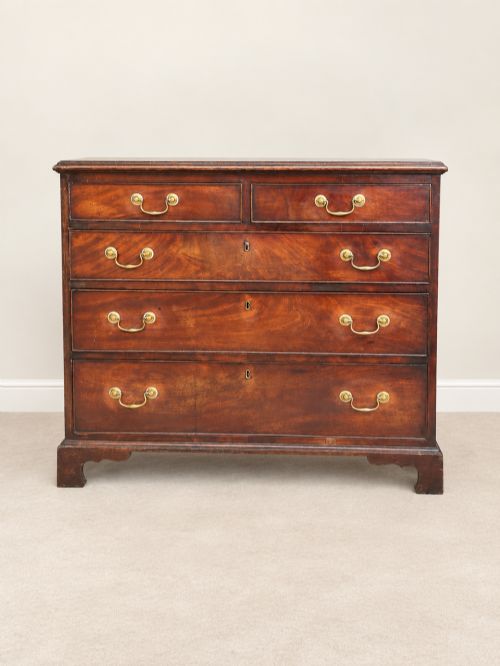
Hardware details typically include brass handles and escutcheons, while interior construction relies on hand-cut dovetail joints for the drawers. Secondary woods such as pine or oak appear in internal compartments and drawer bases.
Some chests include secret frieze drawers hidden within the top cornice moulding, designed for securing valuables out of sight.
What varies in quality
The visual impact of the veneering dictates much of the distinction between standard examples and finer pieces. Master makers arranged the flame patterns with careful symmetry, ensuring the grain flows continuously across multiple drawers.
Proportion and secondary timber selection also separate workshops, with superior pieces utilising dense native oak for internal linings and retaining crisp architectural mouldings around the cornices and base drawers.
Whytock and Reid
The Flame Mahogany Tallboy Chest Glossary
- Flame mahogany
- A veneer cut from the branch junctions or fork of the mahogany tree, creating a feathery, flame-like grain pattern. This highly decorative wood was prized by cabinetmakers for drawer fronts.
- Tallboy
- A tall chest of drawers, often built as a chest-on-chest where a smaller upper section sits upon a wider base. It maximises vertical storage floor space.
- Bow front
- A cabinet front that curves outward in a convex shape, popular during the Georgian and Regency periods. It softens the linear geometry of tall storage furniture.
- Book matching
- A technique where adjacent slices of veneer are opened like pages of a book to create a mirrored pattern. This method highlights the symmetry of the wood figure.
- Dovetail joint
- A traditional interlocking woodworking joint used in drawer construction. Hand-cut dovetails indicate older craftsmanship before machine manufacture became common.
Flame Mahogany Tallboy Chest: Frequently Asked Questions
How do I date a flame mahogany tallboy?
Dating relies on observing construction methods, hardware styles, and timber choices across the carcase. Georgian and Regency examples often feature hand-cut dovetails and oak linings, whereas later Victorian and Edwardian pieces show machine assistance.
Stylistic cues such as bracket feet, cornice mouldings, and brass pull handles also help pinpoint the era. Examining the interior secondary woods provides further clues regarding the workshop's active period.
Where should I place a tallboy?
These tall pieces suit bedrooms, dressing rooms, and spacious hallways where vertical storage is required without sacrificing floor space. Their striking wood grain makes them natural focal points against neutral walls.
Positioning them away from direct sunlight and heat sources protects the fragile mahogany veneer from fading or drying out over time.
How do I care for mahogany veneer?
Maintaining flame mahogany involves dusting gently with a soft, dry cloth and avoiding silicone-based polishes or harsh chemical sprays. Natural beeswax applied sparingly helps nourish the timber and preserve the polished finish.
Maintaining stable indoor humidity prevents the wood underneath from expanding or contracting, which can otherwise cause the delicate veneer to lift or crack.