
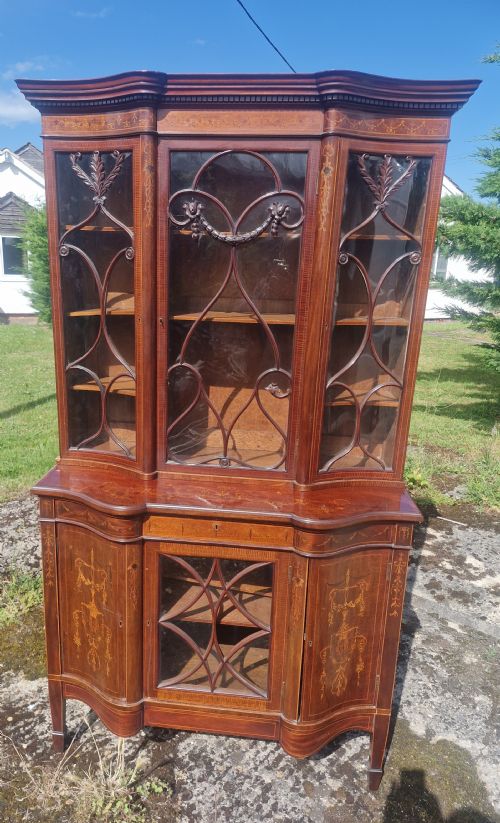


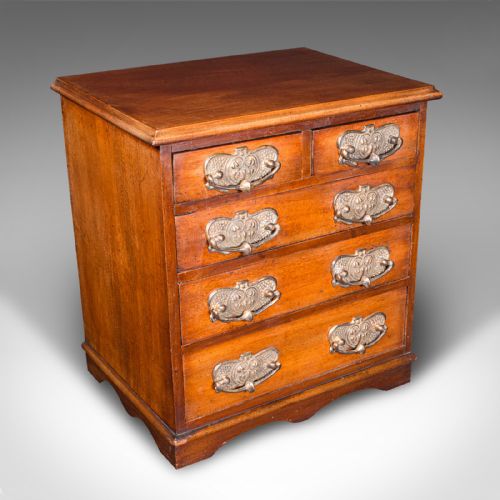


Two Piece Mahogany Cabinet
A two piece mahogany cabinet brings architectural timber and segmented storage into a room, offering both display space and practical division.
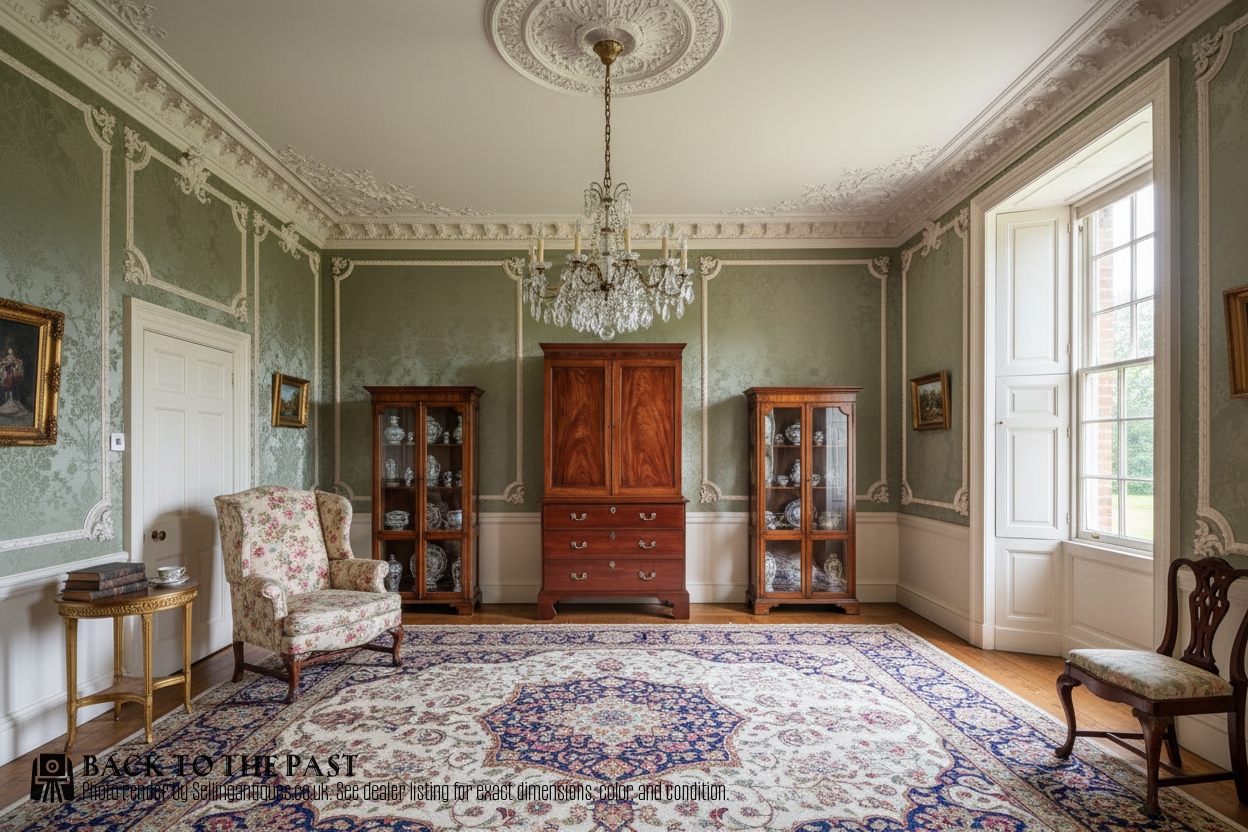
Two Piece Mahogany Cabinet
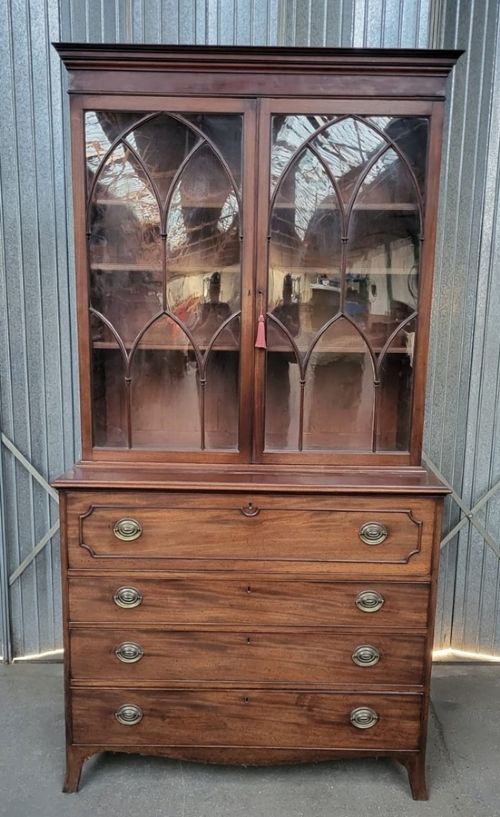
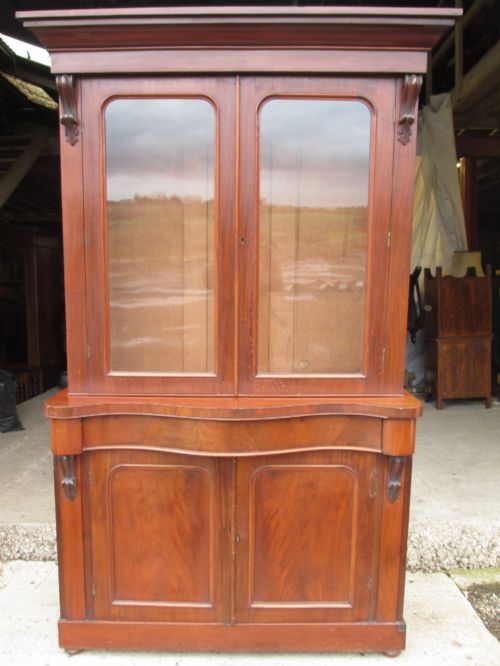
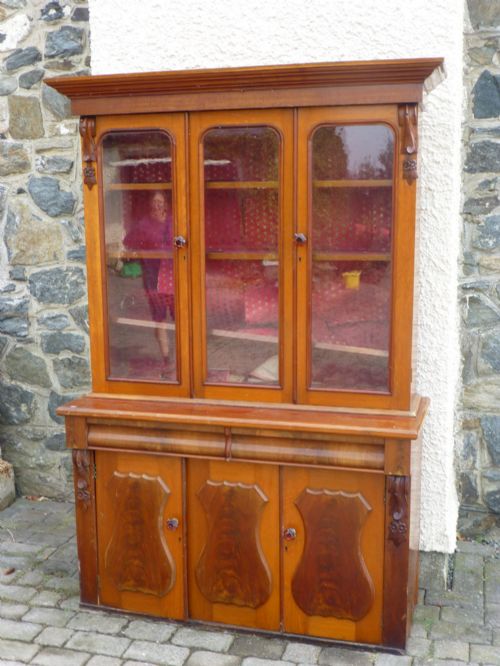
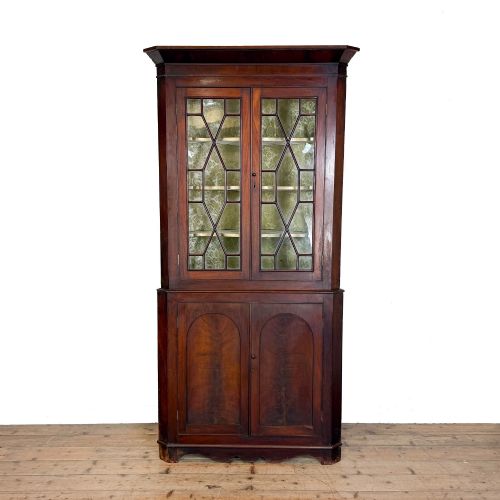
A two piece mahogany cabinet comprises sectional storage forms such as bookcases, corner cupboards, and press cupboards that separate into upper and lower halves for transport and placement. These dual-stage pieces span Georgian, Victorian, and Edwardian periods, appearing in standard upright formats alongside corner designs and glazed display variants.
The version most commonly met on this page is the standing bookcase or corner display cabinet, frequently configured with glazed upper doors and enclosed lower cupboards. Makers utilised mahogany as the primary structural timber, sometimes pairing it with oak or satinwood, and incorporating glass, brass, and fabric details.
Materials and construction
Cabinet makers constructed these sectional pieces using solid mahogany and flame mahogany veneer applied over secondary timbers like oak. The timber work frequently incorporates satinwood stringing, marquetry inlay, and brass hardware to articulate the doors, drawers, and cornices.
Upper display sections often utilise glazed panels held by wooden astragals, while lower sections rely on panelled wooden doors or bank drawers. The division into two separate carcases allowed workshops to transport heavy library bookcases, press cupboards, and corner cabinets through domestic doorways.
The listings span the eighteenth, nineteenth, and early twentieth centuries, featuring Georgian, Victorian, and Edwardian periods in forms ranging from corner cupboards to library bookcases.
Judging quality and proportion
The distinction between standard utility pieces and finer examples rests upon timber selection and surface patination. Cabinets executed in figured flame mahogany with balanced proportions and crisp inlay demonstrate superior workshop execution compared to plainer counterparts.
Integration between the upper and lower carcases also marks the tier of a piece, where well-matched grain continuity and refined brass fittings indicate higher status. The depth of the colour and the handling of mouldings distinguish regional vernacular items from sophisticated metropolitan productions.
The Two Piece Mahogany Cabinet Glossary
- Two piece
- A form built in separate upper and lower carcases that stack together to form a single tall piece of furniture. This division facilitated movement and placement in historic interiors.
- Flame mahogany
- A veneer cut from timber where the branch meets the trunk, producing a rippling, flame-like grain pattern. Cabinet makers reserved this highly figured wood for prominent door panels and drawer fronts.
- Astragal
- A moulding profile used to divide panes of glass within a glazed cabinet door. Finer examples feature slender, individually shaped wooden bars rather than heavy framing.
- Press cupboard
- A tall sectional storage piece traditionally used for linens and clothing, featuring sliding trays or shelves behind panelled lower and upper doors.
- Marquetry
- Decorative inlay work where contrasting veneers are fitted together to form pictorial or geometric patterns. Edwardian and Georgian examples often display satinwood and various exotic woods set into the mahogany ground.
Two Piece Mahogany Cabinet: Frequently Asked Questions
How do I separate the two sections?
The upper and lower carcases typically separate by lifting the top section straight up off the base moulding or locating pins. It is advisable to remove all doors, shelves, and glass panels before attempting to split the sections.
Assistance from a second person is essential to lift the upper case safely without damaging the cornice, timber edges, or adjoining walls.
Where should I place a corner cabinet?
Corner cabinets are designed to fit directly into ninety-degree room junctions, making them practical for smaller rooms or neglected wall spaces. They utilise vertical height while projecting minimally into the main floor area.
Ensure the surrounding skirting boards and picture rails allow the carcase to sit flush against both walls for stability.
How do I care for mahogany surfaces?
Maintain mahogany timber by dusting with a dry, soft cloth and occasionally applying traditional beeswax to nourish the polished finish. Avoid placing these cabinets in direct sunlight or near active heat sources to prevent timber shrinkage and veneer lifting.
Consistent indoor humidity levels protect both the solid mahogany structure and any applied flame mahogany veneers.
What is the difference between a bookcase and a display cabinet?
Bookcases generally feature wooden shelves designed for holding volumes, enclosed by either solid panelled doors or clear glazed fronts. Display cabinets prioritize visual presentation, often incorporating fabric-lined interiors, mirrored backs, and extensive glass panels for porcelain or curiosities.
Many sectional pieces bridge both categories, offering shelved storage below and glazed display space above.