
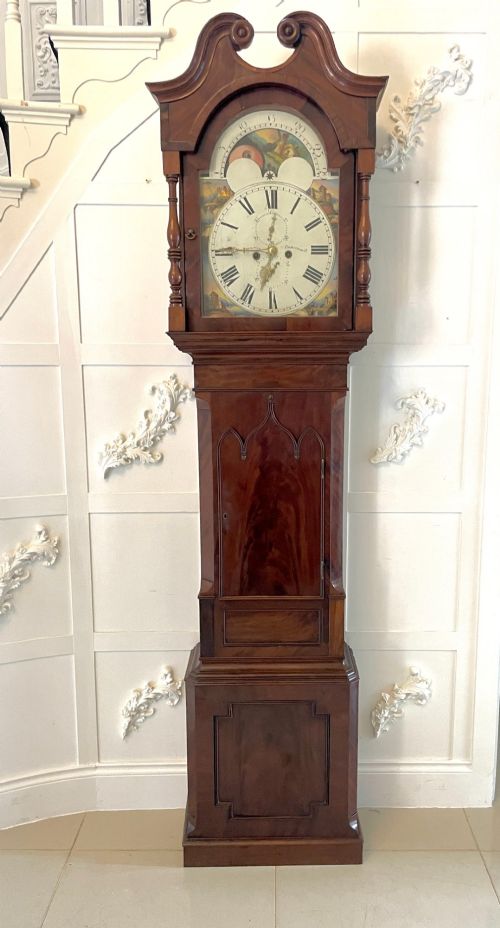
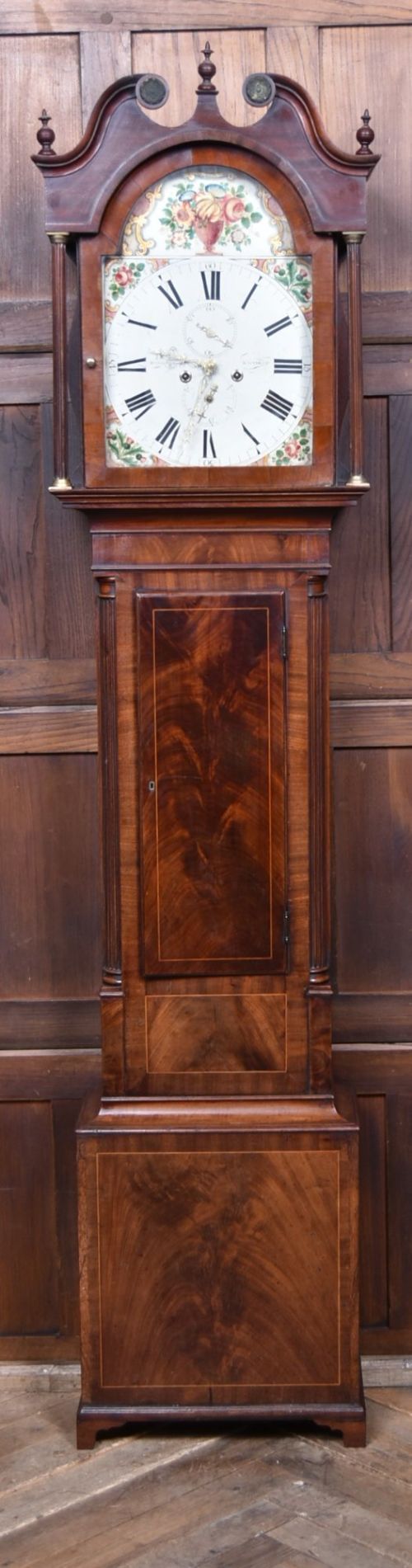
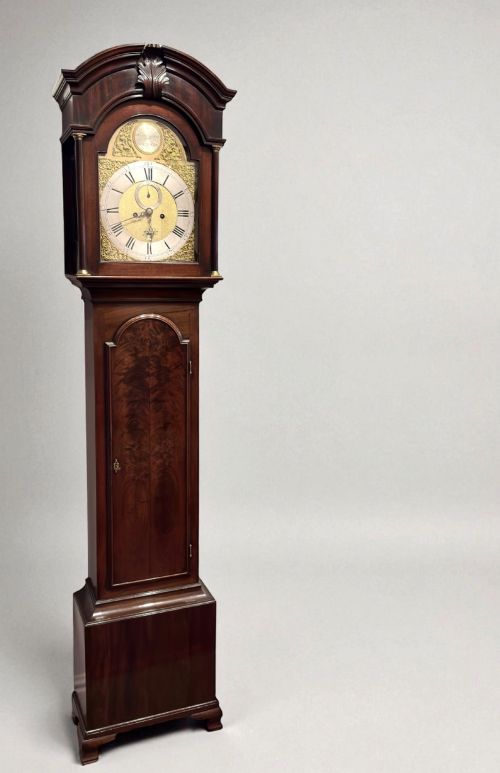
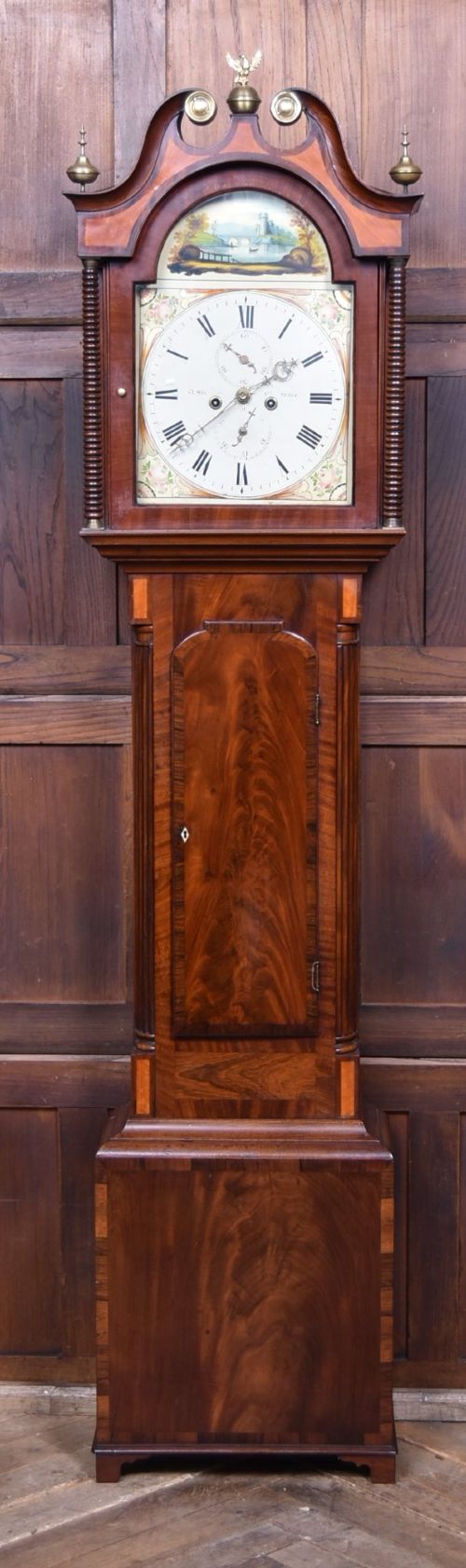

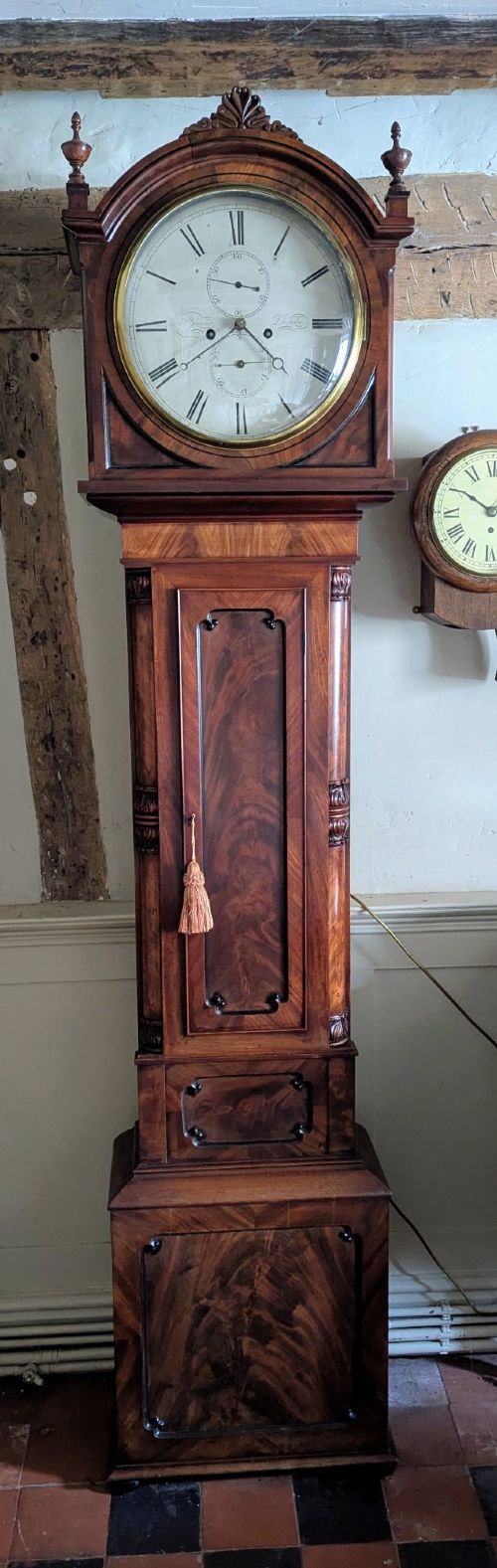
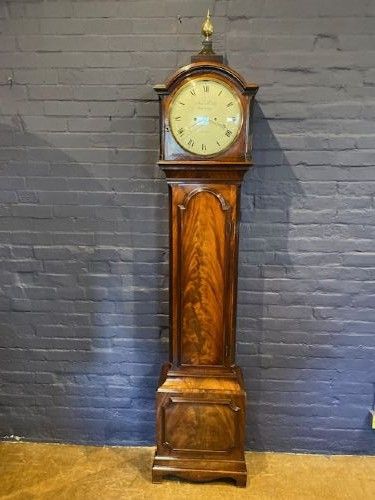
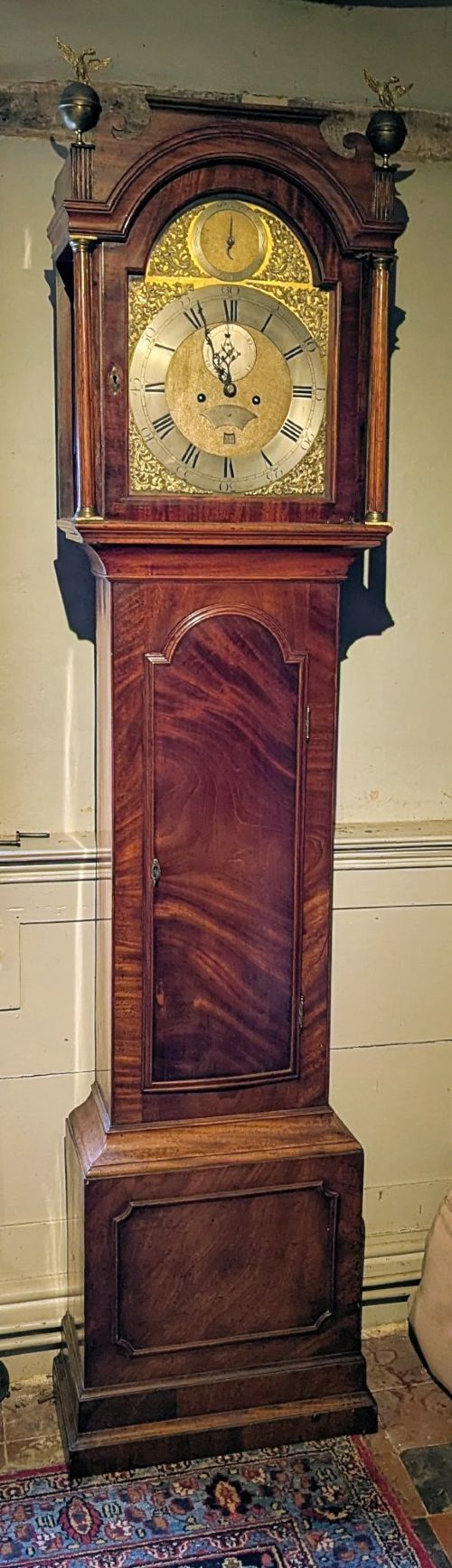
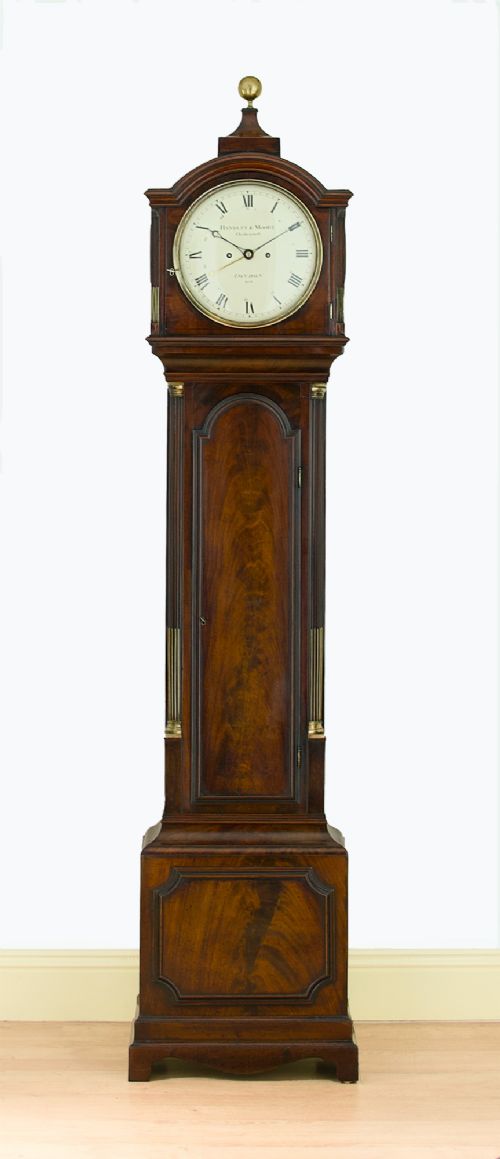
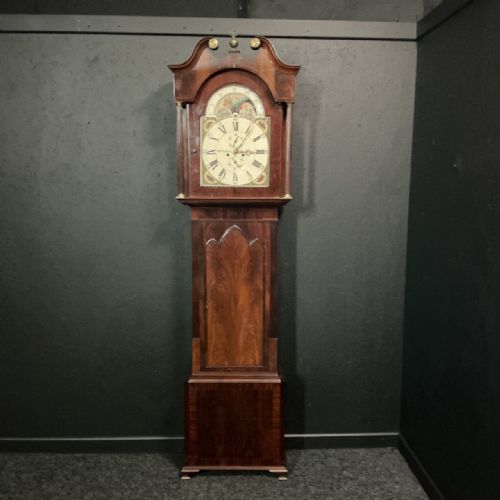
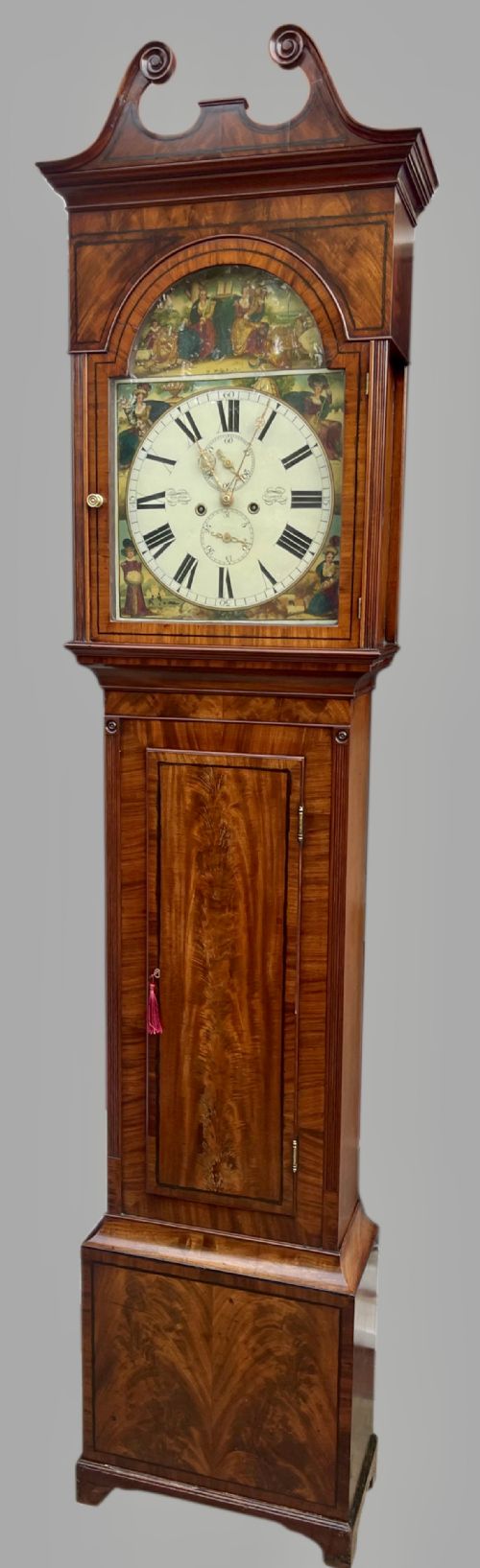
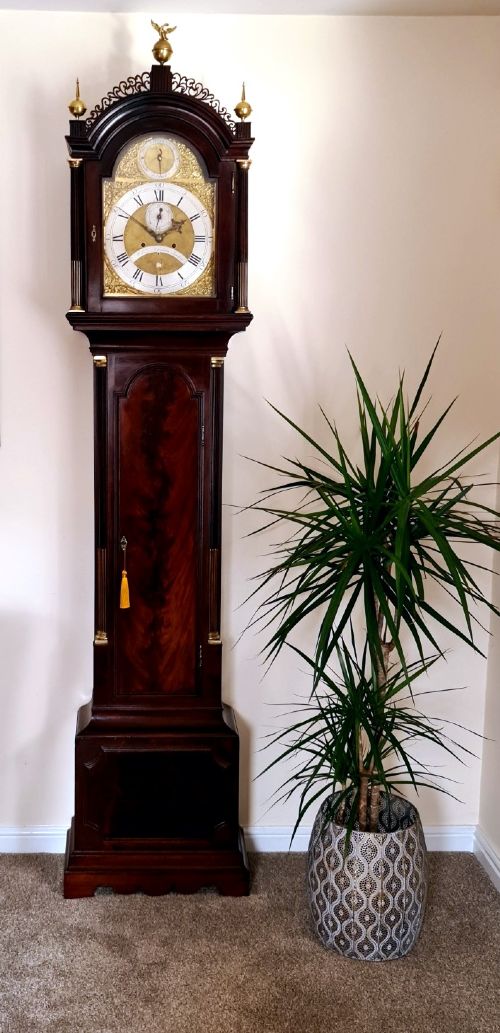
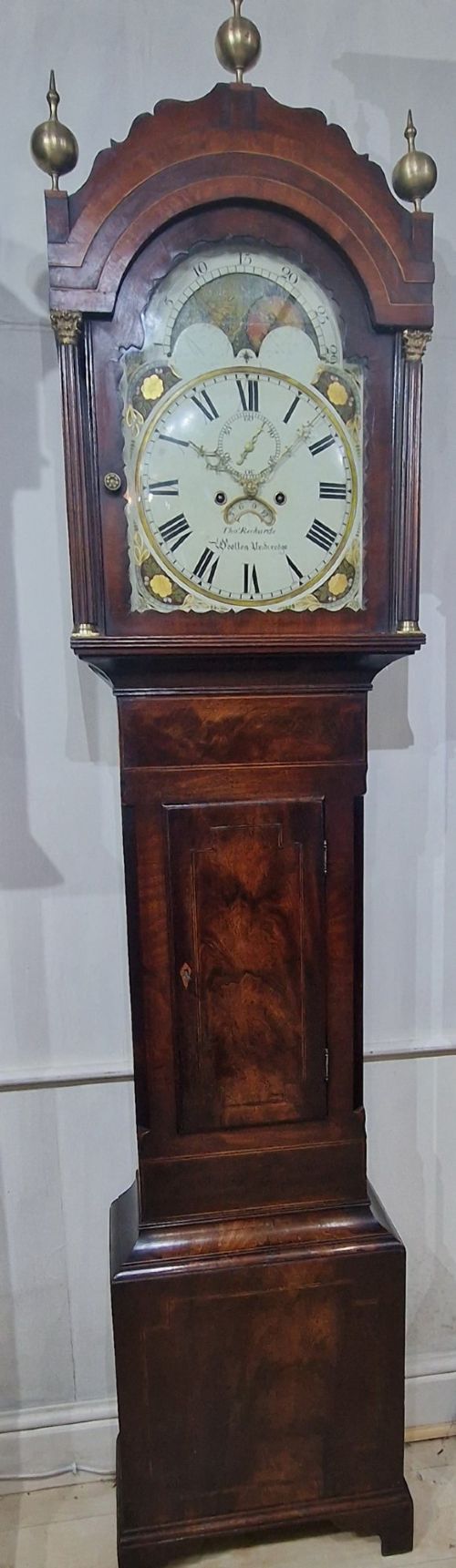

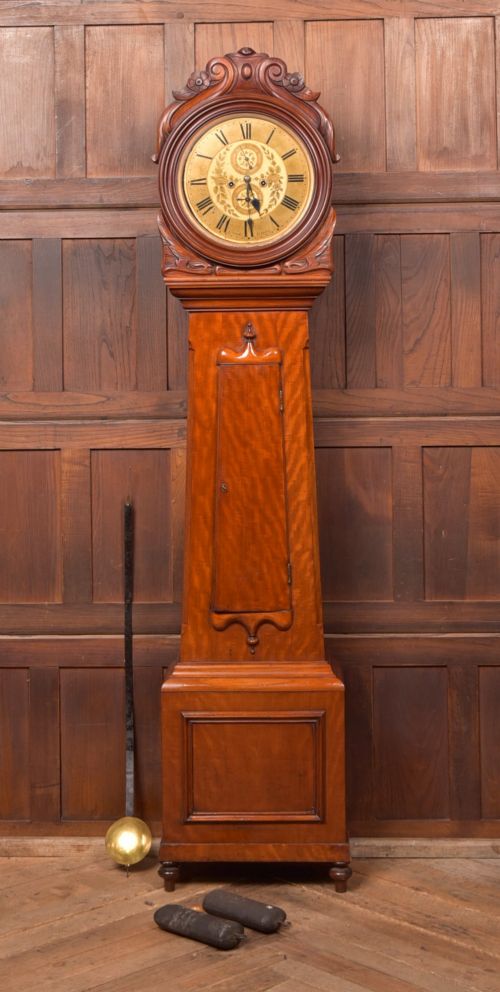
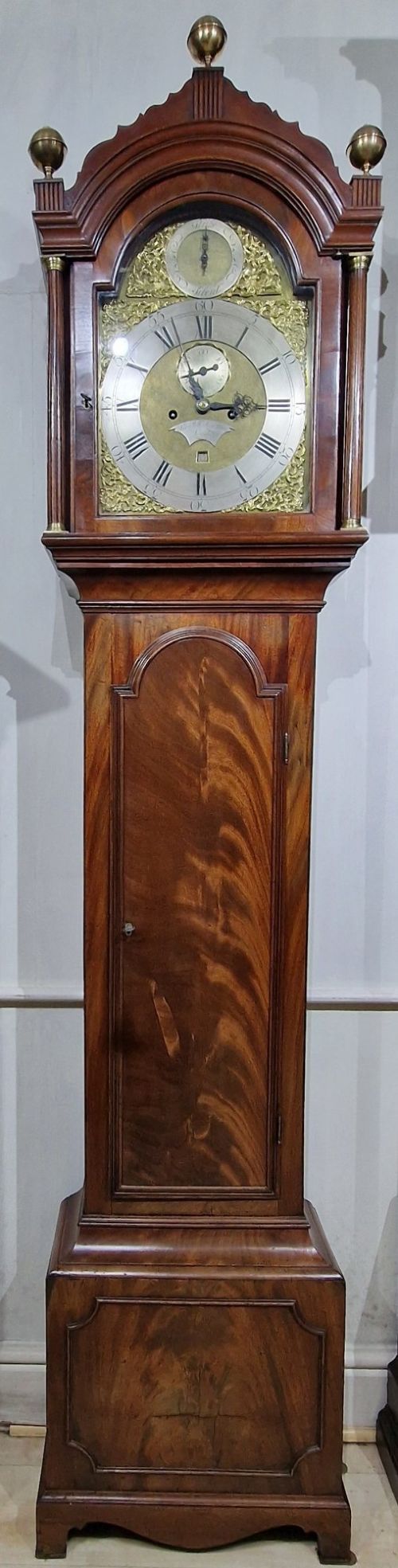
Flame Mahogany Tall Case
Flame mahogany tall case furniture and longcase clocks bring deep, figured timber grain and vertical presence to an interior.
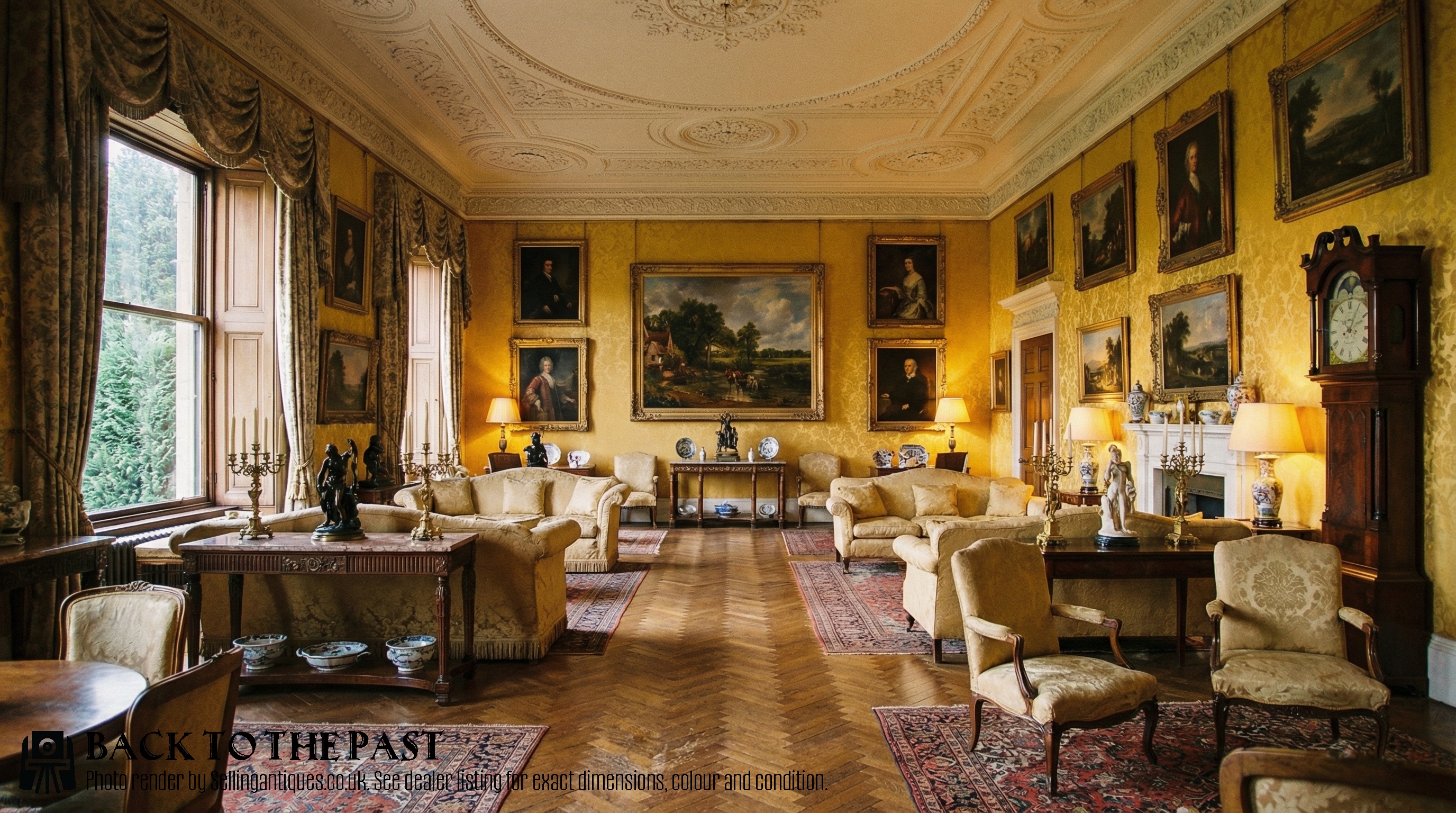
Flame Mahogany Tall Case
A flame mahogany tall case search brings together grand vertical forms, dominated heavily by longcase clocks alongside tall bookcases and secretaires. The longcase clocks, often called grandfather clocks, stand tall with wooden hoods protecting their dials and movements. Tall bookcases and secretaires provide high storage enclosed by glass or timber doors. These pieces originate predominantly across periods from the eighteenth century through the nineteenth century.
The examples found here cross regional workshops from London, provincial England, Wales, and various Scottish towns. Makers in places such as London, Aberdeen, Dundee, and Edinburgh signed their brass or painted dials, establishing local horological traditions. Cases manifest distinct regional proportions, moving from restrained London lines to robust Scottish and provincial constructions.
Mahogany and flame mahogany veneer provide the unifying visual language across the selection. Secondary woods support the carcass construction, while glass panels and brass fittings complete the longcase and bookcase doors. Painted iron or enamel dials frequently display moonphase mechanisms and calendar indicators within the clock hoods.
How they were made
Cabinetmakers constructed the tall cases using solid mahogany framing applied with carefully selected flame mahogany veneer. The dramatic figuring of the wood grain results from cutting branches or fork joints at specific angles to create flame-like patterns across the surface. Brass components, including dial surrounds, weights, pendulums, and sometimes dial spandrels, were cast and finished by hand.
Movements within the longcase clocks rely on brass gear trains driven by hanging weights, often regulating time via pendulum systems such as gridiron designs. Dials combine painted iron or enamel faces with hand-painted numerals, subsidiary seconds dials, and calendar apertures. Glazing for both clock hoods and tall bookcase doors utilised mouth-blown sheet glass secured with wooden glazing bars.
Object forms on this page range from domestic longcase clocks and regulators to tall bookcases and secretaires.
What varies in quality
Quality rests significantly in the choice and matching of the flame mahogany veneer across the longcase door and trunk. Skilled cabinetmakers booked-matched veneer sheets to create symmetrical, sweeping grain patterns that command visual attention. Inferior examples display mismatched grain directions or hurried preparation of the underlying timber surfaces.
The mechanical sophistication of the clock movement dictates distinction at the higher end of the range. Movements featuring month-long durations, gridiron pendulums, quarter-striking capability, or rolling moon phases reflect superior horological ambition. Simpler eight-day or thirty-hour movements represent standard domestic utility rather than specialist craftsmanship.
Hendrie Ogg·Gordon of Aberdeen·D. Straiton·James McCabe·Handley and Moore·William Jourdain·Andrew Thom·William McEwan·William Allam·James Tregent·Francis Perigal·Gillows·James Harvey·Upjohn·Parkinson and Frodsham·John Shelton·John Banks·Thos Russell·Dwerrihouse and Carter·James Bullock
The Flame Mahogany Tall Case Glossary
- Flame mahogany
- A veneer cut from the fork of a mahogany tree where the branches join the trunk, producing a rippling flame pattern. This wood was prized by Georgian and Regency cabinetmakers for principal display surfaces.
- Longcase clock
- A weight-driven pendulum clock enclosed in a tall wooden case with a hood and base. Often referred to as a grandfather clock, it dominated domestic timekeeping from the eighteenth century onwards.
- Rolling moon
- A mechanism behind the dial that tracks the lunar cycle through a painted rotating disc showing moon phases. It appeared frequently on better longcase clocks of the Georgian period.
- Regulator
- A precision pendulum clock designed for exceptional accuracy in timekeeping. These movements usually incorporate gridiron pendulums to compensate for temperature changes.
- Spandrel
- An ornamental corner piece fitted on a clock dial surrounding the circular chapter ring. Cast brass spandrels evolved through distinct decorative styles from pierced scrolls to rococo motifs.
Flame Mahogany Tall Case: Frequently Asked Questions
What is a flame mahogany tall case?
A flame mahogany tall case typically refers to tall standing furniture such as bookcases, secretaires, or longcase clocks finished in highly figured mahogany veneer. The term encompasses vertical timber pieces designed to display the dramatic grain patterns characteristic of high-end cabinetmaking.
These pieces served functional storage and timekeeping roles while acting as major architectural focal points within period interiors.
How do longcase clocks work?
Longcase clocks operate through brass gear trains powered by heavy metal weights suspended on cords or chains inside the trunk. The swinging pendulum regulates the movement of the gears, translating mechanical energy into precise timekeeping displayed on the dial.
Secondary mechanisms within the movement can drive striking trains, calendar displays, and rolling moon phases located in the arch of the hood.
Where were these pieces made?
The pieces originate from workshops across London, regional English towns, Welsh centres, and various Scottish locations such as Aberdeen, Dundee, Edinburgh, and Glasgow. Regional makers signed their work on the clock dials or within the cabinetwork.
Local cabinetmaking traditions influenced the proportions and secondary timbers used in the construction of the tall cases.
How do you date a longcase clock?
Dating relies on stylistic shifts in the clock dial, case proportions, and the signature of the maker recorded in historical trade directories. Painted iron dials, brass spandrel designs, and hood pediments evolved through the Georgian, Regency, and Victorian periods.
Signatures on the dial face connect the clock directly to known working dates of individual horologists and London or provincial workshops.
How do you care for flame mahogany?
Flame mahogany requires stable indoor humidity and protection from direct sunlight to prevent the timber and veneer from fading or splitting. Regular dusting with a dry cloth maintains the polished surface without applying heavy chemical waxes.
Longcase movements also require professional servicing and oiling every few years to keep the gear trains functioning correctly.