

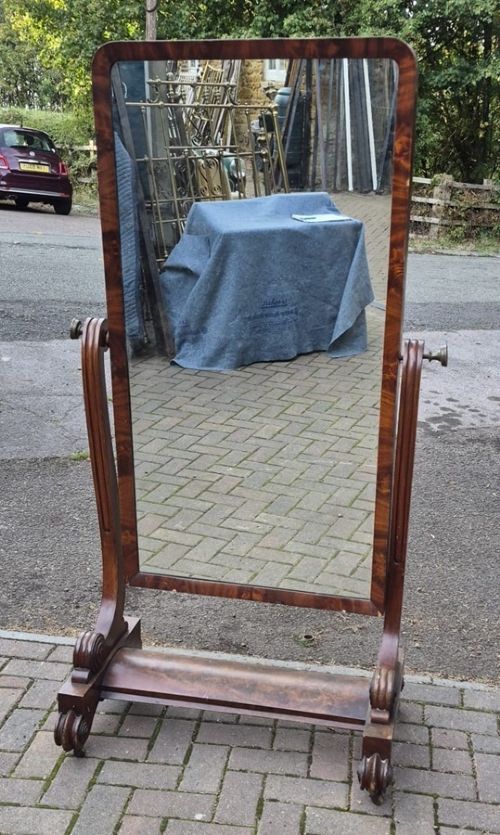
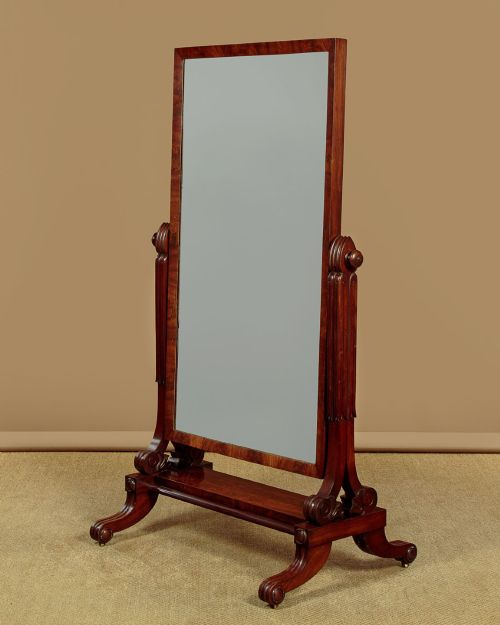
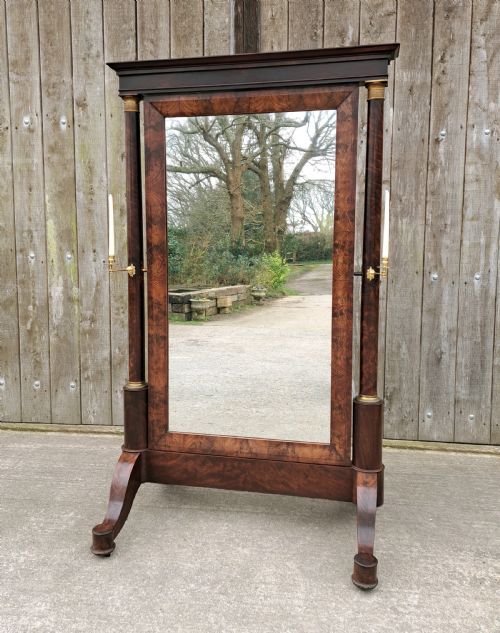
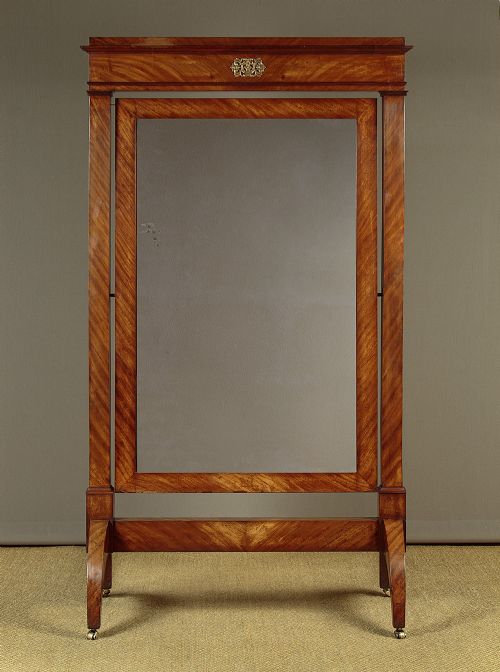


Flame Mahogany Standing Mirror
Flame mahogany standing mirror pieces offer striking figured grain and tall proportions, bringing warmth and presence to any room.
Flame Mahogany Standing Mirror
A flame mahogany standing mirror provides a full-length reflection framed by richly patterned wood veneers, commonly seen in nineteenth-century pieces. These items include cheval mirrors and dressing mirrors designed to stand independently or tilt within supporting side posts.
The selections available on this page span the nineteenth century, including Victorian examples alongside French Empire, Biedermeier, and Danish Empire designs. Buyers will encounter both large cheval mirrors and dressing table mirrors that demonstrate distinct regional styling from this era.
Makers utilised mahogany and flame mahogany veneer, often pairing the timber with brass fittings and glass mirror plates. Certain pieces incorporate cabinets or console structures beneath the glass, expanding the functional form beyond a simple standalone frame.
Materials and construction methods
Craftsmen applied thin veneers of flame mahogany over solid timber carcases, cutting the wood to highlight the dramatic, flame-like patterns in the grain. This technique required precise hand-laying to ensure the symmetrical visual flow characteristic of quality cabinet work.
Frames incorporated brass hardware for pivoting mechanisms, allowing the mirror plate to tilt smoothly within its upright supports. Structural elements relied on solid mahogany, walnut, and fitted mirror glass to complete each freestanding assembly.
Flame Mahogany Standing Mirror Retail Price Guide 2026
Typical asking prices for flame mahogany standing mirror among the pieces listed under this phrase on Sellingantiques today, from the lower quarter to the upper quarter. They describe what is for sale here now, not the wider market.
Early makers sometimes matched wood grain so precisely that the reflection seemed the calmest part of the room.
Distinguishing quality across examples
The visual impact of a flame mahogany standing mirror depends heavily on the intensity and matching of the veneer figures across the frame. Superior items display harmonious grain patterns that wrap evenly around the structure without awkward breaks or mismatched sections.
Proportion and architectural detail separate standard production from exceptional design, particularly in pieces influenced by French Empire and Biedermeier styles. Refined turnings, well-integrated brass mounts, and solid overall construction elevate the presence of the object.
The Flame Mahogany Standing Mirror Glossary
- Cheval mirror
- A large standing mirror mounted on a frame with four legs and side pivots that allow the glass to tilt. This form became popular for dressing rooms during the nineteenth century.
- Flame mahogany veneer
- A thin slice of wood cut from the point where a branch joins the main trunk, producing a distinctive flame-like pattern. Cabinet makers used this decorative veneer on prominent surfaces.
- French Empire
- A neoclassical design style spanning the early nineteenth century, characterised by classical motifs, rich timbers, and architectural symmetry. Pieces in this style often feature bold proportions and disciplined lines.
- Biedermeier
- A Central European style from the mid-nineteenth century focusing on utility and clean lines rather than excessive ornamentation. Furniture from this movement showcases warm wood grains with minimal applied decoration.
- Dressing mirror
- A smaller table-standing mirror, frequently fitted with small drawers or a box base. These items sat atop dressing tables to assist with grooming.
Flame Mahogany Standing Mirror: Frequently Asked Questions
What is a flame mahogany standing mirror?
A flame mahogany standing mirror is a tall or table-height glass panel set within a wooden frame exhibiting dramatic, rippling grain figures. These pieces function as both practical dressing aids and decorative focal points in a room.
Most examples date from the nineteenth century, reflecting periods such as the Victorian era and continental Empire styles. They stand on supportive legs or bases, often featuring adjustable pivots to angle the reflection.
How do I date a Victorian mirror?
Dating a Victorian mirror involves examining the timber selection, construction techniques, and stylistic influences present in the frame. Pieces from this era frequently utilise mahogany and flame mahogany veneer alongside brass hardware.
Context clues such as registration marks, backboards, and secondary woods help narrow down the production period. Comparing the proportions against known Victorian and mid-nineteenth-century design patterns provides further clarity.
Where were cheval mirrors placed?
Cheval mirrors typically stood in bedrooms, dressing rooms, or hallways where occupants needed a full-length view of their attire. Their freestanding nature allowed them to be positioned near windows to maximise natural light.
Because they could tilt on their side pivots, users adjusted the angle easily without moving the entire heavy wooden base. This flexibility made them central fixtures in nineteenth-century domestic interiors.
What is the difference between Empire and Biedermeier styles?
French Empire styling draws heavily on grand classical antiquity, featuring bold architectural forms, dark polished woods, and often decorative metal mounts. It projects a sense of formal presence and decorative richness.
Biedermeier design, by contrast, emerged as a more restrained Central European aesthetic that prioritises domestic comfort and clean wood surfaces. It showcases natural timber grains like mahogany with fewer applied ornaments.